
Instant heat for Van Buren County's historic homes.
From the brick storefronts of Keosauqua to the river cottages of Bentonsport and Bonaparte, gas heat fits Van Buren County's mix of century-old homes and working farmsteads. We'll match you with a trusted local dealer who knows the difference.
Every Project Starts From One of These Five Situations
Clean heat without the wood pile.
Van Buren County is one of Iowa's smallest and most rural counties by population—just 3,536 people spread across the Villages of Van Buren along the Des Moines River, including Keosauqua, Bentonsport, Bonaparte, and Farmington, plus the farmland in between. Winters here fall in climate zone 5A, which puts Van Buren County in the same cold-climate category as Madison, Wisconsin—genuinely cold from December through February, with stretches that test any heating system, old or new. Many of the county's homes date back to the 1800s river-trade era, with the kind of drafty rooms and original masonry fireplaces that make a modern gas unit an appealing upgrade rather than a replacement for character.
Natural gas service in Van Buren County is largely confined to the small in-town clusters around Keosauqua; outside those pockets—which is most of the county—propane is the standard fuel, delivered by tank to farmsteads, river cabins, and the historic homes scattered through Bentonsport and Bonaparte. Either way, a properly sized gas fireplace or insert gives you heat at the flip of a switch, no wood to split or haul, and in many cases the ability to keep a room warm even when a winter ice storm knocks out power along the river valley. For homes with an existing but unused masonry fireplace, a direct-vent insert is often the simplest way to bring a 19th-century hearth back into daily use.
Three steps. No salesperson until you're ready.
Tell us about your project
Your zip code, your situation, and the fuel you're leaning toward—or let the answers point you to one.
See what's actually available
The brands dealers within 100 miles genuinely carry—real options, never a catalog mirage.
Get your dealer & Project Guide
A trusted local dealer, plus the free Project Guide & Parts List that names every component of the job.
Frequently Asked Questions
How much does a gas fireplace installation cost in Van Buren County?
Installations across Van Buren County typically run $3,500 to $9,000, with the biggest cost drivers being whether the home already has gas service and how much venting or masonry work is involved. A home already on natural gas near Keosauqua with a straightforward insert install lands on the lower end. Rural properties that need a new propane tank set, or older Bentonsport and Bonaparte homes with unlined chimneys that need a stainless liner for a direct-vent unit, tend to run toward the higher end. A local dealer can give you a firm number after seeing the fireplace or wall in person.
Can I convert an old fireplace in one of the historic river town homes to gas?
Yes, and it's a common request in Van Buren County given how many homes in Bentonsport, Bonaparte, and Keosauqua still have their original 1800s masonry fireplaces. A gas insert slides into the existing firebox and vents through a new stainless liner run inside the old chimney, so the exterior character of the home doesn't change. Because many of these fireplaces were built for wood and coal long before gas appliances existed, an installer will typically need to check the flue dimensions and clearances before recommending a specific insert size—this isn't a project to guess at with an off-the-shelf unit.
Should I plan on natural gas or propane for my fireplace?
It depends on where in the county you are. Natural gas lines reach into the small commercial core around Keosauqua, but most of Van Buren County—including the farmsteads, the river towns of Bentonsport and Bonaparte, and outlying acreages—runs on propane. If your home already has a propane tank for the furnace or water heater, adding a fireplace on the same tank is usually simple. If not, a local propane supplier can set a new tank as part of the install. Gas fireplace models are configured for one fuel or the other, so tell your dealer up front which service you have.
Will a gas fireplace still work if the power goes out?
Most will, which matters in a rural county like Van Buren where winter ice storms can take out power along the river bottoms for hours at a time. Units with intermittent pilot ignition (IPI) run on AA batteries that kick in automatically when the power drops, so the fireplace lights and operates as normal. Valor fireplaces go a step further—their pilot generates its own electricity through the thermocouple, so there's no battery to remember or replace. Ask your local dealer about the ignition system on any model you're considering, especially if you're out on an acreage away from town.
What's the difference between a gas fireplace, insert, and stove?
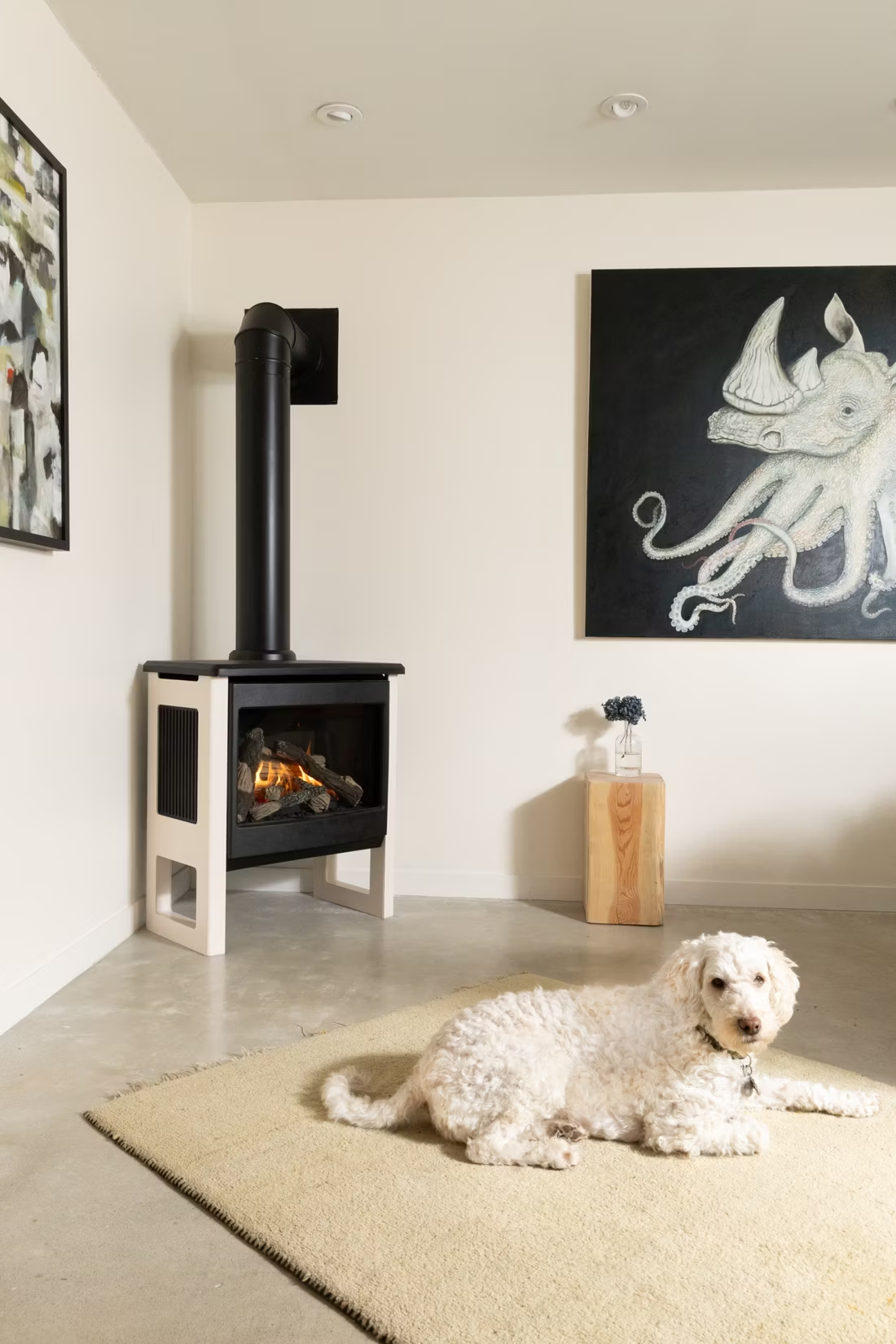
A gas fireplace is a built-in unit framed into a wall—the right choice for new construction or a room without an existing hearth. A gas insert drops into an existing masonry fireplace and uses the chimney as its vent path, which fits well with Van Buren County's older homes that already have a firebox. A gas stove is a freestanding cabinet-style unit that sits on the floor, useful in a room with no chimney at all—including some of the county's outbuildings and river cabins used seasonally. Most homeowners with an existing fireplace in Keosauqua, Bentonsport, or Bonaparte end up choosing an insert.
Do I need a permit to install a gas fireplace in Van Buren County?
Yes—a building permit and a gas line permit are required for a new gas fireplace installation through the county's building department, and any propane line work needs to be done by a licensed gas-fitter. Most established local dealers handle the permitting and coordinate the gas work as part of the installation, which matters in a rural county where you'd otherwise be lining up separate trades yourself. This is one reason to avoid a big-box or handyman install for gas appliances—the line work and venting have to be inspected and signed off correctly.
Should I get a vented or vent-free gas fireplace?
Vented (direct-vent) units draw combustion air from outside and exhaust it back outside through a sealed pipe—they're the safer, more universally recommended choice and the standard for most installations. Vent-free units burn gas directly into the room and are legal in Iowa, but they release some combustion byproducts indoors and require strict room-sizing rules. In Van Buren County, vent-free can make sense for a river cabin or outbuilding with no chimney and no practical way to run venting, but for a primary living space in Keosauqua, Bentonsport, or Bonaparte, a vented direct-vent unit is the better long-term choice. Your local dealer can walk through both options for your specific space.
How often does a gas fireplace need to be serviced?
Plan on an annual inspection, ideally before the cold sets in each fall. A technician checks the burner, pilot or ignition system, venting, and gas connections, and cleans the glass and interior—a much smaller job than a wood chimney sweep, but just as important given how much of the county relies on propane tanks and lines that need periodic checking. Local service providers typically charge $150 to $250 for a standard annual visit.
Should I go with gas or stick with wood?
Van Buren County has plenty of oak, hickory, maple, and walnut in its wood lots, and wood heat has deep roots here for families with access to that timber and the time to process it. Gas trades that self-sufficiency for convenience—no splitting, hauling, or ash cleanup, and consistent heat at the touch of a switch, which matters for retirees, second-home owners along the river, or anyone who wants reliable heat without the labor. Plenty of homes in Van Buren County keep both: a gas insert in the main living space for daily use, and a wood stove in a shop, cabin, or secondary space for backup heat or ambiance.
Is my gas fireplace wasting gas?
If it was installed more than 15 years ago, probably. Older gas fireplaces keep a standing pilot light burning all the time, and that little flame can cost a couple hundred dollars a year. Newer models use pilot-on-demand ignition—the pilot lights only when you use the fireplace and goes out when you turn it off.
Can I put a TV above my fireplace?
Yes—with an asterisk. Fireplaces are hot and TVs don't like heat. Either put a mantel between them to deflect rising warmth, or choose a fireplace with heat-management technology that creates a cool zone on the wall above—the wall stays around 125 degrees, barely warm, while the room still gets full heat. If you like clean lines and don't want a mantel, heat management is the answer.
How much should I budget for a fireplace?
For an average home—covering the fireplace, the vent pipe, and basic installation—a budget between $3,900 and $5,500 gives you a lot of options across wood, gas, and pellet. By the time you add finish work, gas line, and electrical, the average complete installation lands between $5,000 and $12,000 all-in. In a remodel or new build, a good rule is to put about 2.5% of the total project cost toward the fireplace.
Can I install a fireplace myself?
If you're putting a fire in your house on purpose, it's best to work with an expert. Unless you're genuinely experienced in framing, gas line, vent pipe, and the national code on clearances to combustibles, have a professional do it—and ideally the same company that sells you the fireplace, so warranty, service, and liability all live under one roof.
Find your gas fireplace in Van Buren County.
Tell us about your home and we'll put together a free Project Guide & Parts List—the right unit, the vent kit, and a trusted local dealer who can install it correctly.
Find Your Fireplace →