
Find the Right Fireplace for Your Van Buren County Home.
Wood, gas, pellet, and electric fireplace resources for every river town and farmstead in Van Buren County—from Keosauqua to Bonaparte to Milton. Find the right unit and connect with a trusted local hearth retailer.
Every Project Starts From One of These Five Situations
Hardwood country heat along the Des Moines River valley.
Van Buren County sits in southeast Iowa's climate zone 5A—winters that run cold and humid, with the kind of hard freezes and snow load you'd expect in Madison, Wisconsin, though usually a shade milder. With just 3,536 residents spread across river bluffs, farmland, and the historic Villages of Van Buren, this is a low-density county where a lot of heat still comes from the woodlot out back. Oak, hickory, maple, and walnut grow thick along the Des Moines River bottoms, and self-cut firewood is a normal part of getting through winter here. The Amish and Mennonite farms concentrated around Milton and Cantril often heat entirely with wood—for some households it isn't a backup fuel, it's the only one.
This hub covers hearth retailers, service technicians, and fuel suppliers reaching every community in the county—the historic river towns of Bentonsport, Bonaparte, and Keosauqua, the farm towns of Milton, Cantril, and Stockport, and Birmingham and Farmington to the south. Because the county has no incorporated town over a couple thousand people, most dealers and technicians are based in nearby Fairfield, Ottumwa, or Mount Pleasant and drive in for consultations and installs. Pick your fuel below for local dealers, installed cost ranges, and the specifics that apply to your project.
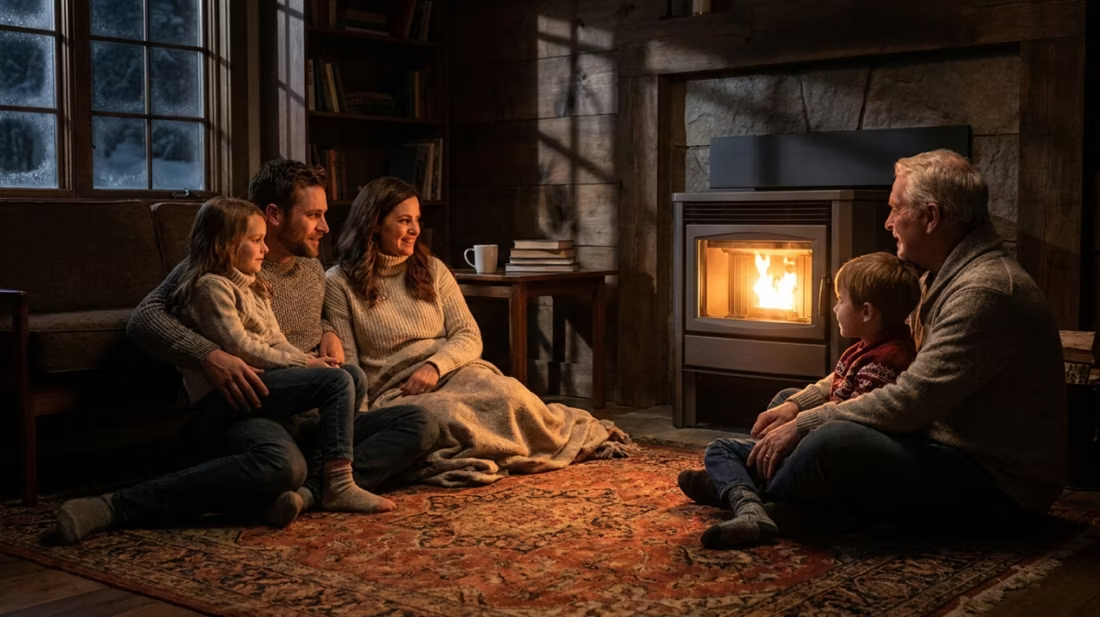
Four fuels. One honest answer for Van Buren County.
Three steps. No salesperson until you're ready.
Tell us about your project
Your zip code, your situation, and the fuel you're leaning toward—or let the answers point you to one.
See what's actually available
The brands dealers within 100 miles genuinely carry—real options, never a catalog mirage.
Get your dealer & Project Guide
A trusted local dealer, plus the free Project Guide & Parts List that names every component of the job.
Frequently Asked Questions
Which fuel works best in Van Buren County?
It depends heavily on the household. Wood is the traditional and still-dominant choice in much of rural Van Buren County—oak, hickory, and walnut are abundant along the Des Moines River bottoms, self-cutting firewood is common practice, and the county's Amish and Mennonite farms around Milton and Cantril often rely on wood stoves as their sole heat source, without electric backup. Gas is the convenience choice for river-town homes in Keosauqua or Bonaparte, though rural properties without natural gas lines typically run on propane tanks instead. Pellet stoves are a solid middle option—less labor than splitting wood, with regional brands like Lignetics reasonably accessible. Electric fireplaces are supplemental almost everywhere in the county—good for a spare bedroom or a historic Bentonsport cottage where running a flue isn't practical, but not adequate as primary heat through a zone 5A winter.
Do I need a permit to install a fireplace in Van Buren County?
In most cases, yes, for new wood stoves, wood inserts, gas fireplaces, gas inserts, and pellet stoves—permits are handled through the Van Buren County zoning and building office at the courthouse in Keosauqua. If your property sits within one of the National Register historic districts—Bentonsport and Bonaparte both carry that designation—exterior work like a new chimney or venting run may get an extra look for visual compatibility with the historic district, even though the mechanical permit process itself is the same. Gas installations also need a separate gas-line permit and licensed installer for the connection work. Electric fireplaces are usually permit-free unless you're hardwiring a built-in unit on a new circuit. Most local retailers pull permits as part of the installation, so you're rarely handling this paperwork yourself.
Are there air quality restrictions on wood burning in Van Buren County?
No—Van Buren County has no designated non-attainment status and no local wood-burning curtailment program. This is a rural, low-density county without the winter inversion issues that trigger burn advisories in basin or valley terrain elsewhere. Open burning and wood heat are treated as normal, longstanding practice here, particularly given how much of the county still heats with wood cut from its own oak-hickory timber. Iowa DNR's general outdoor burning rules still apply to open burn piles and debris, but they don't touch indoor wood stove or fireplace use.
Can one local hearth retailer handle all four fuel types?
Some can, though with a county this small and rural, dealer coverage is thinner than in a bigger metro area. Retailers based in Fairfield and Ottumwa that regularly service Van Buren County typically carry wood, gas, and pellet as their core three, with electric fireplaces available as a secondary line rather than a showroom focus. If you're outfitting an Amish or Mennonite household near Cantril with a wood-only setup, or a river cottage in Bonaparte with a gas insert, ask specifically which fuels a given dealer stocks and installs before assuming they carry all four—coverage varies more here than it would in a larger county seat.
How does service work in rural areas of Van Buren County?
Most chimney sweeps and gas technicians serving the county are based out of Fairfield, Ottumwa, or Mount Pleasant and drive in on scheduled routes rather than same-day dispatch. Expect a modest travel charge for calls out to Bonaparte, Stockport, or Birmingham, and plan on booking well ahead of the first cold snap—fall is peak season for chimney sweeps here since so many county households are cutting and stacking oak and hickory for the winter at the same time. If you're on a wood-only setup without electric backup, an annual pre-season sweep matters more than it would for a household with a gas furnace as fallback.
What's the typical cost range for fireplace installation across all fuel types in Van Buren County?
Wood stove or insert installation: roughly $4,000–$8,500 for a typical install, more if new chimney work is required on an older Bentonsport or Bonaparte-area home. Gas fireplace, insert, or stove: roughly $4,000–$10,000, with propane conversions running toward the lower end when a tank is already on the property. Pellet stove or insert: roughly $4,000–$7,000 for most installs. Electric fireplace: $200–$2,800 for the unit itself, plus modest labor for anything beyond a simple plug-in wall unit. Because dealer travel is a real factor out here, get a firm installed quote rather than assuming a base sticker price covers a rural delivery.
Wood, gas, pellet, or electric—how do I choose?
Match the fuel to your life, not the other way around. Wood: lowest fuel cost and total power-outage independence, but you're hauling and stacking. Gas: press a button, set a thermostat, no maintenance to speak of. Pellet: wood economics with automatic feeding, in exchange for weekly cleaning and a need for electricity. Electric: plugs in anywhere with honest supplemental heat. Nobody regrets the fuel that fits how they actually live.
Does a fireplace add value to my home?
On average, a fireplace adds back to the home about the same amount you spent installing it. Add the monthly savings from heating the rooms you actually use instead of the whole house—often hundreds of dollars a year—and the value case is strong before you even count what a fire does for how your family uses the room.
Can I install a fireplace myself?
If you're putting a fire in your house on purpose, it's best to work with an expert. Unless you're genuinely experienced in framing, gas line, vent pipe, and the national code on clearances to combustibles, have a professional do it—and ideally the same company that sells you the fireplace, so warranty, service, and liability all live under one roof.
I know I want a fireplace—where do I actually start?
Do two things today: snap a photo of the wall or fireplace you want to transform, and take a tape measure to the space—width, height, depth. Those two artifacts answer most of a hearth professional's first questions. Then settle fuel (wood, gas, pellet, or electric) and set a realistic budget: $3,900–$5,500 covers fireplace, vent, and basic install for most homes.
Stove and Fireplace Dealers in Van Buren County
Listings include WhyFire partner dealers, dealers we have verified as authorized for the brands we recommend, and established local businesses that carry hearth products. Every listing shows which one it is. The ones marked Preferred run on WhyFire's software, so they can show you real pricing and book your appointment right here. No manufacturer pays for placement. How we verify dealers →
Blazing Burners L.L.C.
Stoves & Chimneys Of Iowa, Inc.
Jc Huffman Cabinetry
Get matched with a hearth dealer in Van Buren County.
Tell us about your home and we'll match you with a trusted local dealer and send a free Project Guide & Parts List—the exact parts, vent kit, and recommended installer for your fireplace project in Van Buren County.
Find Your Fireplace →