
Zone heat and ambiance for Quad Cities winters.
With winter lows averaging 13°F and a heavy winter heating load each year, Scott County homes from Davenport to LeClaire lean on electric fireplaces for instant, no-venting warmth in bedrooms, basements, and finished additions. Find the right unit and get matched with a trusted local dealer.
Every Project Starts From One of These Five Situations
Instant heat, zero venting, real flexibility.
Scott County sits along the Mississippi River in eastern Iowa, home to Davenport, Bettendorf, LeClaire, Eldridge, and roughly 342,000 residents across the Iowa side of the Quad Cities. Climate zone 5A puts the county in the same cold-winter bracket as Madison, Wisconsin—long heating seasons that stretch from October into April, with a heavy winter heating load each year. MidAmerican Energy serves electric and natural gas accounts across nearly the entire county, and most homes here run a gas furnace as their primary heat source. Electric fireplaces fill a different role: fast, controllable zone heat and real flame ambiance without a flue, a gas line, or a hole in the wall.
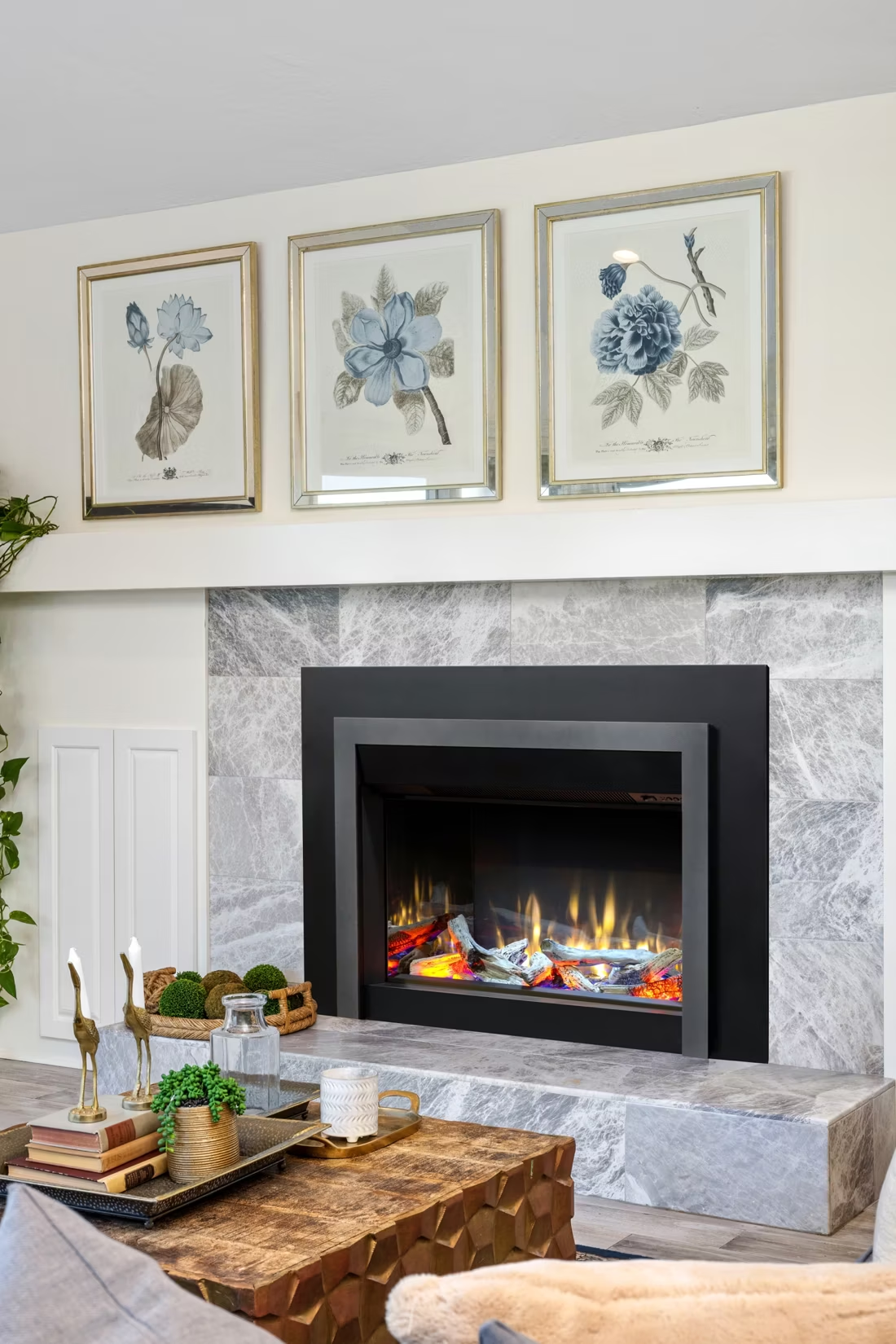
That makes electric a natural fit for Scott County's housing stock—older Davenport bungalows without a second chimney, Bettendorf and Eldridge ranch homes with finished basements, and newer builds in LeClaire and Blue Grass where a homeowner wants supplemental warmth in a bonus room or primary bedroom without touching the HVAC system. An electric insert can drop into an existing but unused masonry fireplace, a built-in can go into new construction framing, and a freestanding stove can sit almost anywhere with an outlet nearby. None of it requires venting, and none of it competes with the natural gas furnace handling the bulk of the heating load through a long Iowa winter.
Three steps. No salesperson until you're ready.
Tell us about your project
Your zip code, your situation, and the fuel you're leaning toward—or let the answers point you to one.
See what's actually available
The brands dealers within 100 miles genuinely carry—real options, never a catalog mirage.
Get your dealer & Project Guide
A trusted local dealer, plus the free Project Guide & Parts List that names every component of the job.
Frequently Asked Questions
How much does an electric fireplace installation cost in Scott County?
Most electric fireplace projects in Scott County run $300 to $2,500 installed. A plug-in freestanding stove or a mantel package with a basic insert sits at the low end—no wiring changes needed, just an existing outlet. A built-in wall unit or a larger insert that requires a dedicated 120V or 240V circuit, drywall or trim work, and an electrician's time runs toward the higher end. Homes in older Davenport neighborhoods with older electrical panels sometimes need panel or circuit upgrades first, which adds to the total. Local dealers will quote a firm number after seeing the space and the electrical panel.
Can an electric fireplace heat my whole house?
No, and this matters for Scott County's climate. A typical electric fireplace heater tops out around 1,500 watts—roughly 5,100 BTU—enough to comfortably heat a single room or open living area, not a whole home during a stretch of 13°F nights. Electric fireplaces here are best used as zone heat: warming the room you're actually in so you can turn down the thermostat on the gas furnace elsewhere in the house. For whole-home heating through a Quad Cities winter, the furnace still does the heavy lifting.
Do I need a permit or an electrician to install an electric fireplace?
It depends on the unit. A plug-in electric stove or insert that runs off an existing standard outlet typically doesn't require a permit. A built-in electric fireplace that needs a new dedicated circuit—common with larger units—requires an electrical permit through your local building department, whether that's the city of Davenport, Bettendorf, LeClaire, or the Scott County Planning & Development office for unincorporated areas. Most local dealers either employ a licensed electrician or coordinate with one as part of the installation, so you're not left tracking down the permit yourself.
What's the difference between an electric insert, built-in, and freestanding stove?
An electric insert is sized to slide into an existing fireplace opening—a good option for Davenport and Bettendorf homes with an old, unused masonry fireplace that never had gas run to it. A built-in electric fireplace is designed to be framed into a wall during new construction or a remodel, giving a flush, custom look. A freestanding electric stove sits on the floor like a traditional wood stove and can go almost anywhere with an outlet—bedroom, basement, sunroom. For Scott County's mix of older housing stock and newer subdivisions, all three see regular use; the right choice comes down to whether you're retrofitting an existing opening or building something new.
Will my electric fireplace work during a power outage?
No—unlike a wood stove, an electric fireplace has no function without power, since both the heater and the flame effect run on electricity. Scott County's grid, served by MidAmerican Energy, is generally reliable, and extended outages are the exception rather than the norm outside of severe ice storms. Still, if backup heat during outages is a priority for your household, that's worth a conversation with your local dealer about pairing an electric unit with a generator circuit, or considering a gas option for at least one room in the house.
Are electric fireplaces a good fit for finished basements?
Yes—this is one of the most common installs local dealers see in Scott County. Finished basements are standard in Bettendorf, Eldridge, and Davenport homes, and they're often the coldest, least-heated part of the house in winter. An electric insert or built-in adds real supplemental warmth and a focal point without running gas line or venting through a below-grade space, both of which are expensive and sometimes impractical in a finished basement. Zero-clearance installation also means no additional framing setbacks to worry about.
Is it cheaper to run an electric fireplace or a gas fireplace?
Per unit of heat, natural gas through MidAmerican Energy is typically less expensive than electricity in Scott County—which is one reason gas furnaces dominate whole-home heating here. But electric fireplaces are rarely used for whole-home heat; they're zone heaters running a few hours a day in one room, so the total operating cost is usually modest even at electric rates. If you're comparing a full-room gas fireplace installation against an electric unit for the same space, the gas unit will generally cost more to run per hour but less to operate overall if it becomes your primary source of heat in that room. A local dealer can walk through the math for your specific space and usage pattern.
What features should I look for in an electric fireplace?
Look at flame realism (LED technology has improved considerably in recent years), heater wattage and coverage area, and whether the unit allows the flame effect to run independently of the heater—useful in Scott County for ambiance on mild fall evenings in Eldridge or Walcott without needing the heat on. Also check thermostat control versus a simple high/low switch, since a thermostat lets the unit cycle on and off to maintain a set room temperature rather than running constantly. Local dealers carry a range of brands and can match features to your room size and how you plan to use the fireplace.
Electric vs. gas fireplace—which is right for my Scott County home?
Gas fireplaces deliver more heat output, work during power outages with battery backup ignition, and make sense as a primary heat source for a room given the county's long, demanding winter heating season. Electric fireplaces cost less to install, need no gas line or venting, go in almost anywhere including basements and bedrooms, and give you real flame ambiance with a flip of a switch. For a Davenport or Bettendorf home with an unused masonry fireplace and no gas line nearby, electric is often the simpler, less invasive upgrade. For a primary living space where you want serious supplemental heat during a long Iowa winter, gas is usually the stronger performer. A local dealer can walk your specific room and give a straight answer either way.
Can I put a TV above my fireplace?
Yes—with an asterisk. Fireplaces are hot and TVs don't like heat. Either put a mantel between them to deflect rising warmth, or choose a fireplace with heat-management technology that creates a cool zone on the wall above—the wall stays around 125 degrees, barely warm, while the room still gets full heat. If you like clean lines and don't want a mantel, heat management is the answer.
Do electric fireplaces actually produce heat?
Yes—most put out around 4,800–5,000 BTUs from a standard outlet, which comfortably warms a bedroom, office, or den as a comfort-zone heater. What they won't do is carry a whole house the way wood, gas, or pellet can. Think of electric as ambiance-first with honest supplemental heat: flames on with no heat in July, flames plus warmth in January.
Does a fireplace add value to my home?
On average, a fireplace adds back to the home about the same amount you spent installing it. Add the monthly savings from heating the rooms you actually use instead of the whole house—often hundreds of dollars a year—and the value case is strong before you even count what a fire does for how your family uses the room.
Can I install a fireplace myself?
If you're putting a fire in your house on purpose, it's best to work with an expert. Unless you're genuinely experienced in framing, gas line, vent pipe, and the national code on clearances to combustibles, have a professional do it—and ideally the same company that sells you the fireplace, so warranty, service, and liability all live under one roof.
Stove and Fireplace Dealers in Scott County
Listings include WhyFire partner dealers, dealers we have verified as authorized for the brands we recommend, and established local businesses that carry hearth products. Every listing shows which one it is. The ones marked Preferred run on WhyFire's software, so they can show you real pricing and book your appointment right here. No manufacturer pays for placement. How we verify dealers →
Quad City Fireplaces
Barnett's - Doug's Heating And Air
Find your electric fireplace in Scott County.
Tell us a bit about your home and we'll match you with the right electric fireplace, insert, or stove—plus a free Project Guide & Parts List with the exact specs and your recommended local Scott County dealer.
Find Your Fireplace →