
Find the Right Heat Source for Your Quad Cities Home.
Fireplace resources for every city in Scott County—from Davenport and Bettendorf along the Mississippi to LeClaire, Eldridge, and Walcott. Find the right unit and connect with a trusted local hearth retailer.
Every Project Starts From One of These Five Situations
Gas heat dominates along the Mississippi River in Scott County, Iowa.
Scott County sits in climate zone 5A with winters that bring a heating season on par with Madison, Wisconsin and average winter lows near 13°F. That's plenty cold for a serious heating appliance, but the county's dense, urbanized Quad Cities core (population over 342,000) is built almost entirely around natural gas service from MidAmerican Energy. New wood-burning stove and insert installations are genuinely rare here—not because the county lacks fuel wood (oak, hickory, maple, and walnut are common along the river bluffs), but because most of that timber goes to lumber, furniture, and recreational fire pits rather than home heating, and few local dealers stock or install new wood systems in a market this saturated with gas lines. Pellet appliances face the same gap—Lignetics and Indeck Energy Services have a regional footprint, but that's largely industrial and commercial pellet supply, not a residential retail network built around home pellet stoves.
What you'll find on this hub: hearth retailers, service technicians, and fuel suppliers serving every community in the county—from Davenport and Bettendorf out to LeClaire, Eldridge, Walcott, Princeton, Blue Grass, Long Grove, and the smaller unincorporated communities along the river and inland farmland. Pick your fuel below to see local dealers, installation costs, recommended units, and the resources that match your project. Whether you're in a Bettendorf subdivision or a farmhouse outside Long Grove, this is the starting point.
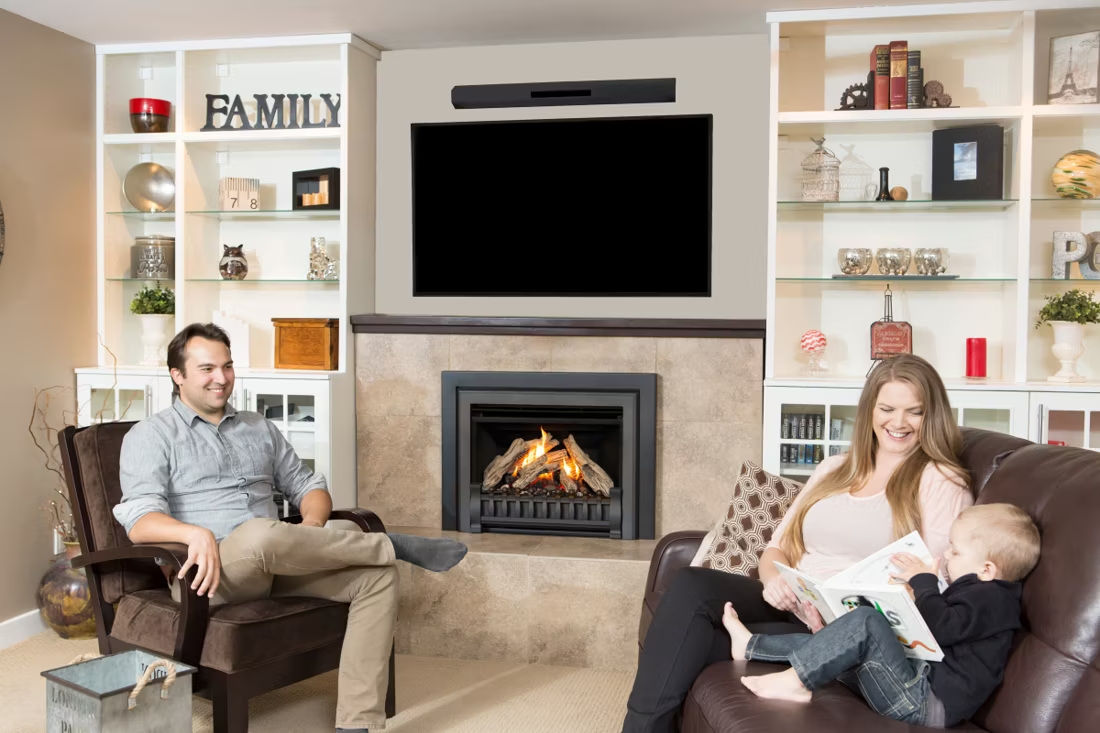
Four fuels. One honest answer for Scott County.
Three steps. No salesperson until you're ready.
Tell us about your project
Your zip code, your situation, and the fuel you're leaning toward—or let the answers point you to one.
See what's actually available
The brands dealers within 100 miles genuinely carry—real options, never a catalog mirage.
Get your dealer & Project Guide
A trusted local dealer, plus the free Project Guide & Parts List that names every component of the job.
Frequently Asked Questions
Which fuel works best in Scott County?
For most homes here, gas. Scott County's Quad Cities core is well served by MidAmerican Energy's natural gas network, and with average winter lows around 13°F and a heating season on par with Madison, Wisconsin, a direct-vent gas fireplace or insert delivers reliable, thermostat-controlled heat without a chimney or woodpile. Electric fireplaces are a solid supplemental choice—bedrooms, basements, and rooms where running new gas line isn't practical. Wood stoves and pellet stoves are genuinely uncommon in this market: the housing stock is dense and gas-served, few local retailers install new wood or pellet systems, and most homeowners who want that look go with a gas unit that mimics the aesthetic instead. If you already have an older wood-burning fireplace, service for it is available, but new wood or pellet installs are the exception rather than the rule here.
Do I need a permit to install a fireplace in Scott County?
Generally yes for gas and hardwired electric installs. Within Davenport and Bettendorf, permits are issued through the respective city building departments; in smaller cities like LeClaire, Eldridge, or Walcott, check with that city's building office, and unincorporated areas fall under the Scott County building department. Gas fireplace and insert installations require a gas line permit and licensed gas-fitter work in addition to the building permit. Plug-in electric fireplaces typically need no permit at all; built-in electric units that require new circuits or hardwiring do. Most local hearth retailers and licensed installers handle the permitting on your behalf as part of the installation quote.
Are there air quality restrictions on wood or gas burning in Scott County?
No—Scott County doesn't have the winter inversion or non-attainment issues that trigger burn advisories in some Western basin counties. There's no local ordinance restricting wood-burning appliances or gas fireplace use on air quality grounds. That said, since new wood-burning installations are already rare here, most of what you'll encounter is EPA-certified equipment on the retail floor anyway. Gas fireplaces have no burn-day restrictions; the main consideration is routine venting and combustion inspection to keep them operating safely and efficiently.
Can one local hearth retailer handle all four fuel types?
Most Scott County hearth retailers focus on gas and electric, since that's what the majority of local customers are shopping for. A handful of dealers will special-order or service an existing wood-burning unit, but very few maintain wood or pellet stoves as a stocked, actively-installed product line—that's a smaller, specialty niche here compared to more rural, wood-heavy counties. If you're specifically looking for wood or pellet, expect a shorter list of qualified installers and plan for a conversation about whether it's practical for your home before you commit. For gas and electric, you'll have more dealer options and can compare installs side by side.
How does service work across the county's smaller towns?
Most gas service technicians and electricians serving Scott County are based in Davenport or Bettendorf and travel out to LeClaire, Eldridge, Walcott, Princeton, Blue Grass, and the more rural communities like Long Grove, Donahue, and Maysville. Expect a modest trip fee for the farther-out calls, and know that scheduling tends to tighten up once temperatures drop in November and December—booking your annual gas fireplace inspection in late summer or early fall avoids the mid-winter wait.
What's the typical cost range for fireplace installation across fuel types in Scott County?
Gas fireplace, insert, or stove: roughly $4,500–$10,500, with the range driven mostly by how much new gas line and venting work is needed—conversions where gas service already reaches the room run toward the lower end. Electric fireplace: $200–$3,000 for the unit itself, plus $400–$1,200 in labor for anything beyond a simple plug-in wall unit. Wood or pellet appliances are installed infrequently enough here that pricing varies more by project—expect a custom quote if you go this route, since fewer local dealers specialize in that installation type. For fuel-specific detail, see the county + fuel pages above.
What is an in-home preview and do I need one?
It's a visit where a hearth professional measures your space, confirms the model you picked actually works in your home, and walks the specs—framing, gas line, venting, finish work—before anything is ordered. Some details you just can't know until you see the house. Never make a down payment without one; it's the single most-skipped step that burns buyers.
I know I want a fireplace—where do I actually start?
Do two things today: snap a photo of the wall or fireplace you want to transform, and take a tape measure to the space—width, height, depth. Those two artifacts answer most of a hearth professional's first questions. Then settle fuel (wood, gas, pellet, or electric) and set a realistic budget: $3,900–$5,500 covers fireplace, vent, and basic install for most homes.
How much should I budget for a fireplace?
For an average home—covering the fireplace, the vent pipe, and basic installation—a budget between $3,900 and $5,500 gives you a lot of options across wood, gas, and pellet. By the time you add finish work, gas line, and electrical, the average complete installation lands between $5,000 and $12,000 all-in. In a remodel or new build, a good rule is to put about 2.5% of the total project cost toward the fireplace.
Can I install a fireplace myself?
If you're putting a fire in your house on purpose, it's best to work with an expert. Unless you're genuinely experienced in framing, gas line, vent pipe, and the national code on clearances to combustibles, have a professional do it—and ideally the same company that sells you the fireplace, so warranty, service, and liability all live under one roof.
Stove and Fireplace Dealers in Scott County
Listings include WhyFire partner dealers, dealers we have verified as authorized for the brands we recommend, and established local businesses that carry hearth products. Every listing shows which one it is. The ones marked Preferred run on WhyFire's software, so they can show you real pricing and book your appointment right here. No manufacturer pays for placement. How we verify dealers →
Quad City Fireplaces
Barnett's - Doug's Heating And Air
Get matched with a Scott County hearth dealer.
Tell us about your project and we'll match you with a trusted local dealer and send a free Project Guide & Parts List—the exact parts, including the vent kit, for your fireplace project in Scott County.
Find Your Fireplace →