
Consistent heat, without the woodpile, for Ringgold County winters.
With a winter heating season on par with Bismarck, ND and overnight lows averaging 12°F, Ringgold County winters run long. A pellet stove or insert delivers thermostat-like, automated heat for farmhouses and in-town homes alike—find the right unit and connect with a trusted local dealer.
Every Project Starts From One of These Five Situations
Automated warmth for a county built on self-reliance.
Ringgold County sits on the Missouri border in south-central Iowa, one of the state's least populated counties at roughly 3,000 residents, anchored by the county seat of Mount Ayr. The climate here is Zone 5A, with a winter heating season comparable to Bismarck, ND—a long, cold stretch—and average winter lows around 12°F. That's a long, cold stretch for the mostly rural, older farmhouses and small-town homes spread across the county, many of which rely on wood or propane as a primary or backup heat source alongside central systems.
Pellet stoves fit that picture well for households that want the radiant, real-fire feel of wood heat without the daily cutting, splitting, and hauling—a meaningful difference on a working farm where time during winter chores is scarce. Bagged hardwood pellets from regional producers like Lignetics and Indeck Energy Services are sold through farm stores and hearth dealers across southern Iowa, so fuel sourcing doesn't depend on standing timber or a woodlot, even though oak, hickory, maple, and walnut are all common on local properties. The tradeoff worth knowing: pellet stoves need electricity to run the auger and blower, which matters in a rural county where winter storms occasionally knock out power for hours at a stretch—something to plan around with a battery backup or small generator if the stove will serve as primary heat.
Three steps. No salesperson until you're ready.
Tell us about your project
Your zip code, your situation, and the fuel you're leaning toward—or let the answers point you to one.
See what's actually available
The brands dealers within 100 miles genuinely carry—real options, never a catalog mirage.
Get your dealer & Project Guide
A trusted local dealer, plus the free Project Guide & Parts List that names every component of the job.
Frequently Asked Questions
How much does a pellet stove installation cost in Ringgold County?
Most pellet stove installations in this part of southern Iowa run in the $3,000 to $6,500 range, with the spread driven by the unit itself, whether you're venting through an exterior wall or an existing chimney, and whether a hearth pad is needed to meet clearance requirements. A straightforward wall-vent install into a room with no existing masonry is usually on the lower end; retrofitting into an old farmhouse fireplace or running vent pipe through a finished wall pushes costs higher. Given the distances involved in a county this size, expect a modest trip charge if your home is well outside Mount Ayr.
What size pellet stove do I need for a Ringgold County home?
Sizing depends on square footage, ceiling height, and how well-insulated the home is—and a lot of the housing stock here is older farmhouses with less insulation than newer construction, which pushes sizing up. As a rough guide for this climate: smaller units (under 1,000 sq ft) suit a single room or add-on, mid-size units (1,000–1,800 sq ft) cover most main living areas, and larger units handle open-concept or whole-home heating in better-insulated homes. With winter lows averaging 12°F and a heating season that runs from October into April, undersizing is the more common mistake locally—a local dealer can size the unit correctly during an in-home visit.
Where do pellets come from, and how much do they cost?
Hardwood pellets sold in this region typically come from regional producers including Lignetics and Indeck Energy Services, distributed through farm supply stores and hearth dealers across southern Iowa. Pricing generally runs in line with Midwest averages, and most households burn 2 to 4 tons over a full heating season depending on how much of the home the stove is heating and how consistently it's run. Buying early in the fall, before the season's demand peaks, is the more reliable way to secure supply in a lower-population county where any single retailer may carry limited stock.
Will my pellet stove still work if the power goes out?
Not without a backup power source. Pellet stoves rely on an electric auger to feed fuel and a blower to circulate heat, so a power outage stops the stove even with a full hopper. That's an important consideration in Ringgold County, where winter storms occasionally take down rural power lines for extended stretches. Homeowners who want pellet heat as a real emergency backup typically pair the stove with a small generator or battery inverter sized to the stove's wattage draw—a local dealer can tell you the specific draw for any unit you're considering.
Do I need a permit to install a pellet stove in Ringgold County?
Most new pellet stove installations require a building permit through the county, covering the venting path and hearth clearance, since the appliance is a fixed heat source rather than a portable one. In practice, most established hearth dealers handle the permitting as part of the installation, so homeowners rarely have to navigate it directly. Because Ringgold County has no air quality non-attainment designations or burn restrictions, there are no seasonal curtailment periods to plan around—once installed, the stove can be run as needed all winter.
Pellet stove vs. wood stove—which makes more sense for my property?
With oak, hickory, maple, and walnut all common on properties throughout the county, plenty of Ringgold County households have ready access to their own firewood, which makes a wood stove attractive for anyone willing to cut, split, and season it. A pellet stove trades that self-sufficiency for convenience: load the hopper, set the thermostat, and let the auger do the rest, with less daily tending and a more even heat output. The tradeoff is the electricity dependence noted above—wood stoves keep working through a power outage, pellet stoves don't. Many rural households here end up with both: wood as backup heat, pellet for daily convenience in the main living space.
How much maintenance does a pellet stove actually need?
Day-to-day, plan on emptying the ash pan every few days to weekly depending on how much the stove runs, and wiping the glass as needed—pellet stoves produce far less ash than cordwood. Beyond that, the hopper and auger area should be vacuumed out periodically to prevent pellet dust buildup, and the exhaust venting and gaskets should get a full professional inspection once a year, ideally before the heating season starts in early fall. Skipping the annual service is the most common cause of feed and ignition problems mid-winter.
What pellet stove brands are available through local dealers?
Regional pellet fuel producers like Lignetics and Indeck Energy Services supply the bagged fuel that's most readily available in southern Iowa, and most hearth dealers carrying pellet appliances in this area work with a handful of established stove manufacturers rather than a wide catalog—which is exactly why matching with the right local dealer matters more than browsing brand names online. Given the low population and rural spread of Ringgold County, the nearest dealer with pellet units on the floor may be a short drive outside the county; we match you with whichever trusted dealer actually stocks and services what fits your home.
Does homeowners insurance require anything special for a pellet stove install?
Most insurers want documentation that the installation meets the manufacturer's clearance specs and local code—typically a permit and, in some cases, a WETT-style or manufacturer inspection certificate. Because pellet stoves burn cleaner and cooler than wood stoves, some insurers treat them more favorably on premiums, but it's worth confirming with your carrier before installation, especially on an older farmhouse where the existing wiring or wall construction may need review before the unit goes in. A licensed local installer will document the install properly, which makes this step straightforward.
Why is my open fireplace making my house colder?
Open fireplaces suck—literally. As the fire burns, it consumes air your furnace already paid to heat and pulls it out through the chimney, so the house is actually colder after the fire goes out than before you lit it. An insert fixes this: it seals the chimney, puts fixed glass across the front, and turns that hole in your house into a real heat source.
How often does a pellet stove need cleaning?
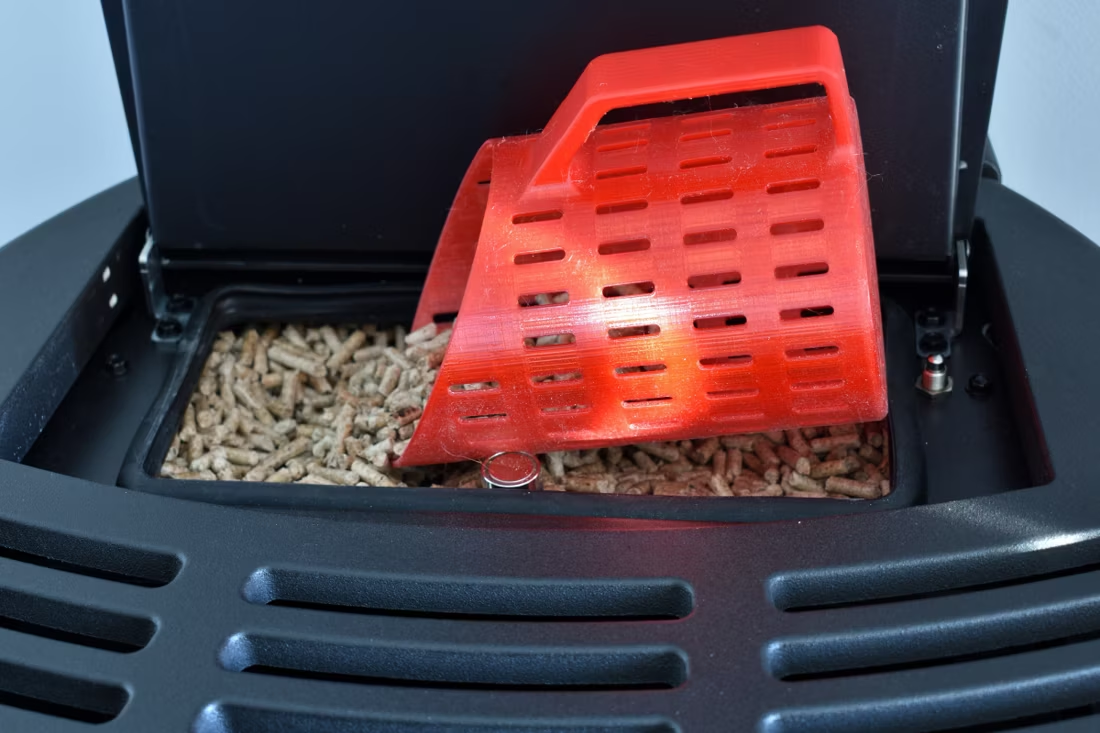
A clean pellet stove is a happy pellet stove. Plan on cleaning the burn pot about once a week when you're burning regularly—ash and clinkers gum up the air holes just like a pellet barbecue. Most pellet stove problems trace back to skipped cleaning that nobody explained up front. Some designs make it easy with a trapdoor burn pot: pull a lever and the gunk drops into the ash pan.
What is an in-home preview and do I need one?
It's a visit where a hearth professional measures your space, confirms the model you picked actually works in your home, and walks the specs—framing, gas line, venting, finish work—before anything is ordered. Some details you just can't know until you see the house. Never make a down payment without one; it's the single most-skipped step that burns buyers.
Does a fireplace add value to my home?
On average, a fireplace adds back to the home about the same amount you spent installing it. Add the monthly savings from heating the rooms you actually use instead of the whole house—often hundreds of dollars a year—and the value case is strong before you even count what a fire does for how your family uses the room.
Pellet Brands Stocked Around Ringgold County
Manufacturers will point you to the nearest stocking dealer.
Find your pellet stove in Ringgold County.
Tell us about your home and heating goals, and we'll match you with a trusted local dealer serving Ringgold County—plus a free Project Guide & Parts List spelling out the exact parts, venting, and recommended dealer for your pellet stove project.
Find Your Fireplace →