
Steady Heat for Linn County's Long Winters.
With a long winter heating season and lows near 12°F, Mount Vernon homes need heat that turns on instantly. Find the right gas fireplace or insert and get matched with a trusted local dealer.
Every Project Starts From One of These Five Situations
Instant heat built for eastern Iowa's cold stretches.
Mount Vernon sits at 878 feet in Linn County, just east of Cedar Rapids, in climate zone 5A. With a winter heating load not far off from Madison, Wisconsin, and average lows around 12°F, this is a town where a fireplace needs to actually carry heat, not just look nice. In a small college town of under 5,000 people, most homeowners want a supplemental or zone-heating solution that works reliably without daily tending, which is exactly the gap gas fireplaces fill.
Interstate Power and Light Co (part of Alliant Energy) serves natural gas within Mount Vernon's city limits, so homes already on natural gas appliances can usually add a fireplace without much extra plumbing. Outside town, in the rural stretches of Linn County served by Linn County REC—an electric-only cooperative—propane is the standard fallback since REC doesn't deliver gas. Either way, a direct-vent gas fireplace or insert gives you real heat at the flip of a switch, works during the region's ice-storm power outages if you choose the right ignition system, and pairs well with the existing furnace in an older Mount Vernon or Cornell College-area home.
Three steps. No salesperson until you're ready.
Tell us about your project
Your zip code, your situation, and the fuel you're leaning toward—or let the answers point you to one.
See what's actually available
The brands dealers within 100 miles genuinely carry—real options, never a catalog mirage.
Get your dealer & Project Guide
A trusted local dealer, plus the free Project Guide & Parts List that names every component of the job.
Frequently Asked Questions
How much does a gas fireplace installation cost in Mount Vernon?
Most gas fireplace installations in the Mount Vernon area run between roughly $3,500 and $9,000. A direct-vent insert going into an existing masonry fireplace where a gas line is already nearby lands on the lower end. A new built-in gas fireplace for a remodel or addition—with framing, venting through an exterior wall, and a fresh gas line run from the meter—sits toward the higher end, especially on the older homes common near downtown Mount Vernon with brick or balloon-frame construction that complicates venting runs. Homes on propane instead of natural gas may see a bit more cost if a new tank has to be set.
Can I convert an existing wood-burning fireplace to gas?
Yes, and it's a common project in Mount Vernon's older housing stock, much of which was built with a traditional masonry fireplace originally meant to burn local hardwoods like oak, hickory, maple, or walnut. Today, few homeowners here use wood as a primary or even regular supplemental heat source, so converting that fireplace to a sealed gas insert is often the more practical upgrade. A liner runs through your existing chimney, and the insert connects to either natural gas (if you're within the Interstate Power and Light service area) or a propane line. This keeps the original masonry look while adding real, controllable heat output.
Do I need natural gas, or can I use propane instead?
Both work, and which one applies to your house depends mostly on where you sit relative to town. Interstate Power and Light Co provides natural gas service within Mount Vernon's city limits, so if your home already runs a gas furnace, range, or water heater, adding a fireplace is straightforward. If you're on a rural property served only by Linn County REC—which supplies electricity, not gas—you'll need propane, either from an existing tank or a new one set by a local propane supplier. Nearly every gas fireplace model on the market can be configured for either fuel; your installer just sets the correct orifice and regulator.
Will a gas fireplace still work if the power goes out?
It depends on the ignition system, which matters more here than in mild climates given how often Linn County sees winter storms take down power lines. Units with IPI (intermittent pilot ignition) run on small internal batteries as backup, so the fireplace lights and operates normally even with the grid down—as long as the batteries are fresh. Valor's gas fireplaces skip batteries altogether: the pilot's thermocouple generates its own electricity, so the unit works during an outage indefinitely. For a Mount Vernon home where an ice storm can knock out Interstate Power and Light service for a day or more, that self-powering feature is worth asking your local dealer about directly.
What's the difference between a gas fireplace, gas insert, and gas stove?
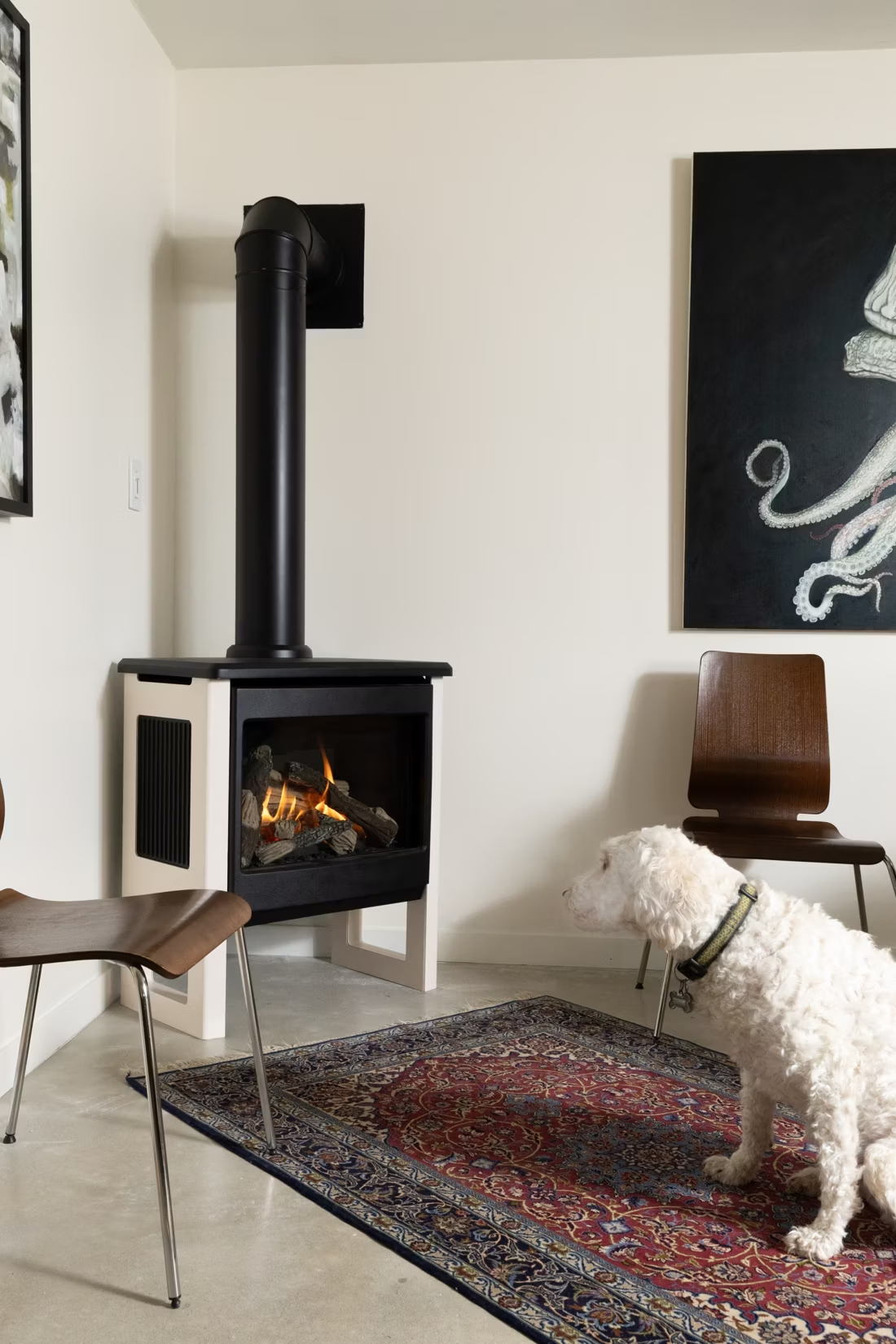
A gas fireplace is a fully built-in unit, framed into a wall—the right call for new construction or a remodel without an existing hearth. A gas insert slides into an existing masonry fireplace opening, which fits a lot of the older homes around Mount Vernon's historic district and Cornell College neighborhood. A gas stove is a freestanding cast-iron or steel unit that vents like a wood stove but burns gas, useful in a room with no fireplace at all and no interior wall space for a built-in. For most Mount Vernon homeowners with an existing but underused fireplace, the insert is the simplest and most cost-effective path.
Do I need a permit to install a gas fireplace in Mount Vernon?
Yes. New gas fireplace installations require a building permit, and the gas line work itself requires a licensed gas-fitter—typically coordinated through the City of Mount Vernon Building Department for in-town properties or the Linn County Planning and Building Department for rural addresses outside city limits. Most established hearth dealers handle this paperwork as part of the installation, coordinating the gas line, venting, and inspection so you're not managing separate trades yourself.
Should I choose a vented or vent-free gas fireplace?
Vented gas fireplaces (direct-vent or B-vent) pull combustion air from outside and exhaust it back outside through a sealed pipe system—they're the safer, more universally recommended choice and the standard in most new Mount Vernon installations. Vent-free units burn directly into the room and are legal in Iowa, which has no non-attainment air quality restrictions like the coastal states that ban them outright, but they still carry room-sizing rules and require an oxygen depletion sensor. For a well-sealed, energy-efficient Iowa home built to handle a long, demanding winter heating season, most local installers steer homeowners toward direct-vent units for both air quality and heat output reasons.
How often does a gas fireplace need to be serviced?
Plan on an annual inspection, ideally before the first cold snap hits in late fall. A technician checks the burner, pilot assembly, venting, and gas connections, and cleans the glass and interior—a much lighter job than wood chimney sweeping but still important, especially for units that see heavy winter use as supplemental heat. Local service typically runs $150 to $250 per visit; several Cedar Rapids-based hearth companies service Mount Vernon on a regular route given the short drive.
Gas vs. wood vs. electric—what's the right call for a Mount Vernon home?
Wood heat has genuinely fallen out of everyday use here—while oak, hickory, maple, and walnut are all plentiful in the surrounding Linn County timber, very few homeowners today install a wood stove as primary heat, and it's not a widely stocked category among area dealers. Gas is the practical standard: instant on-off operation, no ash or creosote, and reliable output through the coldest Iowa stretches. Electric fireplaces, run through either Interstate Power and Light (around 17.9¢/kWh) or Linn County REC (around 14.2¢/kWh), are a low-cost, no-venting option for ambiance or light supplemental heat but won't carry a room through a January cold snap the way gas does. For most Mount Vernon homes, gas wins on real heating performance; electric is the easier add-on for a bedroom or den.
Why is my open fireplace making my house colder?
Open fireplaces suck—literally. As the fire burns, it consumes air your furnace already paid to heat and pulls it out through the chimney, so the house is actually colder after the fire goes out than before you lit it. An insert fixes this: it seals the chimney, puts fixed glass across the front, and turns that hole in your house into a real heat source.
Is my gas fireplace wasting gas?
If it was installed more than 15 years ago, probably. Older gas fireplaces keep a standing pilot light burning all the time, and that little flame can cost a couple hundred dollars a year. Newer models use pilot-on-demand ignition—the pilot lights only when you use the fireplace and goes out when you turn it off.
Does a fireplace add value to my home?
On average, a fireplace adds back to the home about the same amount you spent installing it. Add the monthly savings from heating the rooms you actually use instead of the whole house—often hundreds of dollars a year—and the value case is strong before you even count what a fire does for how your family uses the room.
How much should I budget for a fireplace?
For an average home—covering the fireplace, the vent pipe, and basic installation—a budget between $3,900 and $5,500 gives you a lot of options across wood, gas, and pellet. By the time you add finish work, gas line, and electrical, the average complete installation lands between $5,000 and $12,000 all-in. In a remodel or new build, a good rule is to put about 2.5% of the total project cost toward the fireplace.
Nearby Dealers
Hearth shops serving Mount Vernon and the surrounding area. Every listing shows whether it is a WhyFire partner, a dealer we have verified as authorized for the brands we recommend, or a local business carrying hearth products. No manufacturer pays for placement. How we verify dealers →
Spartan Heating, Cooling And Fireplaces
Stone Works - Marion Location
Ferguson Home - Cedar Rapids
Hearth And Home Solutions
Brick House Ops.
Ogden-Adams Building Solutions
Brandt Heating And Air Conditioning
Find your gas fireplace in Mount Vernon.
Tell us about your home and we'll put together a free Project Guide & Parts List—the right gas fireplace or insert, the exact vent kit your install needs, and a trusted local dealer near Mount Vernon to install it.
Find Your Fireplace →