
Pellet heat built for Mason City's brutal winters.
With a heavy winter heating load in the same range as Minneapolis and winter lows averaging 7°F, Mason City homes need heat that holds steady. A pellet stove or insert delivers consistent, thermostat-controlled warmth without the wood-splitting.
Every Project Starts From One of These Five Situations
Consistent warmth for a genuinely cold North Iowa winter.
Mason City sits in climate zone 6A with a heating load in the same range as Minneapolis, keeping furnaces and supplemental heaters working hard from November through March. Winter lows here average around 7°F, and stretches of single-digit or sub-zero nights aren't unusual across Cerro Gordo County. That's exactly the kind of climate where a pellet stove earns its keep as a steady, set-it-and-forget-it heat source for a den, basement, or main living area.
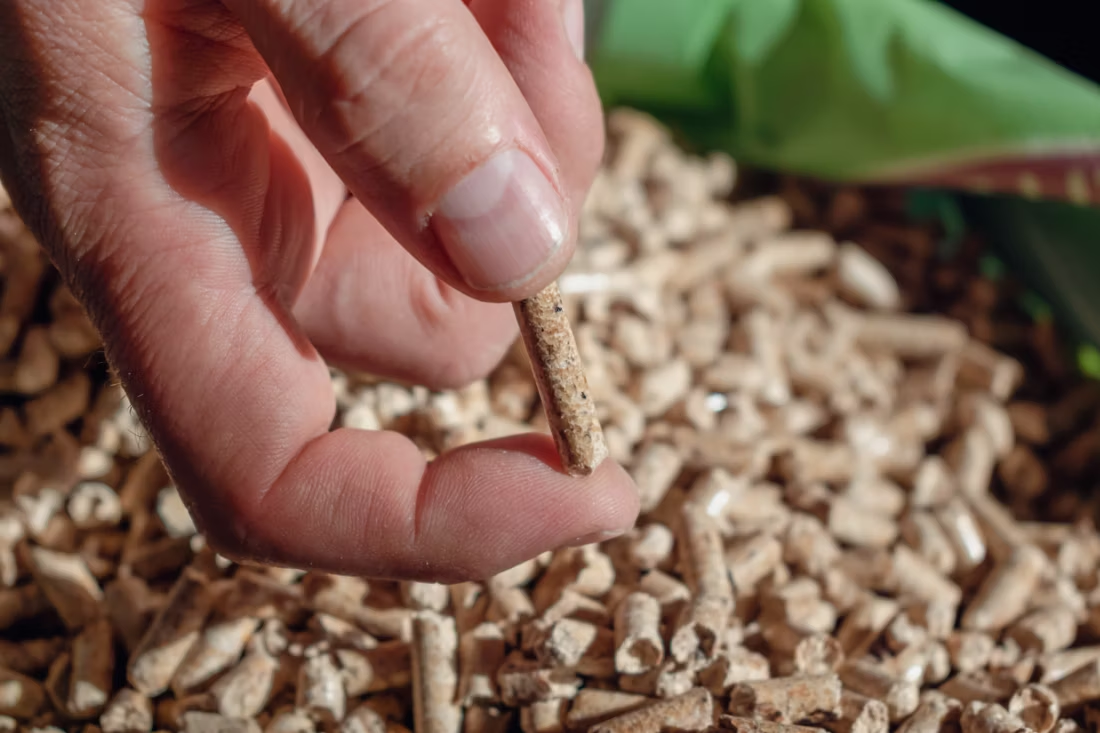
Unlike wood stoves, pellet units don't require splitting or seasoning cordwood—they run on compressed hardwood pellets sold in 40-pound bags, with regional supply available through manufacturers like Lignetics and Indeck Energy Services. That makes pellet heat a practical option for Mason City homeowners who want real supplemental warmth through a long Iowa winter without the labor of a wood-burning setup, and without giving up the ambiance of a visible flame.
Three steps. No salesperson until you're ready.
Tell us about your project
Your zip code, your situation, and the fuel you're leaning toward—or let the answers point you to one.
See what's actually available
The brands dealers within 100 miles genuinely carry—real options, never a catalog mirage.
Get your dealer & Project Guide
A trusted local dealer, plus the free Project Guide & Parts List that names every component of the job.
Frequently Asked Questions
How much does a pellet stove installation cost in Mason City?
Most pellet stove installations run in the $3,000 to $6,500 range, and pellet inserts that fit into an existing masonry fireplace typically land between $4,000 and $7,500 once venting and any surround work is included. Pellet venting is simpler than a full masonry chimney—most installs use a horizontal PL-rated vent pipe run through an exterior wall, which keeps labor costs lower than a comparable wood stove installation. A local dealer can give you a firm number after seeing your home's layout and where the vent will terminate.
What size pellet stove do I need for a Mason City home?
With winter lows averaging 7°F and a heating season that runs long, most Mason City homes do best with a mid-to-large pellet stove rated in the 40,000 to 60,000 BTU range for primary or near-primary heating of a main living area. Smaller units (around 25,000 to 35,000 BTU) work fine for supplemental heat in a single room, den, or finished basement. Because pellet stoves run on a thermostat and hopper feed rate rather than a hand-fed fire, sizing is more forgiving than with wood—but a local retailer should still walk your space to confirm before you buy.
Where do I buy pellets in Mason City, and how much do I need for a winter?
Wood pellets are sold in 40-pound bags, usually 50 bags to a ton, through farm supply stores, hardware retailers, and hearth dealers serving Cerro Gordo County. Regional producers like Lignetics and Indeck Energy Services supply much of the upper-Midwest pellet market, so availability here is generally reliable even during a heavy-demand cold snap. A home using a pellet stove as a primary heat source through a full Mason City winter typically burns through 2 to 3 tons of pellets; used as supplemental heat, expect closer to 1 to 1.5 tons. Buying early in fall before the first cold snap tends to get you better pricing and avoids the scramble when everyone else remembers at once.
Will my pellet stove work during a power outage?
Not without backup power. Pellet stoves rely on an electric auger to feed fuel and a blower to circulate heat, so they shut down when the power does—unlike a wood stove, which keeps burning through an outage. If winter storm outages are a real concern in Mason City, ask your dealer about battery backup kits (many pellet stoves support a small UPS or deep-cycle battery setup) or plan for a portable generator sized to handle the stove's draw, which is typically under 500 watts on the electric supply from Interstate Power and Light Co.
Do I need a permit to install a pellet stove in Mason City?
Most pellet stove and insert installations require a building permit through the City of Mason City (or Cerro Gordo County if you're outside city limits), since the work involves a wall penetration for venting and sometimes a hearth pad modification. Most hearth dealers handle the permit application and inspection scheduling as part of the installation, so it's rarely something homeowners have to navigate on their own. Because pellet venting doesn't require a full chimney, the permitting process is generally simpler and faster than a wood stove or masonry fireplace project.
What's the difference between a pellet stove and a pellet insert?
A pellet stove is a freestanding unit that sits on a hearth pad and vents horizontally through an exterior wall—it can go almost anywhere in a room with wall access. A pellet insert is built to slide into an existing masonry fireplace opening, using a liner run up the existing chimney (or a through-wall vent kit, depending on the fireplace) to convert an old wood-burning fireplace into an efficient, thermostat-controlled heat source. For Mason City homes with an existing masonry fireplace that's rarely used because it loses more heat than it produces, an insert is usually the better upgrade. Homes without an existing fireplace typically go with a freestanding stove instead.
How much maintenance does a pellet stove need compared to a wood stove?
Pellet stoves are meaningfully lower-maintenance than wood stoves. There's no creosote buildup to worry about the way there is with cordwood, so you're not scheduling an annual chimney sweep in the same sense—instead, you're emptying the ash pan every few days to weekly depending on use, and doing a deeper cleaning of the burn pot, heat exchanger tubes, and exhaust vent once or twice a season. Most manufacturers recommend a professional service visit once a year, ideally before the fall heating season starts, to check the auger motor, gaskets, and venting. It's a fraction of the upkeep required by wood, which is part of why pellet appeals to homeowners who want the look of a real flame without the labor.
Pellet stove vs. wood stove—which makes more sense for my Mason City home?
Wood stoves burn cordwood—and Cerro Gordo County has plenty of it, with oak, hickory, maple, and walnut all common locally—and they keep working through a power outage, which matters when an Iowa ice storm knocks out electric service for days. Pellet stoves trade that off for real convenience: automated feed, thermostat control, easier venting, and none of the splitting, stacking, or seasoning that wood requires. Pellet stoves also burn cleaner with far less ash and no need to season fuel a year in advance. If you want low-effort, consistent heat and don't need it to double as emergency backup heat, pellet is usually the better fit. If backup heat during outages is the priority, wood—or a pellet stove paired with battery backup—makes more sense.
Are there rebates or incentives for installing a pellet stove in Iowa?
Iowa doesn't currently offer a dedicated statewide rebate program for pellet stoves the way some states do, but federal incentives are worth checking: biomass stoves meeting a minimum efficiency threshold have qualified for a federal tax credit under Section 25(C) of the tax code in recent years. Interstate Power and Light Co, the electric utility serving Mason City, doesn't currently list pellet-stove-specific rebates either, though it's worth asking your local dealer directly since program availability shifts year to year. Keep your purchase receipt and the manufacturer's efficiency documentation regardless—you'll need both if you claim any federal credit at tax time.
Why is my open fireplace making my house colder?
Open fireplaces suck—literally. As the fire burns, it consumes air your furnace already paid to heat and pulls it out through the chimney, so the house is actually colder after the fire goes out than before you lit it. An insert fixes this: it seals the chimney, puts fixed glass across the front, and turns that hole in your house into a real heat source.
What do I measure to size a fireplace insert?
Four numbers tell you what fits: the front width, the front height, the back width, and the overall depth of your existing fireplace opening. Grab a tape measure, jot those down, and snap a photo of the wall—those two things do more to move your project forward than anything else you can do today.
What is an in-home preview and do I need one?
It's a visit where a hearth professional measures your space, confirms the model you picked actually works in your home, and walks the specs—framing, gas line, venting, finish work—before anything is ordered. Some details you just can't know until you see the house. Never make a down payment without one; it's the single most-skipped step that burns buyers.
Should the dealer who sells my fireplace also install it?
Ideally, yes. A fireplace project involves vent pipe, gas line, electrical, and often tile or stone. Hire three or four separate trades and you own the liability and the game of telephone between them. One company selling and installing means one accountable party, start to finish—ask about factory training, on-time completion records, and what happens if an inspection fails.
Nearby Dealers
Hearth shops serving Mason City and the surrounding area.
Pellet Brands Stocked Around Mason City
Manufacturers will point you to the nearest stocking dealer.
Find your pellet fireplace in Mason City.
Tell us about your home and heating goals, and we'll match you with a trusted local dealer and send over a free Project Guide & Parts List—sized venting, the right pellet stove or insert for your space, and a dealer who can actually install it.
Find Your Fireplace →