
Find a pellet stove built for Marshall County winters.
With over 7,100 heating degree days and average lows near 9°F, Marshall County homes need heat that runs steady all winter. Get matched with a trusted local dealer who knows what actually installs and vents correctly here.
Every Project Starts From One of These Five Situations
Consistent, thermostat-controlled heat for a long Iowa winter.
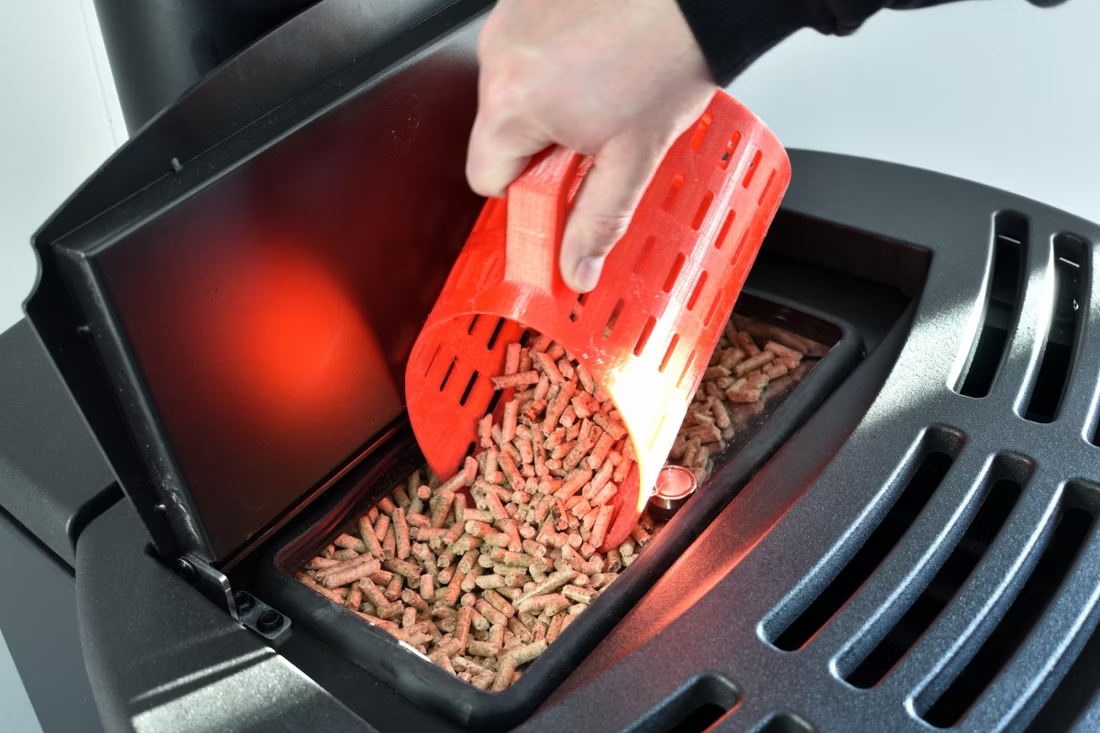
Marshall County sits in climate zone 5A, and the numbers back up what anyone who's lived through a Marshalltown winter already knows—winters here run long and cold, with average lows around 9°F and over 7,100 heating degree days per season, putting the county in the same general heat-load territory as Madison, WI. That's a lot of hours a heating appliance needs to run without fuss, and it's exactly the scenario pellet stoves are built for: load the hopper, set the thermostat, and let the auger and igniter handle the rest through a January cold snap.
Marshall County has no air quality non-attainment concerns, so pellet stoves here are chosen for convenience and efficiency rather than to get around burn restrictions. Regional pellet brands including Lignetics and Indeck Energy Services supply the Midwest corridor, which keeps fuel reasonably accessible for Marshalltown, Albion, Melbourne, and the county's rural townships. For homeowners weighing pellet against cordwood—oak, hickory, maple, and walnut are the common local species—pellet stoves trade a bit of romance for consistency: no splitting, no seasoning wood for a year, and cleaner burns with far less ash to manage.
Three steps. No salesperson until you're ready.
Tell us about your project
Your zip code, your situation, and the fuel you're leaning toward—or let the answers point you to one.
See what's actually available
The brands dealers within 100 miles genuinely carry—real options, never a catalog mirage.
Get your dealer & Project Guide
A trusted local dealer, plus the free Project Guide & Parts List that names every component of the job.
Frequently Asked Questions
How much does a pellet stove installation cost in Marshall County?
Pellet stove and insert installations in Marshall County typically run in the range you'd expect for a Midwest market—costs depend heavily on whether you're installing a freestanding stove with new venting, converting an existing wood fireplace to a pellet insert, or adding electrical for the hopper and blower. Homes with an existing fireplace or hearth pad usually land on the lower end since the structural work is already done. A local dealer will walk your home and give you a firm number rather than a phone estimate, since venting length and any electrical upgrades change the total.
How much pellet fuel will I need for a Marshall County winter?
With average lows near 9°F and a heating season that stretches from roughly October through April, a pellet stove used as a primary or heavy supplemental heat source in Marshall County can burn through 2 to 3.5 tons of pellets over a full winter, depending on square footage and how tightly the home is insulated. Homes using pellet heat mainly for a single zone—a finished basement or a family room—will use less. Lignetics and Indeck Energy Services both supply pellets into the Midwest, and a local dealer can advise on seasonal ordering so you're not scrambling for bags mid-January.
What size pellet stove do I need for my home?
Sizing depends on square footage, ceiling height, insulation quality, and whether the stove is primary heat or supplemental. As a rough guide for Marshall County's cold-climate housing stock—a mix of older farmhouses and newer construction around Marshalltown—smaller units (under 1,200 sq ft) suit a single zone or add-on room, while larger units (1,200 to 2,500 sq ft) can carry a main living area or an open-concept layout through a hard freeze. Older, leakier farmhouses in the rural parts of the county often need to size up compared to a similarly-sized newer home. A local dealer will size your space for free during an in-home visit—this is worth getting right, since an undersized unit won't keep up on the coldest nights and an oversized one short-cycles.
What's the difference between a pellet stove and a pellet insert?
A pellet stove is a freestanding unit that sits on a hearth pad and vents through a wall or existing chase—it can go almost anywhere with the right clearances and a nearby electrical outlet. A pellet insert is built to slide into an existing masonry or prefab fireplace opening, converting an old wood-burning fireplace into a thermostat-controlled pellet appliance while reusing the existing chimney chase for venting. For Marshall County homes with an existing fireplace they don't use much, an insert is often the simpler upgrade. Homes without an existing fireplace opening are usually better suited to a freestanding stove.
Do pellet stoves need electricity to run?
Yes—this is the main tradeoff against wood. Pellet stoves rely on an electric auger to feed fuel and a blower to distribute heat, so they won't run during a power outage unless paired with a battery backup or generator. For Marshall County, where winter storms occasionally take down power for a stretch, that's worth factoring into your decision if you're counting on the stove as true emergency heat. Some homeowners pair a pellet stove for daily convenience with a battery backup system or a small generator sized to keep the auger and blower running through an outage. Ask a local dealer about backup options if that's a priority for your home.
Do I need a permit to install a pellet stove in Marshall County?
Most pellet stove installations require a building permit, particularly for new venting penetrations through a wall or roof, and if electrical work is needed for the unit's power supply. Permit requirements and the specific jurisdiction depend on whether the home is inside Marshalltown city limits or in unincorporated Marshall County—a local dealer installing your unit will typically handle the permitting process as part of the job, so you're not left tracking down the right office yourself.
How often does a pellet stove need to be cleaned and serviced?
Pellet stoves need less maintenance than wood stoves but aren't maintenance-free. Plan on emptying the ash pan every few days during regular use, a deeper burn-pot and glass cleaning weekly, and a full annual inspection and cleaning of the venting, hopper, and auger system before the start of each heating season—ideally in late summer or early fall ahead of Marshall County's first cold snap. A local dealer or hearth service provider can handle the annual service, and doing it before the season starts (rather than after the first cold week hits) avoids the scramble everyone else is in.
Where can I buy pellets in Marshall County?
Regional brands including Lignetics and Indeck Energy Services distribute pellets through the Midwest corridor, and local hardware stores, farm supply retailers, and hearth dealers in and around Marshalltown typically carry bagged pellets by the ton, especially during the fall stocking-up season. Buying early in the fall—rather than waiting for the first cold snap—usually means better selection and avoids the shortages that can hit popular brands mid-winter. A local dealer can also point you toward bulk delivery options if you're heating with pellets as a primary source.
Pellet stove vs. wood stove—which is right for my Marshall County home?
Wood stoves burn cordwood—oak, hickory, maple, and walnut are all common species locally—work without any electricity (a real advantage during a winter power outage), and offer the lowest fuel cost if you're cutting or sourcing your own wood. Pellet stoves are easier to operate day-to-day, load a hopper instead of splitting and stacking, burn cleaner with far less ash, and hold a more consistent temperature since the auger feed is thermostat-controlled. For Marshall County homes where convenience and steady, hands-off heat matter more than self-sufficiency during outages, pellet is usually the better fit. For homes prioritizing backup heat security through Iowa winter storms, wood is worth serious consideration. A local dealer can walk you through both options based on your specific home.
Why is my open fireplace making my house colder?
Open fireplaces suck—literally. As the fire burns, it consumes air your furnace already paid to heat and pulls it out through the chimney, so the house is actually colder after the fire goes out than before you lit it. An insert fixes this: it seals the chimney, puts fixed glass across the front, and turns that hole in your house into a real heat source.
What's the difference between an insert and a zero-clearance fireplace?
An insert is a fireplace that slides into a pre-existing wood-burning fireplace—if you don't have one, there's nothing to insert it into. A zero-clearance fireplace is built into a framed wall, which makes it the answer for remodels and new construction. Simple test: existing masonry fireplace means insert; blank or framed wall means zero-clearance.
Can a fireplace actually lower my heating bill?
Yes—by creating a comfort zone. A furnace heats every square foot of the house just to warm the one room you're in; a gas fireplace on low burns roughly a sixth of the gas a typical furnace does. Set the furnace around 55–60 degrees as a baseline, then heat the rooms your family actually uses. Families who heat this way commonly save $20–$60 a month.
Can I install a fireplace myself?
If you're putting a fire in your house on purpose, it's best to work with an expert. Unless you're genuinely experienced in framing, gas line, vent pipe, and the national code on clearances to combustibles, have a professional do it—and ideally the same company that sells you the fireplace, so warranty, service, and liability all live under one roof.
Stove and Fireplace Dealers in Marshall County
Pellet Brands Stocked Around Marshall County
Manufacturers will point you to the nearest stocking dealer.
Get your free Project Guide & Parts List for pellet heat in Marshall County.
Tell us about your home and we'll match you with a trusted local dealer, plus a free Project Guide & Parts List—the exact parts, including the vent kit, and the dealer recommended for your project.
Find Your Fireplace →