
Pellet heat built for Iowa's long winters.
With winter lows averaging 8°F and a long, demanding heating season, La Porte City sits deep in climate zone 6A—closer in severity to Madison, WI than most of the Midwest. A pellet stove delivers steady, thermostat-set warmth without splitting or stacking cordwood. Find the right unit and connect with a trusted local dealer.
Every Project Starts From One of These Five Situations
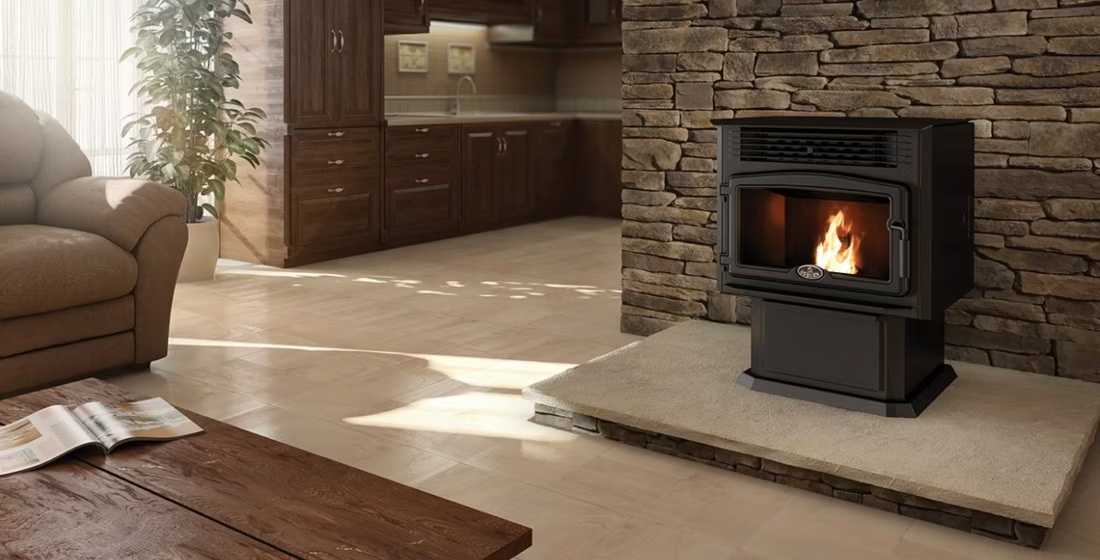
Consistent heat without tending a wood pile.
La Porte City is a small Black Hawk County farm town surrounded by oak, hickory, maple, and walnut timber—the same hardwoods that have heated Iowa farmhouses for generations. But splitting and hauling cordwood isn't for everyone, especially on a working farm schedule or in a smaller in-town lot without room to season a woodpile. A pellet stove gives you a comparable amount of radiant, dry heat with a hopper you fill every day or two instead of a woodshed you manage all summer.
Iowa has no wood-smoke non-attainment areas or winter burn restrictions the way parts of the West do, so pellet stoves here are chosen for convenience and efficiency rather than air-quality compliance. Regional pellet brands like Lignetics and Indeck Energy Services supply much of the upper Midwest, which generally keeps pellet costs more stable here than in areas that truck pellets long distances. Depending on which utility serves your property—Interstate Power and Light, MidAmerican Energy, or East-Central Iowa Rural Electric Cooperative—your residential rate runs anywhere from about $0.11 to $0.18 per kWh. The stove itself only draws 100–400 watts to run the auger, igniter, and blower, so the electric cost to operate one is minor. The bigger consideration is that a pellet stove needs power to run at all, which matters when Iowa ice storms take down rural electric co-op lines.
Three steps. No salesperson until you're ready.
Tell us about your project
Your zip code, your situation, and the fuel you're leaning toward—or let the answers point you to one.
See what's actually available
The brands dealers within 100 miles genuinely carry—real options, never a catalog mirage.
Get your dealer & Project Guide
A trusted local dealer, plus the free Project Guide & Parts List that names every component of the job.
Frequently Asked Questions
How much does a pellet stove installation cost in La Porte City?
A typical pellet stove or insert installation in this area runs roughly $3,000 to $6,500, depending on the unit, whether you're venting through an existing masonry chimney or running new PL-vent pipe through a sidewall, and whether you need a hearth pad for clearance. Pellet venting is simpler and cheaper than wood chimney work—most installs use a small-diameter vent run straight out an exterior wall rather than a full Class A chimney, which keeps costs toward the lower end of that range for a straightforward sidewall install.
Do I need a permit to install a pellet stove in La Porte City?
Yes, a building permit is typically required for a new solid-fuel appliance installation. La Porte City is a small enough municipality that permitting for a project like this usually runs through Black Hawk County rather than a dedicated city building department. Most local hearth dealers handle the permit application and inspection scheduling as part of the installation, so you're not tracking down the paperwork yourself.
Where can I buy pellets locally, and what do they cost?
Pellets in this part of Iowa typically run $250 to $320 per ton, sold in 40-pound bags, usually by the pallet (roughly a ton per pallet). Lignetics and Indeck Energy Services are the two regional brands most commonly stocked by farm stores and hearth dealers serving Black Hawk County, since both operate mill capacity within trucking distance of eastern Iowa. Buying a season's supply—typically 2 to 3 tons for a home using a stove as primary heat through an Iowa winter—in late summer or early fall usually beats winter spot pricing, and it also guarantees you have supply before demand spikes during cold snaps.
What happens to my pellet stove during a power outage?
A pellet stove won't run without electricity—the auger, igniter, and combustion blower are all electric, unlike a wood stove that burns with no power at all. For a rural property served by East-Central Iowa Rural Electric Cooperative, where ice storm outages can stretch longer than in town, a lot of homeowners here pair their pellet stove with a small battery backup unit or a portable generator sized for 300–600 watts. That's a modest generator compared to what you'd need to run a furnace blower, and it's enough to keep the stove firing through a multi-day outage.
What size pellet stove do I need for my home?
Sizing depends on square footage, ceiling height, and how drafty an older farmhouse is versus a newer build. As a rough guide for La Porte City's climate zone 6A winters: a small unit (under 1,000 sq ft) suits a single addition or a smaller in-town home, a medium unit (1,000–1,800 sq ft) covers most main living areas, and a large unit (1,800+ sq ft) can serve as primary heat in a well-insulated whole home. Older farmhouses with less insulation often need to size up a step from what the square footage alone would suggest—a local dealer will walk your home before recommending a specific model.
Pellet stove vs. wood stove—which makes more sense here?
With oak, hickory, maple, and walnut all growing locally and no air-quality burn restrictions in Black Hawk County, wood heat is a perfectly viable option here, and it has the advantage of running with zero electricity during an outage. A pellet stove trades that off for real convenience: no splitting, no seasoning wood for a year before burning it, easier cleanup, and a thermostat-controlled burn instead of manually damping a firebox. For a working farm household with the time and space to process cordwood, wood often wins on fuel cost. For a smaller in-town lot or a household that wants set-it-and-forget-it heat, pellet is usually the better fit.
How much maintenance does a pellet stove need?
Plan on emptying and vacuuming the burn pot and ash pan every few days during heavy use, a deeper cleaning of the hopper and auger monthly, and a full professional service—including the venting and combustion blower—once a year, ideally in late summer before pellet season ramps up. This is considerably less involved than a wood chimney sweep, but skipping the annual service is the most common reason pellet stoves start jamming or losing efficiency mid-winter.
What pellet stove brands are available through local dealers?
Hearth dealers serving Black Hawk County typically carry a mix of Harman, Quadra-Fire, and Lopi pellet stoves and inserts, with more budget-oriented options from US Stove Company also common in this part of the Midwest. Harman in particular has a strong dealer network across Iowa and is known for handling the ash-heavy burn of lower-grade pellets well, which matters if you're buying whichever brand is on sale locally rather than sourcing premium low-ash pellets year-round.
Are there any rebates or tax credits for installing a pellet stove?
Federal law currently allows a 30% tax credit (up to $2,000 per year) under Section 25C for qualifying biomass stoves, including pellet stoves, that are rated at 75% efficiency or higher on a higher heating value basis—most modern EPA-certified pellet stoves qualify. Keep the manufacturer's certification statement and your dealer's invoice, since you'll need both when you file. Iowa doesn't currently layer a separate state rebate on top of the federal credit, so the 25C credit is the main incentive to factor into your budget.
Why is a fireplace insert so efficient?
An insert does two things: it seals the chimney completely, so you stop losing air you already paid to heat, and it radiates warmth into the room through the firebox and glass. Most add a heat-exchange fan that pulls cool room air underneath, wraps it around the hot firebox, and pushes it back out warm. Your home is more efficient before you've even lit the first fire.
How often does a pellet stove need cleaning?
A clean pellet stove is a happy pellet stove. Plan on cleaning the burn pot about once a week when you're burning regularly—ash and clinkers gum up the air holes just like a pellet barbecue. Most pellet stove problems trace back to skipped cleaning that nobody explained up front. Some designs make it easy with a trapdoor burn pot: pull a lever and the gunk drops into the ash pan.
Can a fireplace actually lower my heating bill?
Yes—by creating a comfort zone. A furnace heats every square foot of the house just to warm the one room you're in; a gas fireplace on low burns roughly a sixth of the gas a typical furnace does. Set the furnace around 55–60 degrees as a baseline, then heat the rooms your family actually uses. Families who heat this way commonly save $20–$60 a month.
Can I install a fireplace myself?
If you're putting a fire in your house on purpose, it's best to work with an expert. Unless you're genuinely experienced in framing, gas line, vent pipe, and the national code on clearances to combustibles, have a professional do it—and ideally the same company that sells you the fireplace, so warranty, service, and liability all live under one roof.
Nearby Dealers
Hearth shops serving La Porte City and the surrounding area. Every listing shows whether it is a WhyFire partner, a dealer we have verified as authorized for the brands we recommend, or a local business carrying hearth products. No manufacturer pays for placement. How we verify dealers →
Johnson Plumbing Heating & Cooling
Ogden-Adams Building Solutions
Ferguson Home - Cedar Rapids
Stone Works - Marion Location
Native Iowa Wood Specialties
Pellet Brands Stocked Around La Porte City
Manufacturers will point you to the nearest stocking dealer.
Find your pellet stove in La Porte City.
Tell us about your home and heating goals, and we'll match you with a trusted local dealer and send a free Project Guide & Parts List—sized for La Porte City's long, cold winters.
Find Your Fireplace →