
Set it, forget it—warm all winter in Keokuk County.
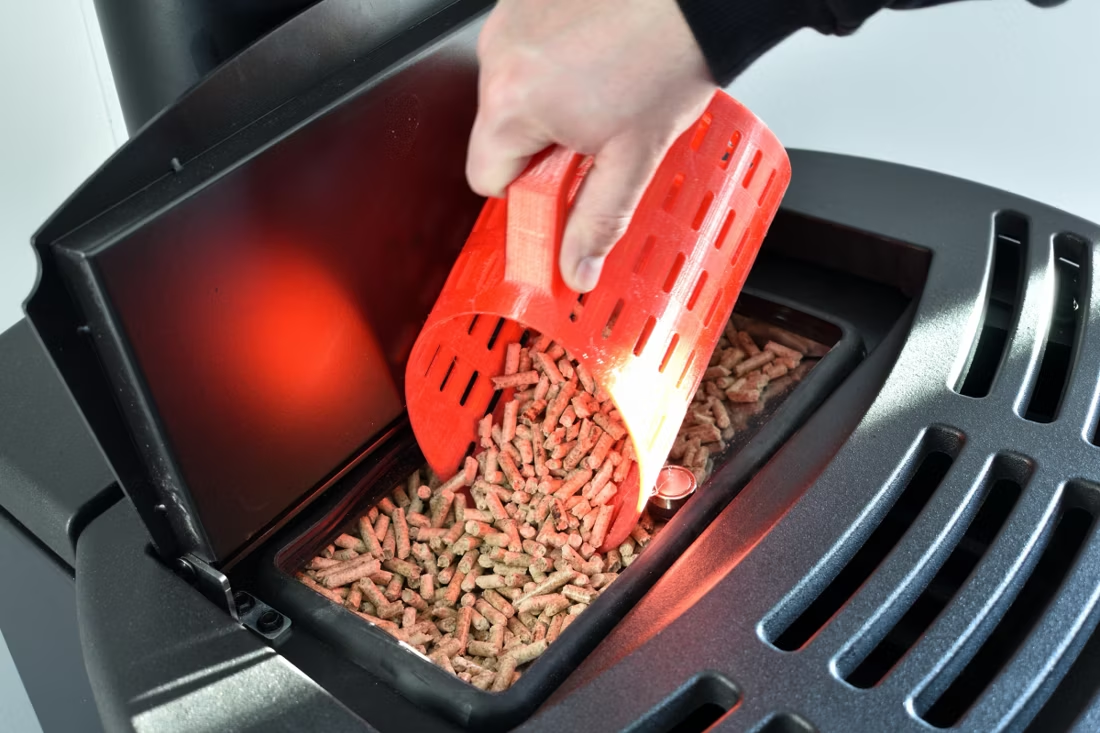
Hopper-fed heat for the farmsteads and small towns around Sigourney, What Cheer, and Delta—no splitting, no stacking, just a thermostat and a bag of hardwood pellets. Find the right stove and connect with a trusted local dealer.
Every Project Starts From One of These Five Situations
Hopper-fed heat for a hardwood-rich county.
Keokuk County sits in the rolling farm country of southeast Iowa, county seat in Sigourney, with about 6,400 residents spread across small towns like What Cheer, Delta, Hedrick, and Ollie and a lot of open ground in between. Climate zone 5A brings a real Midwest winter—average lows around 12°F and roughly 6,640 heating degree days per year, a cold-climate profile in the same range as Madison, Wisconsin. The English River and Skunk River bottomlands that cut through the county are lined with oak, hickory, maple, and walnut, the same hardwoods that make up the bulk of the region's firewood—and, processed into pellets, the fuel that heats a growing number of local homes.
Keokuk County has no air-quality non-attainment designation and no winter burn curtailment periods, so a pellet appliance here runs on your schedule, not around an inversion advisory. Regional suppliers like Lignetics and Indeck Energy Services keep hardwood pellet bags moving through farm-supply and hardware stores across this part of Iowa, which matters for a county where many homes rely on LP furnaces or rural electric cooperative service rather than piped natural gas. A pellet stove or insert gives those homes a set-it-and-forget-it supplemental heat source—steady output, automatic feed, and none of the splitting and hauling that cordwood demands, which is a real consideration for a lot of the county's older residents and part-time farmstead owners.
Three steps. No salesperson until you're ready.
Tell us about your project
Your zip code, your situation, and the fuel you're leaning toward—or let the answers point you to one.
See what's actually available
The brands dealers within 100 miles genuinely carry—real options, never a catalog mirage.
Get your dealer & Project Guide
A trusted local dealer, plus the free Project Guide & Parts List that names every component of the job.
Frequently Asked Questions
How much does a pellet stove installation cost in Keokuk County?
Most pellet stove and insert installations run in the $3,000 to $6,000 range once you factor in the unit, the wall-thimble or through-roof vent kit, and any hearth pad work required for clearance. Inserts going into an existing masonry fireplace tend to land on the lower end since the chimney chase is already in place; freestanding stoves in a new location cost more because they need fresh venting run through a wall or ceiling. Because Keokuk County is largely rural, expect installers based out of Oskaloosa, Washington, or the Ottumwa area to factor a modest travel charge into quotes for homes well outside Sigourney or the county's small towns.
What size pellet stove do I need for my home?
With average winter lows near 12°F and roughly 6,640 heating degree days a year, Keokuk County sits solidly in cold-climate territory—similar in heating demand to Madison, Wisconsin. A small pellet stove (under 1,000 sq ft) suits a single room or a farmhouse addition being used as supplemental heat; a medium unit (1,000–2,000 sq ft) covers most main living areas in the county's older farmhouses and in-town homes; larger stoves (2,000+ sq ft) can carry a whole modest-sized home if it's reasonably well insulated. Older farmhouses with less insulation and higher ceilings should size up rather than down—a local dealer can walk the space and size it properly during a free in-home visit.
Where can I find certified pellet stove installers near me?
Look for an installer with NFI (National Fireplace Institute) pellet-specialist certification, which covers proper venting, clearance, and hopper setup specific to pellet appliances rather than wood-burning units. Given how much of Keokuk County is unincorporated farmland, expect your closest certified dealer to be based in a nearby larger town rather than in the county itself—Find My Fireplace matches you with a trusted local dealer who already covers this part of southeast Iowa, so you're not guessing which installer actually services rural addresses.
What's the difference between a pellet stove and a pellet insert?
A pellet stove is a freestanding unit that sits on its own hearth pad and vents out through a wall or the roof—it can go almost anywhere in a home with the right clearances, which makes it a good fit for the farmhouse additions and mudrooms common in Keokuk County. A pellet insert is built to slide into an existing masonry fireplace opening, converting an old wood-burning hearth into an automated, hopper-fed heat source while reusing the existing chimney chase for venting. If your home already has a fireplace you rarely use, an insert is usually the more cost-effective route; if you're heating a shop, addition, or a home with no existing fireplace, a freestanding stove makes more sense.
Do I need a permit to install a pellet stove in Keokuk County?
Yes—new pellet stove and insert installations typically require a building permit through the Keokuk County building department, or through your local municipality if you're inside city limits in Sigourney or one of the county's other incorporated towns. Most certified dealers handle the permit paperwork as part of the installation, so you generally don't need to file anything yourself. Unlike wood stoves, pellet appliances don't require chimney sweep inspections or cutting permits, since there's no cordwood or public-land harvesting involved.
What's the best pellet stove for Keokuk County's climate?
With HDD near 6,640 and regular sub-20°F nights in January, look for a stove with a large hopper capacity—40 to 80 pounds—so it can run overnight without a refill during the coldest stretches. Because a lot of Keokuk County is served by rural electric cooperatives where ice storms can knock out power for hours at a time, a pellet stove with a battery-backup option (or a small backup generator plan) is worth discussing with your dealer, since the auger and igniter both need electricity to run. Hardwood pellets from suppliers like Lignetics and Indeck Energy Services burn cleanly in most standard pellet stoves and are widely stocked at farm-supply retailers across this part of Iowa.
Where do I buy pellets and how much fuel will I need?
Hardwood pellets are sold in 40-pound bags, typically by the ton (roughly 50 bags), through regional suppliers including Lignetics and Indeck Energy Services, both of which distribute through farm-supply and hardware retailers across southeast Iowa. A home using a pellet stove as supplemental heat through a Keokuk County winter typically burns 1 to 2 tons per season; a home relying on it as a primary heat source in a drafty older farmhouse can go through 3 tons or more given the county's 6,640 heating degree days. Pellets need to stay dry—a garage, shed, or basement works, but they'll clump and jam the auger if they absorb moisture, so plan storage before delivery season.
Pellet stove vs. wood stove—which is right for me?
Keokuk County's oak, hickory, maple, and walnut woodlots along the English and Skunk River bottoms make cordwood genuinely easy to come by here, and a wood stove will keep running through a power outage—a real advantage during the ice storms that periodically hit rural electric cooperative service in this part of Iowa. A pellet stove trades that off for convenience: no splitting, no stacking, more consistent heat output, and a cleaner burn, but it needs electricity for the auger and igniter, so it goes dark in an extended outage unless you add battery backup. For farmstead homes that want low-maintenance daily heat and already have reliable power, pellet is usually the easier choice; for homes that want backup heat independent of the grid, wood still has the edge.
Will my pellet stove work during a power outage?
Not without backup power—pellet stoves rely on an electric auger to feed fuel and an igniter to start combustion, so a standard unit shuts down the moment the power does. This is a real consideration in Keokuk County, where a lot of homes are served by rural electric cooperatives and ice storms can take out power for hours or, occasionally, days. Some pellet stove manufacturers offer battery-backup kits that keep the auger and blower running for a limited time, and a small home generator can keep a pellet stove going indefinitely. If uninterrupted heat during outages is a priority, ask your local dealer about pairing a pellet stove with a battery backup, or consider a wood-burning unit as a second heat source.
What's the difference between an insert and a zero-clearance fireplace?
An insert is a fireplace that slides into a pre-existing wood-burning fireplace—if you don't have one, there's nothing to insert it into. A zero-clearance fireplace is built into a framed wall, which makes it the answer for remodels and new construction. Simple test: existing masonry fireplace means insert; blank or framed wall means zero-clearance.
What does it take to replace an existing fireplace?
Fireplaces are like icebergs—bigger behind the wall than in front of it. Replacement means removing the surrounding tile or stone (the finish material laps onto the fireplace face), pulling the old unit, setting the new one in the same enclosure, and re-finishing the wall. A hearth professional can determine what's behind your wall without demolition during an in-home preview.
Can I install a fireplace myself?
If you're putting a fire in your house on purpose, it's best to work with an expert. Unless you're genuinely experienced in framing, gas line, vent pipe, and the national code on clearances to combustibles, have a professional do it—and ideally the same company that sells you the fireplace, so warranty, service, and liability all live under one roof.
Can a fireplace actually lower my heating bill?
Yes—by creating a comfort zone. A furnace heats every square foot of the house just to warm the one room you're in; a gas fireplace on low burns roughly a sixth of the gas a typical furnace does. Set the furnace around 55–60 degrees as a baseline, then heat the rooms your family actually uses. Families who heat this way commonly save $20–$60 a month.
Pellet Brands Stocked Around Keokuk County
Manufacturers will point you to the nearest stocking dealer.
Find your pellet stove in Keokuk County.
Tell us a bit about your home and we'll match you with a trusted local dealer serving Keokuk County, plus a free Project Guide & Parts List—a plan for your pellet project with the exact parts, including the vent kit, and the local pro who can install it.
Find Your Fireplace →