
Set-it-and-forget-it heat for Jefferson County winters.
Thermostat-controlled, low-maintenance warmth for the farmhouses and in-town homes of Fairfield, Libertyville, Batavia, and the rest of Jefferson County. Find the right pellet stove or insert and connect with a trusted local dealer.
Every Project Starts From One of These Five Situations
Reliable, automated heat for southeast Iowa winters.
Jefferson County sits in climate zone 5A with roughly 6,377 heating degree days a year and average winter lows around 14°F—a cold season on par with Madison, Wisconsin, stretched across flat, wind-exposed farmland with little to break the chill. Fairfield, the county seat and home to Maharishi University of Management, anchors a mostly rural county of about 11,700 people, where older farmhouses and newer in-town builds alike deal with long stretches of sub-freezing weather from November through March. Oak, hickory, maple, and walnut are the common hardwoods across the county's timber stands, and plenty of homeowners here already burn cordwood—but a growing number are turning to pellet stoves for the heat without the splitting, stacking, and hauling.
With no local air quality restrictions on wood or pellet burning, the decision in Jefferson County usually comes down to convenience and consistency rather than regulation. A pellet stove loads from a bag instead of a woodpile, holds a steady output on a thermostat, and burns cleaner with far less ash than cordwood—a real advantage for anyone managing a farm operation or just tired of stacking wood every fall. Regional pellet supply runs through brands like Lignetics and Indeck Energy Services, both of which move product through Midwest distribution networks, so fuel availability in Jefferson County holds up even during the coldest stretches of an Iowa winter. A trusted local dealer can size the unit correctly, handle venting through an exterior wall or existing masonry chimney, and pull the right permits—no big-box guesswork required.
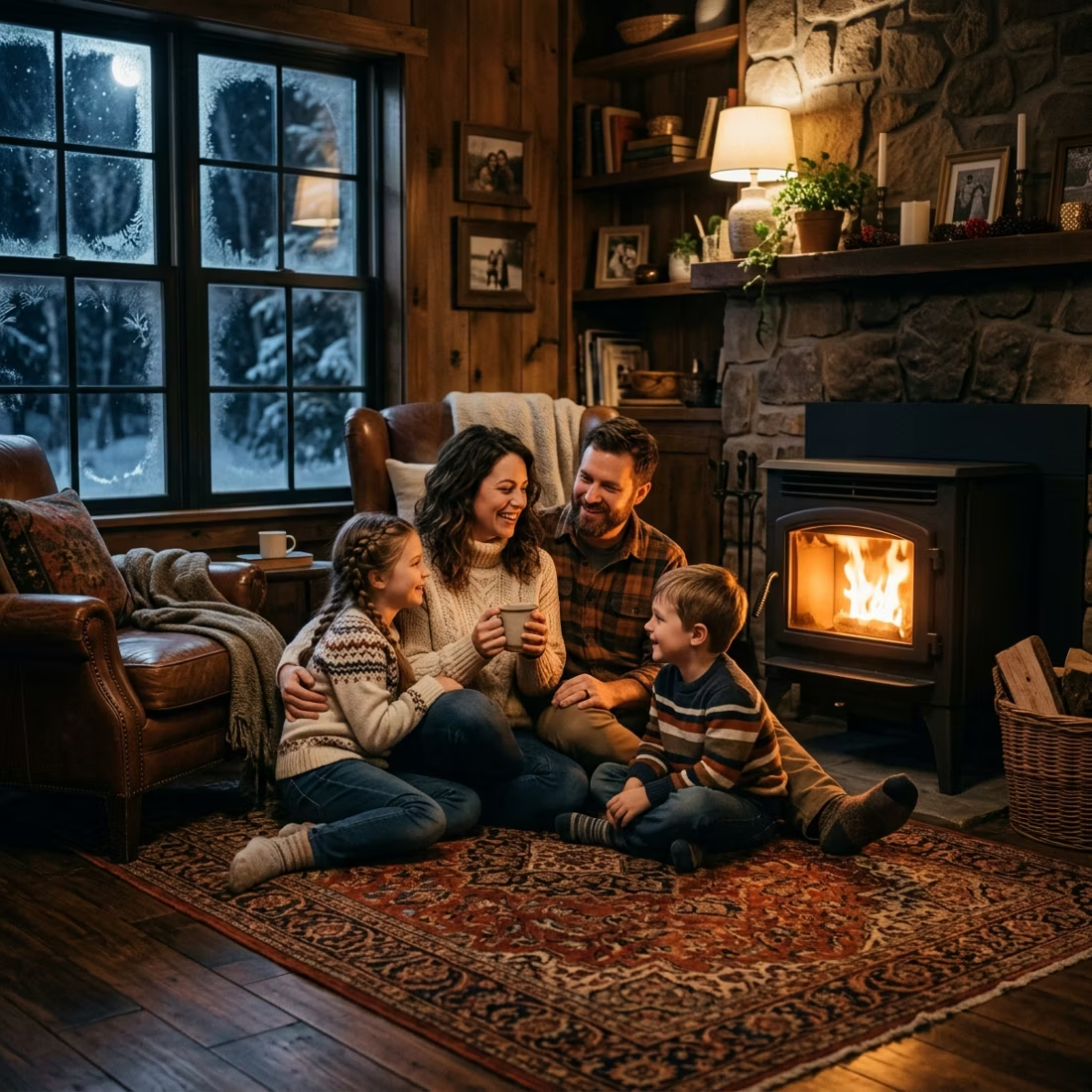
Three steps. No salesperson until you're ready.
Tell us about your project
Your zip code, your situation, and the fuel you're leaning toward—or let the answers point you to one.
See what's actually available
The brands dealers within 100 miles genuinely carry—real options, never a catalog mirage.
Get your dealer & Project Guide
A trusted local dealer, plus the free Project Guide & Parts List that names every component of the job.
Frequently Asked Questions
How much does a pellet stove installation cost in Jefferson County?
Pellet stove installations in Jefferson County typically run in the $3,000 to $6,000 range, depending on the unit, whether you're venting through an existing masonry chimney or need a new exterior wall vent, and any electrical work required for the auger and blower. Installing a pellet insert into an existing fireplace using a stainless liner tends to land on the lower end of that range; a freestanding stove in a new location with fresh wall venting and a dedicated outlet runs higher. A local dealer will give you a firm number after seeing your home, but expect the venting path and electrical access to be the two biggest cost drivers here.
What size pellet stove do I need for my Jefferson County home?
Sizing depends on square footage, insulation, and how open your floor plan is—but Jefferson County's 6,377 heating degree days and regular sub-20°F nights mean most homes should size up rather than down. Older, less-insulated farmhouses common around Libertyville and Batavia often need a mid-to-large hopper capacity unit to keep pace through a cold snap, while newer, tighter-built homes in and around Fairfield can often get by with a smaller stove used as supplemental heat alongside a furnace. A local dealer will walk your space and factor in ceiling height and layout before recommending a specific model—oversizing wastes fuel and undersizing leaves you cold on the worst nights.
Pellet stove vs. wood stove—which makes more sense in Jefferson County?
With oak, hickory, maple, and walnut all common across the county's timber, plenty of Jefferson County homeowners already have easy access to cordwood, and a wood stove works without electricity—a real plus during ice storms when the power grid struggles. A pellet stove trades that off-grid resilience for convenience: no splitting or stacking, a thermostat that holds a steady temperature overnight, and a cleaner burn with less ash to manage. For homeowners who value the ritual of a wood fire and want backup heat during outages, wood still makes sense here. For those who want consistent, hands-off heat and don't mind depending on electricity, pellet is usually the better fit—and it's a common upgrade for people tired of the annual firewood routine.
Will my pellet stove work if the power goes out?
Not on its own—pellet stoves rely on electricity to run the auger, igniter, and blower, so a power outage stops the stove even with a full hopper. This matters in Jefferson County, where winter ice storms and downed lines aren't rare. Some homeowners pair a pellet stove with a small battery backup unit or a portable generator sized to keep the stove running through an outage; your local dealer can tell you the wattage draw for a specific model so you can size a generator correctly. If backup heat during outages is your top priority, it's worth discussing a wood stove or a hybrid setup with the same dealer.
Where can I buy pellets in or near Jefferson County?
Pellet fuel in the region moves through established Midwest suppliers including Lignetics and Indeck Energy Services, and bags are typically available through farm supply stores and hardware retailers around Fairfield, with seasonal price swings similar to the rest of the Midwest—expect roughly $220 to $300 per ton depending on the brand and time of year, with early-season buying usually cheaper than mid-winter restocking. Because pellet fuel is trucked in rather than self-cut like local hardwood, it's worth buying a season's supply early rather than waiting for a cold spell when demand spikes.
Do I need a permit to install a pellet stove in Jefferson County?
Most pellet stove installations require a building permit through Jefferson County or the local municipality, along with an electrical inspection if new wiring is needed for the unit's blower and igniter. Compared to a wood-burning chimney installation, pellet venting through an exterior wall is generally a simpler permit process, but it's still not something to skip—improper venting clearances are a common code violation on DIY installs. A local dealer who installs pellet stoves regularly will typically handle the permit application as part of the job.
How much maintenance does a pellet stove need?
Pellet stoves need more frequent attention than a wood stove but less physical labor. Plan on emptying the ash pan every few days to weekly depending on use, wiping the glass and burn pot regularly, and vacuuming the hopper and exhaust passages every couple of weeks during heavy winter use. Beyond that, an annual professional service—checking the auger motor, blower, gaskets, and venting—keeps the unit running efficiently through a full Jefferson County heating season. Skipping the annual service is the most common cause of mid-winter breakdowns, usually from ash buildup in the exhaust venting.
What's a good pellet stove for Jefferson County's climate?
For a county with 6,377 heating degree days and regular nights in the teens, look for a mid-to-large hopper capacity model with a strong BTU output rating—units in the 40,000 to 60,000 BTU range from brands commonly carried by Midwest hearth dealers, such as Harman or Englander, hold up well through sustained cold. A larger hopper also means fewer refills during a stretch of below-zero weather, which matters if you're heating a drafty older farmhouse rather than a tightly sealed newer build. A local dealer can match hopper size and BTU output to your specific square footage and insulation level.
Can I convert my existing wood-burning fireplace to pellet?
Yes—a pellet insert can be installed into an existing masonry fireplace using a vent liner run through the chimney, which is a common upgrade for older Fairfield-area homes with a fireplace that's rarely used because of the work involved in burning cordwood. The insert seals the old opening, adds a blower for better heat distribution, and switches you to bagged pellets instead of split wood. Because the chimney is already in place, this conversion is often more straightforward than a new freestanding stove installation, though you'll still need an electrical outlet nearby for the unit's auger and fan.
Why is a fireplace insert so efficient?
An insert does two things: it seals the chimney completely, so you stop losing air you already paid to heat, and it radiates warmth into the room through the firebox and glass. Most add a heat-exchange fan that pulls cool room air underneath, wraps it around the hot firebox, and pushes it back out warm. Your home is more efficient before you've even lit the first fire.
What's the difference between an insert and a zero-clearance fireplace?
An insert is a fireplace that slides into a pre-existing wood-burning fireplace—if you don't have one, there's nothing to insert it into. A zero-clearance fireplace is built into a framed wall, which makes it the answer for remodels and new construction. Simple test: existing masonry fireplace means insert; blank or framed wall means zero-clearance.
Can a fireplace actually lower my heating bill?
Yes—by creating a comfort zone. A furnace heats every square foot of the house just to warm the one room you're in; a gas fireplace on low burns roughly a sixth of the gas a typical furnace does. Set the furnace around 55–60 degrees as a baseline, then heat the rooms your family actually uses. Families who heat this way commonly save $20–$60 a month.
Can I install a fireplace myself?
If you're putting a fire in your house on purpose, it's best to work with an expert. Unless you're genuinely experienced in framing, gas line, vent pipe, and the national code on clearances to combustibles, have a professional do it—and ideally the same company that sells you the fireplace, so warranty, service, and liability all live under one roof.
Stove and Fireplace Dealers in Jefferson County
Pellet Brands Stocked Around Jefferson County
Manufacturers will point you to the nearest stocking dealer.
Find your pellet stove in Jefferson County.
Tell us a bit about your home and we'll put together a free Project Guide & Parts List—the exact parts, including the vent kit, and a trusted local dealer to install your pellet stove or insert.
Find Your Fireplace →