
Pellet heat that keeps up with Iowa County winters.
From Marengo to the Amana Colonies, farmhouses across Iowa County lean on pellet stoves for steady, automated heat through a long, cold season. Find the right stove or insert and get matched with a trusted local dealer.
Every Project Starts From One of These Five Situations
Consistent warmth without the woodpile.
Iowa County sits in east-central Iowa, home to the county seat of Marengo, the community of Williamsburg, and the seven historic Amana Colonies villages spread across farmland dotted with oak, hickory, maple, and walnut woodlots. With a population just over 10,000 spread across mostly rural townships, this is a county where a lot of heating decisions get made at the kitchen table, not in a showroom. Winters here run long—climate zone 5A, with a heating season on par with Madison, Wisconsin, and winter lows that average around 10 degrees. That's cold enough that a fireplace isn't decoration; it's part of the heating plan.
A lot of Iowa County homes already have plenty of hardwood on the property—oak, hickory, and walnut from windbreaks and farm woodlots are common locally. But cutting, splitting, and stacking cordwood isn't for everyone, especially on a working farm schedule, and that's where pellet stoves earn their place. Load the hopper, set the thermostat, and the auger does the rest—no chainsaw, no ash-heavy fireboxes, no daily tending. Regional suppliers like Lignetics and Indeck Energy Services keep pellets moving through local dealers here, so you're not driving to Cedar Rapids or Iowa City every time the bag pile runs low. With no local air quality restrictions on burning, pellet stoves are simply a matter of preference and convenience rather than compliance.
Three steps. No salesperson until you're ready.
Tell us about your project
Your zip code, your situation, and the fuel you're leaning toward—or let the answers point you to one.
See what's actually available
The brands dealers within 100 miles genuinely carry—real options, never a catalog mirage.
Get your dealer & Project Guide
A trusted local dealer, plus the free Project Guide & Parts List that names every component of the job.
Frequently Asked Questions
How much does a pellet stove installation cost in Iowa County?
Most pellet stove and insert installations in this part of Iowa run somewhere between $3,000 and $6,500, depending on the unit, whether you're venting through an exterior wall or an existing chimney, and whether any electrical work is needed to power the hopper and blower. A pellet insert going into an existing masonry fireplace in a Marengo or Williamsburg home tends to land on the lower end since the chimney chase is already there. A freestanding stove in a new location—say, a farmhouse basement or a detached shop—costs more once wall penetration and venting are figured in. A local dealer can give you a firm number after seeing the space in person.
What size pellet stove do I need for my home?
It depends on square footage, ceiling height, and how drafty the home is—and Iowa County has plenty of older farmhouses that lose heat fast through original windows and uninsulated walls. As a rough guide, small pellet stoves handle up to about 1,000 square feet, medium units cover 1,000 to 2,000 square feet, and large stoves can carry a well-insulated 2,000-plus square foot home as a primary heat source. If you're heating an older two-story farmhouse rather than a tight, newer build, size up rather than down—a stove that's slightly oversized and run on a lower setting outperforms one that's maxed out every cold snap. A local dealer will walk through your home and give you a specific recommendation at no cost.
Where can I find certified pellet stove installers near me?
Look for installers with NFI (National Fireplace Institute) certification, which covers proper venting, clearances, and code compliance for pellet appliances specifically—pellet venting differs from wood stove venting, and not every hearth installer handles both equally well. Dealers serving Iowa County typically cover Marengo, Williamsburg, the Amana Colonies villages, and the smaller communities like Victor and North English, sometimes with a modest travel charge for homes further out in the townships. Having the same company that sells the stove also handle the install keeps warranty coverage and permit sign-off simpler if anything needs attention down the road.
What's the difference between a pellet stove and a pellet insert?
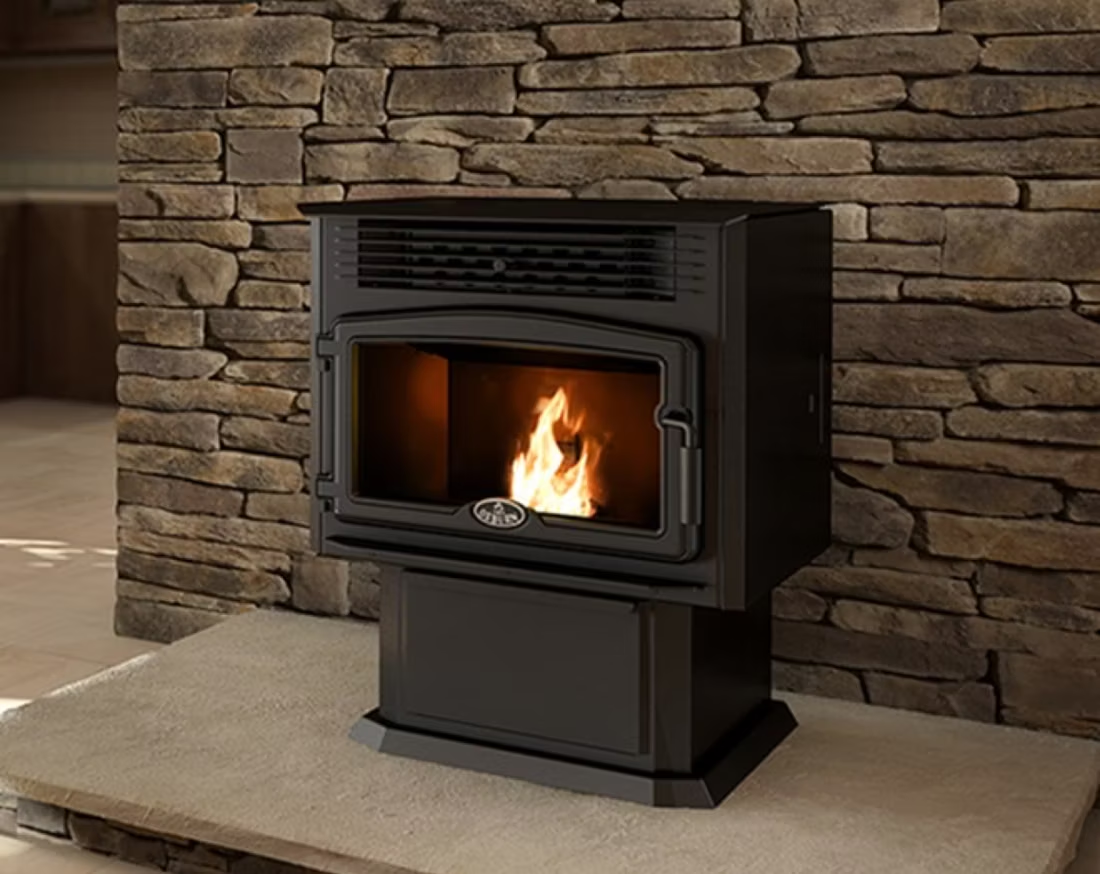
A pellet stove is a freestanding unit that sits on its own hearth pad and vents out through a wall or existing chimney—it can go almost anywhere in the house with the right clearances, which makes it a good fit for shops, additions, or homes without a fireplace. A pellet insert is built to slide into an existing masonry fireplace opening, turning an old wood-burning fireplace into an automated, hopper-fed heat source while using the existing chimney as the vent path. For Iowa County homes with an older fireplace already in place—common in the historic Amana Colonies buildings and many Marengo-area homes—an insert is often the simpler, less invasive upgrade.
Do I need a permit to install a pellet stove in Iowa County?
Most new pellet stove and insert installations require a building permit through Iowa County's building department, primarily to confirm venting placement and clearances meet code. Most local dealers handle the permit paperwork as part of the installation, so it's rarely something you have to manage yourself. Unlike some parts of the country, Iowa County doesn't have air quality non-attainment issues or winter burn curtailment periods, so once the stove is installed and permitted, you're free to run it whenever the weather calls for it.
What's the best pellet stove for Iowa County's climate?
With a long, Madison-Wisconsin-style heating season and winter lows that regularly sit around 10 degrees, Iowa County homeowners generally do best with a mid-to-large hopper stove that can run for 24+ hours on a full load rather than needing a refill every night during a hard freeze. Larger hopper capacity matters more here than in milder climates simply because the burn season is long and consistent. Local dealers carrying pellets from Lignetics and Indeck Energy Services can also speak to which stove models pair well with the pellet supply that's actually easy to source locally, which matters more than it sounds—running a stove tuned for a pellet blend you can't reliably buy nearby gets old fast.
How often does a pellet stove need to be cleaned and serviced?
Ash pans typically need emptying every few days to weekly depending on how much the stove runs, and the burn pot needs a quick scrape every couple of days during heavy winter use to keep the flame clean and efficient. Beyond that, plan on one full professional service a year—usually late summer before the heating season ramps up—to clean the exhaust venting, check the auger and blower motors, and inspect the gaskets. Iowa County's long heating season means stoves here log more running hours than in milder climates, so staying on top of the annual service protects both efficiency and the warranty.
Where can I buy pellets in Iowa County?
Lignetics and Indeck Energy Services both supply pellets that move through dealers and farm supply retailers serving this part of Iowa, and most hearth dealers who sell pellet stoves also stock or special-order pellets by the ton or the pallet. Given the length of the heating season here, a lot of homeowners buy their winter supply in bulk in late summer or early fall before demand picks up and prices firm up. Your local dealer can tell you which pellet blend burns cleanest in the specific stove model you choose.
Pellet stove vs. wood stove—which is right for my home?
Wood stoves burn the oak, hickory, and walnut that are common on Iowa County properties, work without electricity—a real advantage during winter storm outages on rural power lines—and offer the lowest fuel cost if you're cutting your own. Pellet stoves trade that self-sufficiency for convenience: no splitting or stacking, a thermostat you can set and mostly forget, and a cleaner, lower-maintenance burn, but they need electricity to run the auger and blower, so they go dark in a power outage unless paired with a battery backup. For farmhouses that already have a woodlot and don't mind the work, wood often makes sense. For homeowners who want automated heat without the labor, pellet is usually the better fit—and plenty of local homes run both, wood for backup and pellet for daily convenience.
Why is a fireplace insert so efficient?
An insert does two things: it seals the chimney completely, so you stop losing air you already paid to heat, and it radiates warmth into the room through the firebox and glass. Most add a heat-exchange fan that pulls cool room air underneath, wraps it around the hot firebox, and pushes it back out warm. Your home is more efficient before you've even lit the first fire.
What's the difference between an insert and a zero-clearance fireplace?
An insert is a fireplace that slides into a pre-existing wood-burning fireplace—if you don't have one, there's nothing to insert it into. A zero-clearance fireplace is built into a framed wall, which makes it the answer for remodels and new construction. Simple test: existing masonry fireplace means insert; blank or framed wall means zero-clearance.
Can a fireplace actually lower my heating bill?
Yes—by creating a comfort zone. A furnace heats every square foot of the house just to warm the one room you're in; a gas fireplace on low burns roughly a sixth of the gas a typical furnace does. Set the furnace around 55–60 degrees as a baseline, then heat the rooms your family actually uses. Families who heat this way commonly save $20–$60 a month.
What is an in-home preview and do I need one?
It's a visit where a hearth professional measures your space, confirms the model you picked actually works in your home, and walks the specs—framing, gas line, venting, finish work—before anything is ordered. Some details you just can't know until you see the house. Never make a down payment without one; it's the single most-skipped step that burns buyers.
Stove and Fireplace Dealers in Iowa County
Pellet Brands Stocked Around Iowa County
Manufacturers will point you to the nearest stocking dealer.
Find your pellet stove in Iowa County.
Tell us a bit about your home and we'll put together a free Project Guide & Parts List—the right pellet stove or insert, the vent kit it needs, and a trusted local dealer to install it.
Find Your Fireplace →