
Steady Heat for Ida County's Long Winters.
With winter lows averaging 8°F and a long, harsh heating season each year, Ida County homes need heat that works on demand—natural gas in Ida Grove, propane across the surrounding farm country. Find the right unit and connect with a trusted local dealer.
Every Project Starts From One of These Five Situations
Reliable warmth for a working farm county.
Ida County sits in the rolling loess hills of western Iowa, home to about 5,000 residents spread across Ida Grove, Battle Creek, Galva, Holstein, Arthur, and Ute. This is row-crop country—corn and soybean ground with scattered timber along the Maple River bottoms—and winters here are genuinely severe. A climate zone of 6A and a long, harsh heating season put Ida County in the same heating category as Minneapolis, MN, with winter lows that average around 8°F and regularly dip lower during arctic outbreaks.
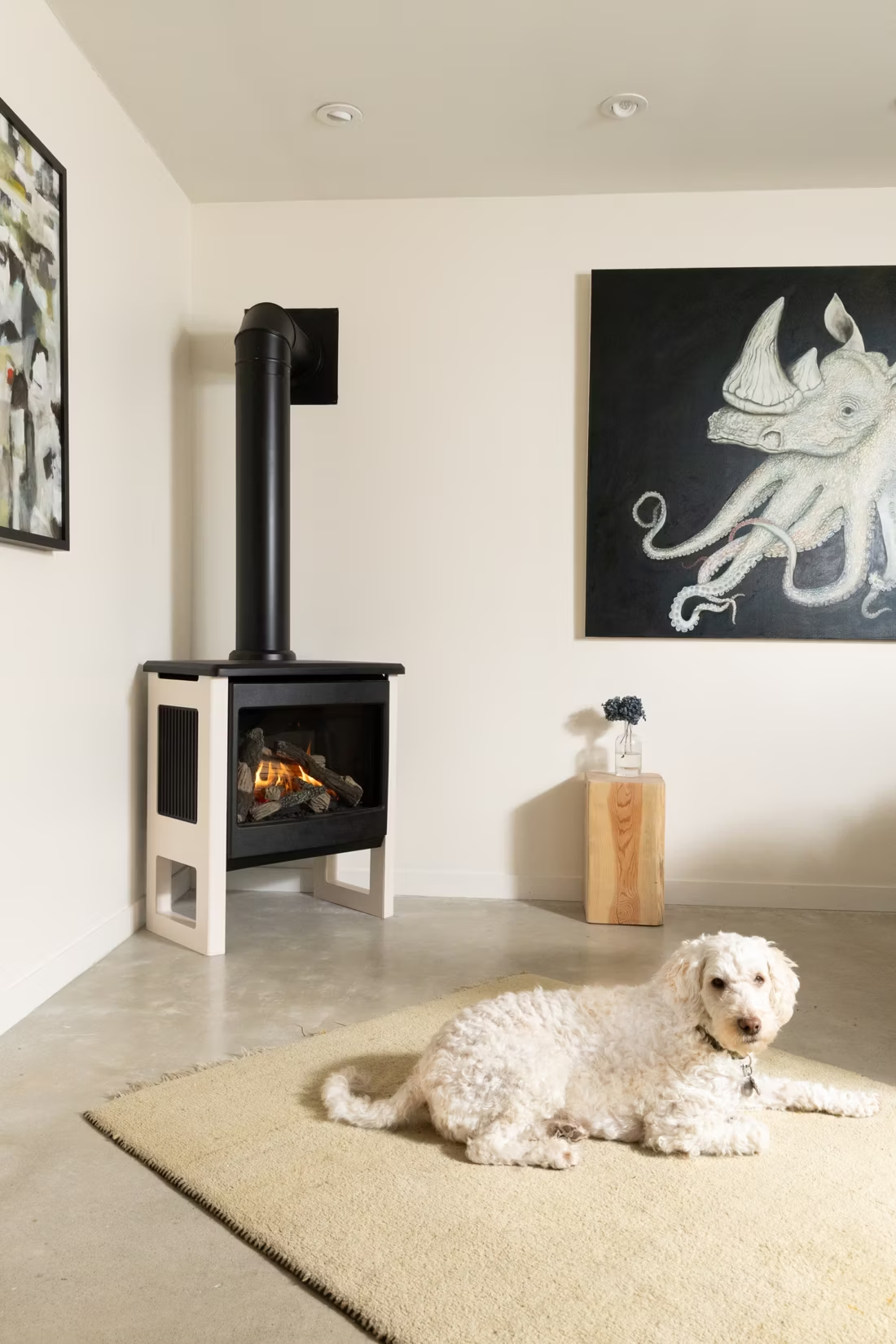
Unlike heavily forested regions, wood heat has never been the default here—most Ida County households rely on gas or propane as primary or supplemental heat, which is why gas fireplaces and inserts show up in nearly every neighborhood in Ida Grove and on farmsteads throughout the county. Natural gas service reaches Ida Grove and the immediate area through MidAmerican Energy; outside city limits, propane delivered by regional farm cooperatives and propane retailers is the standard fuel. Either way, a properly sized and vented gas fireplace gives you instant heat at the flip of a switch—a real advantage during the ice storms and sustained cold snaps that define an Ida County winter.
Three steps. No salesperson until you're ready.
Tell us about your project
Your zip code, your situation, and the fuel you're leaning toward—or let the answers point you to one.
See what's actually available
The brands dealers within 100 miles genuinely carry—real options, never a catalog mirage.
Get your dealer & Project Guide
A trusted local dealer, plus the free Project Guide & Parts List that names every component of the job.
Frequently Asked Questions
How much does a gas fireplace installation cost in Ida County?
A typical gas fireplace or insert installation in Ida County runs roughly $3,500 to $8,000, depending on the unit, whether you're converting an existing masonry fireplace or building new, and whether a propane tank or new gas line is part of the job. Homes in Ida Grove already on MidAmerican Energy's natural gas line tend to land on the lower end since no tank installation is needed. Farmsteads outside city limits relying on propane should budget for tank placement or hookup to an existing tank as part of the total cost. A local dealer will give you a firm number after seeing your home and existing gas or propane setup.
Can I convert my existing wood fireplace to gas?
Yes, and it's a common project even in a county where wood was never the primary heat source. Older farmhouses in Ida County, especially around Ida Grove and Battle Creek, often have an original masonry fireplace that gets converted with a direct-vent gas insert using the existing chimney as the venting path. Expect $3,500 to $7,000 depending on the insert model and whether you're on natural gas or propane. The result keeps the look of the original hearth while giving you heat you can actually rely on during a January cold snap without hauling wood.
Do I need natural gas, or can I use propane?
Either works, and which one you use mostly comes down to where you live in Ida County. Natural gas service through MidAmerican Energy covers Ida Grove and the immediately surrounding area—if your home already runs on natural gas for the furnace or water heater, adding a gas fireplace is straightforward. Most of the county's farmsteads and smaller towns like Galva, Arthur, and Ute are outside the natural gas footprint and rely on propane, typically delivered by regional farm cooperatives and propane retailers. Nearly every gas fireplace model on the market can be configured for either fuel—your installer sets the correct orifice and regulator for whichever you have.
Will my gas fireplace work during a power outage?
Most modern gas fireplaces will, which matters in a county where ice storms and high winds regularly knock out rural electric service. Units with IPI (intermittent pilot ignition) run on a battery backup that kicks in automatically when the power drops, so the fireplace still lights on demand. Valor units go a step further—their pilot assembly generates its own electricity through the thermocouple, so there's no battery to remember at all. For an Ida County farmstead where an outage can stretch for a day or more during a winter storm, that reliability is worth asking about directly with your local dealer.
What's the difference between a gas fireplace, gas insert, and gas stove?
A gas fireplace is a built-in unit framed into a wall, typical in new construction or a full remodel. A gas insert slides into an existing masonry fireplace opening and uses your current chimney as the vent, which is the common route for older Ida Grove and Battle Creek homes with an existing hearth. A gas stove is a freestanding cast-iron or steel unit that sits on the floor like a wood stove but runs on gas or propane—a good option for a room with no existing fireplace and no interest in framing one in. Most Ida County homeowners upgrading an old fireplace go with an insert; new construction more often goes with a built-in unit.
Do I need a permit to install a gas fireplace in Ida County?
Yes—new gas fireplace installations require a building permit, and any new gas line or propane line work requires a licensed gas-fitter or propane technician. Permits within Ida Grove city limits go through the city; in unincorporated Ida County, the Ida County Building & Zoning Department handles it. Most established local dealers include permitting in their installation quote, so you're not left coordinating inspections yourself, and it ensures the work is signed off before you're relying on it through a hard winter.
What's the difference between vented and vent-free gas fireplaces?
Vented (direct-vent) fireplaces draw combustion air from outside and exhaust it back outside through a sealed pipe—they're the most common choice and produce real, sustained heat without any indoor air quality tradeoffs. Vent-free units burn fuel directly into the room, which is legal in Iowa but requires strict room-sizing rules and an oxygen depletion sensor. Given how tightly built many newer Ida County homes are for energy efficiency, and how long units run during a long, harsh heating season, direct-vent is the option most local dealers recommend for whole-room heating rather than occasional ambiance.
How often should my gas fireplace be serviced?
Plan on an annual inspection, ideally before the heating season starts in the fall. A technician checks the burner, pilot assembly, gas connections, and venting, and cleans the glass and interior components. This matters more in Ida County than in milder climates simply because of how many hours a season a gas fireplace here logs as supplemental or even primary heat—units running hard through a full Iowa winter benefit from that yearly check far more than one used a few evenings a month.
Gas vs. electric fireplace—which is right for my Ida County home?
Gas delivers real, sustained heat output—enough to meaningfully offset a furnace during an extended cold stretch—plus the option to keep running during a power outage if you choose a battery-backup or self-powered ignition model. Electric fireplaces plug into a standard outlet, need no venting or gas line at all, and install in under an hour, but they're realistically a supplemental or ambiance option rather than a serious heat source for an Ida County winter. Wood and pellet appliances are uncommon here since the county's farm-country landscape never built the cutting and fuel infrastructure that forested regions have—most homeowners choosing between real heating options in Ida County are choosing between gas and electric, and for anything beyond a small room, gas is usually the better fit.
Why is my open fireplace making my house colder?
Open fireplaces suck—literally. As the fire burns, it consumes air your furnace already paid to heat and pulls it out through the chimney, so the house is actually colder after the fire goes out than before you lit it. An insert fixes this: it seals the chimney, puts fixed glass across the front, and turns that hole in your house into a real heat source.
Can I put a TV above my fireplace?
Yes—with an asterisk. Fireplaces are hot and TVs don't like heat. Either put a mantel between them to deflect rising warmth, or choose a fireplace with heat-management technology that creates a cool zone on the wall above—the wall stays around 125 degrees, barely warm, while the room still gets full heat. If you like clean lines and don't want a mantel, heat management is the answer.
How much should I budget for a fireplace?
For an average home—covering the fireplace, the vent pipe, and basic installation—a budget between $3,900 and $5,500 gives you a lot of options across wood, gas, and pellet. By the time you add finish work, gas line, and electrical, the average complete installation lands between $5,000 and $12,000 all-in. In a remodel or new build, a good rule is to put about 2.5% of the total project cost toward the fireplace.
Does a fireplace add value to my home?
On average, a fireplace adds back to the home about the same amount you spent installing it. Add the monthly savings from heating the rooms you actually use instead of the whole house—often hundreds of dollars a year—and the value case is strong before you even count what a fire does for how your family uses the room.
Find your gas fireplace in Ida County.
Tell us a bit about your home and we'll match you with a trusted local Ida County dealer and send over a free Project Guide & Parts List—the right unit, the vent kit, and everything needed for your install.
Find Your Fireplace →