
Warm Up a Room in Ida County—No Chimney Required.
From Ida Grove to Battle Creek, Galva, Arthur, and Holstein, electric fireplaces bring instant ambiance and zone heat to farmhouses and newer builds alike—no gas line, no venting, no chimney. Find the right unit and connect with a trusted local dealer.
Every Project Starts From One of These Five Situations
Electric heat that fits into any Ida County home.
Ida County sits in the 6A climate zone, with an average winter low around 8°F and a winter heating load in the same range as Madison, Wisconsin. That's serious cold, and it's why most Ida County homes rely on a propane or natural gas furnace, or a rural electric cooperative-supplied heat pump system, to carry the bulk of the heating load through a long western Iowa winter. An electric fireplace isn't built to replace that system, and it doesn't try to.
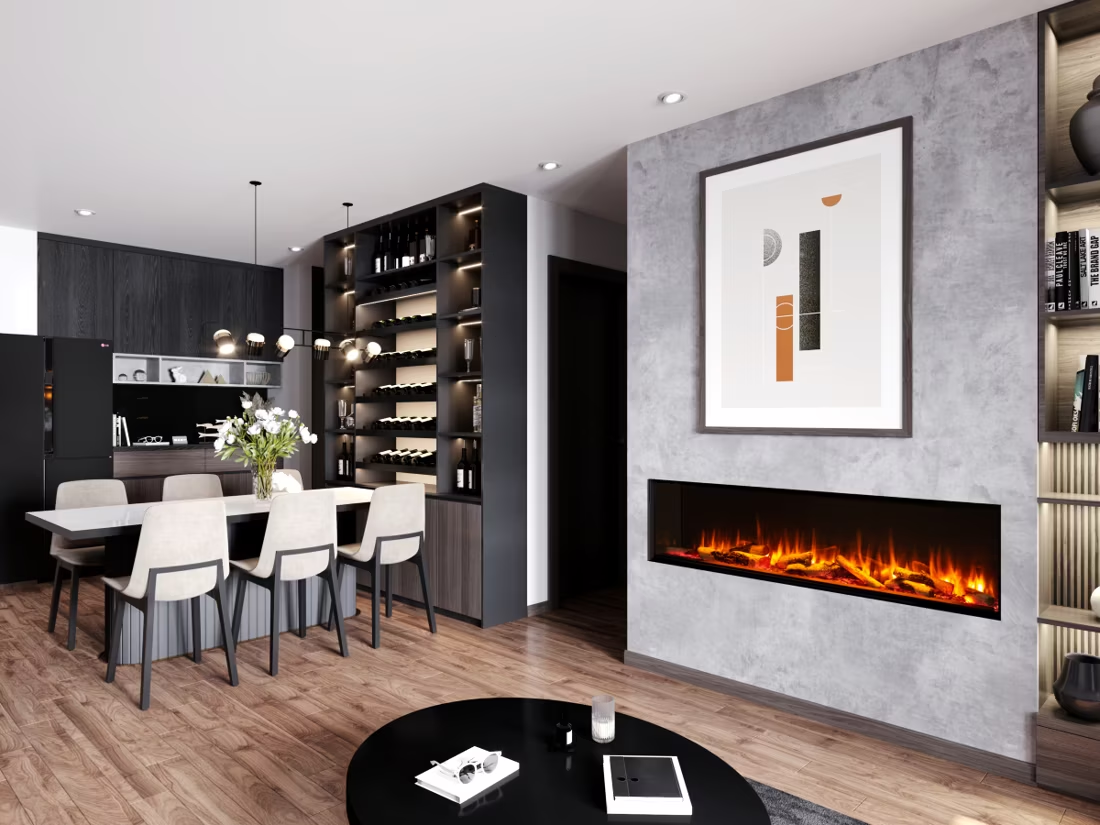
What an electric fireplace does well is add real, usable zone heat and genuine ambiance to a single room—a living room in an older Ida Grove farmhouse, a finished basement rec room in Battle Creek, or a new-build great room out toward Galva or Arthur—without touching your gas line or chimney. Because there's no combustion and no venting requirement, installation is simpler and less invasive than gas or wood, and with zero on-site emissions, air quality inside the home isn't a concern the way it can be with solid-fuel appliances. For rural Ida County properties on older wiring, the main consideration usually isn't the fireplace itself—it's whether your electrical panel and circuit have the capacity to run it.
Three steps. No salesperson until you're ready.
Tell us about your project
Your zip code, your situation, and the fuel you're leaning toward—or let the answers point you to one.
See what's actually available
The brands dealers within 100 miles genuinely carry—real options, never a catalog mirage.
Get your dealer & Project Guide
A trusted local dealer, plus the free Project Guide & Parts List that names every component of the job.
Frequently Asked Questions
How much does an electric fireplace installation cost in Ida County?
A plug-in electric insert or freestanding unit typically runs $150 to $1,200 for the unit itself, and if there's a standard 120-volt outlet nearby, there's often no additional installation cost beyond mounting. A wired, built-in electric fireplace—the kind recessed into a wall or media center—usually needs a dedicated 20-amp circuit run by a licensed electrician, which pushes total project cost to roughly $1,500 to $4,000 depending on how far the circuit has to run and whether an older farmhouse panel needs any upgrade work to accommodate it. Because there's no venting or chimney involved, electric installs are consistently the least expensive fireplace option available to Ida County homeowners.
Will an electric fireplace actually heat my house through an Ida County winter?
Not the whole house, and it's worth being direct about that. Most electric fireplaces top out around 1,500 watts, which translates to roughly 5,000 BTU of supplemental heat—enough to noticeably warm a single living room or den, but nowhere near what's needed to carry a home through a winter heating load in the same range as Madison, Wisconsin and 8°F average winter lows. In Ida County, an electric fireplace works best paired with your existing furnace or heat pump system: the furnace handles the whole-house load, and the fireplace adds comfortable zone heat and ambiance to the room you actually spend your evenings in.
Do I need a permit or an electrician to install an electric fireplace in Ida County?
A basic plug-in electric fireplace that runs off an existing 120-volt outlet generally doesn't require a permit. A built-in, hardwired unit is a different story—it typically needs a dedicated circuit, which means an electrical permit through the county building department and a licensed electrician to run the wiring. This matters more than it might seem in Ida County's older farmhouse stock, where original wiring and fuse panels sometimes need a subpanel or circuit upgrade before a built-in unit can be added safely. A local dealer or electrician can tell you quickly whether your existing service will support the unit you want.
Will my electric fireplace still work if the power goes out?
No—and this is the honest tradeoff of going electric in a rural county where winter storms occasionally knock out power for hours at a time. Unlike a wood stove, an electric fireplace is entirely dependent on grid power (or a generator) to run its heater and flame effects. If backup heat during an outage is a real priority for your Ida County home, it's worth pairing an electric fireplace—which is excellent for daily ambiance and convenience—with a separate backup heat source, whether that's a propane furnace, a generator-fed circuit, or a wood-burning appliance elsewhere in the house.
What's the difference between an electric fireplace, insert, and stove?
An electric fireplace is typically a built-in or wall-mounted unit designed to look like a traditional fireplace, often recessed into a wall or set into a media console. An electric insert is sized to slide into an existing masonry or factory-built fireplace opening, converting a fireplace you already have into a clean, no-venting heat source. An electric stove is a freestanding cabinet-style unit that can sit anywhere in a room, including spots with no fireplace opening at all. For Ida County homeowners with an old, rarely-used masonry fireplace, an insert is often the simplest upgrade; for a new-construction great room or basement remodel, a built-in unit or freestanding stove gives more flexibility.
What's the best electric fireplace for Ida County's cold climate?
Look for a unit with a true 1,500-watt heater element rather than a purely decorative flame effect, since that heat output is what actually takes the edge off a cold western Iowa evening. Models with adjustable thermostats and multi-speed fans give you more control for zone heating a specific room, which matters when the rest of the house is running on the furnace. Realistic LED flame technology has improved enough that many homeowners choose electric purely for the look and ambiance, especially in rooms where a gas or wood installation isn't practical. A local dealer can match wattage and room size so you're not disappointed by a unit that's more decorative than functional.
Electric vs. gas—which is right for my Ida County home?
Gas fireplaces, running on propane in most of rural Ida County, produce far more heat output—enough to genuinely supplement whole-room or even whole-floor heating—and many models are designed to run during power outages, which matters given the county's occasional winter storm outages. Electric fireplaces cost less to install since there's no gas line or venting to run, produce zero combustion byproducts, and offer nearly any style or mantel configuration without worrying about clearance-to-combustible rules. If your priority is real supplemental heat and outage resilience, gas is usually the stronger fit; if your priority is ambiance, low install cost, and flexibility of placement, electric wins. Plenty of homeowners in the county end up with gas in the main living area and an electric unit in a bedroom or basement.
How much maintenance does an electric fireplace need?
Very little, which is one of its biggest advantages over a wood or gas appliance. There's no chimney to sweep, no venting to inspect, and no annual safety inspection required by code. Maintenance amounts to periodically dusting the heater vents so airflow isn't restricted, wiping down the glass front, and occasionally replacing the LED flame bulbs on older units (most current models use LEDs rated for 20,000+ hours). There's no combustion, so there's no soot, no ash, and no creosote to worry about—a meaningful difference for anyone who's dealt with wood stove upkeep in an Ida County farmhouse.
Are there rebates or efficiency incentives for electric fireplaces in Ida County?
Electric fireplaces are generally classified as supplemental space heaters rather than primary heating equipment, so they typically don't qualify for the efficiency rebates offered for heat pumps or high-efficiency furnaces. That said, it's worth checking with your electric provider—whether that's MidAmerican Energy or a rural electric cooperative serving your part of the county—about time-of-use or off-peak rate programs, since running a zone heater during off-peak hours can meaningfully reduce the cost of supplemental heating over a long Ida County winter.
Can I put a TV above my fireplace?
Yes—with an asterisk. Fireplaces are hot and TVs don't like heat. Either put a mantel between them to deflect rising warmth, or choose a fireplace with heat-management technology that creates a cool zone on the wall above—the wall stays around 125 degrees, barely warm, while the room still gets full heat. If you like clean lines and don't want a mantel, heat management is the answer.
Does an electric fireplace need a vent or chimney?
No—that's its superpower. An electric fireplace needs a wall and an outlet, period. No vent pipe, no gas line, no clearances to design around, which is why it works in bedrooms, offices, apartments, and walls where venting a gas or wood unit would be impractical or impossible. Installation is typically the simplest and least expensive of any fireplace type.
Can I install a fireplace myself?
If you're putting a fire in your house on purpose, it's best to work with an expert. Unless you're genuinely experienced in framing, gas line, vent pipe, and the national code on clearances to combustibles, have a professional do it—and ideally the same company that sells you the fireplace, so warranty, service, and liability all live under one roof.
Does a fireplace add value to my home?
On average, a fireplace adds back to the home about the same amount you spent installing it. Add the monthly savings from heating the rooms you actually use instead of the whole house—often hundreds of dollars a year—and the value case is strong before you even count what a fire does for how your family uses the room.
Find your electric fireplace in Ida County.
Tell us about your home and how you plan to use the room, and we'll match you with the right electric fireplace, insert, or stove—plus a free Project Guide & Parts List and a trusted local dealer to install it.
Find Your Fireplace →