
Reliable Pellet Heat for Hardin County's Long Winters.
With a long, cold heating season and average winter lows near 8°F, Hardin County homes need steady, low-maintenance heat. Pellet stoves deliver it—no splitting, no stacking, and thermostatic control through the coldest stretch of an Iowa winter.
Every Project Starts From One of These Five Situations
Efficient warmth without the wood-splitting.
Hardin County sits in north-central Iowa along the Iowa River, anchored by Eldora and stretching out through Iowa Falls, Ackley, Alden, New Providence, Union, and Hubbard. It's farm country—corn and soybean ground broken up by river bluffs—and winter here is a real commitment. With a long, cold heating season and an average winter low of 8°F, the county runs colder than much of the Midwest corn belt, closer to what a household in Madison, WI deals with each year than the milder river towns further south in Iowa. Homes here need a heat source that can hold steady output for months, not just take the edge off a cold evening.
Pellet stoves fit that need well. Hardin County has no air quality non-attainment issues and no curtailment periods to work around, so a pellet appliance can run whenever it's needed without the smoke-day restrictions some parts of the country deal with. Local hardwoods—oak, hickory, maple, and walnut—are common in the region's forests and farmstead windbreaks, and while pellet fuel itself is manufactured rather than self-cut, brands like Lignetics and Indeck Energy Services supply the compressed hardwood pellets that stock farm and hardware stores across this part of Iowa. For a county built around agricultural self-reliance, a pellet stove that loads once a day and holds a consistent burn is an easy fit.
Three steps. No salesperson until you're ready.
Tell us about your project
Your zip code, your situation, and the fuel you're leaning toward—or let the answers point you to one.
See what's actually available
The brands dealers within 100 miles genuinely carry—real options, never a catalog mirage.
Get your dealer & Project Guide
A trusted local dealer, plus the free Project Guide & Parts List that names every component of the job.
Frequently Asked Questions
How much does a pellet stove installation cost in Hardin County?
Pellet stove and insert installations in this part of Iowa typically run in the $3,000 to $6,000 range, depending on the unit, whether a hearth pad or wall protection is needed, and the venting path—pellet stoves vent through a smaller-diameter pipe than wood stoves, which often keeps labor costs lower. An insert into an existing masonry fireplace tends toward the lower end since the chimney is already in place; a freestanding stove in a new location (garage, basement, addition) that needs fresh venting run through an exterior wall runs higher. A local dealer will give you a firm number after seeing your space.
What size pellet stove do I need for my Hardin County home?
With winter lows averaging 8°F and a long, demanding heating season, most Hardin County homes need a mid-size to large pellet stove rather than a small supplemental unit—especially if the goal is to offset a propane or fuel oil furnace rather than just take the chill off one room. A stove rated for 1,500–2,000+ square feet is common for full farmhouse or ranch-style heating in this climate, while a smaller unit works fine for a single large room or a finished basement. Hopper size matters too: a bigger hopper means fewer refills during the stretch of subzero nights that hit this part of Iowa most winters. A local dealer will size the unit to your square footage, insulation, and ceiling height rather than square footage alone.
Where can I find certified pellet stove installers near me?
Look for installers with NFI (National Fireplace Institute) certification, which covers pellet-specific venting and clearance requirements—different from wood stove installation in a few key ways, including smaller vent diameter and the need for a nearby electrical outlet to run the auger and combustion blower. A certified local dealer covering Hardin County will handle the hearth pad, venting, and electrical tie-in as part of the install, and most sell the same brands they service, which simplifies warranty claims down the road. Avoid general handyman installs for pellet appliances—improper venting slope or clearance is the most common cause of callbacks.
What's the difference between a pellet stove and a pellet insert?
A pellet stove is a freestanding unit that sits on its own hearth pad and vents through a wall or existing chimney chase—it can go almost anywhere with a nearby power outlet. A pellet insert is built to slide into an existing masonry fireplace opening, converting an old wood-burning fireplace into an automated, thermostat-controlled heat source while reusing the existing chimney as a vent chase (with a proper liner). For Hardin County homes with an older fireplace that's rarely used because it's inefficient, an insert is often the more direct upgrade. Homes without an existing fireplace typically go with a freestanding stove instead.
Do I need a permit to install a pellet stove in Hardin County?
Most pellet stove and insert installations require a building permit through the Hardin County building department, primarily to confirm venting clearances and, where applicable, electrical work for the unit's power supply. Most local dealers handle the permit paperwork as part of the installation quote, so it's rarely something you have to manage yourself. Because Hardin County has no air quality non-attainment designation, there are no seasonal burn restrictions to plan around—a pellet stove here can run on the schedule that suits your household, not a curtailment calendar.
What's the best pellet stove for Hardin County's climate?
For a climate that regularly sees single-digit lows and a heating season that runs from October into April, look at pellet stoves with a larger hopper capacity (40+ lbs) to reduce refill frequency, along with a reliable auto-ignition system so the stove restarts cleanly after a hopper reload or brief power blip. Brands commonly available through Midwest dealers and compatible with pellets from Lignetics and similar regional suppliers are a safe starting point. If backup heat during a power outage matters to you—worth considering given how exposed rural Hardin County farmsteads can be during winter storms—ask your dealer about battery backup options, since pellet stoves require electricity to run the auger and blower and won't operate on their own during an outage.
How often does a pellet stove need to be cleaned and serviced?
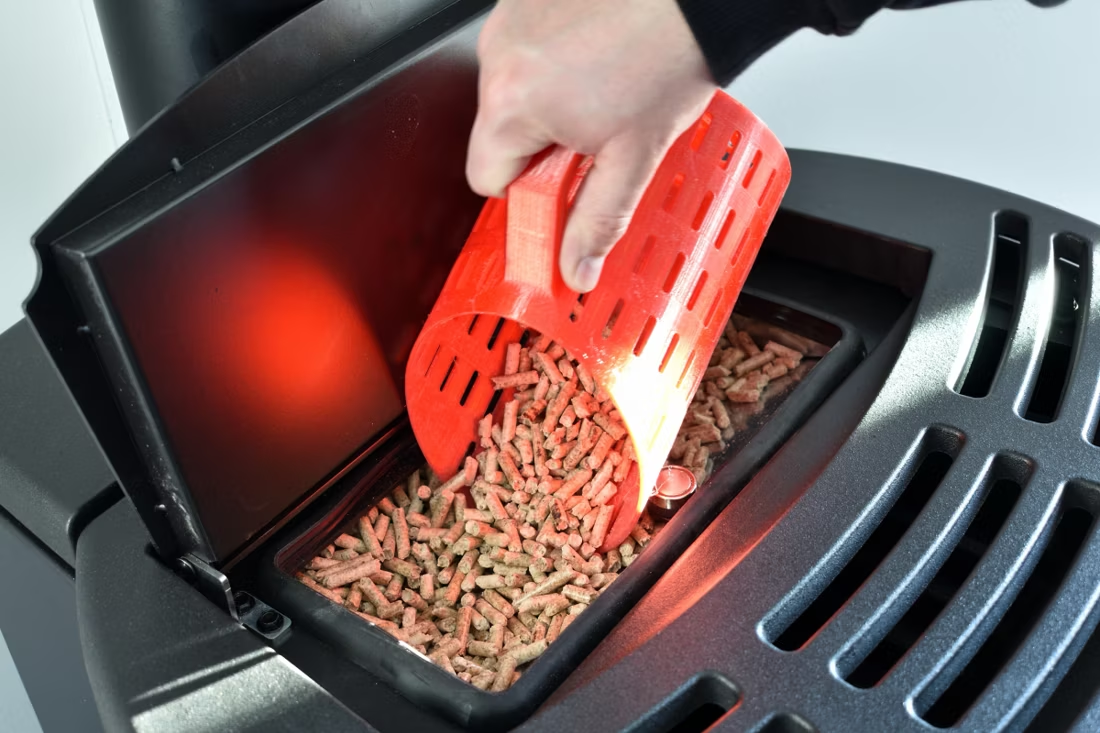
Pellet stoves need more frequent light maintenance than wood stoves but far less heavy cleaning. Plan on emptying the ash pan every few days during regular winter use, cleaning the glass weekly, and running a deeper burn-pot and venting cleaning once a month during heavy-use stretches. An annual professional service—checking the auger, combustion blower, gaskets, and venting—is recommended before each heating season starts, typically in September ahead of Hardin County's first cold snaps. Heavier users running the stove as a primary heat source through the full 7,300-degree-day season may want a mid-winter check as well.
Where can I buy pellet fuel in Hardin County?
Hardwood pellets from brands like Lignetics and Indeck Energy Services are commonly stocked at farm supply and hardware stores throughout north-central Iowa, and many local hearth dealers also sell pellets directly or can point you to the nearest reliable supplier. Pricing in this part of the Midwest generally runs in the $250 to $300 per ton range, though it can shift with hardwood pellet demand each fall. Buying a season's supply early—before the first cold snap drives up demand—is a common strategy among Hardin County pellet stove owners.
Pellet stove vs. wood stove—which is right for my Hardin County home?
Wood stoves work without electricity, which matters for rural Hardin County properties where winter storms can knock out power for extended stretches, and cordwood from local oak, hickory, maple, or walnut can be sourced cheaply or self-cut. Pellet stoves are more convenient day to day—load the hopper, set the thermostat, and walk away, with less ash and a cleaner burn—but they need power to run the auger and blower, so they're not a stand-alone option during an outage unless paired with a battery backup or generator. For a farmstead that already keeps a generator on hand for outages, pellet is often the easier daily-use choice. For households without backup power planning, wood remains the more storm-resilient option.
What's the difference between an insert and a zero-clearance fireplace?
An insert is a fireplace that slides into a pre-existing wood-burning fireplace—if you don't have one, there's nothing to insert it into. A zero-clearance fireplace is built into a framed wall, which makes it the answer for remodels and new construction. Simple test: existing masonry fireplace means insert; blank or framed wall means zero-clearance.
Why is a fireplace insert so efficient?
An insert does two things: it seals the chimney completely, so you stop losing air you already paid to heat, and it radiates warmth into the room through the firebox and glass. Most add a heat-exchange fan that pulls cool room air underneath, wraps it around the hot firebox, and pushes it back out warm. Your home is more efficient before you've even lit the first fire.
Does a fireplace add value to my home?
On average, a fireplace adds back to the home about the same amount you spent installing it. Add the monthly savings from heating the rooms you actually use instead of the whole house—often hundreds of dollars a year—and the value case is strong before you even count what a fire does for how your family uses the room.
Can I install a fireplace myself?
If you're putting a fire in your house on purpose, it's best to work with an expert. Unless you're genuinely experienced in framing, gas line, vent pipe, and the national code on clearances to combustibles, have a professional do it—and ideally the same company that sells you the fireplace, so warranty, service, and liability all live under one roof.
Stove and Fireplace Dealers in Hardin County
Pellet Brands Stocked Around Hardin County
Manufacturers will point you to the nearest stocking dealer.
Find your pellet stove in Hardin County.
Tell us a bit about your home and heating goals, and we'll match you with a trusted Hardin County dealer plus a free Project Guide & Parts List—the exact equipment, vent kit, and installation plan for your pellet project, no big-box guesswork.
Find Your Fireplace →