
Consistent heat for Franklin County's 7,300-degree-day winters.
From Hampton to Sheffield, Coulter, and Latimer, Franklin County homes see winter lows averaging 8°F and a heating season that runs long. Find the right pellet stove or insert, and get matched with a trusted local dealer.
Every Project Starts From One of These Five Situations
Automated heat for corn country's cold snaps.
Franklin County sits in north-central Iowa's corn and hog country, with Hampton as the county seat and roughly 7,365 residents spread across Hampton, Sheffield, Coulter, Latimer, Popejoy, Chapin, Alexander, and Geneva. At climate zone 6A and 7,363 heating degree days, the county's winters run about as demanding as Minneapolis, Minnesota—long, cold, and often windy across open farmland with little terrain to break the chill. For farm families already busy with chores, calving, or fieldwork prep well into the cold months, a pellet stove's set-it-and-forget-it operation is a real advantage over splitting and stacking cordwood.
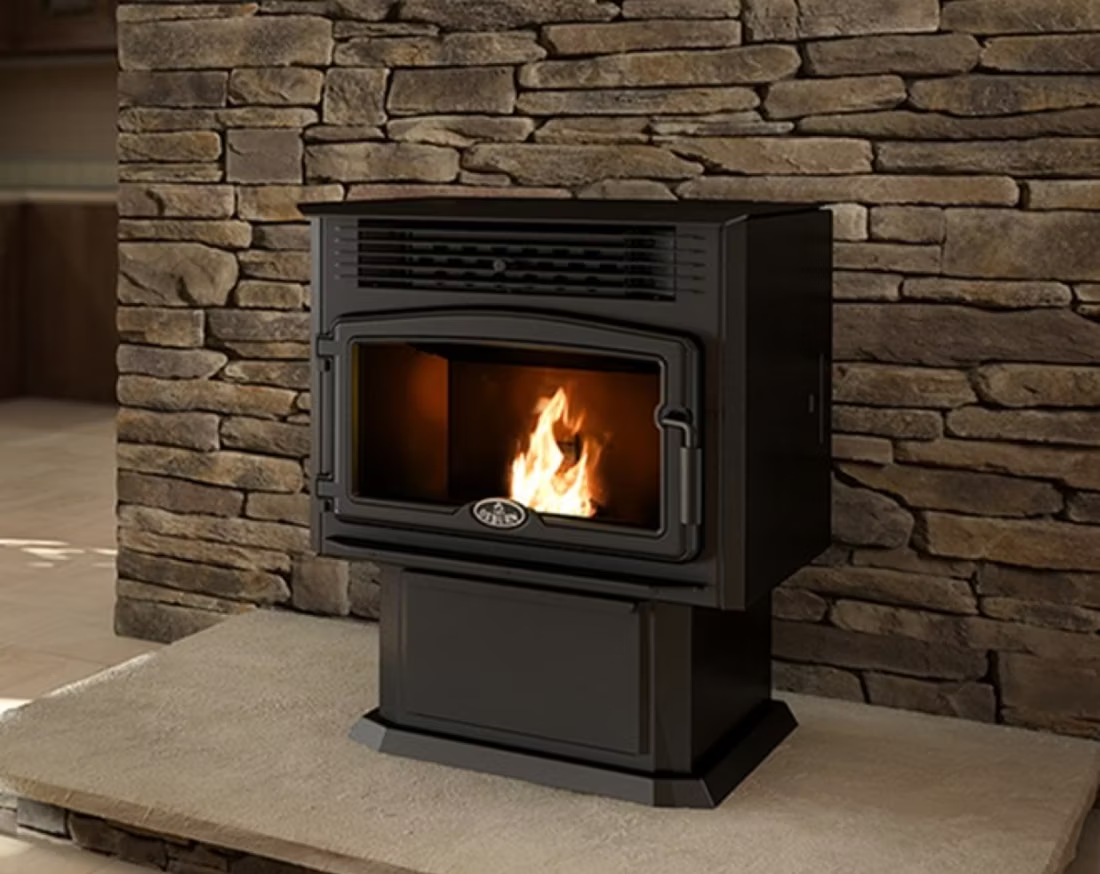
Franklin County has no air quality non-attainment issues and no wood-burning curtailment periods to work around, so pellet appliances run without the burn-ban restrictions homeowners in some Western states face. Regional pellet supply comes through brands like Lignetics and Indeck Energy Services, both of which draw on the hardwood resources common across Iowa's oak, hickory, maple, and walnut timber—the same species that make good pellet feedstock also happen to be the trees lining farmsteads and windbreaks around the county. A properly sized pellet stove or insert gives Franklin County homes a clean, thermostatically controlled heat source that supplements a propane or LP furnace during the coldest stretches of a long winter.
Three steps. No salesperson until you're ready.
Tell us about your project
Your zip code, your situation, and the fuel you're leaning toward—or let the answers point you to one.
See what's actually available
The brands dealers within 100 miles genuinely carry—real options, never a catalog mirage.
Get your dealer & Project Guide
A trusted local dealer, plus the free Project Guide & Parts List that names every component of the job.
Frequently Asked Questions
How much does a pellet stove installation cost in Franklin County?
Most pellet stove and insert installations in Franklin County run in the $3,000 to $6,000 range, depending on the unit, whether it's a freestanding stove or an insert going into an existing fireplace, and how much venting work is needed. Pellet appliances vent through a smaller-diameter pipe than wood stoves and often run through an exterior wall rather than up an existing chimney, which can simplify installation in homes without a masonry fireplace. A local dealer will give you a firm number after walking your home, but expect the venting path and electrical hookup for the auger and blower to be the main cost variables.
Pellet stove or wood stove—which makes more sense for a Franklin County farmhouse?
Wood is abundant locally—oak, hickory, maple, and walnut are common across the county's farmsteads and windbreaks—and a wood stove keeps working during a power outage, which matters when an ice storm takes down rural lines. A pellet stove trades that off-grid capability for convenience: load the hopper, set the thermostat, and it self-feeds for a day or more without tending. For households where someone is already managing livestock, grain bins, and field equipment through the winter, the lower labor burden of a pellet stove is often the deciding factor, as long as you have a plan for backup power during outages.
What size pellet stove do I need for a Franklin County home?
With winter lows averaging 8°F and over 7,300 heating degree days, Franklin County sits solidly in cold-climate territory, so err toward the higher end of a stove's rated square footage rather than the low end. Small pellet stoves (up to roughly 1,000 sq ft) suit a single room or a supplemental-heat setup; medium units (1,000-1,800 sq ft) cover most main living areas in the older farmhouses and ranch homes common in the county; larger units can handle a well-insulated whole home as primary heat. Older farmhouses with less insulation and higher ceilings typically need to size up compared to a newer, tightly built home of the same square footage—a local dealer can walk your space and give you a specific recommendation.
Will my pellet stove work during a power outage?
No—this is the honest tradeoff with pellet appliances. The auger that feeds pellets and the blower that circulates heat both run on electricity, so a standard pellet stove goes cold the moment power drops. In rural Franklin County, where winter ice storms and line damage can knock out power for hours or longer, that matters. Some homeowners pair a pellet stove with a small battery backup unit or a portable generator specifically to keep the stove running through an outage; others keep a wood stove or fireplace as backup heat for exactly this scenario. Ask your local dealer about battery backup options if reliable off-grid heat is a priority for your household.
Do I need a permit to install a pellet stove in Franklin County?
Yes—a new pellet stove installation typically requires a building permit through your local jurisdiction, and the unit itself should carry EPA certification for solid-fuel appliances. Most dealers who sell and install pellet stoves in Franklin County handle the permit paperwork as part of the job, so you're not left coordinating it yourself. Since the county has no air quality non-attainment designation, there are no seasonal burn curtailment periods to plan around—once it's installed and permitted, you're free to run it whenever the weather calls for it.
Where can I buy pellets in or near Franklin County?
Pellets are typically sold by the ton (usually delivered as 40-pound bags, 50 bags to a ton) through farm supply stores, hardware stores, and hearth dealers serving Hampton and Sheffield, with brands like Lignetics commonly stocked regionally. Expect roughly $250 to $300 per ton depending on the brand and hardwood content—premium hardwood pellets made from oak or hickory tend to run at the higher end but burn cleaner with less ash. Buying a season's supply (typically 2-3 tons for an average Franklin County home) in late summer or early fall, before demand picks up, is the usual strategy locally.
How often does a pellet stove need cleaning and maintenance?
Plan on cleaning the burn pot and ash removal weekly during heavy winter use, a full glass and interior cleaning monthly, and a professional inspection and deep clean once a year—typically before the heating season starts. Pellet stoves produce far less creosote than wood stoves, so there's no annual chimney sweep required, but the auger motor, exhaust blower, and gaskets do wear over time and benefit from a yearly professional look. Local dealers who sell pellet stoves in the area generally offer this service, and keeping up with it protects both efficiency and the manufacturer's warranty.
Pellet stove or propane furnace—how do they work together in Franklin County?
Most Franklin County homes outside city limits run on propane or LP for their primary furnace, and a pellet stove typically supplements rather than replaces that system. Placed in a main living area, a pellet stove can carry most of the day-to-day heating load during the coldest months, letting the propane furnace run less and cutting the propane bill—a meaningful savings given how many heating degree days the county racks up each winter. Some households size a pellet stove to handle the bulk of the heating season and reserve the furnace as backup and for the coldest overnight stretches.
What's the best pellet stove for Franklin County's climate?
For a cold, wind-exposed county like Franklin, look for a pellet stove with a large hopper capacity so it can run overnight without refilling, and confirm the BTU output matches your home's square footage and insulation level rather than just its listed range. Regional pellet supply from brands like Lignetics burns reliably in most major stove brands sold through local dealers. Beyond BTU output, ask about hopper size, auger feed rate on the highest setting, and whether the model has a battery backup option—all details a local dealer can match to your specific home and heating goals.
How often does a pellet stove need cleaning?
A clean pellet stove is a happy pellet stove. Plan on cleaning the burn pot about once a week when you're burning regularly—ash and clinkers gum up the air holes just like a pellet barbecue. Most pellet stove problems trace back to skipped cleaning that nobody explained up front. Some designs make it easy with a trapdoor burn pot: pull a lever and the gunk drops into the ash pan.
Why is my open fireplace making my house colder?
Open fireplaces suck—literally. As the fire burns, it consumes air your furnace already paid to heat and pulls it out through the chimney, so the house is actually colder after the fire goes out than before you lit it. An insert fixes this: it seals the chimney, puts fixed glass across the front, and turns that hole in your house into a real heat source.
How much should I budget for a fireplace?
For an average home—covering the fireplace, the vent pipe, and basic installation—a budget between $3,900 and $5,500 gives you a lot of options across wood, gas, and pellet. By the time you add finish work, gas line, and electrical, the average complete installation lands between $5,000 and $12,000 all-in. In a remodel or new build, a good rule is to put about 2.5% of the total project cost toward the fireplace.
Can I install a fireplace myself?
If you're putting a fire in your house on purpose, it's best to work with an expert. Unless you're genuinely experienced in framing, gas line, vent pipe, and the national code on clearances to combustibles, have a professional do it—and ideally the same company that sells you the fireplace, so warranty, service, and liability all live under one roof.
Stove and Fireplace Dealers in Franklin County
Pellet Brands Stocked Around Franklin County
Manufacturers will point you to the nearest stocking dealer.
Find your pellet stove in Franklin County.
Tell us a bit about your home and we'll match you with the right pellet stove or insert, plus a free Project Guide & Parts List—and connect you with a trusted local dealer.
Find Your Fireplace →