
Find your pellet stove in Floyd County.
Thermostat-set, hopper-fed heat for the long, cold stretches between Charles City and Rockford. Get matched with a trusted local dealer who can size the right unit for your home.
Every Project Starts From One of These Five Situations
Consistent heat for a county that sees real winter.
Floyd County sits in climate zone 6A with roughly 7,356 heating degree days a year and average winter lows near 9°F—a heating season closer to Fargo, ND than to most of the Midwest. That's a long stretch where a home needs steady, unattended heat, not just a fire someone has to feed every few hours. Pellet stoves fill that gap well: load the hopper, set the thermostat, and the auger handles the rest for a day or more depending on the unit and hopper size.
Farmhouses and older homes around Charles City, Nora Springs, and the rural townships of the county tend to run drafty, and a pellet stove's consistent, automated output handles that better than an open fireplace ever could. Regional pellet supply is straightforward here—brands like Lignetics and Indeck Energy Services distribute into this part of Iowa, so fuel isn't a scarce or seasonal scramble the way firewood sometimes is. With no local air quality restrictions on burning in Floyd County, the bigger question isn't whether you can run a pellet stove—it's sizing the right one for your square footage and getting the venting installed correctly.
Three steps. No salesperson until you're ready.
Tell us about your project
Your zip code, your situation, and the fuel you're leaning toward—or let the answers point you to one.
See what's actually available
The brands dealers within 100 miles genuinely carry—real options, never a catalog mirage.
Get your dealer & Project Guide
A trusted local dealer, plus the free Project Guide & Parts List that names every component of the job.
Frequently Asked Questions
How much does a pellet stove installation cost in Floyd County?
Pellet stove and insert installations in this part of Iowa typically run in the $2,500 to $5,500 range depending on the unit, whether it's a freestanding stove or an insert into an existing fireplace, and how much venting work is required. Inserts going into an existing masonry fireplace with a usable flue tend to land on the lower end. New freestanding installations that need fresh through-wall venting and an electrical run for the auger and blower sit higher. Local dealers serving Charles City and the surrounding county will give a firm number after seeing the install site.
How big a pellet stove do I need for a Floyd County home?
With average winter lows around 9°F and nearly 7,400 heating degree days a year, Floyd County homes generally need a mid-size to large pellet stove rather than a small supplemental unit—even well-insulated houses. As a starting point, small units (up to 1,000 sq ft) suit a single room or addition, mid-size units (1,000-1,800 sq ft) cover most main living areas, and larger units (1,800+ sq ft) can handle a whole modest farmhouse as primary heat. Older, leakier homes common around Rockford and Marble Rock often need to size up a step from what the square footage alone would suggest. A local dealer will size this properly during an in-home visit—oversizing wastes pellets and undersizing leaves you cold on the worst nights.
Where do I buy pellets in Floyd County, and will I run short in a bad winter?
Pellet supply in this region runs through established manufacturers like Lignetics and Indeck Energy Services, both of which distribute into Iowa, so hardware stores and farm supply outlets around Charles City typically restock through the season rather than selling out for good. Buying a season's worth of bags early in fall—before the first hard cold snap hits—is still the smart move, since local demand spikes fast once temperatures drop and trucks can be delayed by snow. A rough estimate for primary heat through a Floyd County winter is 2 to 3 tons; supplemental use is closer to 1 ton.
Do pellet stoves work during a power outage in rural Floyd County?
This is worth being direct about: standard pellet stoves need electricity to run the auger, igniter, and blower, so they shut down in an outage unless you have battery or generator backup. For rural parts of the county where outages can run longer during winter storms, some homeowners pair a pellet stove with a small battery backup unit or a generator sized to keep the stove running, while others keep a wood stove as backup heat specifically for outage scenarios. If uninterrupted backup heat during storms is a priority for your property, mention that to your local dealer—it changes which unit and setup they'll recommend.
Do I need a permit to install a pellet stove in Floyd County?
Most municipalities in Floyd County, including Charles City, require a building permit for a new pellet stove installation, and the unit itself needs to meet current EPA emissions standards. Reputable local dealers handle the permitting as part of the installation, so this generally isn't something you have to manage yourself. There are no local air quality restrictions or burn curtailment periods in Floyd County, unlike some Western states—pellet stoves here are simply a heating appliance choice, not a regulated fuel category tied to smog advisories.
What's the difference between a pellet stove and a pellet insert?
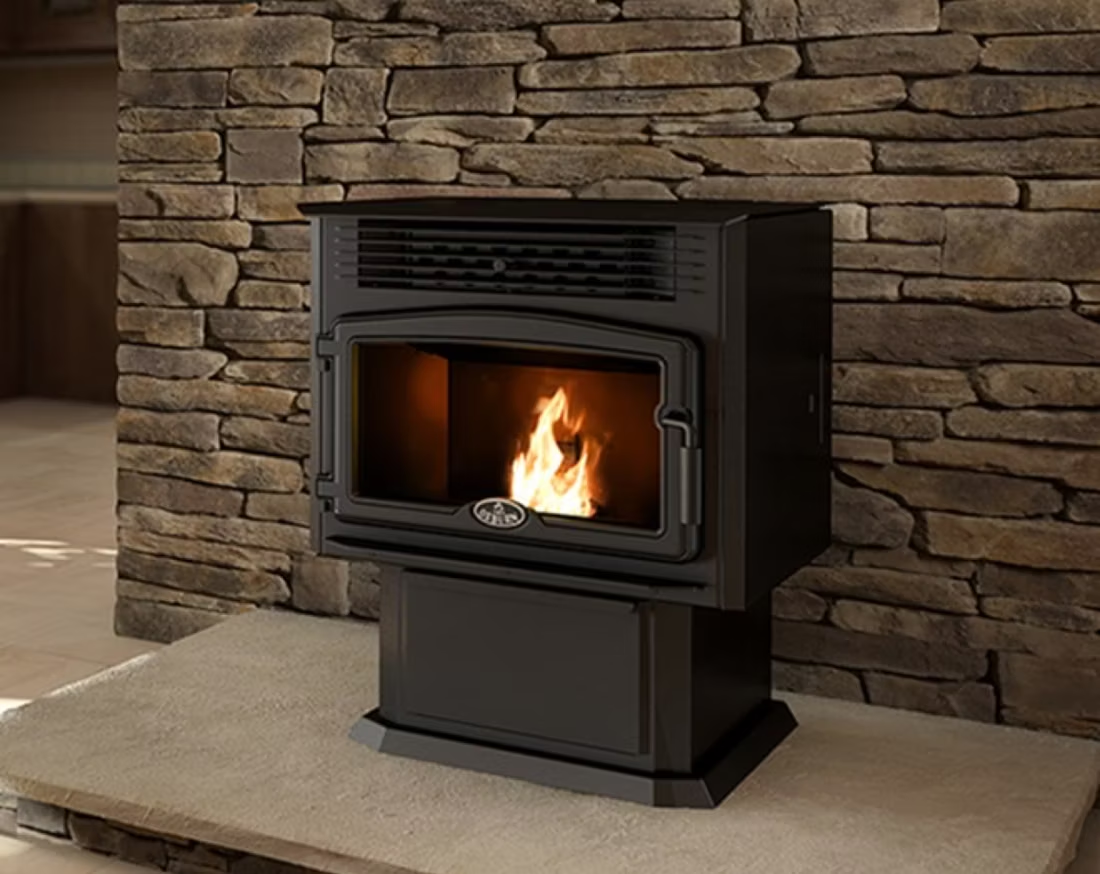
A pellet stove is a freestanding unit that sits on its own hearth pad and vents through an exterior wall or existing chimney—it can go almost anywhere in a room with the right clearances. A pellet insert is built to slide into an existing masonry fireplace opening, converting an old wood-burning fireplace into an automated, thermostat-controlled heat source while reusing the existing chimney chase. For older homes around Charles City with an existing fireplace that doesn't get much use, an insert is often the simpler retrofit. Newer construction without an existing fireplace usually calls for a freestanding stove instead.
How often does a pellet stove need cleaning and maintenance?
Pellet stoves need more frequent attention than a once-a-year chimney sweep, but each task is quicker. Ash pans typically need emptying every few days to weekly depending on use, the burn pot needs scraping every 1-2 weeks during heavy winter use, and the exhaust venting and hopper should get a full cleaning and inspection annually, ideally before the heating season starts. For a Floyd County home running a pellet stove as primary heat through a 7,000-plus HDD winter, staying on top of the burn pot specifically matters—a clogged pot leads to poor ignition and smoky starts. Local dealers can walk through the maintenance schedule specific to your model at time of purchase.
What's the best pellet stove for a cold Iowa winter?
For Floyd County's climate, look for a unit with a larger hopper capacity (40+ lbs) so it can run through a full overnight cycle without a refill, and a stated heating capacity rated for at least the square footage you're heating—err toward the higher end given the local HDD count. Look for models with a reliable auger feed system and a straightforward control panel, since these units will be running near-continuously for months rather than occasionally. A local dealer familiar with regional brands like Lignetics-fueled setups can match hopper size and BTU output to your specific home rather than a generic recommendation.
Pellet stove vs. wood stove—which is right for my Floyd County home?
Wood stoves burn cordwood from local species like oak, hickory, maple, and walnut, work without electricity (a real advantage during winter outages), and generally cost less to fuel if you're cutting or buying wood locally. Pellet stoves are more hands-off day to day—load the hopper, set the thermostat, and walk away—burn cleaner with less ash, but require electricity and a steady pellet supply. For Floyd County homes where convenience and consistent, low-maintenance heat matter most, pellet is usually the better fit. For homes prioritizing outage resilience or already set up with a woodlot, wood stays competitive. Either way, a local dealer can walk through both options for your specific home.
Are pellet stoves loud?
They make some noise—there are two fans running plus an auger motor that turns as it feeds pellets. But there's a real range: premium models are engineered quiet, and the best offer a whisper-quiet mode you can comfortably watch TV next to. If noise matters in your room, ask to hear a stove running before you buy—it's a five-minute test that saves years of annoyance.
What do I measure to size a fireplace insert?
Four numbers tell you what fits: the front width, the front height, the back width, and the overall depth of your existing fireplace opening. Grab a tape measure, jot those down, and snap a photo of the wall—those two things do more to move your project forward than anything else you can do today.
Does a fireplace add value to my home?
On average, a fireplace adds back to the home about the same amount you spent installing it. Add the monthly savings from heating the rooms you actually use instead of the whole house—often hundreds of dollars a year—and the value case is strong before you even count what a fire does for how your family uses the room.
Can a fireplace actually lower my heating bill?
Yes—by creating a comfort zone. A furnace heats every square foot of the house just to warm the one room you're in; a gas fireplace on low burns roughly a sixth of the gas a typical furnace does. Set the furnace around 55–60 degrees as a baseline, then heat the rooms your family actually uses. Families who heat this way commonly save $20–$60 a month.
Stove and Fireplace Dealers in Floyd County
Pellet Brands Stocked Around Floyd County
Manufacturers will point you to the nearest stocking dealer.
Get your free Project Guide & Parts List for pellet heat in Floyd County.
Tell us about your home and we'll match you with a trusted local dealer and send a free Project Guide & Parts List—the right pellet stove or insert, the vent kit it needs, and who locally can install it.
Find Your Fireplace →