
Warm your lake house without stacking a wood pile.
With 7,678 heating degree days and winter lows that average 7°F around Big Spirit Lake and the Okobojis, Dickinson County homes and cabins need real heat for six-plus months a year. A pellet stove gives you thermostat-set warmth without tending a fire every hour—find the right unit and connect with a trusted local dealer.
Every Project Starts From One of These Five Situations
Consistent heat for seven months of Iowa winter.
Dickinson County's 13,595 year-round residents share the Iowa Great Lakes region with a much larger seasonal population that fills lake cabins around Big Spirit Lake, West Lake Okoboji, and East Lake Okoboji from Memorial Day through Labor Day—then largely empties out for winter. That split matters for heating: a full-time home in Spirit Lake or Milford needs a heat source that runs reliably day after day, while a weekend cabin near Arnolds Park or Okoboji needs something that can hold heat for a day or two between visits without babysitting. At 7,678 heating degree days—in the same range as Minneapolis—and average winter lows around 7°F, this isn't a climate where any stove can coast.
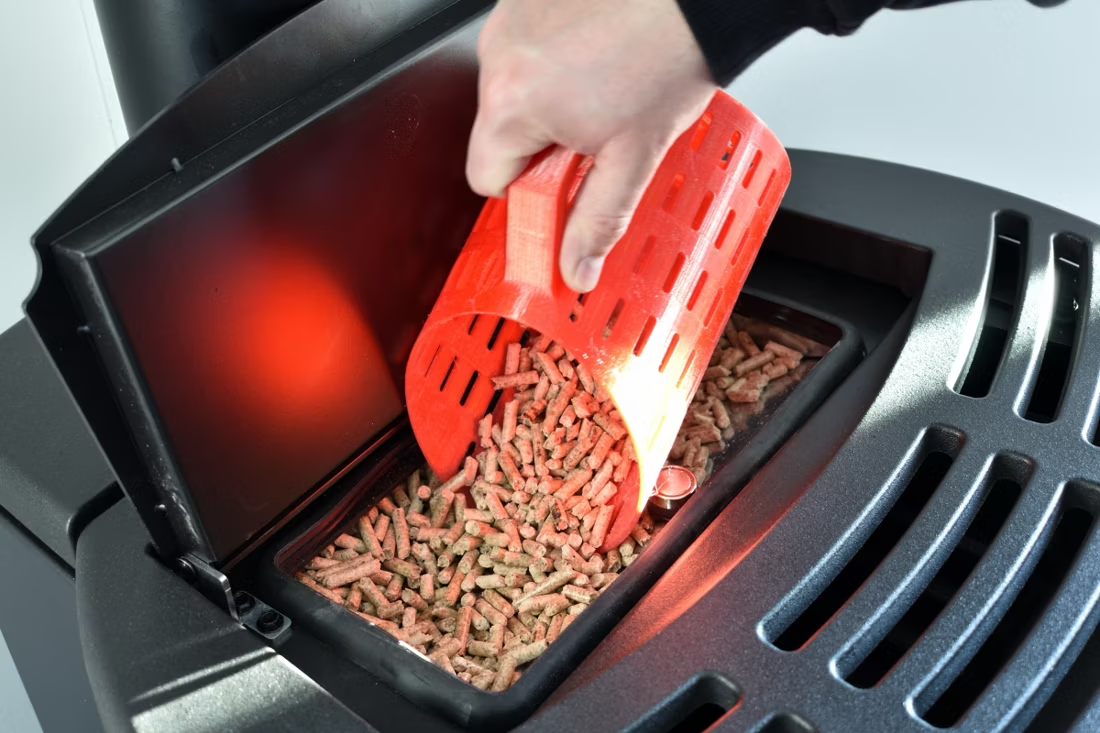
Dickinson County has no air quality restrictions on wood or pellet burning, so the decision here comes down to convenience rather than emissions compliance. Plenty of county homes already burn cordwood cut from local oak, hickory, maple, and walnut woodlots, and pellet stoves appeal to the same households for a simple reason: load the hopper, set the thermostat, and walk away—no splitting, no stacking, and far less ash than a wood-burning unit. Regional pellet supply runs through brands like Lignetics and Indeck Energy Services, which keep farm co-ops and hardware stores around the lakes stocked heading into fall before the coldest stretch hits.
Three steps. No salesperson until you're ready.
Tell us about your project
Your zip code, your situation, and the fuel you're leaning toward—or let the answers point you to one.
See what's actually available
The brands dealers within 100 miles genuinely carry—real options, never a catalog mirage.
Get your dealer & Project Guide
A trusted local dealer, plus the free Project Guide & Parts List that names every component of the job.
Frequently Asked Questions
How much does a pellet stove installation cost in Dickinson County?
Most pellet stove and insert installations in Dickinson County run somewhere between $3,000 and $6,500, depending on whether you're installing a freestanding stove, converting an existing masonry fireplace with a pellet insert, and how much venting work is involved. Pellet venting is simpler than wood-burning Class A chimney pipe—it typically runs through an exterior wall rather than up through the roof—which keeps costs down compared to a full wood stove install. Lake cabins with limited existing infrastructure, or homes needing a dedicated electrical circuit for the auger and blower, tend to land on the higher end. A local dealer can give you a firm number after seeing the space.
Pellet vs. wood—which makes more sense for a Dickinson County home or cabin?
Wood burns without electricity, which matters here—winter storms around the lakes can knock out power for hours or longer, and a wood stove keeps working when a pellet stove's auger and blower can't. If you're heating a full-time home in Milford or Spirit Lake and want backup heat for outages, wood—using the oak, hickory, or maple already common on local woodlots—is worth strong consideration. But if you're heating a lake cabin near Okoboji or Arnolds Park that sits empty for stretches at a time, a pellet stove's set-it-and-forget-it hopper and thermostatic control is hard to beat, and pairing it with a battery backup or small generator solves the outage gap. A number of county homeowners run both: pellet for daily convenience, wood as the storm backup.
What size pellet stove do I need for my home?
At 7,678 heating degree days, Dickinson County sits in genuinely cold territory, so undersizing is the mistake to avoid. A small unit (under 1,200 sq ft) suits a lake cabin or single-level ranch; a medium unit (1,200–2,000 sq ft) covers most year-round homes in Spirit Lake, Milford, or Lake Park; larger, well-insulated homes may need a unit rated for 2,000+ sq ft or a second heat source for the coldest stretches in January and February. For cabins that only get visited on weekends, hopper capacity matters as much as BTU output—a larger hopper means the stove can run longer between refills, which is the difference between a warm cabin on arrival and a cold one.
What's the difference between a pellet stove and a pellet insert?
A pellet stove is a freestanding unit that sits on its own hearth pad and vents through an exterior wall or existing chimney—it can go almost anywhere with the right clearances. A pellet insert is built to slide into an existing masonry fireplace opening, which makes it a natural upgrade for older Dickinson County homes around the lakes that already have a fireplace but rarely use it for real heat. Inserts use your existing chimney as a chase for the vent liner, which usually keeps installation simpler and less expensive than adding venting from scratch.
Do I need a permit to install a pellet stove in Dickinson County?
Yes—new pellet stove and insert installations typically require a building permit, issued either through the county building department for unincorporated areas or through the local city office in Spirit Lake, Milford, Arnolds Park, Okoboji, or Lake Park, depending on where the home sits. Permitting for pellet appliances is generally more straightforward than for wood-burning units since the venting run is shorter and simpler, and most local dealers handle the permit paperwork as part of the installation so you don't have to track it down yourself.
What's the best pellet stove for Dickinson County's winters?
For a climate with average winter lows around 7°F and long stretches of below-freezing weather, look for a pellet stove with a large hopper capacity and a solid BTU output rated for cold climates—this reduces how often you're refilling on the coldest nights and helps the unit keep pace as a primary or near-primary heat source. Cabin owners who visit intermittently should prioritize hopper size and an auto-ignition feature so the stove restarts cleanly after sitting cold between visits. A local dealer familiar with pellet supply from Lignetics or Indeck Energy Services can match a specific model to your square footage and how often the home is occupied.
How much maintenance does a pellet stove need?
Pellet stoves need the ash pan emptied every few days to weekly depending on use, and the burn pot scraped clean periodically to keep combustion efficient—far less than the daily attention a wood stove demands, and no chimney sweeping is required. Plan on a professional inspection and deeper cleaning of the venting, auger, and exhaust blower once a year, ideally before the fall cutting into heating season. Cabins that sit unused for weeks at a time should also have the hopper checked for humidity-swollen pellets before the stove is fired up again.
Where can I buy pellets in bulk in Dickinson County?
Regional brands like Lignetics and Indeck Energy Services supply much of the pellet fuel sold through farm co-ops and hardware stores around the Iowa Great Lakes area. Buying early—before the fall rush when demand spikes ahead of the first cold snap—is the best way to avoid picking through whatever's left on the shelf. Pellets are sold by the ton (roughly fifty 40-pound bags) and stored dry indoors; a garage or basement works fine as long as moisture stays out, since damp pellets swell and jam the auger.
Pellet vs. propane—which is right for my home?
Much of rural Dickinson County runs on propane rather than natural gas, since municipal gas lines don't reach every home around the lakes. A propane fireplace or furnace offers instant, thermostat-controlled heat with no fuel handling at all, but it depends on a tank refill schedule and, like pellet stoves, most propane appliances with blowers need electricity to run efficiently. A pellet stove requires more hands-on involvement—filling the hopper, emptying ash—but pellet fuel is often cheaper per BTU than propane and gives you a visible flame that a lot of homeowners simply prefer. If your home already has a propane tank and furnace, a pellet stove works well as a secondary, cost-saving heat source for the living areas you use most.
Why is a fireplace insert so efficient?
An insert does two things: it seals the chimney completely, so you stop losing air you already paid to heat, and it radiates warmth into the room through the firebox and glass. Most add a heat-exchange fan that pulls cool room air underneath, wraps it around the hot firebox, and pushes it back out warm. Your home is more efficient before you've even lit the first fire.
What's the difference between an insert and a zero-clearance fireplace?
An insert is a fireplace that slides into a pre-existing wood-burning fireplace—if you don't have one, there's nothing to insert it into. A zero-clearance fireplace is built into a framed wall, which makes it the answer for remodels and new construction. Simple test: existing masonry fireplace means insert; blank or framed wall means zero-clearance.
Can I install a fireplace myself?
If you're putting a fire in your house on purpose, it's best to work with an expert. Unless you're genuinely experienced in framing, gas line, vent pipe, and the national code on clearances to combustibles, have a professional do it—and ideally the same company that sells you the fireplace, so warranty, service, and liability all live under one roof.
Can a fireplace actually lower my heating bill?
Yes—by creating a comfort zone. A furnace heats every square foot of the house just to warm the one room you're in; a gas fireplace on low burns roughly a sixth of the gas a typical furnace does. Set the furnace around 55–60 degrees as a baseline, then heat the rooms your family actually uses. Families who heat this way commonly save $20–$60 a month.
Stove and Fireplace Dealers in Dickinson County
Pellet Brands Stocked Around Dickinson County
Manufacturers will point you to the nearest stocking dealer.
Find your pellet stove in Dickinson County.
Tell us about your home or lake cabin and we'll match you with a trusted local dealer and a free Project Guide & Parts List—sized for Dickinson County's winters, with the vent kit and parts spelled out.
Find Your Fireplace →