
Steady, hands-off heat for Delaware County's long winters.
With average winter lows around 8°F and a heating season on par with Madison, Wisconsin, Delaware County homes need heat that keeps running through February without daily wood-splitting. Find the right pellet stove or insert, and connect with a trusted local dealer.
Every Project Starts From One of These Five Situations
Consistent heat without daily wood-splitting.
Delaware County sits in the rolling farmland of northeast Iowa, from the county seat of Manchester out to Delhi, Earlville, Hopkinton, Ryan, Dundee, Colesburg, and Greeley. It's a Zone 6A climate—winters that settle into single digits for stretches, with a heating season on par with what a home in Madison, Wisconsin deals with most winters. Woodlots on local farms and acreages are thick with oak, hickory, maple, and walnut, which is part of why wood heat has deep roots here—but not every homeowner wants to split, stack, and haul cordwood every day of a five-month heating season.
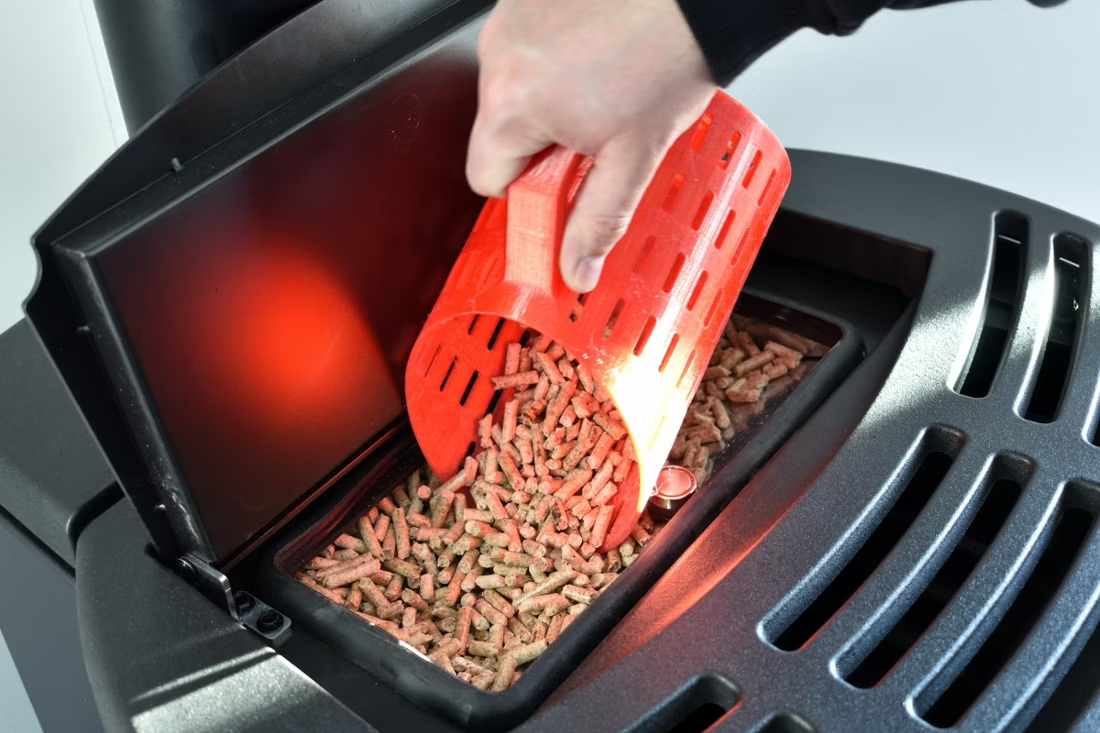
That's where pellet appliances fit. A pellet stove or insert loads from a hopper, runs on a thermostat, and burns compressed hardwood pellets—often sourced regionally through suppliers like Lignetics and Indeck Energy Services—far more cleanly and consistently than an open wood fire. Delaware County has no air quality non-attainment issues or winter burn curtailment periods to work around, so pellet appliances here are chosen mainly for convenience and steady output rather than emissions rules. For acreages and older farmhouses across the county, a properly sized pellet stove can run for a full heating season on far less daily labor than a wood stove, while still delivering real, radiant warmth on the coldest nights.
Three steps. No salesperson until you're ready.
Tell us about your project
Your zip code, your situation, and the fuel you're leaning toward—or let the answers point you to one.
See what's actually available
The brands dealers within 100 miles genuinely carry—real options, never a catalog mirage.
Get your dealer & Project Guide
A trusted local dealer, plus the free Project Guide & Parts List that names every component of the job.
Frequently Asked Questions
How much does a pellet stove installation cost in Delaware County?
Pellet stove and insert installations typically run in the $3,000 to $6,000 range in most of Iowa, and Delaware County is no exception—venting is usually a smaller PL-rated pipe run through a wall rather than a full masonry chimney, which keeps installation simpler and generally less expensive than a comparable wood stove project. Costs move toward the higher end for insert conversions into an existing masonry fireplace, or for installs in older Manchester or Earlville-area homes where wiring for the stove's electrical hopper and blower needs upgrading. A local dealer can give you a firm number after seeing your home.
What size pellet stove do I need for my home?
Sizing depends on square footage, insulation, and ceiling height, but Delaware County's cold winters push most homeowners toward the larger end of a given stove's rated range. Many of the county's homes are older farmhouses with less insulation than newer construction, so a unit rated for a 1,500 sq ft home might be more comfortably sized for 1,200 sq ft here once you factor in drafts and single-digit overnight lows. Local dealers who carry Lignetics or Indeck Energy Services pellet lines can size a stove for your specific home during a walkthrough—sizing is one area where a quick in-home visit beats guessing from a chart.
Where can I find certified pellet stove installers near me?
Look for hearth retailers or installers with NFI (National Fireplace Institute) certification, which covers proper venting, clearances, and electrical setup for pellet appliances specifically. Because pellet stoves rely on an auger, blower, and control board rather than just a chimney, an installer who regularly services pellet equipment—not just wood stoves—matters here. A certified local dealer serving the Manchester, Delhi, and Earlville area can also help coordinate any electrical work the stove's hopper motor and igniter need.
What's the difference between a pellet stove and a pellet insert?
A pellet stove is a freestanding unit that sits on its own hearth pad and vents through a wall or existing chimney chase—it can go almost anywhere in a room with the right clearances. A pellet insert is built to slide into an existing masonry fireplace opening, turning an old wood-burning fireplace into a much more efficient, thermostat-controlled heat source. For Delaware County homes with an existing masonry fireplace that's rarely used because it's inefficient, an insert is usually the better fit. Homes without an existing fireplace opening typically go with a freestanding stove instead.
Do I need a permit to install a pellet stove in Delaware County?
Most pellet stove installations still require a building permit through Delaware County's building department, even though pellet venting is simpler than a full wood-stove chimney. Any new electrical circuit for the stove's hopper motor and igniter also needs to meet code. Most local installers handle the permitting and inspection scheduling as part of the install price, so you're generally not filing paperwork yourself. Unlike some states with wood-smoke non-attainment zones, Delaware County has no seasonal burn curtailment periods to plan around.
What's the best pellet stove for Delaware County's climate?
For a climate with a heating season on par with Madison, Wisconsin and winter lows around 8°F, look at mid-to-large pellet stoves with a hopper capacity of at least 40-60 pounds—brands like Harman, Enviro, and Quadra-Fire make models built to run for a full day or more between refills, which matters when overnight temperatures across the county drop into the single digits for days at a stretch. Pair the stove with hardwood pellets from a regional supplier like Lignetics or Indeck Energy Services, which burn cleaner and leave less ash than lower-grade softwood pellets. A local dealer can match hopper size and BTU output to your square footage and insulation level.
How much maintenance does a pellet stove need?
Pellet stoves need more frequent light maintenance than wood stoves but far less heavy cleaning. Plan on emptying the ash pan every few days during regular winter use, cleaning the burn pot and glass weekly, and vacuuming out the hopper and auger area every few weeks. A full professional service—checking the igniter, blower motors, gaskets, and venting—is recommended once a year, ideally before the heating season starts in the fall. Skipping the annual service is the most common cause of pellet stoves running poorly or shutting down mid-winter.
Where can I buy pellets in Delaware County?
Hardwood pellets from suppliers like Lignetics and Indeck Energy Services are widely available through farm stores, hardware retailers, and hearth dealers across northeast Iowa, and many stores in and around Manchester restock heavily each fall as heating season approaches. Pellet pricing moves with lumber and energy markets, so it's worth checking current per-ton pricing with a local dealer rather than relying on a number that's a year old—buying a season's supply early in fall, before the cold sets in, is the most common way Delaware County homeowners avoid running short in January.
Pellet stove vs. wood stove—which is right for me?
Wood stoves burn cordwood cut from local oak, hickory, maple, or walnut, work without electricity, and are the better choice if you want backup heat during an ice storm outage—a real consideration on rural Delaware County acreages where power can be out for a day or more. Pellet stoves are easier to run day to day—load the hopper, set the thermostat, and let the auger do the rest—with less mess and more even heat output, but the auger and blower need electricity, so they go dark in a power outage unless paired with a battery backup. If daily convenience matters more than storm-proof heat, pellet usually wins for full-time living spaces; if you want a heat source you can count on no matter what the power grid is doing, wood is the more resilient option.
Why is my open fireplace making my house colder?
Open fireplaces suck—literally. As the fire burns, it consumes air your furnace already paid to heat and pulls it out through the chimney, so the house is actually colder after the fire goes out than before you lit it. An insert fixes this: it seals the chimney, puts fixed glass across the front, and turns that hole in your house into a real heat source.
Why is a fireplace insert so efficient?
An insert does two things: it seals the chimney completely, so you stop losing air you already paid to heat, and it radiates warmth into the room through the firebox and glass. Most add a heat-exchange fan that pulls cool room air underneath, wraps it around the hot firebox, and pushes it back out warm. Your home is more efficient before you've even lit the first fire.
How much should I budget for a fireplace?
For an average home—covering the fireplace, the vent pipe, and basic installation—a budget between $3,900 and $5,500 gives you a lot of options across wood, gas, and pellet. By the time you add finish work, gas line, and electrical, the average complete installation lands between $5,000 and $12,000 all-in. In a remodel or new build, a good rule is to put about 2.5% of the total project cost toward the fireplace.
Can a fireplace actually lower my heating bill?
Yes—by creating a comfort zone. A furnace heats every square foot of the house just to warm the one room you're in; a gas fireplace on low burns roughly a sixth of the gas a typical furnace does. Set the furnace around 55–60 degrees as a baseline, then heat the rooms your family actually uses. Families who heat this way commonly save $20–$60 a month.
Stove and Fireplace Dealers in Delaware County
Pellet Brands Stocked Around Delaware County
Manufacturers will point you to the nearest stocking dealer.
Find your pellet stove in Delaware County.
Tell us a bit about your home and we'll match you with a trusted local dealer and send over a free Project Guide & Parts List—the right pellet stove or insert for your Delaware County home, the exact parts including the vent kit, and the dealer we recommend to install it.
Find Your Fireplace →