
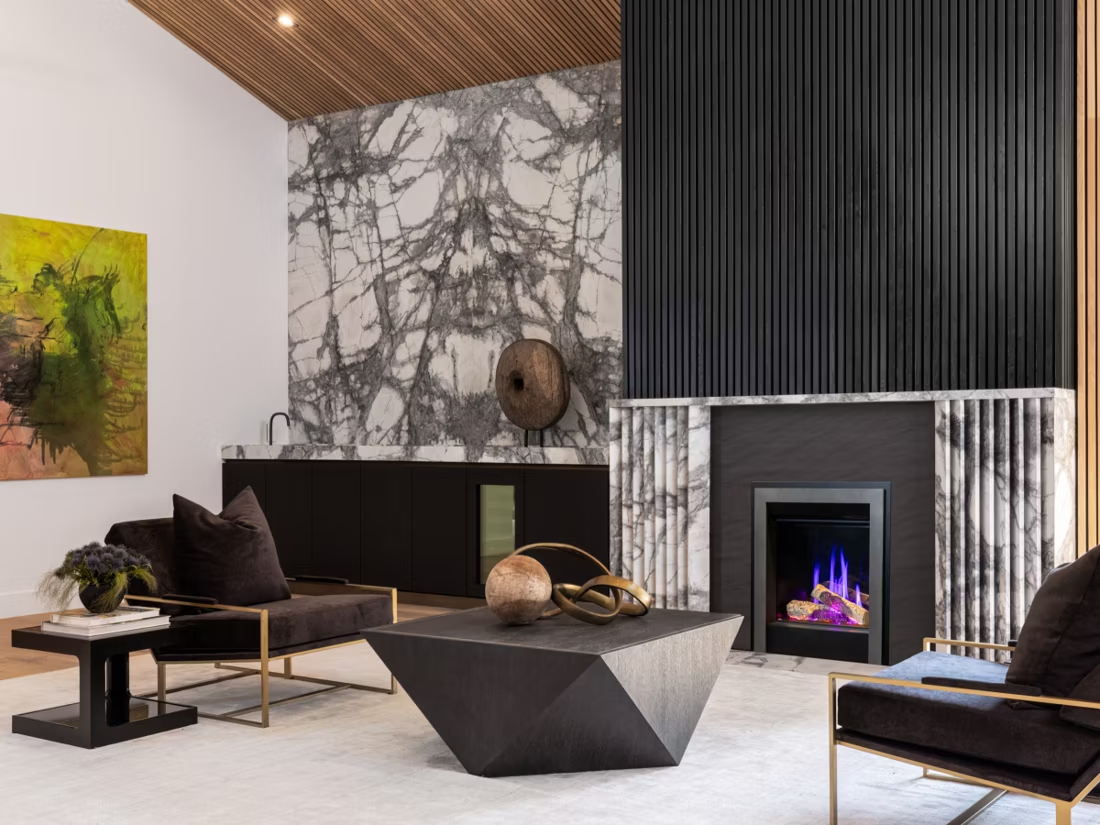
Add Real Flame Look to Any Room in Crawford County—No Chimney Required.
Zone heat and realistic ambiance for Denison, Manning, Schleswig, Charter Oak, and every farmstead in between—no gas line, no masonry, no venting. Find the right electric fireplace and connect with a trusted local dealer.
Every Project Starts From One of These Five Situations
Ambiance and zone heat, without altering the house.
Crawford County sits in the rolling farmland of western Iowa, along the Boyer River, with Denison as the county seat and smaller communities—Manning, Schleswig, Charter Oak, Vail, Aspinwall, Kiron—spread across roughly 12,466 residents and a lot of open ground in between. Winters here are genuinely cold: an average low of 10°F and a heating season on par with Minneapolis, Minnesota, put Crawford County among the chillier spots in the region. Wood heat has deep roots in this county's farmhouses—oak, hickory, maple, and walnut are all common on local wood lots—but electric fireplaces have become the go-to option for homeowners who want real-looking flame and supplemental warmth without cutting into a wall for gas line or building a chimney.
Because Crawford County's winters are cold enough that homes need a real primary heat source—furnace, boiler, or wood stove—electric fireplaces here work best as what they're designed for: zone heat and atmosphere, not whole-house heating. That's exactly why they've found a niche in finished basements without existing flues, additions and sunporches where running new venting isn't practical, rental properties and manufactured homes where alterations are limited, and older farmhouses where owners want fire ambiance in a bedroom or den without touching the exterior. With no combustion byproducts and no emissions to manage, electric units also sidestep any of the air quality or curtailment questions that come up with wood burning—not an issue Crawford County currently faces, but one less thing to think about.
Three steps. No salesperson until you're ready.
Tell us about your project
Your zip code, your situation, and the fuel you're leaning toward—or let the answers point you to one.
See what's actually available
The brands dealers within 100 miles genuinely carry—real options, never a catalog mirage.
Get your dealer & Project Guide
A trusted local dealer, plus the free Project Guide & Parts List that names every component of the job.
Frequently Asked Questions
How much does it cost to install an electric fireplace in Crawford County?
Plug-in electric fireplaces and freestanding stoves that run on a standard 120-volt household outlet are the least expensive to get into a room—often $200 to $1,500 for the unit itself, with no electrical work required beyond an existing outlet. Built-in electric inserts and wall-mount units that need a dedicated circuit typically run $1,500 to $4,000 installed, including a licensed electrician running a 240-volt line if the model calls for one. Custom mantel surrounds or full-wall linear units on the higher end can push past $5,000 once carpentry and finishing are included. A local dealer can give you a firm number once they know the room, the wall type, and whether new wiring is needed.
Will an electric fireplace actually heat a room in Crawford County's winters?
It can take the edge off a single room, but it shouldn't be your primary heat source in a climate this cold. With average lows around 10°F and a heating season on par with Minneapolis, Minnesota, Crawford County homes need a furnace, boiler, or wood stove doing the main work. Most electric fireplaces are rated around 1,500 watts and roughly 4,600–5,000 BTUs, which is enough to noticeably warm a bedroom, den, or finished basement room but not a whole house. Think of it as zone heat for the room you're actually sitting in, paired with your existing central heat for everything else.
Do I need a permit to install an electric fireplace in Crawford County?
Plug-in freestanding units that just need an existing outlet generally don't require a permit. If you're installing a built-in insert or wall unit that needs a new dedicated circuit, the electrical work itself typically requires a permit through the Crawford County building department, and it needs to be pulled by a licensed electrician. Most local dealers either handle this coordination directly or can point you to an electrician who's done the work before—it's a small, routine permit compared to what a wood or gas installation requires.
Electric vs. wood stove—which makes more sense for my Crawford County home?
Wood stoves burning local oak, hickory, maple, or walnut can genuinely heat a whole house and keep running when the power goes out—a real consideration here, since ice storms and heavy snow do knock out rural lines in Crawford County. Electric fireplaces need power to run, so they go dark exactly when a wood stove would be earning its keep. On the other hand, electric units need no chimney, no wood storage, no ash cleanup, and no annual sweep—for a spare bedroom, basement rec room, or rental unit where you just want a real-looking fire and a little supplemental warmth, electric is far simpler. Plenty of Crawford County homes end up with both: wood or a furnace for serious heat, electric for the rooms where ambiance matters more than BTUs.
Electric vs. propane fireplace—which is better for rural Crawford County?
Outside Denison and the other towns, most rural Crawford County homes run on propane rather than piped natural gas, which means a gas fireplace usually means a tank, a gas line, and coordination with a propane supplier. Electric fireplaces skip all of that—no tank, no line, no combustion venting—and can be installed in an afternoon. The tradeoff is heat output and outage resilience: a propane fireplace can put out real BTUs and, with the right ignition system, keep running without grid power. Electric is the simpler, lower-commitment choice when you want flame and light more than serious backup heat.
What's the best type of electric fireplace for a finished basement?
For a Crawford County basement rec room, a built-in electric insert set into a framed wall or existing niche gives the cleanest look and the most realistic flame, since it's recessed rather than sitting on the floor. Wall-mounted linear units work well in newer basements with drywall already up and a nearby outlet or circuit. If you're not ready to cut into a wall, a freestanding electric stove or mantel package gets you most of the same ambiance and heat with no construction at all—a good option for a basement you're not fully remodeling yet. A local dealer can walk the space with you and tell you which approach fits your framing.
How much does it cost to run an electric fireplace?
Most electric fireplaces draw about 1,500 watts on the heat setting. At typical Iowa residential electric rates, running one for several hours an evening costs somewhere in the range of 15 to 25 cents per hour—noticeably cheaper per hour than propane, though it's producing supplemental room heat rather than whole-house BTUs. Flame-only mode with the heater off uses only a fraction of that, since the LED flame effect itself draws very little power. For most Crawford County households using one for evening ambiance in a den or bedroom, it adds a modest amount to a monthly electric bill.
What's the difference between a plug-in and a built-in (hardwired) electric fireplace?
A plug-in unit—whether it's a freestanding stove, a mantel package, or a smaller insert—runs on a standard 120-volt outlet and can be set up the same day you buy it, no electrician needed. A built-in or hardwired unit is wired directly into a dedicated circuit, usually 240 volts for larger models, and is meant to be a permanent fixture recessed into a wall or custom surround. Built-ins generally throw more heat and look more integrated, but they require an electrician and, in Crawford County, an electrical permit for the new circuit. If you're renting, not sure about a final layout, or just want something simple, plug-in is the lower-commitment route.
Can I put an electric fireplace in a manufactured home or older farmhouse?
Yes, and it's one of the more common uses for electric units in Crawford County's rural housing stock. Manufactured homes often can't safely support venting for a wood or gas appliance, and older farmhouses sometimes have walls or chimneys that aren't in shape for a masonry retrofit. A plug-in or properly wired built-in electric fireplace sidesteps both problems entirely—no venting, no clearance-to-combustible chimney chase, no structural changes to the exterior. It's worth confirming your home's electrical panel has capacity for a larger built-in unit before committing to one; a local dealer or electrician can check that in a few minutes.
Can I put a TV above my fireplace?
Yes—with an asterisk. Fireplaces are hot and TVs don't like heat. Either put a mantel between them to deflect rising warmth, or choose a fireplace with heat-management technology that creates a cool zone on the wall above—the wall stays around 125 degrees, barely warm, while the room still gets full heat. If you like clean lines and don't want a mantel, heat management is the answer.
Do electric fireplaces actually produce heat?
Yes—most put out around 4,800–5,000 BTUs from a standard outlet, which comfortably warms a bedroom, office, or den as a comfort-zone heater. What they won't do is carry a whole house the way wood, gas, or pellet can. Think of electric as ambiance-first with honest supplemental heat: flames on with no heat in July, flames plus warmth in January.
What is an in-home preview and do I need one?
It's a visit where a hearth professional measures your space, confirms the model you picked actually works in your home, and walks the specs—framing, gas line, venting, finish work—before anything is ordered. Some details you just can't know until you see the house. Never make a down payment without one; it's the single most-skipped step that burns buyers.
Can I install a fireplace myself?
If you're putting a fire in your house on purpose, it's best to work with an expert. Unless you're genuinely experienced in framing, gas line, vent pipe, and the national code on clearances to combustibles, have a professional do it—and ideally the same company that sells you the fireplace, so warranty, service, and liability all live under one roof.
Find your electric fireplace in Crawford County.
Tell us about your room and we'll match you with the right electric fireplace or insert, plus a free Project Guide & Parts List with the exact parts and your recommended local Crawford County dealer.
Find Your Fireplace →