
Heat your home through a Crawford County winter.
Wood, gas, pellet, and electric fireplace resources for every town in Crawford County, Iowa—from Denison to Charter Oak, Manilla, Schleswig, and the farm crossroads in between. Find the right unit and connect with a trusted local hearth retailer.
Every Project Starts From One of These Five Situations
Long, hard winters shape how Crawford County heats its homes.
Crawford County sits in the rolling farmland of western Iowa, along the Boyer River and just east of the Loess Hills. Winters here run long and cold—average lows near 10°F, with a heating season about as demanding overall as Madison, Wisconsin's. The heating season typically stretches from early October through April, and hardwood species like oak, hickory, maple, and walnut—grown in farm woodlots, windbreaks, and river-bottom timber—have supplied firewood to county households for generations. Unlike parts of the country dealing with winter inversion or nonattainment status, Crawford County has no air quality restrictions on wood burning, which keeps the process straightforward for homeowners who want to run a wood stove or insert.
This hub rolls up what's available across the whole county—hearth retailers, service technicians, and fuel suppliers serving Denison, Charter Oak, Manilla, Schleswig, Kiron, Vail, Aspinwall, Arion, Buck Grove, Deloit, Dow City, Ricketts, and Westside. Pick a fuel below to see local dealers, typical installation costs, and the units that make sense for a farmhouse, an acreage, or a home right in town.
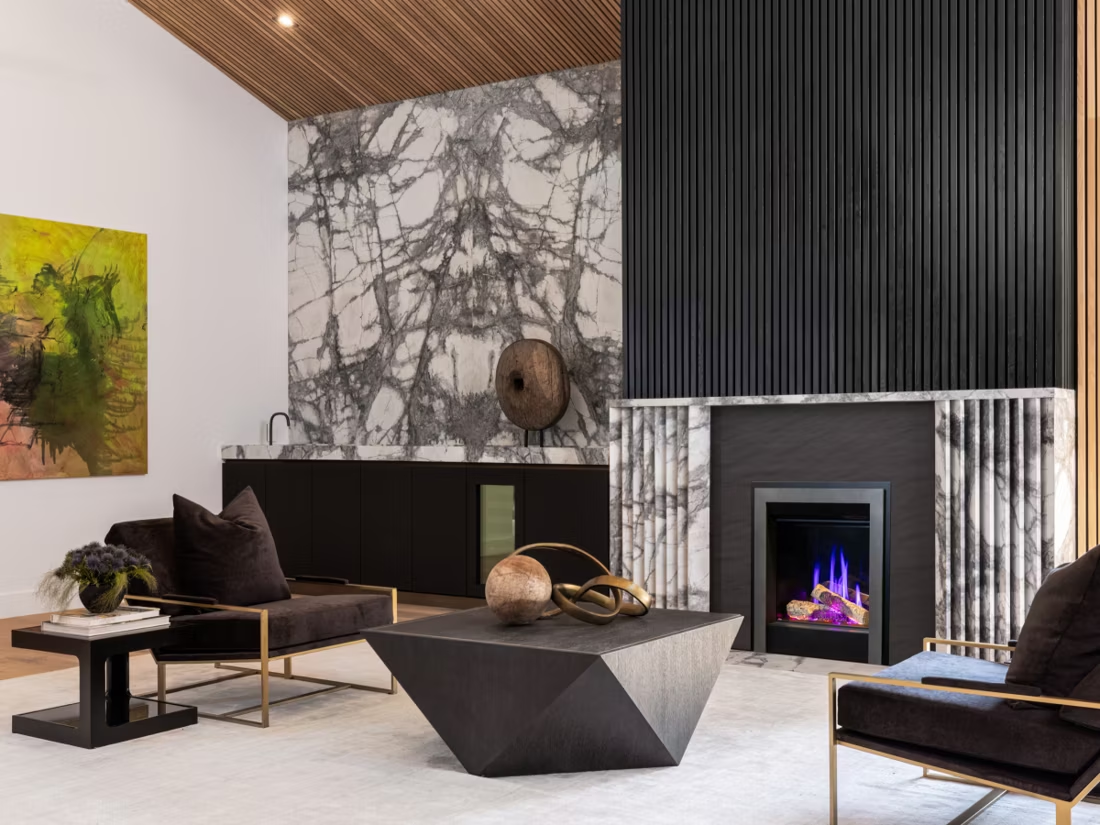
Four fuels. One honest answer for Crawford County.
Three steps. No salesperson until you're ready.
Tell us about your project
Your zip code, your situation, and the fuel you're leaning toward—or let the answers point you to one.
See what's actually available
The brands dealers within 100 miles genuinely carry—real options, never a catalog mirage.
Get your dealer & Project Guide
A trusted local dealer, plus the free Project Guide & Parts List that names every component of the job.
Frequently Asked Questions
Which fireplace fuel works best for a Crawford County home?
It depends on the property and how you use it. Wood remains a strong choice in rural Crawford County—farm woodlots and windbreaks supply oak, hickory, maple, and walnut, all dense hardwoods that burn hot and long, which matters when winter lows average around 10°F and the county sees a long, demanding heating season stretching from early fall well into spring. Gas is the convenience option: Denison and the larger towns have natural gas service, while most acreages and farms outside town run on propane—either way, gas gives instant heat with none of the wood-splitting labor. Pellet stoves are a solid middle ground, and with regional suppliers like Lignetics and Indeck Energy Services in the supply chain, fuel availability isn't usually a problem. Electric fireplaces work well as supplemental heat in a bedroom or den, but on their own they won't keep up with a Crawford County cold snap. Plenty of homes here run two fuels—a wood or pellet stove for the coldest stretches, gas or electric for shoulder-season convenience.
Do I need a permit to install a wood stove or fireplace in Crawford County?
Generally, yes. New wood stoves, inserts, gas fireplaces, gas inserts, gas stoves, and pellet stoves typically require a building permit, and any new gas line work needs a licensed gas fitter and a separate permit. If you're in Denison or one of the other incorporated towns, that permit runs through the city; in unincorporated parts of the county, it goes through the county's zoning and building office. New wood-burning appliances also need to meet current EPA 2020 NSPS emissions standards—this applies nationally, not just in Iowa. Electric fireplaces usually skip the permit process unless you're doing a built-in installation with new wiring. Most hearth retailers in the area handle the permit paperwork as part of the installation, so it's rarely something the homeowner has to manage alone.
Are there any wood-burning restrictions in Crawford County?
No—Crawford County doesn't have the air quality issues that trigger burn advisories in some parts of the country. There's no winter inversion problem here and no nonattainment designation, so there are no mandatory or voluntary burn-curtailment days like you'd see in a basin community out West. That said, it's still worth installing an EPA-certified stove: modern catalytic and non-catalytic units burn oak and hickory more cleanly and efficiently than an older pre-1990s stove, which means less creosote buildup, fewer chimney fires, and more heat per cord.
Will I find a dealer that carries all four fuel types in a county this size?
Crawford County's population is just over 12,000, so the number of full-service hearth retailers based here is small compared to a metro area. Most homeowners work with a Denison-based dealer for wood, gas, and pellet units, and some multi-fuel retailers also carry electric fireplaces as a smaller part of their lineup. If you're comparing all four fuels side by side with working showroom displays, you may need to make the drive to a larger dealer in Sioux City or Carroll. Either way, the local dealers listed on this hub can special-order what they don't stock and handle the installation and permitting locally.
Where does firewood come from in Crawford County, and how should I season it?
Most firewood here comes from private sources rather than public land permits—farm woodlots, windbreak thinning, river-bottom timber along the Boyer, and local tree services clearing storm-damaged trees. Oak and hickory, the two most common species burned locally, need roughly 12 to 18 months of seasoning split and stacked off the ground before they're ready to burn efficiently; walnut and maple season a bit faster, closer to 9 to 12 months. If you're buying firewood rather than cutting your own, ask the supplier how long it's been split and stacked—unseasoned oak in particular will smolder, smoke, and build creosote instead of throwing real heat.
What does fireplace installation typically cost across fuel types in Crawford County?
Costs run lower here than in higher-cost metro markets, but the ranges still vary a lot by fuel. Wood stove or insert installation: roughly $3,500–$7,500 for a typical retrofit, more if new chimney or hearth-pad work is needed. Gas fireplace, insert, or stove: roughly $4,000–$9,000, with cost driven mainly by how much gas line work and venting is required—conversions in homes that already have gas service run toward the lower end. Pellet stove or insert: roughly $3,500–$6,500 installed. Electric fireplace: $200–$2,500 for the unit itself, plus $300–$1,000 in labor for anything beyond a plug-and-play wall unit. For a project-specific number, a local dealer can put together an itemized quote once they've seen the space.
What is an in-home preview and do I need one?
It's a visit where a hearth professional measures your space, confirms the model you picked actually works in your home, and walks the specs—framing, gas line, venting, finish work—before anything is ordered. Some details you just can't know until you see the house. Never make a down payment without one; it's the single most-skipped step that burns buyers.
Can I install a fireplace myself?
If you're putting a fire in your house on purpose, it's best to work with an expert. Unless you're genuinely experienced in framing, gas line, vent pipe, and the national code on clearances to combustibles, have a professional do it—and ideally the same company that sells you the fireplace, so warranty, service, and liability all live under one roof.
Does a fireplace add value to my home?
On average, a fireplace adds back to the home about the same amount you spent installing it. Add the monthly savings from heating the rooms you actually use instead of the whole house—often hundreds of dollars a year—and the value case is strong before you even count what a fire does for how your family uses the room.
Wood, gas, pellet, or electric—how do I choose?
Match the fuel to your life, not the other way around. Wood: lowest fuel cost and total power-outage independence, but you're hauling and stacking. Gas: press a button, set a thermostat, no maintenance to speak of. Pellet: wood economics with automatic feeding, in exchange for weekly cleaning and a need for electricity. Electric: plugs in anywhere with honest supplemental heat. Nobody regrets the fuel that fits how they actually live.
Stove and Fireplace Dealers in Crawford County
Listings include WhyFire partner dealers, dealers we have verified as authorized for the brands we recommend, and established local businesses that carry hearth products. Every listing shows which one it is. The ones marked Preferred run on WhyFire's software, so they can show you real pricing and book your appointment right here. No manufacturer pays for placement. How we verify dealers →
Fac Cooperative
Kay Stevens Custom Designs
Hearth & Home Decor
Find your fireplace dealer in Crawford County.
Pick your fuel below, and we'll match you with a trusted local Crawford County dealer and send over a free Project Guide & Parts List—the parts, the vent kit, and the dealer recommendation for your specific project.
Find Your Fireplace →