
Consistent heat for Butler County's long, cold winters.
Butler County's winters push well below zero with wind chill, and pellet stoves deliver thermostat-controlled heat without the daily wood-splitting. Find the right pellet stove or insert, and we'll match you with a trusted local dealer near Allison, Clarksville, and Parkersburg.
Every Project Starts From One of These Five Situations
Automated heat built for a genuinely cold climate.
Butler County sits in north-central Iowa's corn and dairy country, a rural county of roughly 9,500 residents spread across farmland surrounding Allison, Clarksville, Parkersburg, Shell Rock, Greene, and New Hartford. The climate here is Zone 6A—winter lows average 8°F, and the county's winter heating load puts it in the same cold-climate tier as Minneapolis, Minnesota. Heating season here typically runs from mid-October through April, and farmhouses and acreages across the county have long relied on wood heat from the oak, hickory, maple, and walnut that grow along the Shell Rock and Cedar Rivers.
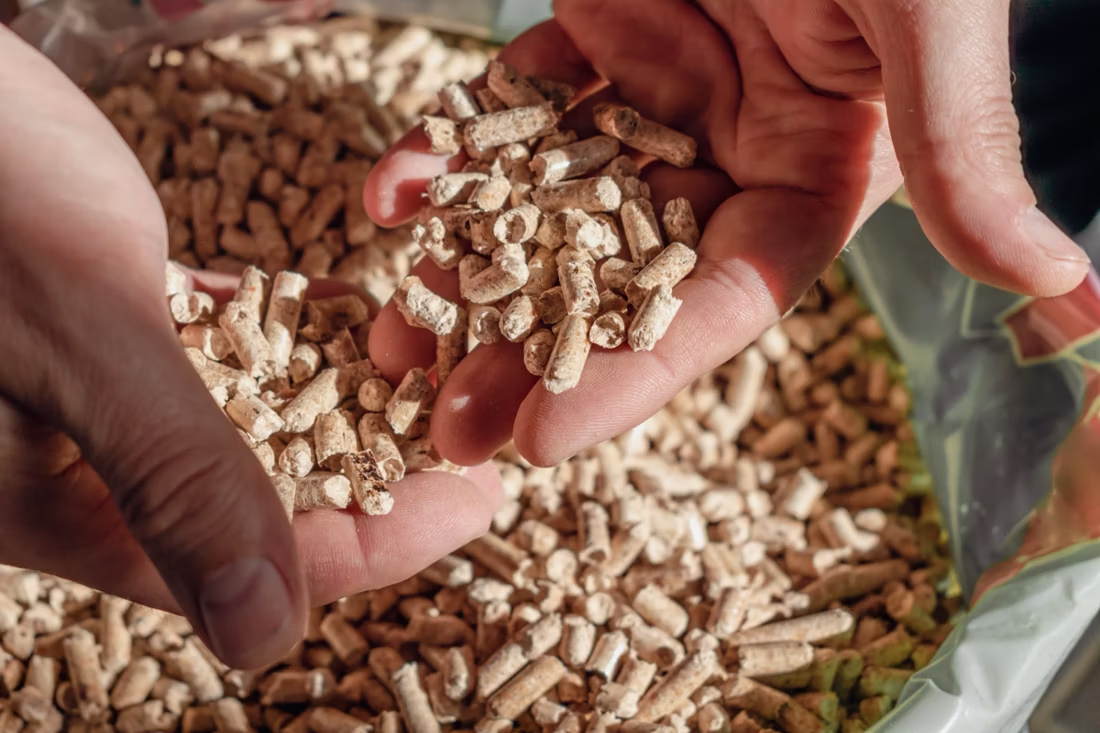
Pellet stoves have become a popular alternative to splitting and stacking cordwood, especially for households that want consistent, thermostat-set heat without daily fire-tending. A hopper load of pellets can run 24 hours or more on a single fill, and because Butler County has no air quality non-attainment designations or wood-burning curtailment periods, pellet stoves run here without any of the restrictions you'd see in more urban, smoke-sensitive counties. Regional supply comes through Lignetics and Indeck Energy Services, both of which distribute bagged pellets to Midwest dealers—worth stocking up on before the first hard freeze, since demand (and price) tends to firm up once temperatures drop.
Three steps. No salesperson until you're ready.
Tell us about your project
Your zip code, your situation, and the fuel you're leaning toward—or let the answers point you to one.
See what's actually available
The brands dealers within 100 miles genuinely carry—real options, never a catalog mirage.
Get your dealer & Project Guide
A trusted local dealer, plus the free Project Guide & Parts List that names every component of the job.
Frequently Asked Questions
How much does a pellet stove installation cost in Butler County?
Most pellet stove installations in Butler County run $3,000 to $6,000, depending on the unit, whether you're venting through an existing chimney chase or need a new through-wall PL-vent run, and whether electrical work is needed for the auger and blower. A straightforward freestanding pellet stove vented through an exterior wall in an existing living space sits at the lower end. Installations in outbuildings, detached shops, or pole barns—common on Butler County acreages—can run higher once new wiring and wall penetrations are factored in. Ask your local dealer for a firm quote after they've seen your space.
What size pellet stove do I need for a Butler County home?
With winter lows averaging 8°F and a heating season that pushes past 7,000 degree days, most Butler County homes need a stove on the larger end of the manufacturer's range compared to milder climates. A stove rated for 1,500-2,000 square feet in a moderate climate may only comfortably cover 1,200-1,600 square feet here once you factor in older farmhouse construction, higher ceilings, and drafty original windows common in the county's older housing stock. For whole-home heating in a well-insulated newer build, a large-capacity unit (40,000+ BTU) is usually the right call. A local dealer can size the stove to your actual square footage and insulation level.
Where do I buy pellets in Butler County, and how many tons do I need?
Lignetics and Indeck Energy Services both supply bagged pellets to dealers serving north-central Iowa, and most local hearth shops stock 40-pound bags year-round, with better pricing if you buy a season's supply (typically 2-3 tons for a stove used as primary heat through Butler County's long winter) before cold weather hits. Pellets need to be stored dry—a garage, shed, or basement works, but avoid damp concrete floors without a pallet underneath, since pellets absorb moisture and swell if they get wet. Expect to pay somewhere in the $230-$280 per ton range for premium hardwood pellets, though pricing shifts with supply.
Do I need a permit to install a pellet stove in Butler County?
Most Butler County jurisdictions require a building permit for a new pellet stove installation, particularly if it involves a new wall penetration for venting or new electrical circuits for the auger and blower. Because pellet stoves vent through a small-diameter PL-rated pipe rather than a full masonry chimney, the permit process is usually simpler and faster than a wood stove or gas fireplace install. Check with your township or the county building department before work starts—most local dealers handle the permit application as part of a full-service installation.
Pellet stove vs. wood stove—which makes more sense in Butler County?
Wood is deeply embedded in Butler County's rural heating culture—oak, hickory, maple, and walnut are all common on local farms and woodlots, and a wood stove works with zero electricity, which matters during the ice storms and high-wind events that occasionally knock out power for days here. Pellet stoves need electricity to run the auger and combustion blower, so without a backup power source, a pellet stove goes cold in an outage. What pellet stoves offer in return is real convenience: no splitting, stacking, or hauling cordwood, more consistent heat output, and a thermostat that holds a set temperature automatically. Many Butler County households that want backup heat security still keep a wood stove or fireplace insert alongside a pellet stove for daily convenience.
Can I install a pellet stove in a machine shed or detached garage?
Yes—this is one of the more common pellet stove projects in Butler County. Because pellet stoves vent through a small horizontal PL-vent pipe rather than requiring a full masonry chimney, they're well suited to pole buildings, machine sheds, and detached garages where a traditional wood stove installation would be far more involved. You'll still need proper clearances to combustibles, a code-compliant hearth pad, and an electrical circuit for the unit—a local dealer can walk the space and confirm what's needed before installation.
How much maintenance does a pellet stove need?
Pellet stoves need more routine attention than a gas unit but less than a wood stove. Plan on emptying the ash pan every few days to weekly depending on use, cleaning the burn pot and glass regularly to keep combustion efficient, and vacuuming the hopper and auger area a few times a season. Most manufacturers also recommend an annual professional cleaning of the exhaust venting and combustion blower, particularly given Butler County's long burn season—a stove running daily from October through April sees a lot more use than one lit occasionally for ambiance.
What happens to my pellet stove during a power outage?
A pellet stove will shut down without power, since the auger, igniter, and combustion blower are all electric. Given that Butler County sees winter storms capable of knocking out rural power lines for extended periods, many households pair their pellet stove with a battery backup unit or a small generator sized to run the stove's low-draw components. Some newer pellet stove models are designed to run on a standard UPS battery backup for several hours, which can bridge a shorter outage. If reliable heat during outages is a priority, ask your local dealer about backup power compatibility before you buy, or consider a wood stove as a no-power supplement.
What pellet stove brands are available through Butler County dealers?
Lignetics and Indeck Energy Services both supply pellet fuel to dealers across north-central Iowa, and most local hearth retailers carry stove lines from manufacturers like Harman, US Stove Company, and Englander, alongside regional availability of Lignetics-branded hardwood pellets. Availability shifts by dealer, so the practical approach is to work with a local retailer who can tell you what's actually in stock and installable in Butler County rather than picking a model off a national website first.
Why is a fireplace insert so efficient?
An insert does two things: it seals the chimney completely, so you stop losing air you already paid to heat, and it radiates warmth into the room through the firebox and glass. Most add a heat-exchange fan that pulls cool room air underneath, wraps it around the hot firebox, and pushes it back out warm. Your home is more efficient before you've even lit the first fire.
How often does a pellet stove need cleaning?
A clean pellet stove is a happy pellet stove. Plan on cleaning the burn pot about once a week when you're burning regularly—ash and clinkers gum up the air holes just like a pellet barbecue. Most pellet stove problems trace back to skipped cleaning that nobody explained up front. Some designs make it easy with a trapdoor burn pot: pull a lever and the gunk drops into the ash pan.
Does a fireplace add value to my home?
On average, a fireplace adds back to the home about the same amount you spent installing it. Add the monthly savings from heating the rooms you actually use instead of the whole house—often hundreds of dollars a year—and the value case is strong before you even count what a fire does for how your family uses the room.
Can a fireplace actually lower my heating bill?
Yes—by creating a comfort zone. A furnace heats every square foot of the house just to warm the one room you're in; a gas fireplace on low burns roughly a sixth of the gas a typical furnace does. Set the furnace around 55–60 degrees as a baseline, then heat the rooms your family actually uses. Families who heat this way commonly save $20–$60 a month.
Pellet Brands Stocked Around Butler County
Manufacturers will point you to the nearest stocking dealer.
Find your pellet stove in Butler County.
Tell us about your home and heating goals, and we'll match you with a trusted local dealer plus a free Project Guide & Parts List—a full plan for your pellet stove project in Butler County, including the exact parts and venting kit you'll need.
Find Your Fireplace →