
Steady, Set-and-Forget Heat for Burlington Winters.
With a long, demanding heating season along the Mississippi in southeast Iowa, Burlington homes need heat that runs for hours without tending. Find the right pellet stove and connect with a trusted local dealer.
Every Project Starts From One of These Five Situations
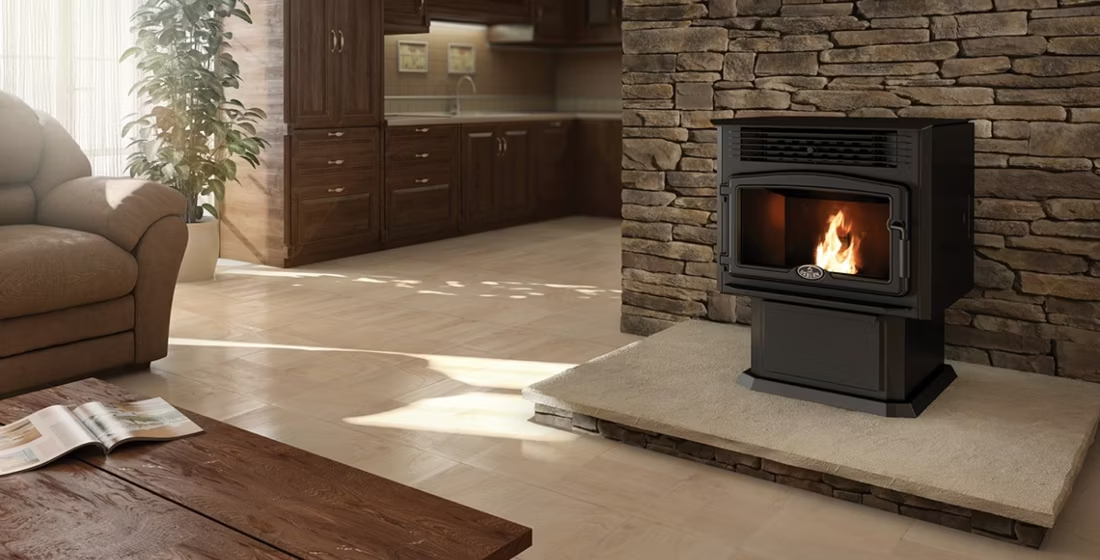
Consistent warmth without the wood-splitting work.
Burlington sits at 628 feet along the Mississippi River in Des Moines County, in climate zone 5A, with winter lows averaging 16°F and a heating season that runs long and steady—not unlike inland Midwest cities such as Madison, Wisconsin. Southeast Iowa's forests are thick with oak, hickory, maple, and walnut, and while most of that hardwood goes into flooring and furniture stock rather than firewood, it points to the same regional supply chain that keeps hardwood pellets flowing through this part of the country.
Pellet stoves have become a practical middle ground for Burlington homeowners: no splitting or stacking cordwood, no open flue losing heat up the chimney, and a hopper that can run 24 to 40 hours on a single fill depending on the unit and setting. Regional pellet producers like Lignetics and Indeck Energy Services supply much of the upper-Midwest market, which generally keeps bag prices more stable here than in regions dependent on long-haul trucking. The tradeoff is that pellet stoves run on electricity for the auger and combustion blower—worth planning around given local rates from Interstate Power and Light Co. (about $0.179/kWh) and Eastern Iowa Light & Power Cooperative (about $0.1356/kWh).
Three steps. No salesperson until you're ready.
Tell us about your project
Your zip code, your situation, and the fuel you're leaning toward—or let the answers point you to one.
See what's actually available
The brands dealers within 100 miles genuinely carry—real options, never a catalog mirage.
Get your dealer & Project Guide
A trusted local dealer, plus the free Project Guide & Parts List that names every component of the job.
Frequently Asked Questions
How much does a pellet stove installation cost in Burlington?
Most pellet stove installations run in the $3,000 to $6,000 range once you account for the stove itself, the vent kit, and labor. A freestanding pellet stove venting straight through an exterior wall is typically on the lower end, while a pellet insert going into an existing masonry fireplace—which often needs a liner and hearth extension for clearance—runs closer to the middle or top of that range. Because Burlington doesn't have a single published local cost benchmark, the firmest number comes from an in-home consultation with a local dealer, who can quote based on your home's layout and venting path.
What size pellet stove do I need for a Burlington home?
With Burlington's long, demanding heating season and winter lows regularly in the teens, sizing matters more here than it would in a milder climate. Small pellet stoves (rated for up to about 1,000 sq ft) suit a single room or a well-insulated addition. Mid-size units (1,000–2,000 sq ft) cover most main living areas in a typical Burlington ranch or two-story. Larger units (2,000+ sq ft) can serve as primary heat in an open floor plan, provided the home holds heat reasonably well. An undersized stove will run at full output constantly and still fall short on the coldest nights; an oversized one cycles on and off and burns pellets inefficiently. A local dealer will size this based on your actual floor plan rather than square footage alone.
Where can I find a certified pellet stove installer near me?
Look for installers with NFI (National Fireplace Institute) pellet-specific certification, which covers venting, clearances, and combustion air requirements unique to pellet appliances. Pellet venting is different from wood-stove chimney venting—it typically uses smaller-diameter PL (pellet) vent pipe run horizontally through a wall rather than a full masonry chimney—so an installer experienced specifically with pellet systems matters. Most hearth dealers serving the Burlington area handle sales and installation together, which keeps warranty coverage and code compliance under one roof rather than split across a retailer and a separate contractor.
Pellet stove vs. wood stove—which makes more sense in Burlington?
Southeast Iowa has no shortage of oak, hickory, and walnut for those who want to burn cordwood, and a wood stove will keep running through a power outage with zero electricity required—a real consideration given Iowa's occasional ice storms. A pellet stove trades that off for convenience: load the hopper, set the thermostat, and let it run for a day or more without tending, with less ash and a cleaner glass. The catch is that pellet stoves need continuous power for the auger and blower, so without a battery backup or generator, a pellet stove goes cold in an outage exactly when you might need heat most. Homes that already have a generator or battery backup, or that simply want the lowest-maintenance heat source, tend to do well with pellet. Homes without backup power and easy access to firewood often lean wood instead.
Do I need a permit to install a pellet stove in Burlington?
Most pellet stove installations require a building permit through the City of Burlington (or Des Moines County if you're outside city limits), primarily to verify wall penetration clearances and venting termination distances from windows, doors, and grade. This is generally a simpler review than a full masonry chimney installation, since pellet venting doesn't require the same structural work. Most local dealers pull the permit as part of the installation package, so it's worth confirming that's included in your quote before work begins.
What's a good pellet stove for Burlington's climate?
For a heating season with real cold snaps, look for a stove with a larger hopper (60+ lb capacity) so it can run overnight without a refill, and a firebox rated to actually heat your square footage rather than just take the edge off. Brands like Harman and St. Croix are common and well-supported across the Midwest and worth asking about at a Burlington-area dealer. If you want the stove to double as backup heat, ask specifically about battery-backup compatibility—it's an add-on on most models, not standard equipment, and it's the detail that matters most if Interstate Power and Light or Eastern Iowa Light & Power service is ever interrupted.
Where do Burlington homeowners buy pellets, and what do they cost?
Hardwood pellets in the Burlington area typically come through regional producers like Lignetics and Indeck Energy Services, sold in 40-lb bags through local hearth dealers, farm supply stores, and home centers. Nationally, hardwood pellets run roughly $250 to $300 per ton (a ton is 50 bags), and being within trucking distance of Midwest pellet mills generally works in Burlington's favor on price and availability compared to regions that import pellets long-distance. Buying a season's supply in late summer, before demand and prices climb with the first cold snap, is the standard local strategy.
What happens to my pellet stove during a power outage?
A standard pellet stove stops working in an outage—the auger that feeds pellets into the firepot and the blower that pushes heat into the room both run on household electricity. Some manufacturers offer an optional battery backup that keeps the stove running for several hours on a charge, and a small inverter generator can run one indefinitely. Given that Iowa winters can bring ice storms severe enough to knock out power for days, it's worth discussing backup options with your dealer up front rather than after the first outage. If uninterrupted heat during outages is the priority over convenience, a wood stove burning local oak or hickory is the more reliable fallback.
Pellet stove vs. gas insert—which should I choose?
A gas insert lights instantly at the flip of a switch or remote, needs no fuel storage, and requires only an annual service visit rather than regular hopper refills—but it depends on either a natural gas line or a propane tank, and propane is the more common option in parts of Des Moines County outside Burlington's gas service area. A pellet stove needs more hands-on attention (loading the hopper, emptying the ash pan every few days) but delivers a more substantial, radiant heat output and taps into a regional hardwood pellet supply that's generally price-stable here. Homeowners who want lower-maintenance, always-ready heat tend to prefer gas; those who want stronger heat output and don't mind a bit more upkeep tend to prefer pellet. A local dealer carrying both can walk through the tradeoffs against your actual home and gas access.
Why is a fireplace insert so efficient?
An insert does two things: it seals the chimney completely, so you stop losing air you already paid to heat, and it radiates warmth into the room through the firebox and glass. Most add a heat-exchange fan that pulls cool room air underneath, wraps it around the hot firebox, and pushes it back out warm. Your home is more efficient before you've even lit the first fire.
How often does a pellet stove need cleaning?
A clean pellet stove is a happy pellet stove. Plan on cleaning the burn pot about once a week when you're burning regularly—ash and clinkers gum up the air holes just like a pellet barbecue. Most pellet stove problems trace back to skipped cleaning that nobody explained up front. Some designs make it easy with a trapdoor burn pot: pull a lever and the gunk drops into the ash pan.
Can a fireplace actually lower my heating bill?
Yes—by creating a comfort zone. A furnace heats every square foot of the house just to warm the one room you're in; a gas fireplace on low burns roughly a sixth of the gas a typical furnace does. Set the furnace around 55–60 degrees as a baseline, then heat the rooms your family actually uses. Families who heat this way commonly save $20–$60 a month.
How much should I budget for a fireplace?
For an average home—covering the fireplace, the vent pipe, and basic installation—a budget between $3,900 and $5,500 gives you a lot of options across wood, gas, and pellet. By the time you add finish work, gas line, and electrical, the average complete installation lands between $5,000 and $12,000 all-in. In a remodel or new build, a good rule is to put about 2.5% of the total project cost toward the fireplace.
Nearby Dealers
Hearth shops serving Burlington and the surrounding area. Every listing shows whether it is a WhyFire partner, a dealer we have verified as authorized for the brands we recommend, or a local business carrying hearth products. No manufacturer pays for placement. How we verify dealers →
Keystone Products Company
Pellet Brands Stocked Around Burlington
Manufacturers will point you to the nearest stocking dealer.
Find your pellet stove in Burlington.
Tell us about your home and heating goals, and we'll match you with a trusted local dealer and send over a free Project Guide & Parts List—sized venting, hopper capacity, and the parts your Burlington installation actually needs.
Find Your Fireplace →