
Reliable Warmth for Scott County's Coldest Nights.
With winter lows averaging 13°F and winters as demanding as Madison, Wisconsin's, Blue Grass homes need heat that comes on the instant you flip a switch. Find the right gas fireplace and connect with a trusted local dealer.
Every Project Starts From One of These Five Situations
Consistent heat, zero hassle.
Blue Grass sits in Scott County on the bluffs above the Mississippi River, just west of the Quad Cities, in a climate zone (5A) with winters comparable to Madison, Wisconsin, in overall winter severity. With average winter lows around 13°F, homes here need dependable heat for a real stretch of the year, not just a few cold snaps.
Unlike larger wooded regions of Iowa, Blue Grass is a small town of under 2,000 people surrounded mostly by farmland rather than forest, and wood-burning setups are uncommon here—most homeowners lean on gas or electric heat instead. MidAmerican Energy serves natural gas throughout much of the Blue Grass area, with Interstate Power and Light and Eastern Iowa Light & Power Cooperative covering electric service for homes farther out toward unincorporated Scott County. For properties outside the natural gas footprint, propane is the standard fallback. Either way, a gas fireplace or insert delivers instant, even heat at the push of a button—a real advantage during a Scott County ice storm when the furnace is working overtime and you want a warm room without waiting.
Three steps. No salesperson until you're ready.
Tell us about your project
Your zip code, your situation, and the fuel you're leaning toward—or let the answers point you to one.
See what's actually available
The brands dealers within 100 miles genuinely carry—real options, never a catalog mirage.
Get your dealer & Project Guide
A trusted local dealer, plus the free Project Guide & Parts List that names every component of the job.
Frequently Asked Questions
How much does a gas fireplace installation cost in Blue Grass?
For this part of eastern Iowa, a typical gas fireplace or insert installation runs roughly $3,500 to $9,000, depending on the unit, the venting path, and whether new gas line work is required. A direct-vent insert going into an existing masonry fireplace with gas already run to the house tends to land on the lower end. A new built-in unit for a remodel—with framing, venting, and a fresh gas line—runs higher. Homes outside the MidAmerican Energy natural gas footprint that need a propane tank set will also see costs shift upward. A local dealer can give you a firm number after seeing your home.
Can I convert an existing wood fireplace to gas in Blue Grass?
Yes, and since dedicated wood-burning setups are relatively uncommon in the Blue Grass area to begin with, this is one of the more common upgrade paths local dealers see—older farmhouses with an existing masonry fireplace that homeowners want converted to something they'll actually use daily. A gas insert typically uses the existing chimney with a stainless liner run through it, which keeps the project contained and preserves the look of the original hearth while adding real, consistent heat output.
Should I install a natural gas or propane fireplace?
It depends on where your home sits. Inside Blue Grass proper, MidAmerican Energy generally provides natural gas service, so if your home already has a gas water heater or furnace, adding a fireplace is straightforward. Homes on the outskirts of town or in unincorporated Scott County, where natural gas lines don't reach, typically run on propane instead, either from an existing tank or a new one set by a regional supplier. Nearly every gas fireplace on the market can be configured for either fuel—your installer just sets the correct orifice and regulator for the one you have.
Will a gas fireplace still work if the power goes out?
Most will, with the right ignition system. Units with intermittent pilot ignition (IPI) run on a small battery backup that kicks in automatically when the power drops, so the fireplace still lights on demand. Some manufacturers, including Valor, go a step further with pilot systems that generate their own electricity through the thermocouple, so there's no battery to remember at all. That matters in Scott County, where a spring ice storm or a heavy winter system can knock out power for a day or more—worth asking your local dealer which ignition system a given model uses.
What's the difference between a gas fireplace, gas insert, and gas stove?
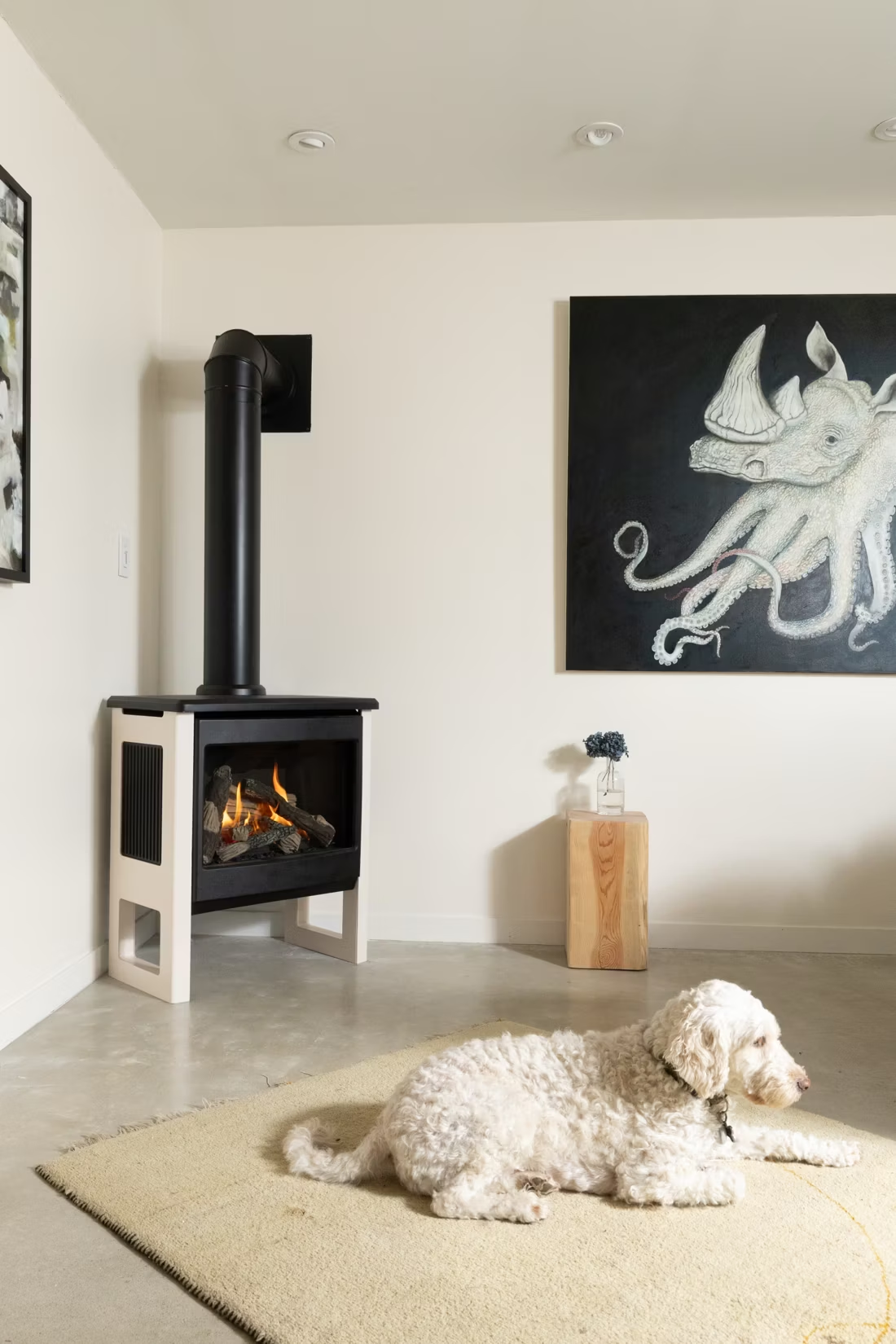
A gas fireplace is a built-in unit installed into a framed wall opening—the right call for new construction or a full remodel. A gas insert is built to slide into an existing masonry fireplace opening and uses the chimney as its vent path, which makes it the natural choice for one of Blue Grass's many older homes with an existing hearth. A gas stove is a freestanding cabinet-style unit that sits out in the room like a wood stove would, but runs on gas—a good option if you want supplemental heat in a room with no fireplace at all.
Do I need a permit to install a gas fireplace in Blue Grass?
Yes. New gas fireplace installations require both a building permit and a gas line permit through Scott County, since Blue Grass is a small town without its own dedicated building department for this kind of work. The gas line portion has to be done by a licensed gas-fitter, which is part of why it's worth using a certified hearth dealer rather than a general handyman—they'll coordinate the gas work, venting, and inspection sign-off as one job instead of leaving you to manage separate trades.
Should I get a vented or vent-free gas fireplace?
Vented (direct-vent) gas fireplaces pull combustion air from outside and exhaust the byproducts back outside through a sealed vent—they're the cleanest and most universally code-approved option, and they're what the large majority of Blue Grass installations use. Vent-free units burn directly into the room air and are legal in Iowa within specific room-size and ventilation limits, but they release some water vapor and combustion byproducts indoors. For a well-sealed Iowa home built to hold in heat during a long winter, a direct-vent unit is generally the safer, more comfortable choice—ask your local dealer to walk through both if you're weighing it.
How often does a gas fireplace need to be serviced?
Plan on an annual inspection, ideally before the heating season ramps up in the fall. A certified technician checks the burner, pilot assembly, venting, and gas connections, and cleans the glass and interior—a much smaller job than a wood chimney sweep, but just as important for safe operation. Expect to pay somewhere in the $150 to $250 range for a standard annual visit from a local service provider.
Gas or electric fireplace—which makes more sense for my Blue Grass home?
Gas delivers real radiant heat that can meaningfully supplement your furnace during Scott County's coldest stretches, plus most units keep working through a power outage with battery or self-powered ignition. Electric fireplaces cost far less to install—usually a few hundred to around a thousand dollars since there's no venting or gas line involved—and they plug into a standard outlet, but they produce mostly convective heat and won't help much if the power itself goes out. If you're relying on a fireplace as genuine backup heat, gas is the stronger choice; if you mainly want ambiance and flexibility to place a unit anywhere, electric is worth a look too.
What's the difference between an insert and a zero-clearance fireplace?
An insert is a fireplace that slides into a pre-existing wood-burning fireplace—if you don't have one, there's nothing to insert it into. A zero-clearance fireplace is built into a framed wall, which makes it the answer for remodels and new construction. Simple test: existing masonry fireplace means insert; blank or framed wall means zero-clearance.
Is my gas fireplace wasting gas?
If it was installed more than 15 years ago, probably. Older gas fireplaces keep a standing pilot light burning all the time, and that little flame can cost a couple hundred dollars a year. Newer models use pilot-on-demand ignition—the pilot lights only when you use the fireplace and goes out when you turn it off.
Can a fireplace actually lower my heating bill?
Yes—by creating a comfort zone. A furnace heats every square foot of the house just to warm the one room you're in; a gas fireplace on low burns roughly a sixth of the gas a typical furnace does. Set the furnace around 55–60 degrees as a baseline, then heat the rooms your family actually uses. Families who heat this way commonly save $20–$60 a month.
Does a fireplace add value to my home?
On average, a fireplace adds back to the home about the same amount you spent installing it. Add the monthly savings from heating the rooms you actually use instead of the whole house—often hundreds of dollars a year—and the value case is strong before you even count what a fire does for how your family uses the room.
Nearby Dealers
Hearth shops serving Blue Grass and the surrounding area. Every listing shows whether it is a WhyFire partner, a dealer we have verified as authorized for the brands we recommend, or a local business carrying hearth products. No manufacturer pays for placement. How we verify dealers →
Quad City Fireplaces
Barnett's - Doug's Heating And Air
Chamberlin Heating & Air Conditioning
Rivo Inc
Find your gas fireplace in Blue Grass.
Tell us a bit about your home and we'll put together a free Project Guide & Parts List—the right gas fireplace or insert, the vent kit it needs, and a trusted local dealer to install it.
Find Your Fireplace →