
Steady, thermostat-controlled heat for Audubon County's long winters.
With a winter heating season as demanding as Minneapolis's and January lows near 9°F, Audubon County homes need heat that doesn't quit. Find the right pellet stove or insert and get matched with a trusted local dealer.
Every Project Starts From One of These Five Situations
Consistent, hands-off warmth for farm country winters.
Audubon County sits in southwest Iowa's rolling farmland, home to about 3,400 residents spread across the county seat of Audubon and small communities like Exira, Brayton, Gray, Hamlin, and Kimballton. Winters here are long and genuinely cold—a climate zone 5A profile with a winter heating load about as heavy as Minneapolis's puts the county in the same range, and average winter lows hover around 9°F. Farmhouses and older homesteads throughout the county often have oak, hickory, maple, and walnut growing in shelterbelts and windbreaks, but pellet appliances trade that firewood for compressed hardwood pellets—a cleaner-burning, more consistent fuel that doesn't require splitting, stacking, or seasoning.
Audubon County has no air quality non-attainment concerns, so there's no seasonal burn curtailment to plan around—pellet stoves here are simply a practical, efficient heat source rather than a regulatory workaround. Regional pellet supply comes through brands like Lignetics and Indeck Energy Services, both distributed to hearth and farm-supply retailers across the region. For rural properties where a homeowner may be out working fields or livestock for hours at a stretch, a pellet stove's automated hopper feed and thermostat control mean the house stays warm without someone tending a fire—a real advantage in a county where winter storms and long commutes are part of daily life.
Three steps. No salesperson until you're ready.
Tell us about your project
Your zip code, your situation, and the fuel you're leaning toward—or let the answers point you to one.
See what's actually available
The brands dealers within 100 miles genuinely carry—real options, never a catalog mirage.
Get your dealer & Project Guide
A trusted local dealer, plus the free Project Guide & Parts List that names every component of the job.
Frequently Asked Questions
How much does a pellet stove installation cost in Audubon County?
Pellet stove installations in Audubon County typically run in the $3,000 to $6,000 range installed, depending on the unit, whether a dedicated electrical circuit needs to be added, and the venting path required. A pellet insert going into an existing fireplace with power already nearby tends to land on the lower end. New construction or a freestanding stove in a farmhouse without existing venting or nearby outlets—common in older rural homes throughout the county—pushes toward the higher end once electrical and wall-penetration venting work is added. A local dealer will give you a firm number after seeing your home.
What size pellet stove do I need for a rural Audubon County home?
Sizing depends on square footage, ceiling height, and insulation—and older farmhouses common throughout Audubon County often have less insulation and more air infiltration than newer construction, which pushes sizing up. As a rough guide: small units (up to 1,000 sq ft) suit a single room or addition, mid-size units (1,000–2,000 sq ft) cover most main living areas, and larger units (2,000+ sq ft) can serve as primary heat in a well-sealed home. Given the county's long, hard winter heating season, most local dealers will size slightly larger than the national default rather than risk a stove that can't keep up on the coldest January nights.
Where can I find pellet stove dealers near me in Audubon County?
With a county population under 4,000 spread across Audubon, Exira, Brayton, Gray, Hamlin, and Kimballton, dealer options are limited compared to a metro area—most homeowners work with a hearth or farm-supply retailer based in or near Audubon itself, or drive to a dealer in a neighboring county. Look for a dealer who handles the electrical hookup and venting as part of the install rather than just dropping off a unit—pellet stoves need a dedicated outlet and a properly sized vent kit, and getting both right the first time avoids callbacks. Expect a modest travel charge for installs at the county's edges given the drive distances involved.
What's the difference between a pellet stove and a pellet insert?
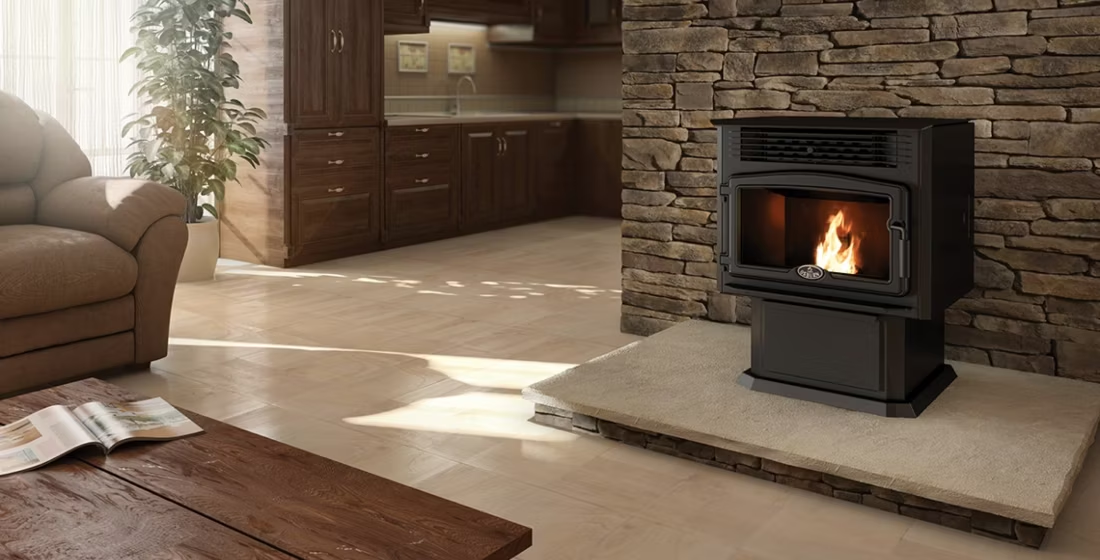
A pellet stove is a freestanding unit that sits on its own hearth pad and vents through an exterior wall or existing chimney—it can go almost anywhere with power and a vent path nearby. A pellet insert is built to slide into an existing masonry fireplace opening, turning an old open hearth into an efficient, thermostat-controlled heat source while reusing the existing chimney as a vent chase. For Audubon County farmhouses with an existing but rarely-used masonry fireplace, an insert is often the more cost-effective upgrade. Homes without an existing fireplace typically go with a freestanding stove instead.
Do I need a permit to install a pellet stove in Audubon County?
Most jurisdictions require a building permit for a new pellet stove installation, particularly when new venting or a new electrical circuit is involved, and Audubon County is no exception—check with the county building department before work begins. Most established local dealers handle the permit application and inspection scheduling as part of the installation, so you typically don't have to navigate it yourself. Because Audubon County has no air quality non-attainment designation, there's no additional burn-curtailment paperwork to worry about—the permit process here is strictly about safe electrical and venting installation.
What's the best pellet stove for Audubon County's climate?
With winter lows averaging around 9°F and a winter heating season as demanding as Minneapolis's, Audubon County homes benefit from a mid-to-large pellet stove with a large hopper capacity—look at models from Harman, Quadra-Fire, or Englander that can run 24+ hours on a full hopper, useful when a farm schedule keeps you away from the house for long stretches. Pair the stove with locally available pellets from Lignetics or Indeck Energy Services, both distributed regionally, and stock up before the county's first hard freeze since demand and delivery times tighten once cold weather sets in.
How much maintenance does a pellet stove need?
Pellet stoves need more routine attention than a gas unit but far less than a wood stove. Plan on emptying the ash pan every few days to weekly depending on use, cleaning the burn pot and glass regularly, and vacuuming the hopper and auger area a few times a season. An annual professional service—checking the exhaust fan, gaskets, and auger motor—is worth scheduling every fall before Audubon County's heating season ramps up, especially for units running as primary heat through the coldest months.
Where can I buy pellets in Audubon County?
Regional pellet supply in and around Audubon County runs through brands like Lignetics and Indeck Energy Services, typically stocked at farm-supply stores and hearth retailers serving the area. Pricing runs by the ton, and buying early—before the first cold snap drives up regional demand—is the standard local strategy, since delivery and pickup windows can tighten once winter sets in. Buying a season's worth at once also protects against supply gaps if a stretch of severe weather slows deliveries to a small rural county.
Pellet stove vs. wood stove—which makes sense for a farmhouse in Audubon County?
Wood stoves work without electricity—a real advantage during the ice storms and high-wind events that occasionally knock out rural power in Audubon County—and pair naturally with the oak, hickory, maple, and walnut common in the county's windbreaks and shelterbelts. Pellet stoves need a live outlet to run the auger and blower, but offer thermostat-set, hands-off heat that doesn't require splitting or hauling cordwood—appealing for a household balancing farm work with keeping the house warm. Many rural homeowners here end up with a wood stove as backup heat and a pellet stove for daily convenience, though either can serve as a home's primary source depending on your tolerance for daily fire-tending versus periodic hopper refills.
How often does a pellet stove need cleaning?
A clean pellet stove is a happy pellet stove. Plan on cleaning the burn pot about once a week when you're burning regularly—ash and clinkers gum up the air holes just like a pellet barbecue. Most pellet stove problems trace back to skipped cleaning that nobody explained up front. Some designs make it easy with a trapdoor burn pot: pull a lever and the gunk drops into the ash pan.
What's the difference between an insert and a zero-clearance fireplace?
An insert is a fireplace that slides into a pre-existing wood-burning fireplace—if you don't have one, there's nothing to insert it into. A zero-clearance fireplace is built into a framed wall, which makes it the answer for remodels and new construction. Simple test: existing masonry fireplace means insert; blank or framed wall means zero-clearance.
How much should I budget for a fireplace?
For an average home—covering the fireplace, the vent pipe, and basic installation—a budget between $3,900 and $5,500 gives you a lot of options across wood, gas, and pellet. By the time you add finish work, gas line, and electrical, the average complete installation lands between $5,000 and $12,000 all-in. In a remodel or new build, a good rule is to put about 2.5% of the total project cost toward the fireplace.
Can I install a fireplace myself?
If you're putting a fire in your house on purpose, it's best to work with an expert. Unless you're genuinely experienced in framing, gas line, vent pipe, and the national code on clearances to combustibles, have a professional do it—and ideally the same company that sells you the fireplace, so warranty, service, and liability all live under one roof.
Pellet Brands Stocked Around Audubon County
Manufacturers will point you to the nearest stocking dealer.
Find your pellet stove in Audubon County.
Tell us about your home and heating goals, and we'll match you with a trusted local dealer and send over a free Project Guide & Parts List—a plan for your pellet project in Audubon County, including the vent kit and their recommended installer.
Find Your Fireplace →