
Find the right pellet stove for Wells County winters.
Consistent, thermostat-controlled heat for Bluffton, Ossian, Markle, and the farm country in between. We'll match you with a trusted local dealer who can size and install it right.
Every Project Starts From One of These Five Situations
Steady heat, low fuss, for a long Indiana winter.
Wells County sits in climate zone 5A with just over 6,184 heating degree days and average winter lows around 17°F—a season not far off from what Madison, WI households deal with, just with flatter terrain and a lot of oak, hickory, maple, and beech in the surrounding woodlots. That mix of hardwoods has historically fed a strong wood-burning tradition in the county, but pellet stoves have carved out a real niche for homeowners in Bluffton, Ossian, and Markle who want consistent heat without splitting and stacking cordwood.
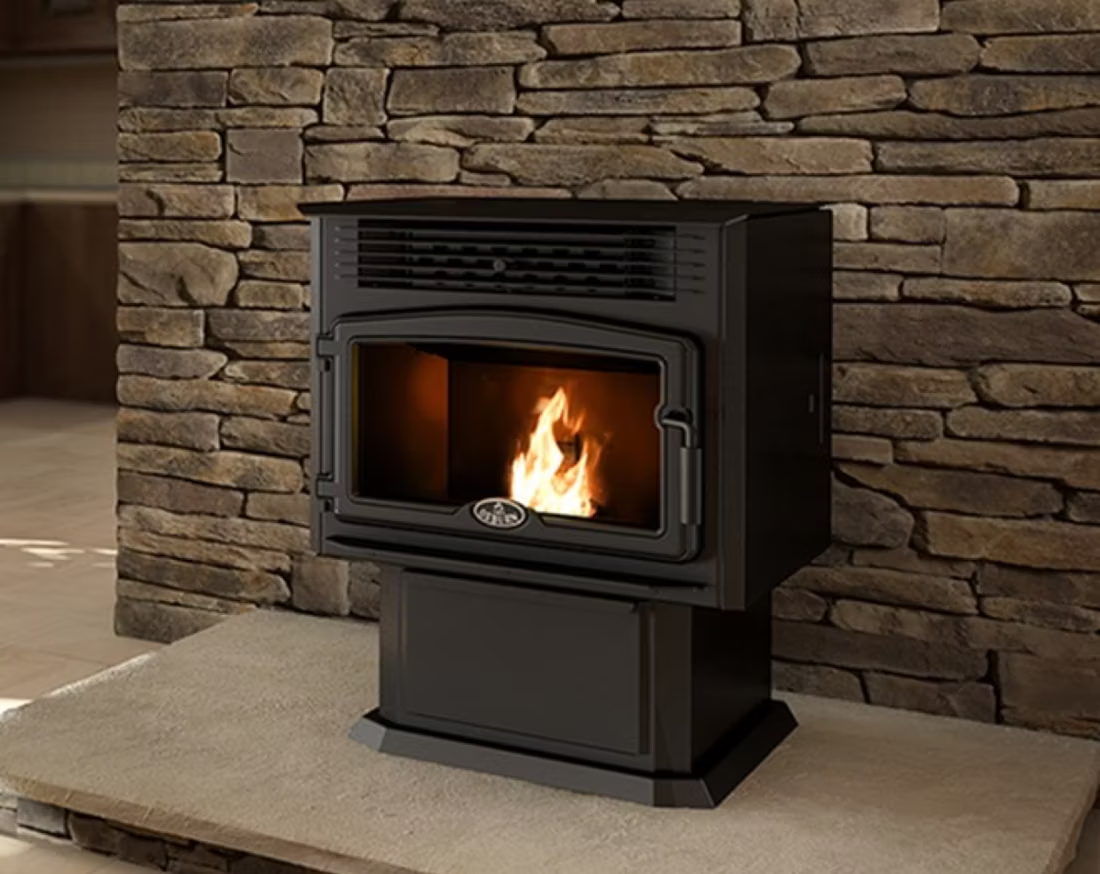
A pellet stove loads from a bag instead of a woodpile, holds a steady temperature on a thermostat, and burns cleaner than a standard wood stove—a real advantage for households managing allergies or simply wanting less mess. Regional pellet supply is solid here: Indeck Energy Services, Lignetics, and Somerset Pellet Fuel all distribute into this part of Indiana, so homeowners aren't relying on a single source or long-haul shipping to keep a hopper full through a 6,000-plus HDD winter.
Three steps. No salesperson until you're ready.
Tell us about your project
Your zip code, your situation, and the fuel you're leaning toward—or let the answers point you to one.
See what's actually available
The brands dealers within 100 miles genuinely carry—real options, never a catalog mirage.
Get your dealer & Project Guide
A trusted local dealer, plus the free Project Guide & Parts List that names every component of the job.
Frequently Asked Questions
How much does a pellet stove installation cost in Wells County?
Pellet stove installations in Wells County typically run in the $4,500 to $7,500 range, which is fairly consistent with pricing across northeast Indiana. The lower end covers a freestanding stove with a simple through-wall vent kit in a home without an existing chimney. The higher end applies to pellet insert installations into an existing masonry fireplace, which require a liner kit and sometimes electrical work to power the hopper auger and blower near the hearth. A local dealer will confirm exact pricing after seeing your home and current venting setup.
Do I need a chimney to install a pellet stove?
No—this is one of the practical advantages of pellet over wood in a county like Wells, where plenty of homes are ranch-style builds without a masonry chimney. Pellet stoves vent through a small-diameter pipe that can run horizontally through an exterior wall, which simplifies installation considerably compared to a wood stove needing full Class A chimney height. If you do have an existing fireplace, a pellet insert can use that flue with a proper liner, but it's not a requirement the way it is for wood.
What size pellet stove do I need for my home?
For most Wells County homes, sizing comes down to square footage and how well-insulated the structure is—older farmhouses around Ossian and Markle with less insulation generally need a step up in output compared to newer construction near Bluffton. Small units (rated for roughly 1,000-1,200 sq ft) suit a single large room or an addition; mid-size units (1,200-2,000 sq ft) cover most main living areas; larger units can handle 2,000+ sq ft in a well-sealed home. Given average winter lows around 17°F here, I'd rather see a homeowner size slightly up than run a stove maxed out every night in January. A local dealer will walk your space and give you a specific recommendation rather than a rule of thumb.
How often do I need to refill the pellet hopper?
Most hoppers hold 40-80 lbs of pellets and, on a low-to-medium thermostat setting during a typical Wells County cold spell, will run 24-30 hours between refills. On the coldest nights—when lows drop into the single digits, which happens most winters here—expect to refill roughly once a day if the stove is your primary heat source. Homeowners using pellet heat as a supplement to a furnace can often stretch a bag further. Auto-ignition models with a hopper sensor make this easier to manage without guessing.
Where can I buy pellets in or near Wells County?
Regional pellet brands with distribution reaching northeast Indiana include Indeck Energy Services, Lignetics, and Somerset Pellet Fuel, and local hardware stores and farm supply retailers in the Bluffton and Ossian area typically stock bagged pellets by the ton, especially heading into fall. Buying a full ton (usually 50 forty-pound bags) ahead of the season is the most economical approach and avoids scrambling for supply during a January cold snap. Ask your dealer which brand burns cleanest in the specific stove model you choose—ash content varies enough between brands that it's worth matching to the appliance.
Do I need a permit to install a pellet stove in Wells County?
Most pellet stove installations require a building permit in Wells County, primarily to confirm the venting and any electrical work meets code—pellet stoves need a standard household outlet to run the auger and blower motor. Most local installers handle the permitting as part of the install process, so it's rarely something a homeowner has to manage directly. Wells County has no air quality non-attainment designation, so there are no curtailment periods or burn restrictions to worry about, unlike some regions with winter inversion issues.
What's the difference between a pellet stove and a pellet insert?
A pellet stove is a freestanding unit that sits on a hearth pad and vents through a wall or existing chimney—it works in homes with or without a fireplace already in place. A pellet insert is built to slide into an existing masonry fireplace opening, converting an old wood-burning fireplace into a pellet-fed heat source while using the existing chimney (with a proper liner) for venting. For Wells County homes with an existing fireplace that's rarely used, an insert is often the more efficient upgrade. For homes without one, a freestanding stove is the simpler installation.
Do pellet stoves work during a power outage?
This is the honest tradeoff with pellet heat: unlike a wood stove, a pellet stove requires electricity to run the auger, igniter, and blower, so it will not operate during an outage unless you have a battery backup or generator. For a county like Wells, where winter storms occasionally knock out power for a few hours to a day, some homeowners pair a pellet stove for daily convenience with a small backup power option, or keep a wood-burning appliance elsewhere in the home for true grid-down heat. It's worth discussing with your local dealer if outage resilience matters to your household.
Pellet vs. wood—which is right for my Wells County home?
Wood is the traditional choice in this part of Indiana given the abundance of local oak, hickory, and maple, and it keeps working through a power outage—a real consideration with the ice storms that occasionally hit this part of the state. Pellet stoves trade that off for real convenience: a thermostat-controlled, consistent burn, less ash, no splitting or stacking, and a cleaner-burning appliance overall. For a household in Bluffton or Ossian without easy access to cut-your-own wood, or one that wants heat that behaves more like a furnace, pellet is usually the better fit. Many homeowners here end up with a pellet stove in the main living space and keep a wood option as backup.
Why is my open fireplace making my house colder?
Open fireplaces suck—literally. As the fire burns, it consumes air your furnace already paid to heat and pulls it out through the chimney, so the house is actually colder after the fire goes out than before you lit it. An insert fixes this: it seals the chimney, puts fixed glass across the front, and turns that hole in your house into a real heat source.
How often does a pellet stove need cleaning?
A clean pellet stove is a happy pellet stove. Plan on cleaning the burn pot about once a week when you're burning regularly—ash and clinkers gum up the air holes just like a pellet barbecue. Most pellet stove problems trace back to skipped cleaning that nobody explained up front. Some designs make it easy with a trapdoor burn pot: pull a lever and the gunk drops into the ash pan.
Can I install a fireplace myself?
If you're putting a fire in your house on purpose, it's best to work with an expert. Unless you're genuinely experienced in framing, gas line, vent pipe, and the national code on clearances to combustibles, have a professional do it—and ideally the same company that sells you the fireplace, so warranty, service, and liability all live under one roof.
Can a fireplace actually lower my heating bill?
Yes—by creating a comfort zone. A furnace heats every square foot of the house just to warm the one room you're in; a gas fireplace on low burns roughly a sixth of the gas a typical furnace does. Set the furnace around 55–60 degrees as a baseline, then heat the rooms your family actually uses. Families who heat this way commonly save $20–$60 a month.
Pellet Brands Stocked Around Wells County
Manufacturers will point you to the nearest stocking dealer.
Get matched with a Wells County pellet stove dealer.
Tell us about your home and heating goals, and we'll send you a free Project Guide & Parts List—the exact parts, vent kit, and a recommended local dealer for your pellet stove project in Wells County.
Find Your Fireplace →