
Steady, hands-off heat for Sullivan County winters.
From Sullivan to Dugger to Carlisle, pellet stoves give Wabash Valley homes consistent, thermostat-controlled heat through a roughly five-month burn season. Find the right stove and connect with a trusted local dealer.
Every Project Starts From One of These Five Situations
A reliable middle ground between wood and gas.
Sullivan County sits in Indiana's Wabash River valley in climate zone 4A, where winter lows average around 21°F and the county racks up roughly 5,043 heating degree days a year—nowhere near as brutal as Duluth, MN or Fargo, ND, but enough cold to matter for a solid five months. Much of the county is rural farmland dotted with older farmhouses in Sullivan, Dugger, Carlisle, Farmersburg, and Hymera, many of which run supplemental heat alongside a furnace to knock down propane or electric bills during the coldest stretches.
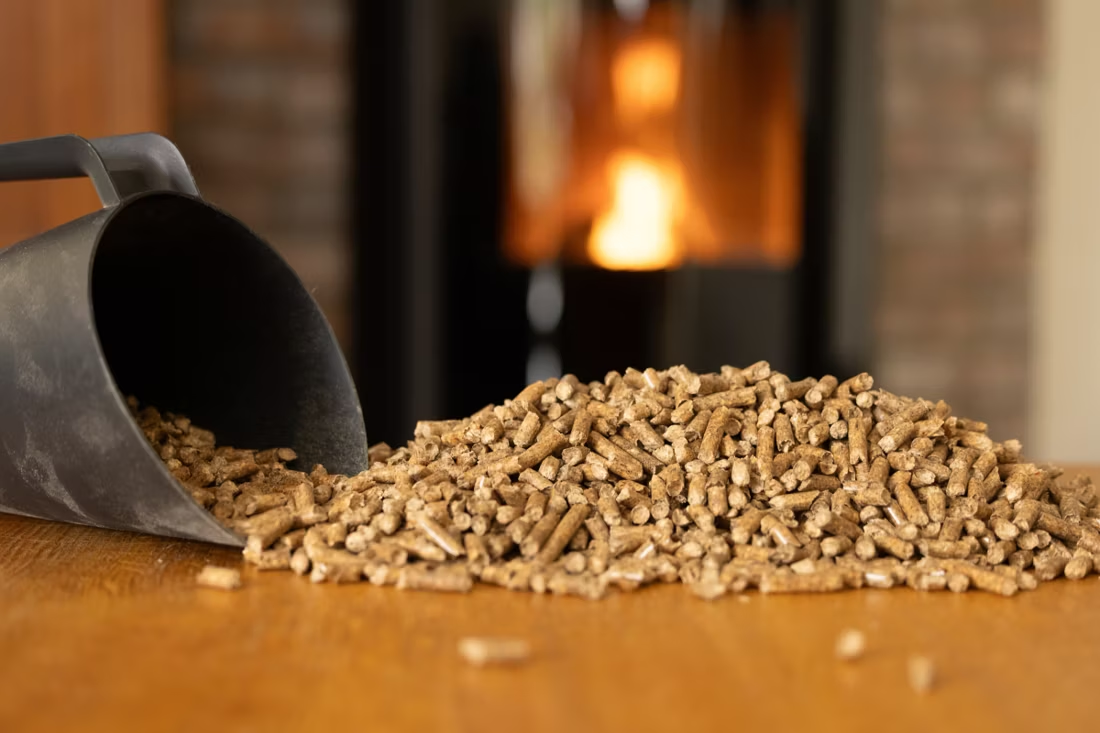
Pellet stoves fit that need well: load the hopper, set the thermostat, and get consistent heat without the daily wood-splitting and stacking that comes with cordwood—even though the county's own hardwood stands of oak, hickory, maple, and beech mean firewood is never hard to come by locally. Bagged hardwood pellets from regional producers like Indeck Energy Services, Lignetics, and Somerset Pellet Fuel are sold through farm and hardware stores across southwestern Indiana, and Sullivan County has no non-attainment or wood-smoke advisory issues that would restrict burning, which simplifies things compared to counties dealing with winter inversion rules.
Three steps. No salesperson until you're ready.
Tell us about your project
Your zip code, your situation, and the fuel you're leaning toward—or let the answers point you to one.
See what's actually available
The brands dealers within 100 miles genuinely carry—real options, never a catalog mirage.
Get your dealer & Project Guide
A trusted local dealer, plus the free Project Guide & Parts List that names every component of the job.
Frequently Asked Questions
How much does a pellet stove installation cost in Sullivan County?
A freestanding pellet stove installation in Sullivan County typically runs $2,500 to $5,500, depending on the model, whether it vents through an existing wall or requires new wall penetration, and any electrical work needed for the auger and blower circuit. A pellet insert going into an existing masonry fireplace tends to run a bit higher once a liner and venting adapter are factored in. Because pellet stoves don't need a full masonry chimney the way wood stoves do, install costs are generally lower and faster than a wood-burning conversion—a plus for older farmhouses around Dugger and Carlisle where chimney work can get expensive.
What size pellet stove do I need for my home?
With roughly 5,043 heating degree days and winter lows averaging 21°F, most Sullivan County homes fall into the medium-stove range—units rated for 1,000 to 2,000 square feet—especially if the goal is supplemental heat for a main living area rather than whole-home replacement. Older, less-insulated farmhouses common throughout the county often run drafty enough that a homeowner sizing for square footage alone under-heats the space; a local dealer walking the home and checking insulation, ceiling height, and floor plan will size more accurately than a chart. Bigger, better-insulated homes closer to town in Sullivan itself can sometimes get by with a smaller unit than a similarly sized older rural place.
Where can I find a pellet stove dealer near me in Sullivan County?
Sullivan County is rural enough that there isn't a hearth showroom on every corner, and big-box stores generally don't handle proper venting or hopper wiring for pellet appliances. Find My Fireplace matches you with a trusted local dealer who actually services this part of the Wabash Valley, pulls the required permit, and sizes the vent kit correctly for your home—rather than leaving you to guess with a mail-order unit and no local install or warranty support.
Pellet stove vs. wood stove—which makes more sense in Sullivan County?
Wood stoves work without electricity, which matters in a rural county where storm-related outages can stretch for hours, and Sullivan County's own oak, hickory, maple, and beech woodlots make cordwood easy to source. Pellet stoves need power to run the auger and blower, so they're not a fallback during an outage unless paired with a battery backup or generator—but they're far less hands-on day to day, produce less ash, and hold a steady burn without the splitting and stacking. For a primary living room in town, pellet is often the more convenient fit; for a shop, cabin, or rural property where self-sufficiency matters more, wood still has an edge.
Do I need a permit to install a pellet stove in Sullivan County?
Yes—a building permit is generally required for a new pellet stove installation, whether you're in the town of Sullivan or unincorporated parts of the county, since the unit involves wall penetration for venting and often a dedicated electrical circuit. Most local dealers handle the permit paperwork as part of the installation, so it typically isn't something you have to manage yourself. Unlike counties dealing with winter air-quality advisories, Sullivan County has no non-attainment status or burn-curtailment periods, so there's no seasonal restriction on when you can run the stove.
What pellets should I buy, and how much do they cost?
Regional hardwood pellet brands including Indeck Energy Services, Lignetics, and Somerset Pellet Fuel are commonly stocked at farm and hardware retailers across southwestern Indiana, and most Sullivan County dealers can point you toward the closest reliable supply. Premium hardwood pellets typically run in the $230 to $300 per ton range depending on the brand and time of year—buying in the fall before demand peaks tends to save a bit. A single ton generally lasts several weeks of regular use for supplemental heat, though a home relying on pellets as primary heat through the full 5,000-plus heating degree day season will burn through more.
How often does a pellet stove need cleaning and maintenance?
Pellet stoves need more frequent attention than a gas unit but less than a wood stove: the ash pan should be emptied every few days of regular use, the burn pot cleaned weekly to keep the flame consistent, and the hopper and auger checked periodically for pellet dust buildup. A full annual service—checking the exhaust blower, gaskets, and venting—is worth scheduling before burn season starts each fall, similar to a furnace tune-up. Skipping this tends to show up as poor ignition or a smoky burn rather than a dramatic failure, but it's still worth staying on top of for efficiency.
Will my pellet stove work during a power outage?
Not on its own—the auger, igniter, and combustion blower all need electricity, so a standard pellet stove goes cold as soon as the power drops. For Sullivan County homes where storm-related outages happen, a small battery backup or a generator sized for the stove's low wattage draw can keep it running through a multi-hour outage. If reliable off-grid backup heat is the priority, especially for a rural property, a wood stove or a pellet model with a built-in battery backup is worth discussing with a local dealer before you buy.
Pellet stove vs. propane or gas—which is right for my home?
Propane and gas fireplaces offer instant on-off operation and no fuel handling at all, which matters if convenience is the top priority—but ongoing propane costs in rural Indiana can run high, especially with tank refills during a stretch of 21°F nights. Pellet stoves require loading a hopper every day or two and cost more upfront to install in a home without existing venting, but bagged hardwood pellets from producers like Lignetics or Somerset Pellet Fuel are generally cheaper per BTU than propane over a full Sullivan County winter. Homes already on natural gas or with an existing propane tank often lean gas for simplicity; homes looking to cut heating costs over a five-month season often find pellet pays for itself faster.
Why is a fireplace insert so efficient?
An insert does two things: it seals the chimney completely, so you stop losing air you already paid to heat, and it radiates warmth into the room through the firebox and glass. Most add a heat-exchange fan that pulls cool room air underneath, wraps it around the hot firebox, and pushes it back out warm. Your home is more efficient before you've even lit the first fire.
Why is my open fireplace making my house colder?
Open fireplaces suck—literally. As the fire burns, it consumes air your furnace already paid to heat and pulls it out through the chimney, so the house is actually colder after the fire goes out than before you lit it. An insert fixes this: it seals the chimney, puts fixed glass across the front, and turns that hole in your house into a real heat source.
Can a fireplace actually lower my heating bill?
Yes—by creating a comfort zone. A furnace heats every square foot of the house just to warm the one room you're in; a gas fireplace on low burns roughly a sixth of the gas a typical furnace does. Set the furnace around 55–60 degrees as a baseline, then heat the rooms your family actually uses. Families who heat this way commonly save $20–$60 a month.
Does a fireplace add value to my home?
On average, a fireplace adds back to the home about the same amount you spent installing it. Add the monthly savings from heating the rooms you actually use instead of the whole house—often hundreds of dollars a year—and the value case is strong before you even count what a fire does for how your family uses the room.
Pellet Brands Stocked Around Sullivan County
Manufacturers will point you to the nearest stocking dealer.
Find your pellet stove in Sullivan County.
Tell us a bit about your home and we'll match you with a trusted local dealer and send over a free Project Guide & Parts List—the exact parts, including the vent kit, for your Sullivan County pellet stove project.
Find Your Fireplace →