
Find the right pellet stove for Scott County winters.
Thermostat-controlled, hands-off heat for Scottsburg, Austin, Lexington, and the rural stretches of Scott County—find the right unit and get matched with a trusted local dealer.
Every Project Starts From One of These Five Situations
Steady heat, without tending a woodpile.
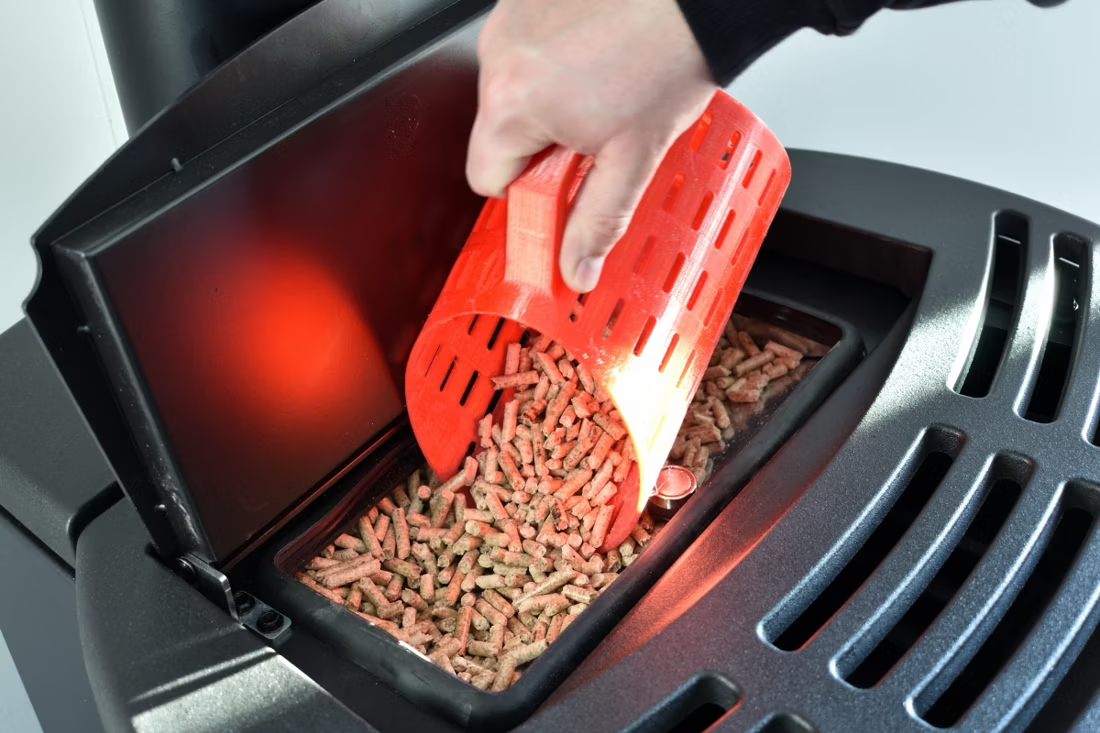
Scott County sits in the mixed-humid climate zone 4A, with winter lows averaging 23°F and about 4,847 heating degree days a year—a real but moderate heating season, noticeably milder than places like Madison, WI, which runs closer to 7,600 HDD. Hardwood is everywhere in this part of southern Indiana—oak, hickory, maple, and beech fill the woodlots around Scottsburg, Austin, and Lexington—and plenty of local homes still burn cordwood. But a growing number of Scott County homeowners are switching to pellet stoves for the thermostat control: load the hopper, set the dial, and the stove maintains a steady output without anyone splitting or stacking wood.
Southern Indiana has no air quality non-attainment designation and no winter burn-curtailment schedule, so choosing pellet here is about convenience and consistent heat rather than working around local air rules. Regional suppliers including Indeck Energy Services, Lignetics, and Somerset Pellet Fuel serve the Ohio Valley region, which keeps bagged pellets reasonably easy to source in Scott County without relying on long-haul delivery. For homes without an existing masonry chimney—common in newer construction around Scottsburg—a pellet stove is often simpler to install than a wood stove, since it vents through a smaller-diameter pipe that can typically run straight out a side wall instead of requiring a full Class A chimney.
Three steps. No salesperson until you're ready.
Tell us about your project
Your zip code, your situation, and the fuel you're leaning toward—or let the answers point you to one.
See what's actually available
The brands dealers within 100 miles genuinely carry—real options, never a catalog mirage.
Get your dealer & Project Guide
A trusted local dealer, plus the free Project Guide & Parts List that names every component of the job.
Frequently Asked Questions
How much does a pellet stove installation cost in Scott County?
A pellet stove installation in Scott County typically runs $2,500 to $5,500 depending on the stove size, the venting path, and whether a new hearth pad is needed for clearance. Because pellet stoves vent through a smaller-diameter pipe than a wood stove—often straight out a side wall rather than up through the roof—the installation is usually less invasive and less expensive than a full masonry chimney build-out. Homes near Scottsburg with an existing fireplace sometimes opt for a pellet insert instead, which changes the cost picture since it reuses the existing chimney as a chase for the vent liner.
What size pellet stove do I need for my Scott County home?
With Scott County's roughly 4,847 heating degree days and average winter lows around 23°F, most homes fall into a mid-size heating need—not the extreme cold-climate sizing you'd see farther north, but enough to want real heat output for four to five months of the year. Small pellet stoves (under 1,000 sq ft) suit a single room or a smaller ranch house common around Austin and Lexington; medium units (1,000–1,800 sq ft) cover most main living areas in a typical Scott County home; larger units handle bigger or less-insulated older farmhouses. A local dealer can size your stove correctly during an in-home visit, accounting for ceiling height, insulation, and whether the stove is primary or supplemental heat.
Where can I find pellet stove dealers near me in Scott County?
A handful of hearth retailers serve Scott County directly out of Scottsburg, and homeowners in the northern part of the county sometimes also work with dealers based toward Louisville, given the short drive down I-65. Look for a dealer that installs and services what they sell—pellet stoves have more moving parts than a wood stove (auger motor, combustion blower, control board), so a dealer who stands behind the install and can service the unit later matters more here than with a simple wood stove. Expect a modest travel charge for installs out toward the more rural parts of the county.
What's the difference between a pellet stove and a pellet insert?
A pellet stove is a freestanding unit that sits on a hearth pad and vents through a wall or existing chimney chase—it can go almost anywhere in a room with the right clearances. A pellet insert is built to slide into an existing masonry fireplace opening, using a vent liner run up through the old chimney. For Scott County homes with an existing wood-burning fireplace that's rarely used, an insert is often the more practical upgrade since it reuses the chimney you already have. Homes without an existing fireplace, or new construction around Scottsburg and Austin, are usually better suited to a freestanding stove.
Do I need a permit to install a pellet stove in Scott County?
Yes—a mechanical or building permit is generally required for a new pellet stove installation through the Scott County Building Department, and within city limits in Scottsburg that may run through the city instead. Most local dealers handle the permit paperwork as part of the installation, so it's rarely something a homeowner has to manage directly. Unlike some non-attainment counties in other states, Scott County has no seasonal burn-curtailment periods to plan around, since there's no local air quality non-attainment designation—a permitted pellet stove can run whenever you want it to.
What's the best pellet stove for Scott County's climate?
Given Scott County's moderate winter lows—averaging around 23°F rather than the sub-zero nights seen farther north—most homes don't need the largest hopper capacity or highest BTU output on the market. A mid-size pellet stove with a 40-pound hopper and a 24-to-48-hour burn time on low settings covers most heating needs here without constant refilling. Look for a unit with a reliable auger feed system and a straightforward control panel; brands commonly stocked by regional dealers and supplied by fuel producers like Lignetics and Somerset Pellet Fuel tend to have good parts availability locally, which matters more for long-term ownership than raw BTU specs.
How much maintenance does a pellet stove need?
Pellet stoves need more routine attention than a wood stove but far less than most people expect. Plan on emptying the ash pan and wiping the glass every few days during regular use, a deeper cleaning of the burn pot and heat exchanger tubes every couple of weeks, and a full professional service once a year to check the auger motor, combustion blower, and gaskets. Pellet quality matters for how much ash you'll deal with—premium low-ash pellets from suppliers like Indeck Energy Services or Lignetics generally mean less frequent cleaning than bargain-bin bags.
Where can I buy wood pellets in Scott County?
Pellets are typically sold in 40-pound bags, often stacked on pallets, through farm supply stores, hardware retailers, and hearth dealers throughout southern Indiana. Regional producers including Indeck Energy Services, Lignetics, and Somerset Pellet Fuel supply much of the Ohio Valley, which keeps Scott County reasonably well stocked without long shipping distances. Buying a season's supply—usually 2 to 3 tons for a home using pellets as a primary heat source—in late summer or early fall, before demand picks up, is the most reliable way to avoid a mid-winter scramble.
Pellet stove vs. wood stove—which makes more sense in Scott County?
Wood is genuinely abundant here—oak, hickory, maple, and beech are common on Scott County properties, and plenty of households already have a source of free or cheap cordwood. A wood stove also keeps working during a power outage, which matters in the more rural parts of the county where outages can run longer. A pellet stove trades that off for convenience: no splitting, stacking, or hauling, more consistent heat output, and a thermostat that holds the temperature—but it needs electricity to run the auger and blower, so it goes dark in an outage unless paired with a battery backup. For a primary residence in town near Scottsburg with reliable power, pellet is often the easier choice. For a rural property where outages are a real concern, a wood stove—or both fuels in different rooms—is worth considering.
Why is my open fireplace making my house colder?
Open fireplaces suck—literally. As the fire burns, it consumes air your furnace already paid to heat and pulls it out through the chimney, so the house is actually colder after the fire goes out than before you lit it. An insert fixes this: it seals the chimney, puts fixed glass across the front, and turns that hole in your house into a real heat source.
Are pellet stoves loud?
They make some noise—there are two fans running plus an auger motor that turns as it feeds pellets. But there's a real range: premium models are engineered quiet, and the best offer a whisper-quiet mode you can comfortably watch TV next to. If noise matters in your room, ask to hear a stove running before you buy—it's a five-minute test that saves years of annoyance.
How much should I budget for a fireplace?
For an average home—covering the fireplace, the vent pipe, and basic installation—a budget between $3,900 and $5,500 gives you a lot of options across wood, gas, and pellet. By the time you add finish work, gas line, and electrical, the average complete installation lands between $5,000 and $12,000 all-in. In a remodel or new build, a good rule is to put about 2.5% of the total project cost toward the fireplace.
Does a fireplace add value to my home?
On average, a fireplace adds back to the home about the same amount you spent installing it. Add the monthly savings from heating the rooms you actually use instead of the whole house—often hundreds of dollars a year—and the value case is strong before you even count what a fire does for how your family uses the room.
Pellet Brands Stocked Around Scott County
Manufacturers will point you to the nearest stocking dealer.
Find your pellet stove in Scott County.
Tell us a bit about your home and we'll put together a free Project Guide & Parts List—the right pellet stove or insert, the vent kit it needs, and a trusted local dealer to install it.
Find Your Fireplace →