
Find pellet heat built for Ripley County winters.
Thermostat-controlled warmth for Versailles, Batesville, Osgood, Milan, and every farmhouse and subdivision in between. We match you with a trusted local dealer who can size, permit, and install the right unit.
Every Project Starts From One of These Five Situations
Consistent, hopper-fed heat for Ripley County homes.
Ripley County sits in the rolling hill country of southeastern Indiana, from the county seat in Versailles out to Batesville, Osgood, Milan, Sunman, and Holton. At Climate Zone 4A with roughly 5,679 heating degree days and average winter lows around 19 degrees, the county sits well inside cold-climate heating territory—noticeably milder than Buffalo, NY (around 6,400 HDD), but still cold enough that a supplemental heat source matters through a long Ohio Valley winter that stretches from November into March. Oak, hickory, maple, and beech are the woodlot staples here, and while plenty of Ripley County households still burn cordwood, a growing number are switching to pellets for the set-it-and-forget-it convenience.
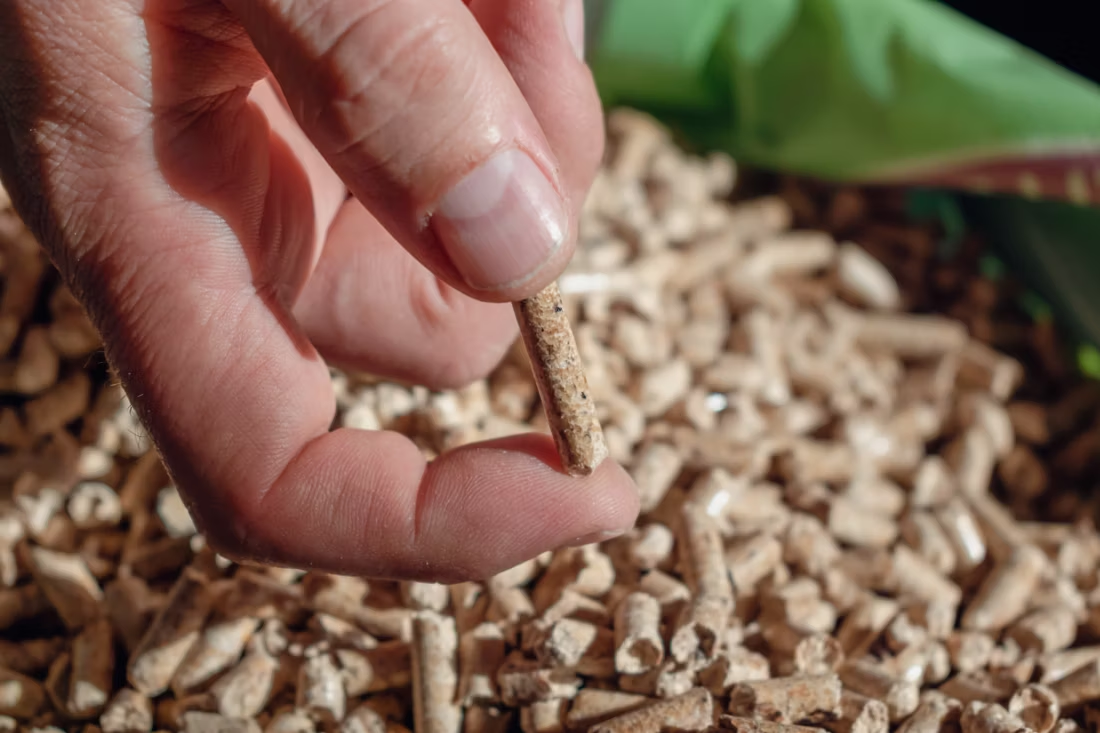
With no air quality non-attainment issues or winter burn restrictions on the books in Ripley County, pellet stoves and inserts install and operate here without the curtailment-period headaches some counties impose on wood burning. Pellet fuel itself is easy to source regionally, with suppliers like Indeck Energy Services, Lignetics, and Somerset Pellet Fuel serving the broader Midwest market. A pellet appliance gives you auger-fed, thermostat-regulated heat that runs for a day or more on a single hopper load—a real advantage for rural households outside Batesville or Milan who want reliable zone heat without hauling and splitting wood every week.
Three steps. No salesperson until you're ready.
Tell us about your project
Your zip code, your situation, and the fuel you're leaning toward—or let the answers point you to one.
See what's actually available
The brands dealers within 100 miles genuinely carry—real options, never a catalog mirage.
Get your dealer & Project Guide
A trusted local dealer, plus the free Project Guide & Parts List that names every component of the job.
Frequently Asked Questions
How much does a pellet stove installation cost in Ripley County?
Most pellet stove and insert installations in Ripley County run in the neighborhood of $3,000 to $6,000, depending on the unit, whether you need a new hearth pad, and the length of the vent run through an exterior wall. Pellet venting is simpler and cheaper than a masonry chimney, which keeps costs down compared to wood installs. Homes in the more rural stretches of the county—out toward Holton or Napoleon—may see a modest travel charge added by installers based in Batesville or Versailles. Ripley County's building department typically requires a permit for the install, which most local dealers handle for you.
What size pellet stove or insert do I need for my home?
Sizing comes down to square footage, insulation quality, and whether the unit is your primary heat source or supplemental. As a rough guide for Ripley County's older farmhouses and newer subdivision homes alike: smaller units (up to 1,000 sq ft) suit a single large room or open living area, medium units (1,000 to 1,800 sq ft) cover most main-floor living spaces, and larger units can handle whole small homes if insulation is solid. Older farmhouses around Osgood and Milan with less insulation and higher ceilings often need to size up compared to newer construction near Batesville. A local dealer will walk your space and size it for free before you buy.
Where can I find certified pellet stove installers near me?
Look for installers with NFI (National Fireplace Institute) pellet-specific certification, since auger and combustion-blower setups differ from wood stove installs in ways a general contractor may not know well. Several hearth and HVAC dealers serving the Versailles-to-Batesville corridor handle pellet installs regularly and can walk you through venting placement, electrical needs (pellet stoves require a standard outlet to run the auger and blower), and permitting with the county. Working with a dealer who also sells the stove simplifies warranty claims if something needs service down the road.
What's the difference between a pellet stove and a pellet insert?
A pellet stove is a freestanding unit that sits on a hearth pad and vents through a wall or existing chimney chase—it can go almost anywhere in a room with the right clearances. A pellet insert is built to slide into an existing masonry fireplace opening, turning an old open-hearth fireplace into an efficient, thermostat-controlled heat source while reusing the existing chimney as a vent chase. For Ripley County homes with an older masonry fireplace already in place—common in many of the county's farmhouses—an insert is often the simpler retrofit. Homes without an existing fireplace usually go with a freestanding stove instead.
Do I need a permit to install a pellet stove in Ripley County?
Yes—a building permit is typically required for a new pellet stove or insert installation through the Ripley County Building Department, covering the appliance placement, clearances, and vent termination through the wall. Most local dealers include the permit paperwork as part of the installation package. Unlike some counties with winter air quality non-attainment status, Ripley County has no air quality restrictions or curtailment periods on the books, so once your unit is installed and inspected, there are no burn-day limitations to worry about.
What's the best pellet stove for Ripley County's climate?
For a county with roughly 5,679 heating degree days and regular winter lows near 19 degrees, a mid-size pellet stove from an established maker—brands like Harman, Quadra-Fire, and Englander are common choices carried by dealers in this part of Indiana—will comfortably handle a main living area or supplemental whole-home heating role. Look for a model with a larger hopper capacity if you want longer unattended burn times overnight, which matters more for households in the outlying parts of the county who don't want to refill at 2 a.m. during a cold snap. A local dealer can match hopper size and BTU output to your specific home and insulation level.
How often does a pellet stove need to be cleaned and serviced?
Pellet stoves need more frequent light cleaning than wood stoves but less intensive annual service. Plan on emptying the ash pan and cleaning the burn pot every few days to weekly during regular use, and a full professional cleaning and inspection once a year—ideally before the heating season starts in early fall. The exhaust vent, combustion blower, and auger mechanism all benefit from an annual once-over by a technician familiar with pellet appliances, since these are mechanical parts that wood stoves don't have. Skipping this can lead to auger jams or reduced heat output mid-winter, which is the worst time to discover a problem.
Where can I buy pellet fuel in Ripley County?
Regional pellet brands including Indeck Energy Services, Lignetics, and Somerset Pellet Fuel supply hardware stores, farm supply retailers, and hearth dealers throughout this part of Indiana, typically sold in 40-pound bags stacked on pallets. Buying a full ton (fifty bags) ahead of the season is the most economical approach and is common practice for Ripley County households running a pellet stove as a primary or heavy supplemental heat source. Stocking up in late summer, before demand and prices climb with the first cold snap, is the standard local strategy.
Pellet stove vs. wood stove—which is right for my home?
Wood stoves burn free or low-cost cordwood—oak, hickory, maple, and beech are all common locally—offer the most authentic fire experience, and keep working during a power outage since they don't rely on electricity. Pellet stoves need a standard outlet to run the auger and combustion blower, so they go dark in an outage unless paired with a battery backup, but they offer easier day-to-day operation, more consistent heat output, and far less ash and mess than cordwood. For Ripley County homes where rural power outages are a real winter concern, many households keep a wood stove as backup even if pellet is the daily driver. For in-town homes in Versailles or Batesville with reliable power, pellet-only setups are common and popular for the convenience alone.
What's the difference between an insert and a zero-clearance fireplace?
An insert is a fireplace that slides into a pre-existing wood-burning fireplace—if you don't have one, there's nothing to insert it into. A zero-clearance fireplace is built into a framed wall, which makes it the answer for remodels and new construction. Simple test: existing masonry fireplace means insert; blank or framed wall means zero-clearance.
Why is my open fireplace making my house colder?
Open fireplaces suck—literally. As the fire burns, it consumes air your furnace already paid to heat and pulls it out through the chimney, so the house is actually colder after the fire goes out than before you lit it. An insert fixes this: it seals the chimney, puts fixed glass across the front, and turns that hole in your house into a real heat source.
What is an in-home preview and do I need one?
It's a visit where a hearth professional measures your space, confirms the model you picked actually works in your home, and walks the specs—framing, gas line, venting, finish work—before anything is ordered. Some details you just can't know until you see the house. Never make a down payment without one; it's the single most-skipped step that burns buyers.
Can a fireplace actually lower my heating bill?
Yes—by creating a comfort zone. A furnace heats every square foot of the house just to warm the one room you're in; a gas fireplace on low burns roughly a sixth of the gas a typical furnace does. Set the furnace around 55–60 degrees as a baseline, then heat the rooms your family actually uses. Families who heat this way commonly save $20–$60 a month.
Stove and Fireplace Dealers in Ripley County
Pellet Brands Stocked Around Ripley County
Manufacturers will point you to the nearest stocking dealer.
Find your pellet stove in Ripley County.
Tell us about your home and heating goals, and we'll match you with a trusted local dealer plus a free Project Guide & Parts List—the exact parts, vent kit, and installer recommendation for your Ripley County pellet project.
Find Your Fireplace →