
No Chimney, No Problem—Electric Warmth for Richmond Homes.
Zone heat and real flame-effect ambiance for Richmond's mix of century-old homes and newer subdivisions—no venting, no gas line, no masonry work required. Find the right unit and connect with a trusted local dealer.
Every Project Starts From One of These Five Situations
The right fit for a city split between century-old chimneys and chimney-free new builds.
Richmond sits in eastern Wayne County near the Ohio line, in climate zone 5A with a long, cold winter heating season and average winter lows around 20°F—cold enough that most homes lean on a furnace all winter and want supplemental heat in the rooms people actually live in. The city's housing stock is split: blocks of 1870s-to-1920s homes in neighborhoods like the Starr Historic District often have decorative masonry fireboxes that were capped off decades ago, while the ranch-style and newer-construction homes on the north and east sides were built without a chimney at all.
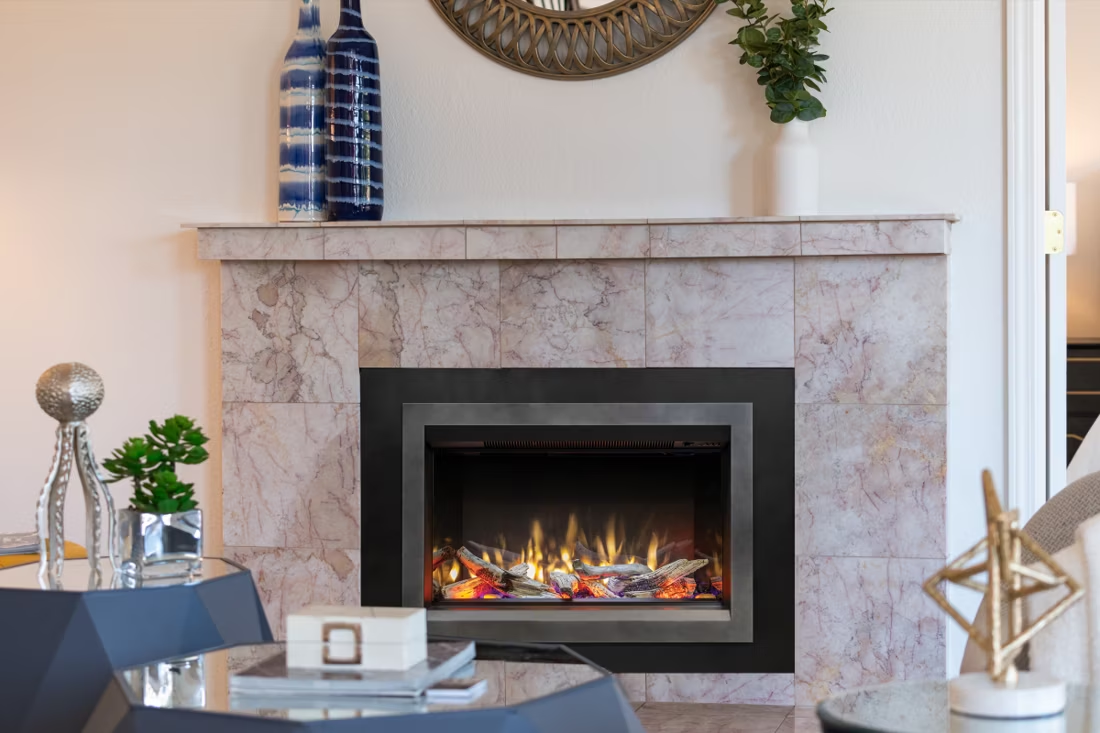
Electric fireplaces work in either case because they don't need a flue, a gas line, or structural changes—an insert drops into an old firebox and preserves the mantel, or a wall-mount unit hangs in a room that never had a hearth to begin with. Local electricity comes from three different providers depending on which side of town you're on—Duke Energy Indiana, the City of Richmond's own municipal utility, and Whitewater Valley Rural EMC out toward the county's edges—so operating costs vary a bit by address, but installation itself is usually the simplest and least expensive hearth project a Richmond homeowner can take on.
Three steps. No salesperson until you're ready.
Tell us about your project
Your zip code, your situation, and the fuel you're leaning toward—or let the answers point you to one.
See what's actually available
The brands dealers within 100 miles genuinely carry—real options, never a catalog mirage.
Get your dealer & Project Guide
A trusted local dealer, plus the free Project Guide & Parts List that names every component of the job.
Frequently Asked Questions
How much does it cost to install an electric fireplace in Richmond?
It depends heavily on the type. A freestanding or insert unit that plugs into an existing 120V household outlet typically costs $150 to $600 for the unit itself, with no installation labor beyond hanging it or setting it in place. A wall-mounted linear unit professionally hung and trimmed out usually runs $800 to $1,500. Built-in units that require a licensed electrician to run a dedicated circuit—common when a homeowner wants a large unit centered on a wall with no nearby outlet—land in the $1,500 to $3,500 range once framing and finish work are included. Local dealers can tell you which category your project falls into during an in-home look.
What does it cost to run an electric fireplace in Richmond?
Most electric fireplaces draw about 1,500 watts on their highest heat setting. Run five hours a day, that's roughly 7.5 kWh—at Duke Energy Indiana's residential rate of about 12.75 cents per kWh that's under a dollar a day, at the City of Richmond's municipal rate of about 13.12 cents it's close to the same, and at Whitewater Valley Rural EMC's rate of about 15.83 cents it runs a bit higher. Across a full winter month of regular evening use, most Richmond households land somewhere between $25 and $40, which is a fraction of what running a whole-house furnace costs to heat the same square footage.
Is electric or gas the better choice for a Richmond living room?
Gas fireplaces put out real heat—most produce 20,000 to 30,000 BTUs, enough to warm a larger room even on Richmond's coldest nights, and a unit with a standing pilot will keep working during a power outage. Electric units top out around 5,000 BTUs and need power to run, so they're built for supplemental zone heat and ambiance rather than replacing the furnace. Where electric wins is upfront cost and simplicity—no gas line, no venting, and a unit that can go into an apartment, a rental, or a historic home with a capped chimney without any structural work. Many Richmond homeowners end up choosing electric specifically because they want the fireplace look without touching an old masonry flue.
Can I put an electric insert into my home's old, non-working fireplace?
Yes, and it's one of the more common projects in Richmond's older neighborhoods, where many masonry fireboxes were sealed off years ago for safety or insurance reasons and have sat unused since. An electric insert slides into that existing opening, plugs into a nearby outlet (or a new one, if needed), and gives the room real supplemental heat and a flame-effect display without opening the chimney, relining a flue, or touching the masonry at all. It's a straightforward way to bring a dead fireplace back into daily use in a Starr Historic District or Old Richmond Historic District home.
Do I need a permit to install an electric fireplace in Richmond?
A plug-in freestanding unit or an insert that uses an existing outlet generally doesn't require a permit—it's treated like any other appliance. If your project involves a built-in unit that needs a new dedicated circuit or an outlet added behind a wall, that electrical work should be pulled by a licensed electrician and typically does require a permit through the local building department. Most installers who sell built-in electric units in Richmond will coordinate that permit and the electrical work as part of the project rather than leaving you to sort it out separately.
Will an electric fireplace actually heat a room in a Richmond winter?
It will keep a room comfortable, but it isn't sized to replace your furnace. Most electric fireplace heaters max out around 1,500 watts and 5,000 BTUs, which comfortably supplements heat in a 400 to 1,000 square foot space—a living room, den, or bedroom—but won't carry a whole house through Wayne County's long, cold winter heating season on its own. The right way to think about it is zone heat: turn the electric fireplace on in the room you're actually using and let your thermostat back off a couple of degrees elsewhere, which is where most of the winter savings come from.
Will my electric fireplace still work if the power goes out?
No—electric fireplaces need power to run, both for the heater and for the flame-effect lighting, so they shut down along with everything else during an outage. That's the tradeoff for the no-venting, no-gas-line simplicity. If backup heat during a winter storm is a priority for your household, a gas fireplace with a standing pilot and battery-backup ignition is worth considering as a second unit, since wood stoves and inserts aren't a common option in Richmond's housing stock the way they are in more rural, forest-adjacent parts of Indiana.
What's the difference between an electric insert, a wall-mount unit, and an electric mantel package?
An insert is built to slide into an existing fireplace opening and is the right call for older Richmond homes with a capped masonry firebox. A wall-mount or built-in linear unit recesses into (or hangs flush against) a wall with no fireplace opening required—common in newer construction on the city's north and east sides where homes were never built with a chimney. A mantel package pairs a smaller electric insert with a freestanding surround, which works well for renters or anyone who wants the fireplace look without any wall modification at all. A local dealer can walk you through which fits your specific room.
Is wood heat an option in Richmond, or is electric the more realistic choice?
Wood-burning stoves and inserts are genuinely uncommon in Richmond. Wayne County has plenty of oak, hickory, maple, and beech in its woodlots, but the city itself doesn't sit near public forest land with cutting permits the way many wood-heat markets do, and a large share of Richmond's housing stock—from capped historic fireboxes to chimney-free newer builds—simply isn't set up for it. Most homeowners here choose between gas and electric instead. If you specifically want a wood-burning appliance, it's still possible in a home with a sound, code-compliant chimney, but it's a smaller niche locally and worth discussing directly with a chimney specialist rather than assuming it's the default option.
Do electric fireplaces actually produce heat?
Yes—most put out around 4,800–5,000 BTUs from a standard outlet, which comfortably warms a bedroom, office, or den as a comfort-zone heater. What they won't do is carry a whole house the way wood, gas, or pellet can. Think of electric as ambiance-first with honest supplemental heat: flames on with no heat in July, flames plus warmth in January.
Can I put a TV above my fireplace?
Yes—with an asterisk. Fireplaces are hot and TVs don't like heat. Either put a mantel between them to deflect rising warmth, or choose a fireplace with heat-management technology that creates a cool zone on the wall above—the wall stays around 125 degrees, barely warm, while the room still gets full heat. If you like clean lines and don't want a mantel, heat management is the answer.
Can I install a fireplace myself?
If you're putting a fire in your house on purpose, it's best to work with an expert. Unless you're genuinely experienced in framing, gas line, vent pipe, and the national code on clearances to combustibles, have a professional do it—and ideally the same company that sells you the fireplace, so warranty, service, and liability all live under one roof.
Can a fireplace actually lower my heating bill?
Yes—by creating a comfort zone. A furnace heats every square foot of the house just to warm the one room you're in; a gas fireplace on low burns roughly a sixth of the gas a typical furnace does. Set the furnace around 55–60 degrees as a baseline, then heat the rooms your family actually uses. Families who heat this way commonly save $20–$60 a month.
Nearby Dealers
Hearth shops serving Richmond and the surrounding area.
Electric Service in Richmond
An electric fireplace's heater draws about 1,500 watts—pennies per hour at local rates.
Duke Energy Indiana, LLC
Whitewater Valley Rural Emc
City Of Richmond - (In)
Find your electric fireplace in Richmond.
Tell us a bit about your home and we'll match you with the right electric fireplace, insert, or wall unit—and connect you with a trusted local dealer who'll hand you a free Project Guide & Parts List for your Richmond installation.
Find Your Fireplace →