
Find the right fireplace for your Wayne County home.
Wood, gas, pellet, and electric fireplace resources for every town in Wayne County—from Richmond to Hagerstown to Cambridge City. Get matched with a trusted local dealer who can tell you what actually works in your house.
Every Project Starts From One of These Five Situations
Steady Midwest winters across Wayne County, Indiana.
Wayne County sits on Indiana's eastern border with Ohio, anchored by Richmond and surrounded by the farmland and hardwood woodlots of the Whitewater River valley. Winters here are solidly cold but not extreme—climate zone 5A, average lows around 20°F, and a long heating season that runs roughly October through April, less punishing than Duluth or Fargo but enough to run a wood stove or gas insert hard for that stretch. The oak, hickory, maple, and beech that fill Wayne County's woodlots have heated farmhouses here for generations, and that tradition still shows up in how many households split their heat between a wood stove and a furnace.
This hub rolls up hearth retailers, service technicians, and fuel suppliers across the whole county—Richmond, Cambridge City, Hagerstown, Centerville, Fountain City, Economy, Milton, Dublin, and Greens Fork. Pick your fuel below to see local dealers, typical installation costs, and the units that actually make sense for a Wayne County home, whether that's a farmhouse outside Dublin or a brick two-story in Richmond's historic district.
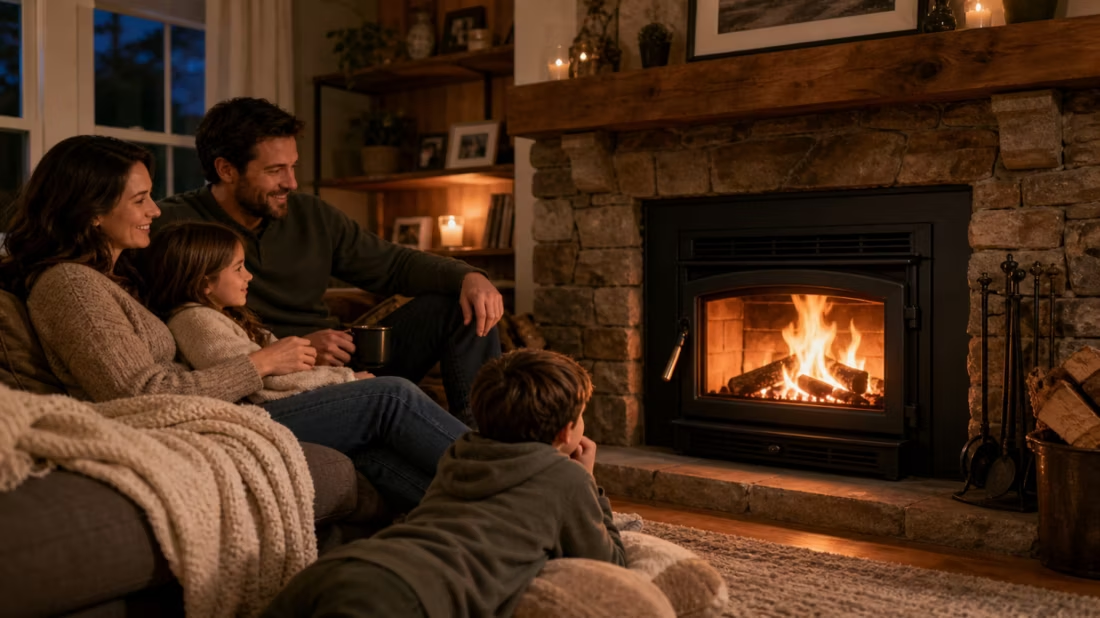
Four fuels. One honest answer for Wayne County.
Three steps. No salesperson until you're ready.
Tell us about your project
Your zip code, your situation, and the fuel you're leaning toward—or let the answers point you to one.
See what's actually available
The brands dealers within 100 miles genuinely carry—real options, never a catalog mirage.
Get your dealer & Project Guide
A trusted local dealer, plus the free Project Guide & Parts List that names every component of the job.
Frequently Asked Questions
Which fuel works best in Wayne County?
It depends on the house and how you use it. Wood is a solid choice for Wayne County's farmhouses and rural properties—oak and hickory from local woodlots burn long and hot, and a wood stove or insert keeps working if the power goes out during an ice storm. Gas is the low-maintenance option for Richmond and Cambridge City homes with natural gas service through CenterPoint Energy—flip a switch, no wood to split or ash to haul. Pellet splits the difference: wood-style heat with hopper convenience, and regional pellet supply from Indeck Energy Services, Lignetics, and Somerset Pellet Fuel keeps fuel reasonably easy to find. Electric works well as supplemental heat in bedrooms, sunrooms, or apartments, but with average winter lows around 20°F and a long heating season running roughly October through April, most Wayne County households still want wood, gas, or pellet as their primary heat source. Many homes here run two fuels—a wood stove for the main living area and gas or electric for the rest of the house.
Do I need a permit to install a fireplace in Wayne County?
Generally yes. New wood stoves, wood inserts, gas fireplaces, gas inserts, gas stoves, and pellet stoves typically require a building permit, and any gas hookup needs a licensed gas-fitter and a separate gas line permit. Wood-burning appliances installed today need to meet current EPA emissions standards—that rules out putting an old uncertified stove into a new installation. Inside Richmond city limits, permits run through the City of Richmond; in Cambridge City, Hagerstown, Centerville, and the unincorporated townships, they go through the Wayne County Building Department. Electric fireplaces usually skip the permit process unless you're hardwiring a built-in unit into a new circuit. Most local dealers handle the permit paperwork as part of the installation, so it's rarely something homeowners have to navigate solo.
Are there any air quality restrictions on wood burning in Wayne County?
No—Wayne County doesn't have the winter inversion problems or non-attainment designations that trigger voluntary burn-advisory days in some parts of the country. There's no local burn-ban program here. That said, any new wood stove or insert sold and installed today still has to meet current EPA New Source Performance Standards for emissions, regardless of local air quality status, so you'll be looking at EPA-certified units either way. If you're replacing an older pre-EPA stove, expect a real improvement in both efficiency and how much smoke you see coming off oak or hickory rounds.
Can one local dealer handle all four fuel types?
Some can, though it varies by shop. Larger hearth retailers based near Richmond are more likely to carry wood, gas, pellet, and electric side by side, which is useful if you're still comparing options. Smaller shops in Cambridge City or Hagerstown may focus more narrowly—often wood and pellet, since those fuels share venting and installation logic, with gas and electric handled by a specialist elsewhere in the county. If you already know your fuel, that narrows your search fast; if you're undecided, a multi-fuel dealer near Richmond can walk you through working displays of more than one type before you commit.
How does service work in rural areas of Wayne County?
Most chimney sweeps and gas technicians covering Wayne County are based in or near Richmond and travel out to Cambridge City, Hagerstown, Centerville, Fountain City, and the surrounding townships for annual service calls. Expect a modest trip charge for the more outlying farms and rural addresses, and know that scheduling gets tighter once cold weather sets in—booking your annual chimney sweep or gas inspection in September or early October, before the first real cold front, is easier than trying to get someone out during a January cold snap. If you're heating a rural property with wood as your main source, keeping a backup fuel or a generator on hand isn't a bad idea for the occasional ice storm that knocks out power.
What's the typical cost range for fireplace installation across all fuel types in Wayne County?
Costs vary by fuel and by how much venting or gas line work is involved. Wood stove or insert installation typically runs $4,000–$8,500, more if the chimney needs relining or rebuilding. Gas fireplace, insert, or stove installation generally falls between $4,000–$10,000, with the lower end for homes that already have gas service and the upper end for new gas line runs. Pellet stove or insert installation is usually $4,000–$7,000. Electric fireplace units run $200–$3,000 for the unit itself, plus $300–$1,000 in labor for anything beyond a simple plug-in, such as a built-in or hardwired install. For a cost breakdown tied to a specific fuel and dealer pricing, check the county + fuel pages above.
Does a fireplace add value to my home?
On average, a fireplace adds back to the home about the same amount you spent installing it. Add the monthly savings from heating the rooms you actually use instead of the whole house—often hundreds of dollars a year—and the value case is strong before you even count what a fire does for how your family uses the room.
Can I install a fireplace myself?
If you're putting a fire in your house on purpose, it's best to work with an expert. Unless you're genuinely experienced in framing, gas line, vent pipe, and the national code on clearances to combustibles, have a professional do it—and ideally the same company that sells you the fireplace, so warranty, service, and liability all live under one roof.
Can a fireplace actually lower my heating bill?
Yes—by creating a comfort zone. A furnace heats every square foot of the house just to warm the one room you're in; a gas fireplace on low burns roughly a sixth of the gas a typical furnace does. Set the furnace around 55–60 degrees as a baseline, then heat the rooms your family actually uses. Families who heat this way commonly save $20–$60 a month.
How much should I budget for a fireplace?
For an average home—covering the fireplace, the vent pipe, and basic installation—a budget between $3,900 and $5,500 gives you a lot of options across wood, gas, and pellet. By the time you add finish work, gas line, and electrical, the average complete installation lands between $5,000 and $12,000 all-in. In a remodel or new build, a good rule is to put about 2.5% of the total project cost toward the fireplace.
Stove and Fireplace Dealers in Wayne County
Listings include WhyFire partner dealers, dealers we have verified as authorized for the brands we recommend, and established local businesses that carry hearth products. Every listing shows which one it is. The ones marked Preferred run on WhyFire's software, so they can show you real pricing and book your appointment right here. No manufacturer pays for placement. How we verify dealers →
Davis Cabinet & Design
Jd Farm Supply
Charles Family Hearth
Find your fireplace in Wayne County.
Pick a fuel below and we'll match you with a trusted local Wayne County dealer, plus a free Project Guide & Parts List—the exact parts, vent kit included, for your project and the dealer we recommend to install it.
Find Your Fireplace →