
Find your pellet stove in Randolph County.
Consistent, low-maintenance heat for Randolph County's long, Madison, WI-style winters—from Winchester to Union City to the farmland in between. Get matched with a trusted local dealer who can size and install it right.
Every Project Starts From One of These Five Situations
Set-it-and-forget-it warmth for east-central Indiana winters.
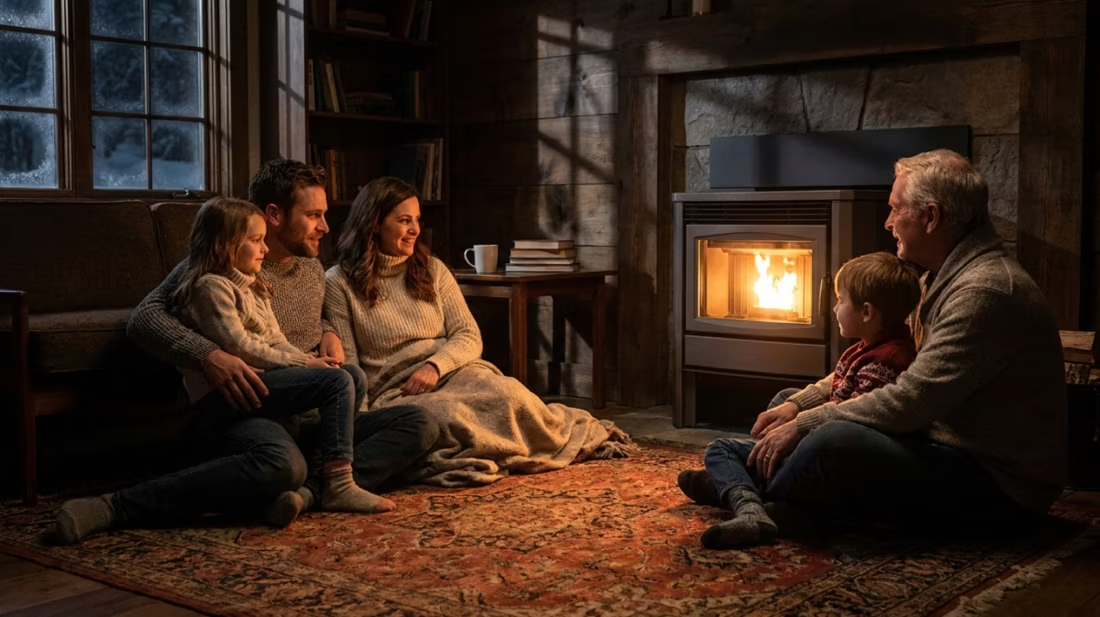
Randolph County sits in climate zone 5A on Indiana's eastern edge against the Ohio line, with average winter lows around 18°F and a long, cold heating season comparable to Madison, WI—a load closer to that than to most of the Midwest's milder pockets. That's a real heating season, not a decorative one. Homes here are surrounded by hardwood country, and while oak, hickory, maple, and beech have long fed wood stoves in Winchester, Union City, and the county's farmsteads, pellet stoves have found a strong following for a simpler reason: no splitting, no stacking, no chimney-cleaning ritual.
A pellet stove loads from a bag instead of a woodpile, holds a steady burn without constant tending, and burns clean enough that air quality has never been a concern in Randolph County the way it is in western states with inversion problems. Regional supply is solid—brands like Indeck Energy Services, Lignetics, and Somerset Pellet Fuel are available through farm stores and hearth dealers across east-central Indiana, so you're not driving to Indianapolis every time you need fuel. For a county with a lot of rural acreage and a lot of cold nights, that combination of steady heat and low hassle is what's driving pellet adoption here.
Three steps. No salesperson until you're ready.
Tell us about your project
Your zip code, your situation, and the fuel you're leaning toward—or let the answers point you to one.
See what's actually available
The brands dealers within 100 miles genuinely carry—real options, never a catalog mirage.
Get your dealer & Project Guide
A trusted local dealer, plus the free Project Guide & Parts List that names every component of the job.
Frequently Asked Questions
How much does a pellet stove installation cost in Randolph County?
Pellet stove and insert installations in Randolph County typically run in the $4,500 to $7,500 range, depending on the unit, whether you're installing into an existing masonry fireplace or as a freestanding stove, and how much venting work is needed. Pellet stoves vent through a smaller-diameter pipe than wood stoves and can often exit through an exterior wall rather than requiring a full chimney, which keeps costs down for homes without existing masonry. A local dealer serving Winchester, Union City, or the surrounding townships can give you a firm number after seeing your home.
What size pellet stove do I need for my Randolph County home?
With average winter lows near 18°F and a heating season on par with Madison, WI, Randolph County homes generally need a mid-size to large pellet stove rated for the full square footage you want heated, not just a supplemental unit. A small unit (rated under 1,000 sq ft) works for a single room or a well-insulated addition; most farmhouses and older homes in the county do better with a stove rated 1,500 to 2,500 sq ft, especially in drafty older construction common in the rural townships. A local dealer will size it to your actual floor plan and insulation rather than square footage alone—oversizing leads to a stove that short-cycles and undersizing leaves you cold on the worst nights.
Where can I find pellet stove dealers near me in Randolph County?
Look for dealers who carry established pellet stove brands and can also speak to local pellet supply—that combination matters more here than in areas without regional pellet production. Dealers serving Winchester, Union City, and Farmland typically also stock or can direct you to bagged pellets from Indeck Energy Services, Lignetics, or Somerset Pellet Fuel, so you're not stuck driving out of county for fuel. Ask any installer about NFI (National Fireplace Institute) certification—it indicates training specific to pellet-burning appliance installation and venting, not just general HVAC work.
What's the difference between a pellet stove and a pellet insert?
A pellet stove is a freestanding appliance that sits on its own hearth pad and vents through a wall or existing chimney—it can go almost anywhere in a room with the right clearances. A pellet insert is built to slide into an existing masonry fireplace opening, converting an old wood-burning fireplace into a much more efficient pellet-fed unit while using the existing chimney cavity for venting. For Randolph County homes with an older fireplace already in place—common in the county's farmhouses and older Winchester homes—an insert is often the more cost-effective route since it reuses infrastructure you already have.
Do I need a permit to install a pellet stove in Randolph County?
Most pellet stove and insert installations require a building permit through the local jurisdiction—Winchester and Union City each handle permitting within city limits, while unincorporated areas of the county go through the Randolph County building department. The permit process mainly verifies clearances, venting termination location, and hearth pad requirements. Most local dealers handle the permit application as part of the installation, so you generally don't have to navigate it yourself.
What's the best pellet stove for a Randolph County winter?
With a heating season as long and cold as Madison, WI's, and regular stretches in the teens, look for a pellet stove with a large hopper capacity—40 to 60 pounds—so it can run overnight or through a full workday without a refill. Auto-ignition and a thermostat-controlled feed rate are worth prioritizing too, since they let the stove modulate output automatically as outdoor temperatures swing, which is useful in a county that sees real cold fronts move through. Brands vary in hopper size and feed control, so ask a local dealer to walk through options based on your square footage and how often you want to be reloading it.
How often does a pellet stove need to be cleaned and serviced?
Pellet stoves need more frequent light maintenance than wood stoves but far less heavy cleaning. Plan on emptying the ash pot every few days during regular use, cleaning the burn pot weekly to keep the auger feeding properly, and scheduling a full professional cleaning and inspection once a year—typically before burning season starts in the fall. Randolph County dealers who sell pellet stoves generally also offer this annual service, and it's worth keeping on the calendar since a clogged burn pot is the most common cause of poor performance or shutdowns mid-winter.
Where can I buy pellet fuel in Randolph County?
Pellet fuel is more locally available in Randolph County than in a lot of the Midwest, thanks to regional production from brands like Indeck Energy Services, Lignetics, and Somerset Pellet Fuel. Farm supply stores and hearth dealers in and around Winchester and Union City typically stock bagged pellets by the ton, and prices are generally competitive with other parts of east-central Indiana. Buying a full ton (usually 50 forty-pound bags) ahead of the season is the common approach for homeowners using pellet stoves as a primary or heavy supplemental heat source, since it locks in supply before winter demand picks up.
Pellet stove vs. wood stove—which is right for my Randolph County home?
Wood stoves burn cordwood cut from local oak, hickory, maple, or beech, work without any electricity (a real advantage during winter storm outages, which do happen in this part of Indiana), and offer the lowest fuel cost if you're cutting or splitting your own. Pellet stoves load from a bag, run on a thermostat, need far less daily tending, and burn cleaner—but they require electricity to run the auger and blower, so they go down in a power outage unless you add a battery backup. For Randolph County's rural properties where self-sufficiency and backup heat matter, wood often wins. For homeowners who want steady, low-hassle heat and don't want to deal with splitting and stacking, pellet is usually the better fit. A local dealer can walk through both options for your specific situation.
How often does a pellet stove need cleaning?
A clean pellet stove is a happy pellet stove. Plan on cleaning the burn pot about once a week when you're burning regularly—ash and clinkers gum up the air holes just like a pellet barbecue. Most pellet stove problems trace back to skipped cleaning that nobody explained up front. Some designs make it easy with a trapdoor burn pot: pull a lever and the gunk drops into the ash pan.
What's the difference between an insert and a zero-clearance fireplace?
An insert is a fireplace that slides into a pre-existing wood-burning fireplace—if you don't have one, there's nothing to insert it into. A zero-clearance fireplace is built into a framed wall, which makes it the answer for remodels and new construction. Simple test: existing masonry fireplace means insert; blank or framed wall means zero-clearance.
Can I install a fireplace myself?
If you're putting a fire in your house on purpose, it's best to work with an expert. Unless you're genuinely experienced in framing, gas line, vent pipe, and the national code on clearances to combustibles, have a professional do it—and ideally the same company that sells you the fireplace, so warranty, service, and liability all live under one roof.
What is an in-home preview and do I need one?
It's a visit where a hearth professional measures your space, confirms the model you picked actually works in your home, and walks the specs—framing, gas line, venting, finish work—before anything is ordered. Some details you just can't know until you see the house. Never make a down payment without one; it's the single most-skipped step that burns buyers.
Pellet Brands Stocked Around Randolph County
Manufacturers will point you to the nearest stocking dealer.
Get your Randolph County pellet stove Project Guide.
Tell us about your home and we'll match you with a trusted local dealer and send a free Project Guide & Parts List—the exact parts, including the vent kit, for your pellet project in Randolph County.
Find Your Fireplace →