
Steady, Set-and-Forget Heat for Pulaski County Winters.
With a long, cold heating season and winter lows averaging 16°F across the flat farmland around Winamac and the Tippecanoe River, a hopper-fed pellet stove keeps running on its own timer while you're out doing chores. Find the right unit and get matched with a trusted local installer.
Every Project Starts From One of These Five Situations
Consistent warmth without babysitting the fire.
Pulaski County is small—under 5,000 residents spread across Winamac, Francesville, Medaryville, and a lot of open farmland along the Tippecanoe River. Climate zone 5A and a heating season comparable to Buffalo, NY put the county's winters in the same range: long, cold, and steady rather than brutally extreme, with winter lows averaging around 16°F. The county's oak, hickory, maple, and beech woodlots have always made cordwood a viable option here, but plenty of homeowners—especially those tired of splitting and stacking, or living in a smaller ranch house that doesn't need a big freestanding wood stove—are turning to pellet appliances instead.
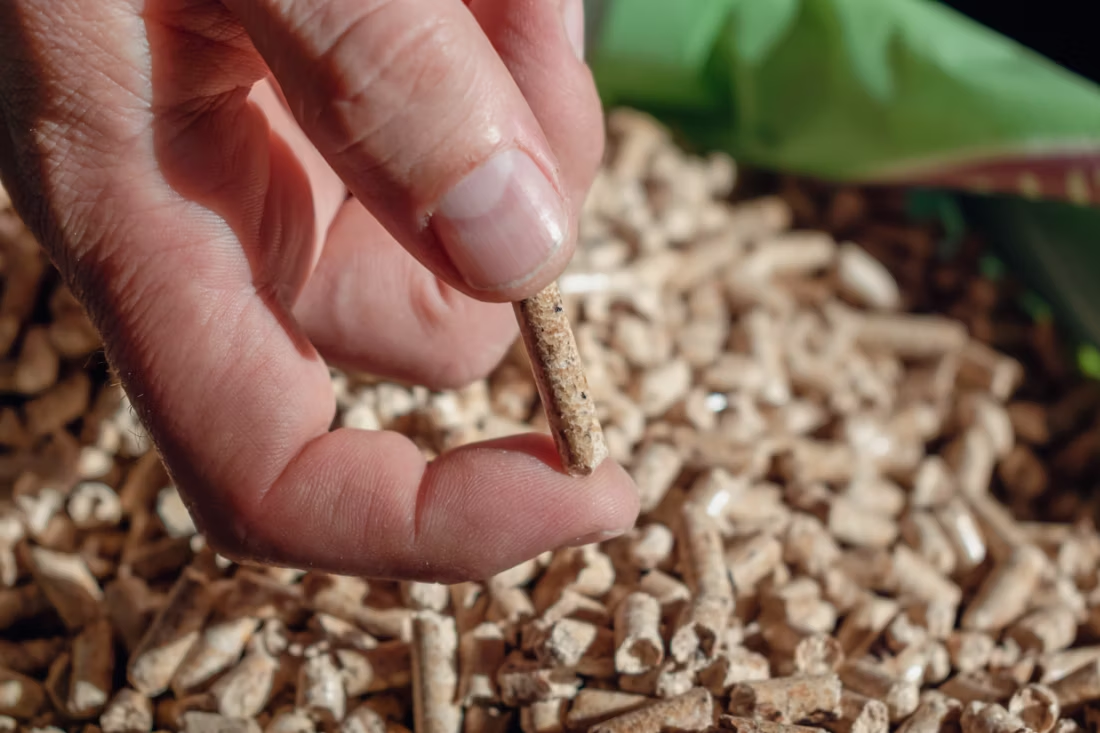
With no air quality restrictions on the books in Pulaski County, there's no curtailment schedule to work around—a pellet stove's automated auger and thermostat are chosen for convenience, not compliance. Regional pellet suppliers like Indeck Energy Services, Lignetics, and Somerset Pellet Fuel keep bags moving through the Midwest, and on farm properties with long driveways, buying by the ton and having it dropped at the barn or garage is often more practical than hauling 40-lb bags from a hardware store trip after trip.
Three steps. No salesperson until you're ready.
Tell us about your project
Your zip code, your situation, and the fuel you're leaning toward—or let the answers point you to one.
See what's actually available
The brands dealers within 100 miles genuinely carry—real options, never a catalog mirage.
Get your dealer & Project Guide
A trusted local dealer, plus the free Project Guide & Parts List that names every component of the job.
Frequently Asked Questions
How much does a pellet stove installation cost in Pulaski County?
Across north-central Indiana, a freestanding pellet stove installation typically runs $3,000 to $6,000, depending on the unit, whether it vents through an existing chimney chase or a new hole cut in an exterior wall, and any electrical work needed for the auger and blower circuit. Pellet stoves vent through a simple 3-4 inch PL pipe rather than a full Class A chimney system, which is one reason install costs generally run lower than wood stove installs in the county. A pellet insert going into an existing masonry fireplace adds a bit more labor for the liner and surround. Get a firm quote from a local dealer after they've seen your home.
What size pellet stove do I need for my home?
A lot of housing stock in Pulaski County is older farmhouses with open floor plans, plus a mix of newer ranch homes in and around Winamac. Small pellet stoves (rated for up to roughly 1,000-1,200 sq ft) suit a single large room or a smaller ranch; medium units (1,200-2,000 sq ft) cover most main living areas; larger units with bigger hoppers can carry a well-insulated whole home through the coldest stretches at 16°F. Because pellet stoves run on a thermostat rather than a hand-fed fire, sizing is more forgiving than wood—but an undersized unit will still struggle to keep up on the coldest nights. A local dealer can size your space during an in-home visit.
Where can I find certified pellet stove installers near Pulaski County?
Pulaski County itself is small enough that most hearth dealers covering the area are based in nearby towns—Logansport, Rensselaer, Monticello, or Plymouth—and travel out to Winamac, Francesville, and Medaryville for installs. Look for NFI (National Fireplace Institute) certification, which specifically covers pellet-burning appliance training. Because pellet stoves need a dedicated electrical circuit and correctly sized wall venting, it's worth avoiding a general handyman install—a poorly set combustion-air intake is a common cause of auger jams and poor draft on pellet units.
What's the difference between a pellet stove and a pellet insert?
A pellet stove is a freestanding cabinet unit that sits on its own hearth pad and vents through a wall or existing chimney—it can go almost anywhere in a room with the right clearances. A pellet insert is built to slide into an existing masonry fireplace opening, turning a drafty old fireplace into an automated heat source while reusing the chimney chase (usually with a stainless liner). For Pulaski County farmhouses with an existing fireplace that's mostly decorative, an insert is often the more efficient upgrade. Homes without an existing fireplace typically go with a freestanding stove instead.
Do I need a permit to install a pellet stove in Pulaski County?
Yes, a building permit is generally required for a new pellet stove installation through the Pulaski County Building Department, since it involves cutting a vent penetration and adding an electrical circuit. The process is usually simpler than a full wood stove chimney permit because pellet venting is smaller-diameter wall pipe rather than a full masonry or Class A chimney system. Most local dealers include the permit paperwork as part of the installation quote, so you're not the one filing it.
What's the best pellet stove for Pulaski County's climate?
With winter lows averaging 16°F and a heating season that runs long, look for a pellet stove with a hopper large enough to get through an overnight burn without a refill—many mid-size units hold 40-60 lbs of pellets, good for roughly 24 to 30 hours on a low thermostat setting. A larger hopper matters more here than in milder climates, since you're feeding the stove through more consecutive cold days. Ask a local dealer to walk through hopper capacity, BTU output, and thermostat control options against your square footage before you buy.
How often does a pellet stove need to be cleaned and serviced?
Ash pans typically need emptying every few days to weekly depending on how hard the stove is running. The burn pot benefits from a scrape every week or two to keep clinkers from blocking airflow. Beyond that, plan on a full professional service once a year—typically before the heating season starts—to clean the auger, exhaust fan, and venting, and check the gaskets and electrical components. Pulaski County's rural service area means it's worth scheduling that annual visit early, since local techs are often booking a season out by late fall.
Where can I buy pellets in Pulaski County?
Regional producers including Indeck Energy Services, Lignetics, and Somerset Pellet Fuel supply pellet fuel throughout the Midwest, and local hardware and farm supply stores in and around Winamac typically stock bags seasonally. Given how spread out the county is, many rural households find it more practical to buy by the ton—a full ton (roughly 50 forty-pound bags) delivered to the property—rather than making repeated pickup trips. Buying pellets in late summer, before the fall rush, generally gets better pricing and availability than waiting until the first cold snap.
Pellet stove vs. wood stove—which is right for my home?
Wood is abundant in Pulaski County—oak, hickory, maple, and beech are all common locally—and a wood stove keeps running without electricity, which matters during winter storm outages. A pellet stove trades that off for real convenience: load the hopper, set the thermostat, and walk away, with far less ash and no splitting or stacking. The tradeoff is that pellet stoves need electricity to run the auger and blower, so they're not a backup heat source if the power goes out—something to weigh seriously in a rural county where outages can run longer than in town. Some households here run both: a pellet stove for daily convenience, a wood stove or fireplace as an off-grid backup.
How often does a pellet stove need cleaning?
A clean pellet stove is a happy pellet stove. Plan on cleaning the burn pot about once a week when you're burning regularly—ash and clinkers gum up the air holes just like a pellet barbecue. Most pellet stove problems trace back to skipped cleaning that nobody explained up front. Some designs make it easy with a trapdoor burn pot: pull a lever and the gunk drops into the ash pan.
Why is my open fireplace making my house colder?
Open fireplaces suck—literally. As the fire burns, it consumes air your furnace already paid to heat and pulls it out through the chimney, so the house is actually colder after the fire goes out than before you lit it. An insert fixes this: it seals the chimney, puts fixed glass across the front, and turns that hole in your house into a real heat source.
Can I install a fireplace myself?
If you're putting a fire in your house on purpose, it's best to work with an expert. Unless you're genuinely experienced in framing, gas line, vent pipe, and the national code on clearances to combustibles, have a professional do it—and ideally the same company that sells you the fireplace, so warranty, service, and liability all live under one roof.
Can a fireplace actually lower my heating bill?
Yes—by creating a comfort zone. A furnace heats every square foot of the house just to warm the one room you're in; a gas fireplace on low burns roughly a sixth of the gas a typical furnace does. Set the furnace around 55–60 degrees as a baseline, then heat the rooms your family actually uses. Families who heat this way commonly save $20–$60 a month.
Pellet Brands Stocked Around Pulaski County
Manufacturers will point you to the nearest stocking dealer.
Find your pellet stove in Pulaski County.
Tell us about your home and heating goals, and we'll match you with a trusted local dealer and put together your free Project Guide & Parts List—the exact stove or insert, vent kit, and install plan for your Pulaski County home.
Find Your Fireplace →