
Pellet heat that keeps up with Owen County winters.
Automated, hopper-fed heat for the hills around Spencer and the White River valley—no splitting, no stacking, no hauling cordwood up from the woodlot. Find the right pellet stove or insert, and get matched with a trusted local dealer.
Every Project Starts From One of These Five Situations
Automated heat for a county built on cutting your own wood.
Owen County's ridges and hollows around Spencer, Gosport, and McCormick's Creek State Park are thick with oak, hickory, maple, and beech—the kind of hardwood cover that's made cutting and burning your own wood a long-standing habit here. With a winter heating season on par with places like southern Michigan and winter lows averaging near 20°F, the county sits solidly in the cold-but-not-extreme range of climate zone 5A: cold enough that a real heating appliance matters, but not so severe that you need to over-build for it.
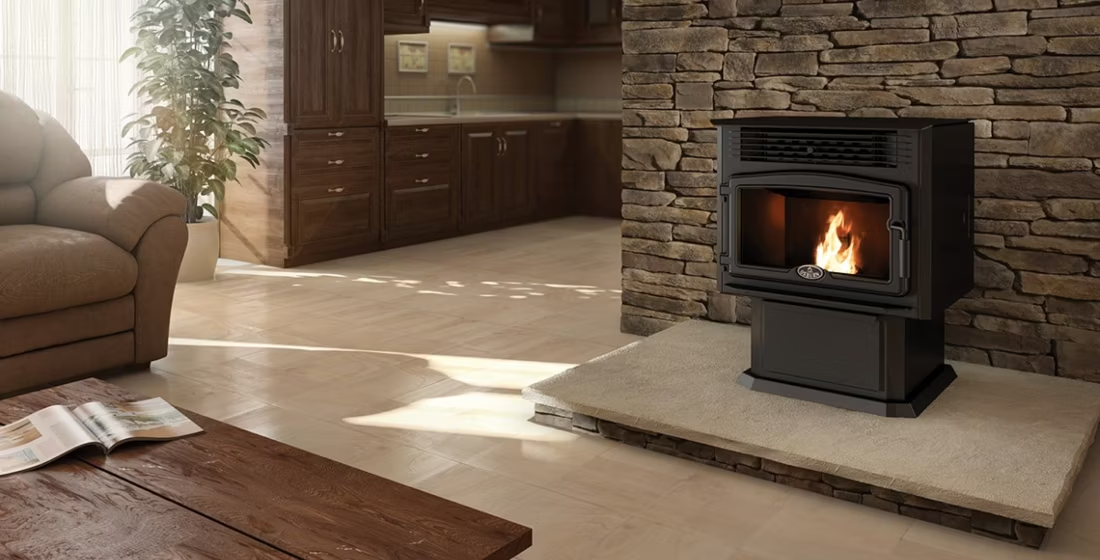
A pellet stove or insert fits into that landscape differently than a wood stove does. Instead of a chainsaw, a woodlot, and a season of splitting and stacking, you're loading a hopper with bagged fuel from brands like Lignetics, Somerset Pellet Fuel, or Indeck Energy Services and setting a thermostat. That trade-off matters most for households that want steady, hands-off heat through an Indiana winter without the physical labor wood demands—retirees, second-home owners, or anyone managing a farm and a full schedule at the same time. With no local air quality restrictions on burning, pellet appliances run here without the curtailment concerns some western counties deal with.
Three steps. No salesperson until you're ready.
Tell us about your project
Your zip code, your situation, and the fuel you're leaning toward—or let the answers point you to one.
See what's actually available
The brands dealers within 100 miles genuinely carry—real options, never a catalog mirage.
Get your dealer & Project Guide
A trusted local dealer, plus the free Project Guide & Parts List that names every component of the job.
Frequently Asked Questions
How much does a pellet stove installation cost in Owen County?
Most pellet stove and insert installations in this part of Indiana run roughly $3,500 to $7,000, depending on the unit, whether you're installing into an existing masonry fireplace (insert) or as a freestanding stove, and what venting and electrical work is required. Because pellet appliances need a dedicated electrical circuit to run the auger and combustion blower, homes without an outlet near the install site sometimes need minor electrical work added to the quote. A local dealer will give you a firm number after seeing your chimney or install location in person.
What size pellet stove do I need for my Owen County home?
Sizing comes down to square footage, insulation quality, and whether the stove is your primary heat or a supplement to a furnace. Given Owen County's winter lows in the 20s and a solidly long heating season, most single-family homes in the 1,200 to 2,000 square foot range do well with a mid-size pellet stove, while larger farmhouses or drafty older homes on the county's ridges may need a bigger hopper capacity to keep up overnight without a refill. A local dealer will walk your space and size it for free—oversizing a pellet stove wastes fuel just as easily as undersizing leaves you cold on the harder nights.
Where can I find a certified pellet stove installer near Owen County?
Look for installers with NFI (National Fireplace Institute) certification, which covers pellet-specific venting, clearance, and electrical requirements that differ from wood stove installs. Because Owen County is largely rural, expect some installers to be based out of Spencer, Bloomington, or other nearby Monroe County communities and to cover a wider service radius—a small travel charge for outlying addresses like Freedom or Gosport isn't unusual. Sticking with a dealer who also sells the stove keeps your warranty and code compliance in one hand instead of split between a retailer and a separate installer.
What's the difference between a pellet stove and a pellet insert?
A pellet stove is a freestanding unit that sits on its own hearth pad and vents through a wall or existing chimney chase—it can go almost anywhere with the right clearances. A pellet insert is built to slide into an existing masonry fireplace opening, which is a common upgrade for older Owen County farmhouses that already have a wood-burning fireplace but want the lower-maintenance, thermostat-controlled heat pellets offer. If you already have a fireplace, an insert usually makes more sense; if you don't, a freestanding stove gives you more flexibility on where it goes.
Do I need a permit to install a pellet stove in Owen County?
Yes—a new pellet stove or insert installation requires a building permit, which in Owen County is handled through the county building department for anything outside city limits, and through the town office for installs within Spencer. Most local dealers include the permit process as part of the installation, so you generally don't have to file anything yourself. Because pellet appliances also need a grounded electrical circuit, an electrical permit may be pulled alongside the building permit if new wiring is required.
What pellet brands are available near Owen County?
Regional supply for this part of Indiana includes Lignetics, Somerset Pellet Fuel, and Indeck Energy Services—all producing bagged hardwood or softwood pellets sold by the ton at farm and hardware stores throughout the area. Hardwood pellets, made from species similar to the oak and hickory that already dominate Owen County's woodlots, tend to burn a little cleaner with less ash than softwood blends, though either works fine in most modern stoves. Buying a season's supply in late summer or early fall, before demand picks up, is the standard local move.
How much maintenance does a pellet stove need?
Pellet stoves need more routine attention than a wood stove but far less than people expect: a daily or every-few-days ash pan cleaning during heavy use, a weekly wipe of the burn pot and glass, and an annual professional service that covers the auger, blower motors, and venting. CSIA guidance calls for at least an annual inspection of the venting system, similar to a wood chimney sweep, even though pellet exhaust runs cooler and produces far less creosote. Skipping the annual service is the most common cause of auger jams and igniter failures mid-winter.
Where do I buy pellets locally in Owen County?
Bagged pellets from brands like Lignetics and Somerset Pellet Fuel are typically stocked seasonally at farm supply and hardware stores across this part of Indiana, with availability tightening as cold weather sets in. Buying by the ton (usually sold as 50 stacked 40-pound bags) ahead of the season, rather than bag by bag mid-winter, is the more economical route and avoids the supply crunches that can hit rural counties when a cold snap drives sudden demand.
Pellet stove vs. wood stove—which is right for my Owen County home?
Wood stoves run on cordwood cut from the oak, hickory, maple, and beech that cover much of the county, need no electricity, and keep working through a power outage—a real consideration on rural lines outside Spencer. Pellet stoves trade that self-sufficiency for convenience: no splitting or stacking, more consistent heat output, and a hopper that can run 12 to 24 hours unattended, but the auger and blower need electricity, so a pellet stove goes cold in an extended outage unless it's paired with a battery backup or generator. For households prioritizing hands-off, thermostat-style heat, pellet usually wins; for households that want heat with no dependence on the grid, wood still has the edge.
Why is my open fireplace making my house colder?
Open fireplaces suck—literally. As the fire burns, it consumes air your furnace already paid to heat and pulls it out through the chimney, so the house is actually colder after the fire goes out than before you lit it. An insert fixes this: it seals the chimney, puts fixed glass across the front, and turns that hole in your house into a real heat source.
Are pellet stoves loud?
They make some noise—there are two fans running plus an auger motor that turns as it feeds pellets. But there's a real range: premium models are engineered quiet, and the best offer a whisper-quiet mode you can comfortably watch TV next to. If noise matters in your room, ask to hear a stove running before you buy—it's a five-minute test that saves years of annoyance.
Can a fireplace actually lower my heating bill?
Yes—by creating a comfort zone. A furnace heats every square foot of the house just to warm the one room you're in; a gas fireplace on low burns roughly a sixth of the gas a typical furnace does. Set the furnace around 55–60 degrees as a baseline, then heat the rooms your family actually uses. Families who heat this way commonly save $20–$60 a month.
How much should I budget for a fireplace?
For an average home—covering the fireplace, the vent pipe, and basic installation—a budget between $3,900 and $5,500 gives you a lot of options across wood, gas, and pellet. By the time you add finish work, gas line, and electrical, the average complete installation lands between $5,000 and $12,000 all-in. In a remodel or new build, a good rule is to put about 2.5% of the total project cost toward the fireplace.
Pellet Brands Stocked Around Owen County
Manufacturers will point you to the nearest stocking dealer.
Find your pellet stove in Owen County.
Tell us a bit about your home and we'll put together a free Project Guide & Parts List—the right pellet stove or insert, the vent kit it needs, and a trusted local dealer who can install it correctly.
Find Your Fireplace →