
Real Warmth, No Firewood Required.
Instant, reliable heat for Munster's Chicagoland winters—find the right gas fireplace or insert and get matched with a trusted local dealer.
Every Project Starts From One of These Five Situations
Gas is the default heat source in NW Indiana.
Munster sits in Lake County, Indiana, on the flat glacial plain of the Calumet region just south of Chicago—part of the dense ring of suburbs where natural gas infrastructure was built out decades ago alongside the housing stock. At 614 feet elevation, winters here average a low of 15°F with a long, demanding heating season, putting Munster's heating load in the same range as Madison, Wisconsin, even though the deep-freeze extremes that hit the upper Midwest are less frequent this far south.
Northern Indiana Public Service Company (NIPSCO) supplies both electric and natural gas service to nearly every address in Munster, and the town's building stock—largely brick ranches and colonials built from the 1950s through the 1980s—means most homes already have either a masonry fireplace ready for a gas insert or a gas line already run to the kitchen or furnace room. With no local air quality restrictions on combustion appliances and no wood-burning permit season to track, gas is the straightforward, code-simple option for homeowners who want real flame and instant heat without keeping a wood supply or watching seasonal burn advisories that other parts of the Midwest deal with.
Three steps. No salesperson until you're ready.
Tell us about your project
Your zip code, your situation, and the fuel you're leaning toward—or let the answers point you to one.
See what's actually available
The brands dealers within 100 miles genuinely carry—real options, never a catalog mirage.
Get your dealer & Project Guide
A trusted local dealer, plus the free Project Guide & Parts List that names every component of the job.
Frequently Asked Questions
How much does a gas fireplace installation cost in Munster?
Munster doesn't have a single going rate for gas installs—cost depends heavily on whether you already have a natural gas line nearby (common, since NIPSCO gas mains run under nearly every street in town) and whether you're converting an existing masonry fireplace or building out a new one. A gas insert into an existing chimney with a nearby gas line is typically the least expensive path; running new gas piping from the meter, framing a new chase for a zero-clearance fireplace, or venting through an exterior wall in a home without an existing flue adds cost. Rather than guess at a number that may not apply to your house, your matched local dealer will walk your gas meter location and existing chimney (if you have one) and give you a firm, written quote as part of your free Project Guide & Parts List.
Can I convert my existing masonry fireplace to gas?
Yes, and it's one of the most common gas projects in Munster's older brick ranch and colonial neighborhoods, where a masonry fireplace built in the 1950s through 1980s often sits unused or gets fired only a few times a year. A gas insert slides into the existing firebox and vents through the existing chimney with a stainless liner, so you keep the look of your fireplace but get push-button flame and real heat output instead of a fireplace that mostly pulls warm air out of the house. Because NIPSCO gas service already reaches nearly every block in town, running a supply line to the hearth is usually straightforward compared to homes on propane or without nearby gas infrastructure.
Is natural gas available throughout Munster, or will I need propane?
Nearly every home in Munster is already on NIPSCO's natural gas distribution system—if your furnace, water heater, or range runs on gas, a fireplace or insert just taps into the existing service with a new branch line. Propane is rarely necessary inside town limits; it tends to show up only in a handful of rural pockets elsewhere in Lake County that sit outside NIPSCO's gas footprint. If you're in one of those rare unserved spots, your local dealer can set the fireplace up for propane with a tank instead—most units are convertible either way.
Will a gas fireplace still work if the power goes out?
Most gas fireplaces with intermittent pilot ignition (IPI) include a battery backup—typically a set of AA batteries built into the control module—so the unit still lights and runs the blower even when NIPSCO's grid is down. That matters in this part of NW Indiana, where summer derechos and winter ice storms occasionally knock out power for hours at a time. A handful of manufacturers, including Valor, use a pilot-driven thermocouple that generates its own electricity, so there's no battery to remember at all. Ask your matched dealer which ignition system a given model uses if backup heat during outages is a priority.
What's the difference between a gas fireplace, insert, and stove?
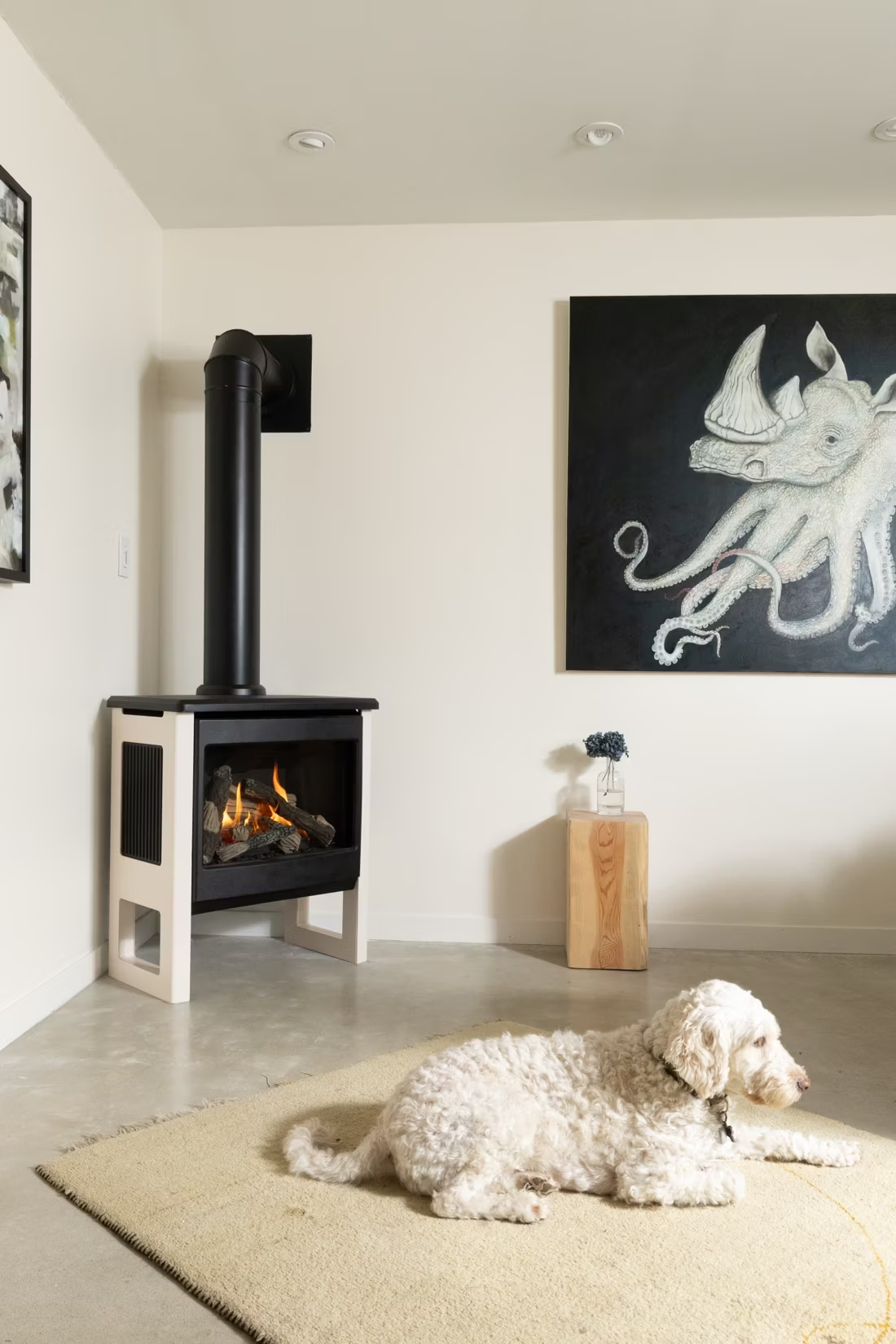
A gas fireplace is a built-in unit framed into a wall—the right call for new construction or a room without an existing hearth. A gas insert is sized to slide into an existing masonry firebox, which fits a large share of Munster's existing brick homes. A gas stove is a freestanding, cabinet-style unit that sits on the floor and vents out through a wall or existing flue, useful in a room with no fireplace at all and no interest in framing one in. For most Munster homeowners with an older brick fireplace already in the living room, an insert is the simplest and most cost-effective upgrade.
Do I need a permit to install a gas fireplace in Munster?
Yes—the Town of Munster's building department requires a permit for gas fireplace installations, and any new or modified gas line needs sign-off from a licensed gas fitter as part of that permit. Most hearth dealers serving Lake County handle the permit application and inspection scheduling directly, so it's rarely something homeowners have to manage themselves. Because Munster is a fully built-out, code-active town rather than unincorporated county land, expect the inspection process to be more consistent—and faster—than it might be in rural parts of Lake County.
Should I get a vented or vent-free gas fireplace?
Vented, direct-vent units draw combustion air from outside and exhaust it back outside through sealed venting—they're the standard, code-compliant choice almost everywhere, including Munster, and they deliver real heat without adding moisture or combustion byproducts to the room. Vent-free units burn without any outside venting; Indiana allows them within specific room-size and ventilation rules, but they're a poorer fit for a tightly sealed, well-insulated Munster home built or updated to modern energy codes, since they add humidity and combustion gas to indoor air that has nowhere to escape. Most local dealers steer suburban Chicago-area customers toward direct-vent units for exactly that reason.
How often does a gas fireplace need to be serviced?
Plan on an annual inspection, ideally in early fall before the heating season ramps up. A technician checks the burner, pilot assembly, venting, and gas connections, and cleans the glass and interior—a much lighter lift than chimney sweeping for a wood-burning unit, but still important, since a dirty or misaligned burner can produce soot staining or trip a safety shutoff. Local hearth and HVAC service companies serving the Munster, Highland, and Griffith area typically offer this as a standard seasonal appointment.
Should I choose gas, electric, or wood heat for my Munster home?
Wood-burning stoves and pellet stoves are uncommon in Munster—the town's dense, fully built-out residential lots and lack of any local firewood or pellet supply infrastructure mean almost no local dealers stock wood-burning equipment here, even though oak, hickory, maple, and beech firewood is easy enough to find elsewhere in Lake County. Electric fireplaces are a real option for supplemental zone heat or rooms without gas access, but NIPSCO's residential electric rate (currently around 19 cents per kWh) makes electric resistance heat noticeably more expensive to run than gas for anything beyond occasional ambiance. For most Munster homes already on NIPSCO gas service, a gas fireplace or insert delivers the lowest operating cost and the most heat output per dollar.
Why is a fireplace insert so efficient?
An insert does two things: it seals the chimney completely, so you stop losing air you already paid to heat, and it radiates warmth into the room through the firebox and glass. Most add a heat-exchange fan that pulls cool room air underneath, wraps it around the hot firebox, and pushes it back out warm. Your home is more efficient before you've even lit the first fire.
Why is my open fireplace making my house colder?
Open fireplaces suck—literally. As the fire burns, it consumes air your furnace already paid to heat and pulls it out through the chimney, so the house is actually colder after the fire goes out than before you lit it. An insert fixes this: it seals the chimney, puts fixed glass across the front, and turns that hole in your house into a real heat source.
What is an in-home preview and do I need one?
It's a visit where a hearth professional measures your space, confirms the model you picked actually works in your home, and walks the specs—framing, gas line, venting, finish work—before anything is ordered. Some details you just can't know until you see the house. Never make a down payment without one; it's the single most-skipped step that burns buyers.
Can I install a fireplace myself?
If you're putting a fire in your house on purpose, it's best to work with an expert. Unless you're genuinely experienced in framing, gas line, vent pipe, and the national code on clearances to combustibles, have a professional do it—and ideally the same company that sells you the fireplace, so warranty, service, and liability all live under one roof.
Nearby Dealers
Hearth shops serving Munster and the surrounding area.
Find your gas fireplace in Munster.
Tell us about your home and existing fireplace, and we'll match you with a trusted local dealer plus a free Project Guide & Parts List—the exact parts, vent kit, and installer recommendation for your Munster gas project.
Find Your Fireplace →