
Instant heat for Muncie homes, no chimney required.
Plug-in or hardwired electric heat for Delaware County winters—no gas line, no venting, no wood to split. Find the right unit and connect with a trusted local dealer.
Every Project Starts From One of These Five Situations
Reliable warmth without gas lines or wood smoke.
Muncie sits in east-central Indiana at just under 1,000 feet elevation, in climate zone 5A with a solid Midwest heating season and winter lows averaging around 21°F. That's a real Midwest heating season—colder and longer than a Southern winter, though nowhere near what homes in Madison, WI or International Falls, MN deal with. It's exactly the kind of climate where a lot of homes want supplemental heat in a family room, a finished basement, or a rental near Ball State's Village without the expense of extending gas lines or building a chimney.
Indiana Michigan Power serves most of Delaware County's residential accounts at a rate around 16.3 cents per kWh, which makes electric fireplaces a practical zone-heating option rather than a whole-home solution. Plug-in inserts and mantel packages need nothing more than a standard outlet; larger built-in units may call for a dedicated 20-amp circuit run by a licensed electrician. Either way, there's no venting, no gas permit, and no creosote to manage—which is a big part of why electric units show up in condos, apartments near campus, and older homes in neighborhoods like the Historic West End where converting an existing masonry firebox is far simpler than running new gas.
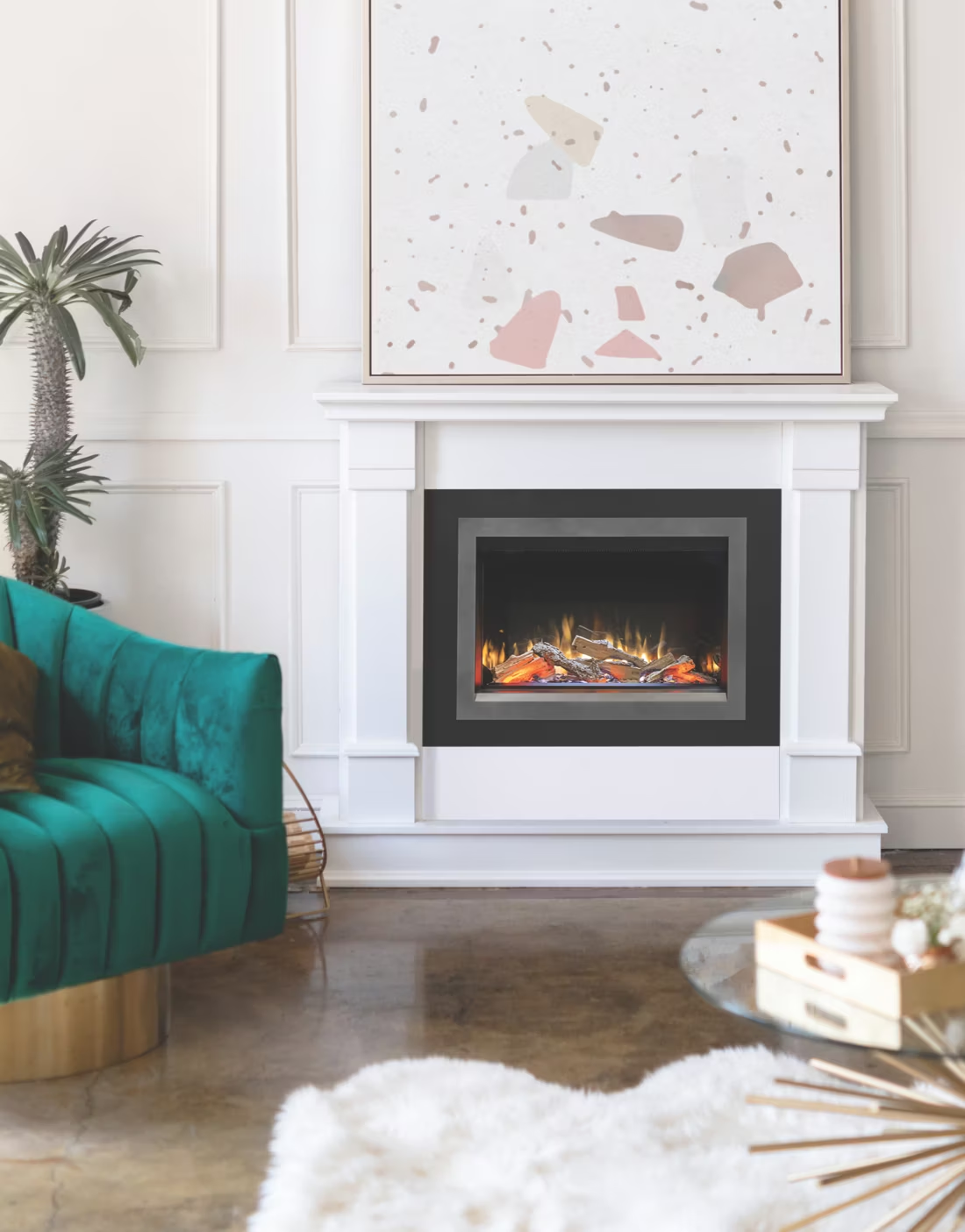
Three steps. No salesperson until you're ready.
Tell us about your project
Your zip code, your situation, and the fuel you're leaning toward—or let the answers point you to one.
See what's actually available
The brands dealers within 100 miles genuinely carry—real options, never a catalog mirage.
Get your dealer & Project Guide
A trusted local dealer, plus the free Project Guide & Parts List that names every component of the job.
Frequently Asked Questions
How much does it cost to install an electric fireplace in Muncie?
Plug-in electric inserts and freestanding stoves typically run $200 to $1,000 for the unit itself, with no installation cost beyond plugging it in. Built-in wall units or mantel-and-insert combinations run higher—often $700 to $3,000 for the unit—and if you need a dedicated 20-amp circuit, expect $150 to $400 more for a licensed electrician to run it. Homeowners converting an existing masonry fireplace in an older Muncie home to an electric insert usually land in the $1,000 to $2,500 range total, since there's no chimney work or venting to pay for.
Do I need a permit to install an electric fireplace in Muncie?
In most cases, no. A plug-in electric fireplace or insert that runs off an existing outlet doesn't trigger a permit requirement. If your installer needs to add a new dedicated circuit or subpanel work to support a larger built-in unit, that electrical work typically does require a permit through the City of Muncie's Permits and Inspections office—and a licensed electrician should be pulling that permit as a matter of course, not skipping it.
Will an electric fireplace actually heat a room, or is it just for looks?
Most electric fireplaces include a 1,500-watt heater rated around 5,000 BTU, which is enough to noticeably warm a 300- to 600-square-foot room—a family room, a finished basement, or a bedroom. It won't replace your furnace across a Delaware County winter, but for supplemental heat during the coldest stretches, or for taking the edge off in a room your HVAC struggles to reach evenly, it does real work. Some homeowners run one instead of firing up the whole-house furnace for just one occupied room in the evening.
What does it cost to run an electric fireplace on Indiana Michigan Power's rates?
At Indiana Michigan Power's residential rate of roughly 16.3 cents per kWh, a typical 1,500-watt electric fireplace heater costs about 24 cents an hour to run. Used for six hours an evening through a cold Muncie month, that's roughly $1.50 a day, or around $40 to $45 for the month if you're running it consistently through January or February. That's considerably cheaper than heating the same space with electric baseboard or a whole-home furnace bump, which is why these units get used for targeted, room-by-room heat.
Electric vs. gas fireplace—which is right for my Muncie home?
Gas fireplaces put out more heat and can serve as a real backup heat source, but they require a gas line, venting, and a more involved install—often $4,000 or more depending on the unit and whether new gas piping is needed. Electric fireplaces skip all of that: no venting, no gas permit, and installation that's sometimes as simple as plugging in a cord. For homes already on natural gas with an existing line nearby, gas is worth considering for a primary living space. For apartments, rentals near Ball State, finished basements, or anywhere adding a gas line isn't practical, electric is usually the more sensible call.
What type of electric fireplace works best for a Muncie home?
For renters and apartment dwellers near campus, a freestanding electric stove or a plug-in insert into an existing fireplace opening is the easiest option—nothing permanent, nothing that requires landlord approval for electrical work. For homeowners doing a remodel, a wall-mounted linear electric fireplace or a built-in unit framed into a wall gives a more finished look, though it usually calls for that dedicated circuit. Homes in the Historic West End or other older Muncie neighborhoods with existing masonry fireboxes often do best with an insert sized to the existing opening—a local dealer can measure that firebox and match it correctly.
Can I install an electric insert into my existing wood-burning fireplace?
Yes, and it's a common project in Muncie's older housing stock, where a lot of masonry fireplaces built decades ago see little to no actual wood-burning use anymore. Since electric inserts don't need to vent combustion gases, there's no chimney work required—the insert simply fits into the existing firebox opening and plugs into a nearby outlet or a new dedicated circuit. It's one of the simplest ways to bring a dormant fireplace back into daily use without touching the flue.
Will my electric fireplace work during a power outage?
No—electric fireplaces require power to run the heater, flame effect, and any fan, so they shut down along with everything else when Indiana Michigan Power's lines go down. That's an important distinction from a wood stove or a battery-backed gas fireplace, both of which can keep producing heat during a winter outage. If backup heat during storms is a priority for your household, an electric fireplace should be considered a comfort and supplemental-heat appliance, not your emergency plan.
Electric fireplace vs. a portable space heater—what's actually different?
A portable space heater is cheaper up front and can be moved room to room, but it's also the appliance most commonly cited in home heating fires when left unattended or placed too close to combustibles. A built-in or freestanding electric fireplace uses the same basic heating element but is engineered with cool-touch housings, tip-over shutoffs, and—in wall-mount or insert models—permanent, code-reviewed placement. For a room you heat regularly through a Delaware County winter, the fireplace is the safer long-term choice and it looks like a real fixture rather than a temporary appliance parked in the corner.
Does an electric fireplace need a vent or chimney?
No—that's its superpower. An electric fireplace needs a wall and an outlet, period. No vent pipe, no gas line, no clearances to design around, which is why it works in bedrooms, offices, apartments, and walls where venting a gas or wood unit would be impractical or impossible. Installation is typically the simplest and least expensive of any fireplace type.
Can I put a TV above my fireplace?
Yes—with an asterisk. Fireplaces are hot and TVs don't like heat. Either put a mantel between them to deflect rising warmth, or choose a fireplace with heat-management technology that creates a cool zone on the wall above—the wall stays around 125 degrees, barely warm, while the room still gets full heat. If you like clean lines and don't want a mantel, heat management is the answer.
How much should I budget for a fireplace?
For an average home—covering the fireplace, the vent pipe, and basic installation—a budget between $3,900 and $5,500 gives you a lot of options across wood, gas, and pellet. By the time you add finish work, gas line, and electrical, the average complete installation lands between $5,000 and $12,000 all-in. In a remodel or new build, a good rule is to put about 2.5% of the total project cost toward the fireplace.
Does a fireplace add value to my home?
On average, a fireplace adds back to the home about the same amount you spent installing it. Add the monthly savings from heating the rooms you actually use instead of the whole house—often hundreds of dollars a year—and the value case is strong before you even count what a fire does for how your family uses the room.
Electric Service in Muncie
An electric fireplace's heater draws about 1,500 watts—pennies per hour at local rates.
Indiana Michigan Power Co
Find your electric fireplace in Muncie.
Tell us a bit about your home and we'll put together a free Project Guide & Parts List—the right electric fireplace or insert, the exact parts you'll need, and a trusted local Muncie dealer to install it.
Find Your Fireplace →