
Instant heat and real ambiance for Delaware County homes.
No chimney, no gas line, no venting—just plug in or hardwire and go. From Muncie's historic neighborhoods to Yorktown's newer subdivisions, find the right electric fireplace or insert and connect with a trusted local dealer.
Every Project Starts From One of These Five Situations
The easiest fireplace upgrade in Muncie's older homes.
Delaware County sits in east-central Indiana, anchored by Muncie and Ball State University, with roughly 107,000 residents spread across Muncie, Yorktown, Selma, Albany, and Eaton. Climate zone 5A brings a real winter—average lows around 21°F and a solid six-month heating season, though nowhere near the severity of Duluth, MN or International Falls, MN. That climate supports plenty of wood-burning tradition using local oak, hickory, maple, and beech, but it also means a lot of homeowners are looking for a simpler, lower-commitment way to add warmth and ambiance to a single room.
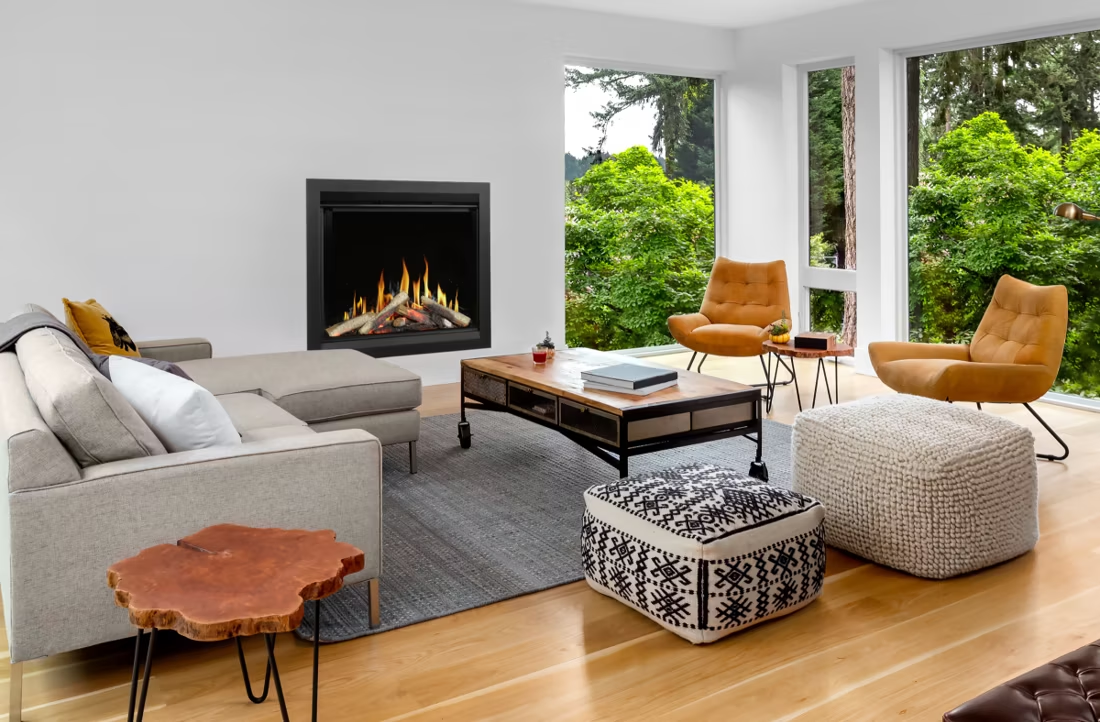
That's where electric fireplaces have carved out a real niche here. Muncie's older housing stock—including the Old West End and the Emily Kimbrough Historic District—is full of homes built before central forced air, with masonry fireplaces that no longer draft properly or were bricked up decades ago. An electric insert drops into that existing firebox opening with no chimney work, no gas line, and no venting required. Indiana Michigan Power (I&M) serves most of the county's electric needs, and a typical unit runs on a standard 120V outlet or a dedicated circuit for higher-wattage built-ins. Installed cost usually falls between $400 and $2,500 depending on whether you choose a simple wall-mount, a recessed linear built-in, or an insert sized to an existing fireplace opening—a fraction of what wood or gas installation runs, and a project most electricians or hearth dealers can complete in a single day.
Three steps. No salesperson until you're ready.
Tell us about your project
Your zip code, your situation, and the fuel you're leaning toward—or let the answers point you to one.
See what's actually available
The brands dealers within 100 miles genuinely carry—real options, never a catalog mirage.
Get your dealer & Project Guide
A trusted local dealer, plus the free Project Guide & Parts List that names every component of the job.
Frequently Asked Questions
How much does an electric fireplace installation cost in Delaware County?
Most electric fireplace installations in Delaware County run between $400 and $2,500. A plug-in wall-mount or freestanding unit sits at the low end since it requires no electrical or structural work beyond an existing outlet. A recessed linear built-in framed into a wall, or an insert sized to fit an existing masonry fireplace opening, runs higher—especially if a dedicated 120V or 240V circuit needs to be added by an electrician. Homes in Muncie's older neighborhoods converting a bricked-up or non-drafting fireplace to an electric insert tend to land in the middle of that range once trim kits and surrounds are factored in.
Can I put an electric insert into my existing masonry fireplace?
Yes, and it's one of the most common projects in Delaware County's older housing stock—particularly in Muncie's Old West End and Emily Kimbrough Historic District, where many masonry fireplaces no longer draft well or were sealed off years ago. An electric insert slides into the existing firebox opening, needs no chimney or venting, and typically runs off a standard household outlet or a dedicated circuit for larger units. It restores the look and function of the fireplace as a focal point without any of the gas line or flue work a wood or gas conversion would require.
Can an electric fireplace actually heat a room, or is it just for looks?
Most electric fireplaces produce real heat—typically around 4,600 to 5,000 BTU from a 1,500-watt heater, enough to comfortably warm a 400 to 1,000 square foot space depending on insulation and ceiling height. That makes them a solid supplemental heat source for a bedroom, addition, basement, or home office, but with a solid six-month heating season in Delaware County, an electric fireplace isn't intended to replace your furnace as primary heat through a full Indiana winter. Most owners run the heater on cold days and switch to flame-only mode the rest of the time for ambiance without running up the electric bill.
Do I need a permit to install an electric fireplace in Delaware County?
A simple plug-in unit generally doesn't require a permit. Built-in installations that involve framing a wall opening, or any work adding a new dedicated electrical circuit, typically do require an electrical permit and sometimes a building permit—through the City of Muncie Building Commissioner's office within city limits, or the Delaware County Building Department for Yorktown, Selma, Albany, and other unincorporated areas. Most local dealers and electricians handle the permitting as part of the installation, so it's worth asking upfront whether your specific unit and location require one.
Electric vs. gas vs. wood—which fits my Delaware County home?
Wood offers real radiant heat, works during power outages, and pairs with abundant local oak, hickory, and maple—a good fit for homeowners who want off-grid backup heat during Indiana's winter storms. Gas, available through CenterPoint Energy service in much of Muncie, gives instant on-demand heat with higher output but requires a gas line and venting. Electric skips both the gas line and the chimney entirely, making it the simplest and least expensive option—ideal for homes without existing gas service, rental properties, additions, or anyone who wants a fireplace's look and ambiance without the fuel logistics of wood or the installation complexity of gas.
What are the best electric fireplace brands to look at?
Dimplex, Napoleon, and Amantii all make well-regarded electric fireplaces with realistic flame technology that holds up over years of daily use rather than looking like a novelty after the first season. Dimplex's Opti-myst and flame-effect lines are common choices for inserts into existing fireboxes, while Napoleon and Amantii both offer linear built-in models popular in newer Yorktown-area construction. A local dealer can show you the flame quality and heater output in person before you commit—worth doing, since flame realism varies more between brands than most people expect.
Will my electric fireplace work during a power outage?
No—electric fireplaces require power to run both the heater and the flame effect, so they'll go dark along with everything else if Indiana Michigan Power service is interrupted, which does happen during ice storms and severe thunderstorms in Delaware County. If backup heat during outages matters to you, a wood stove using local hardwood or a gas unit with a battery-backup ignition system is a better primary choice, with an electric fireplace reserved for everyday ambiance and supplemental warmth in a specific room.
How much does it cost to run an electric fireplace day to day?
Running the flame effect alone with the heater off costs only a few cents an hour—most units use under 100 watts in flame-only mode. Running the heater at full output (typically 1,500 watts) costs roughly 18 to 22 cents an hour at current Indiana Michigan Power residential rates, making it far cheaper to operate a few hours a day than most homeowners assume, especially compared to running a space heater in an under-heated room.
Electric vs. gas insert—which is right for my home?
If your Delaware County home already has natural gas service and you want stronger, sustained heat output with a more traditional flame, a gas insert is usually the better long-term choice, particularly for a primary living space. If you don't have gas service to the room, want to avoid the venting and gas line cost, or are converting a masonry fireplace in an older Muncie home on a tighter budget, an electric insert gets you real flame appearance and supplemental heat with a same-day install and no ongoing fuel logistics. Many homeowners in the county's older neighborhoods choose electric specifically because it sidesteps the gas line question entirely.
Can I put a TV above my fireplace?
Yes—with an asterisk. Fireplaces are hot and TVs don't like heat. Either put a mantel between them to deflect rising warmth, or choose a fireplace with heat-management technology that creates a cool zone on the wall above—the wall stays around 125 degrees, barely warm, while the room still gets full heat. If you like clean lines and don't want a mantel, heat management is the answer.
Does an electric fireplace need a vent or chimney?
No—that's its superpower. An electric fireplace needs a wall and an outlet, period. No vent pipe, no gas line, no clearances to design around, which is why it works in bedrooms, offices, apartments, and walls where venting a gas or wood unit would be impractical or impossible. Installation is typically the simplest and least expensive of any fireplace type.
Can a fireplace actually lower my heating bill?
Yes—by creating a comfort zone. A furnace heats every square foot of the house just to warm the one room you're in; a gas fireplace on low burns roughly a sixth of the gas a typical furnace does. Set the furnace around 55–60 degrees as a baseline, then heat the rooms your family actually uses. Families who heat this way commonly save $20–$60 a month.
Can I install a fireplace myself?
If you're putting a fire in your house on purpose, it's best to work with an expert. Unless you're genuinely experienced in framing, gas line, vent pipe, and the national code on clearances to combustibles, have a professional do it—and ideally the same company that sells you the fireplace, so warranty, service, and liability all live under one roof.
Find your electric fireplace in Delaware County.
Tell us about your home and we'll match you with the right electric fireplace or insert, plus a free Project Guide & Parts List—the exact parts and your recommended local Delaware County dealer.
Find Your Fireplace →