
Steady heat for LaPorte County's lake-effect winters.
Pellet stoves deliver clean, thermostat-controlled heat for Michigan City homes that sit in NIPSCO's higher lake-effect snow bands. Find the right unit and get matched with a trusted local dealer.
Every Project Starts From One of These Five Situations
Consistent warmth for a Lake Michigan winter.
Michigan City sits directly on the Lake Michigan shoreline in LaPorte County, and that proximity to the lake means more than sand dunes and summer beach traffic—it means enhanced lake-effect snow bands that can dump inches of snow while inland Indiana stays dry. With roughly 6,200 heating degree days and average winter lows around 17°F, Zone 5A homes here need a heat source that can run for hours without babysitting. A pellet stove, set on a thermostat, does exactly that.
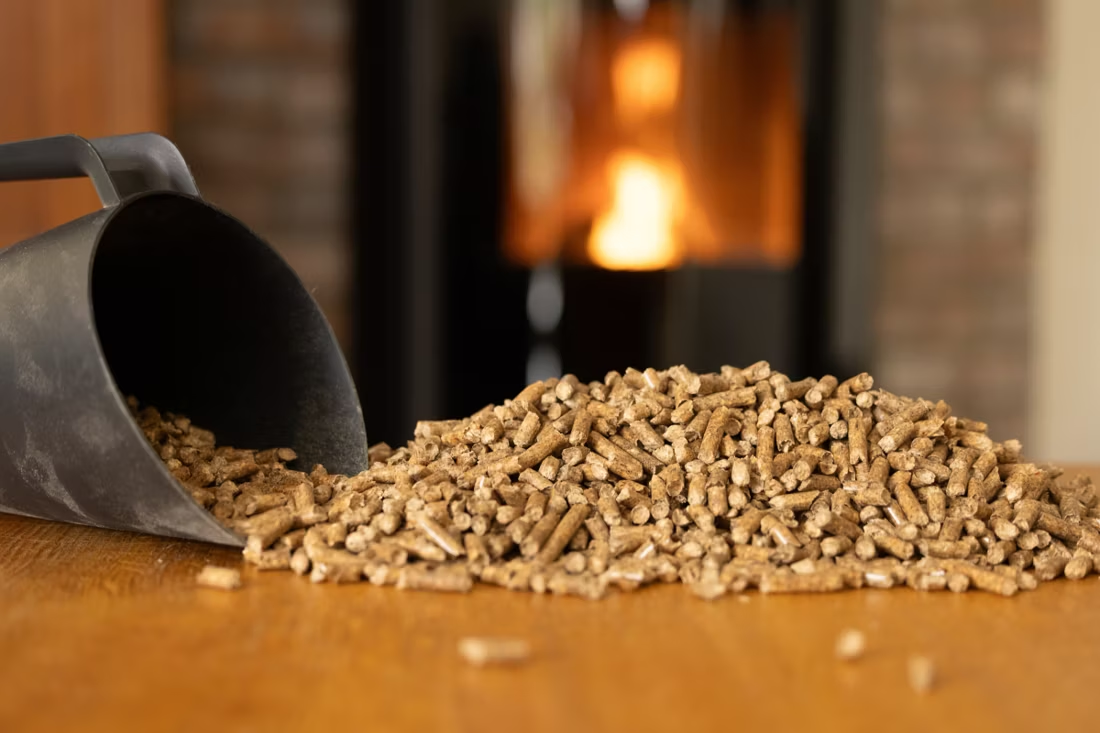
Northern Indiana sits within reach of several regional pellet suppliers—Indeck Energy Services, Lignetics, and Somerset Pellet Fuel all serve this part of the Midwest, drawing on the region's oak, hickory, maple, and beech hardwood supply. That regional sourcing keeps pellet fuel available and reasonably priced even during peak winter demand. And with NIPSCO's residential electric rate running close to 19 cents per kWh, a pellet stove's low electric draw—just enough to run the auger and blower—costs a lot less to operate than electric resistance heat for the same room.
Three steps. No salesperson until you're ready.
Tell us about your project
Your zip code, your situation, and the fuel you're leaning toward—or let the answers point you to one.
See what's actually available
The brands dealers within 100 miles genuinely carry—real options, never a catalog mirage.
Get your dealer & Project Guide
A trusted local dealer, plus the free Project Guide & Parts List that names every component of the job.
Frequently Asked Questions
How much does a pellet stove installation cost in Michigan City?
Pellet stove installations typically run $3,000 to $6,000 in the Michigan City area, depending on whether you're installing a freestanding stove with a simple through-wall vent kit or a pellet insert into an existing masonry fireplace that needs a liner. Homes without an existing hearth or vent path run toward the higher end once wall penetration and venting are factored in. A local dealer will size the unit to your square footage and give you a firm quote after walking the space.
Will a pellet stove keep running during a NIPSCO power outage?
Not without backup power. Unlike a wood stove, a pellet stove needs electricity to run the auger that feeds pellets into the burn pot and the blower that circulates heat—typically 100 to 400 watts, far less than a furnace, but it does need to be on. For Michigan City homes near the lake where winter storms occasionally interrupt service, a battery backup unit or small generator gives you a couple of days of heat from a stove that would otherwise go cold at the wrong moment. Ask a local dealer which pellet stove models pair best with battery backup systems.
Where do pellet stove pellets come from around Michigan City?
Northern Indiana sits within delivery range of several regional pellet producers, including Indeck Energy Services, Lignetics, and Somerset Pellet Fuel, all of which draw on the Midwest's abundant oak, hickory, maple, and beech hardwood supply. Hardwood pellets from these regional mills are widely stocked at local hearth shops and farm supply stores, and buying in bulk—a full ton, delivered on pallets—ahead of the winter season typically saves money over buying by the bag as you go.
Do I need a permit to install a pellet stove in Michigan City?
Most likely, yes. Pellet stove installations generally require a building permit through your local building department—Michigan City or LaPorte County, depending on your address—along with an inspection to confirm proper venting and clearances. Because pellet stoves vent through a small-diameter pipe rather than a full masonry chimney, the permitting and inspection process is usually simpler and faster than a wood stove install. Most local dealers handle the permit paperwork as part of the installation.
What size pellet stove do I need for my home?
Sizing depends on your square footage, ceiling height, and how well-insulated your home is. As a general guide for a Zone 5A home like those in Michigan City: smaller pellet stoves rated around 40,000 BTU handle a single large room or open-concept living area, while larger units rated 50,000+ BTU can heat 1,800 to 2,200 square feet as a primary or near-primary heat source. Because Michigan City sits close enough to the lake to catch heavier lake-effect snow events, it's worth sizing slightly generous rather than marginal—a local dealer can walk your home and recommend the right BTU output.
Pellet stove vs. wood stove—which makes more sense in Michigan City?
Both are viable options in LaPorte County, where oak, hickory, maple, and beech firewood is widely available. A wood stove works without electricity, which matters during winter outages, and pairs well if you already have access to cut or split firewood. A pellet stove is easier to operate—load the hopper, set the thermostat, and it self-regulates the burn—and produces less ash and less visible smoke, which matters in denser Michigan City neighborhoods closer to downtown. Because the area has no current air quality non-attainment concerns, either fuel is permitted without special restrictions. The choice usually comes down to whether you want thermostat convenience (pellet) or off-grid reliability (wood).
How often does a pellet stove need cleaning and service?
Pellet stoves need more frequent attention than a furnace but far less than a wood-burning chimney. Plan on emptying and cleaning the burn pot every few days during heavy winter use, a full interior cleaning every 4 to 6 weeks, and an annual professional service before the start of burning season to check the auger motor, exhaust blower, and venting. Local hearth shops that sell pellet stoves in the Michigan City area typically offer this annual service, and it's worth scheduling before the first cold snap rather than after the lake-effect snow bands arrive.
Can I install a pellet stove insert into my existing fireplace?
Yes—a pellet insert slides into an existing masonry or factory-built fireplace opening and vents through a smaller-diameter pipe run through the existing chimney or, in some cases, straight out through the wall behind it. For Michigan City homes with an older, rarely-used wood fireplace, a pellet insert is often the simplest upgrade: it reuses the existing hearth and opening while adding thermostat-controlled, hands-off heat. A local dealer will need to check your fireplace's dimensions and chimney condition to confirm insert compatibility.
What's the difference between a pellet stove and an electric fireplace for a home like mine?
An electric fireplace or heater in the Michigan City area runs on NIPSCO or La Porte City Utilities power at close to 19 cents per kWh, which adds up fast if you're using it as a real heat source rather than occasional supplemental warmth. A pellet stove burns bagged hardwood pellets—sourced regionally from mills like Lignetics or Somerset Pellet Fuel—and uses only a small amount of electricity to run the auger and blower, so your fuel cost is largely decoupled from the electric rate. For homes that want genuine room-heating output through a full Indiana winter, pellet typically costs less to run than electric resistance heat; for occasional ambiance with zero venting or fuel storage, electric is simpler.
What's the difference between an insert and a zero-clearance fireplace?
An insert is a fireplace that slides into a pre-existing wood-burning fireplace—if you don't have one, there's nothing to insert it into. A zero-clearance fireplace is built into a framed wall, which makes it the answer for remodels and new construction. Simple test: existing masonry fireplace means insert; blank or framed wall means zero-clearance.
How often does a pellet stove need cleaning?
A clean pellet stove is a happy pellet stove. Plan on cleaning the burn pot about once a week when you're burning regularly—ash and clinkers gum up the air holes just like a pellet barbecue. Most pellet stove problems trace back to skipped cleaning that nobody explained up front. Some designs make it easy with a trapdoor burn pot: pull a lever and the gunk drops into the ash pan.
How much should I budget for a fireplace?
For an average home—covering the fireplace, the vent pipe, and basic installation—a budget between $3,900 and $5,500 gives you a lot of options across wood, gas, and pellet. By the time you add finish work, gas line, and electrical, the average complete installation lands between $5,000 and $12,000 all-in. In a remodel or new build, a good rule is to put about 2.5% of the total project cost toward the fireplace.
Can I install a fireplace myself?
If you're putting a fire in your house on purpose, it's best to work with an expert. Unless you're genuinely experienced in framing, gas line, vent pipe, and the national code on clearances to combustibles, have a professional do it—and ideally the same company that sells you the fireplace, so warranty, service, and liability all live under one roof.
Nearby Dealers
Hearth shops serving Michigan City and the surrounding area.
Pellet Brands Stocked Around Michigan City
Manufacturers will point you to the nearest stocking dealer.
Find your pellet stove in Michigan City.
Tell us about your home and we'll put together a free Project Guide & Parts List—the right pellet stove or insert, the vent kit you'll need, and a trusted local dealer near Michigan City who can install it.
Find Your Fireplace →