
Find the right pellet stove for a Miami County winter.
Clean, thermostat-controlled heat for Peru, Bunker Hill, Denver, and the farmland in between. Get matched with a local dealer who knows what actually works here.
Every Project Starts From One of These Five Situations
A practical fit for a working county with real winters.
Miami County sits in climate zone 5A with a solid five-month heating season and average winter lows around 18 degrees—nowhere near the brutal extremes of a place like Fargo, ND. That's the sweet spot pellet appliances were built for: enough cold to justify a dedicated heat source, not so extreme that you need the 24/7 output of a wood furnace to stay comfortable. Farmhouses and newer builds alike, from Peru out past Grissom Air Reserve Base to the fields around Denver and Mexico, are increasingly adding pellet stoves and inserts as either primary heat or a reliable backup to propane and electric furnaces.
Miami County has no listed air quality restrictions or winter inversion concerns, so there's no burn-ban worry with a pellet appliance the way there can be with wood in non-attainment counties—pellet stoves burn cleanly enough that this is rarely an issue anywhere, but it's worth knowing Miami County residents have zero regulatory friction on this front. Regional suppliers including Indeck Energy Services, Lignetics, and Somerset Pellet Fuel keep bagged pellets reasonably accessible throughout north-central Indiana, and the county's oak, hickory, maple, and beech woodlots mean local hardwood is never far away if a homeowner is weighing pellet against a cordwood stove instead.
Three steps. No salesperson until you're ready.
Tell us about your project
Your zip code, your situation, and the fuel you're leaning toward—or let the answers point you to one.
See what's actually available
The brands dealers within 100 miles genuinely carry—real options, never a catalog mirage.
Get your dealer & Project Guide
A trusted local dealer, plus the free Project Guide & Parts List that names every component of the job.
Frequently Asked Questions
How much does a pellet stove installation cost in Miami County?
Most pellet stove and insert installations run in the $3,000 to $6,000 range, with the final number depending on whether you're installing a freestanding stove with a simple through-wall vent kit or a pellet insert going into an existing masonry fireplace, which typically needs a stainless liner. Homes without an existing chimney or exterior wall access for venting will land toward the higher end. A local dealer will give you a firm number after seeing your specific setup—venting distance and wall material both move the price more than the stove itself does.
Will a pellet stove keep up during a Miami County cold snap?
Yes, for the overwhelming majority of winters. With average lows around 18 degrees and a solid five-month heating season, Miami County's climate is well within the range pellet stoves are designed for—this isn't International Falls or Bozeman territory. A properly sized stove (most mid-size units cover 1,000 to 2,000 square feet) will hold a farmhouse or ranch-style home comfortably through the coldest stretches of a Wabash Valley winter. Rural properties around Denver, Mexico, or out toward Mississinewa Lake with older windows and less insulation should size up slightly rather than rely on the square-footage rating alone.
What's the difference between a pellet stove and a pellet insert?
A pellet stove is a freestanding unit that sits against a wall and vents out through a small hole in an exterior wall or existing chimney—it's the more flexible option for homes without a fireplace. A pellet insert is built to slide into an existing masonry fireplace opening, using a liner run up the existing chimney. For the many older homes around Peru with a working but rarely-used wood fireplace, an insert is usually the simpler path since it reuses the chimney you already have rather than requiring new wall penetration.
Do pellet stoves work during a power outage?
This is the one honest tradeoff with pellet heat, and it matters in a rural county like Miami where storm-related outages happen. Pellet stoves rely on an electric auger to feed fuel and a blower to distribute heat, so they shut down when the power does—unlike a wood stove, which keeps burning regardless. Some homeowners pair a pellet stove with a small battery backup or generator specifically for this reason, especially on properties farther from Peru where outages can run longer. If uninterrupted backup heat during outages is the top priority, that's worth discussing with a local dealer who can walk you through both pellet and wood options side by side.
Do I need a permit to install a pellet stove in Miami County?
Most new pellet stove and insert installations require a building permit through your local building department, primarily to confirm venting clearances and, where applicable, hearth pad requirements are met. Requirements can differ slightly between installations inside Peru city limits and those in unincorporated Miami County, so it's worth confirming with your installer before work starts. In practice, most local dealers handle the permit application as part of the installation, so it's rarely something the homeowner has to manage directly.
Where can I buy pellet fuel in Miami County?
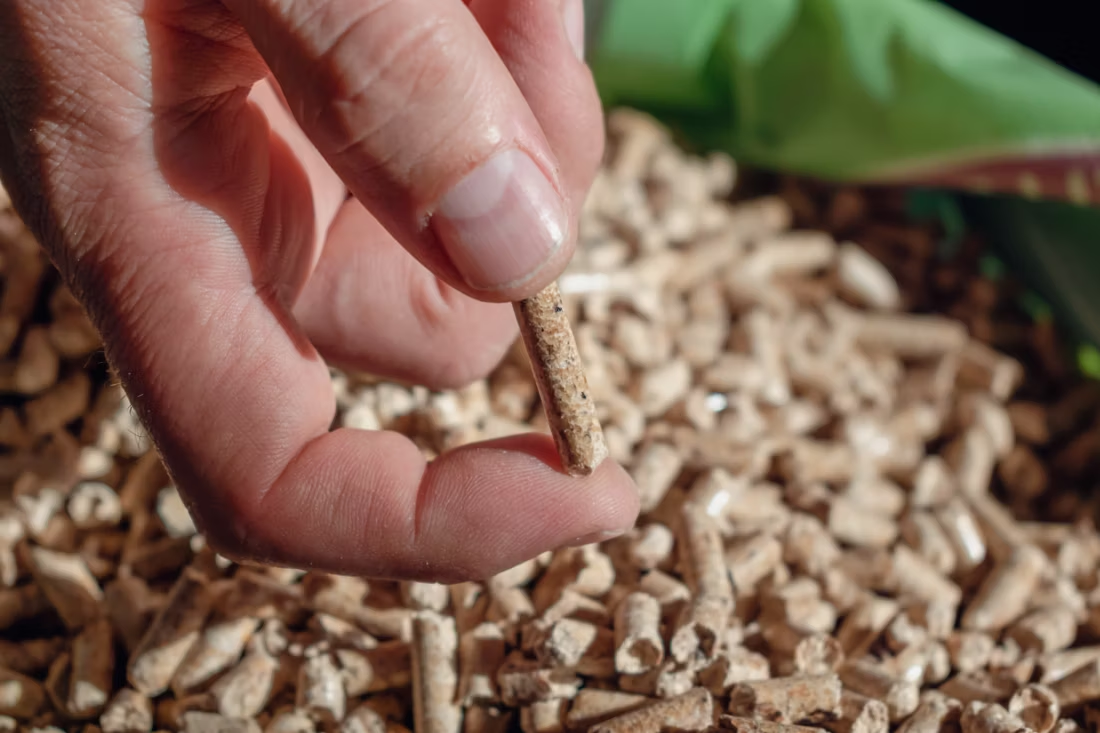
Regional brands like Indeck Energy Services, Lignetics, and Somerset Pellet Fuel are commonly stocked at hardware stores and farm supply retailers throughout north-central Indiana, and bagged hardwood pellets typically run in the neighborhood of $250 to $300 per ton depending on season and supply. Buying early in the fall, before the first cold stretch hits, is the usual advice—pellet demand spikes with the first hard freeze and some retailers sell through their stock. A dry garage, shed, or basement is enough for storage; pellets just need to stay off damp concrete and away from moisture.
How often does a pellet stove need to be cleaned and serviced?
Plan on a full cleaning of the burn pot, ash traps, and venting once a year, ideally before the season starts, plus a quick ash-pot scrape every few days during heavy winter use—pellet stoves produce far less ash than a wood stove but the burn pot still needs regular attention to keep combustion efficient. An annual professional service visit is worth it to check the auger motor, exhaust blower, and gaskets, especially heading into a Miami County winter where you don't want a mechanical failure during the coldest week in January.
What size pellet stove do I need for my Miami County home?
Small pellet stoves (rated up to roughly 1,000 square feet) suit a single large room or a smaller ranch home; mid-size stoves (1,000 to 2,000 square feet) cover most Miami County houses, including many of the farmhouses around Bunker Hill and Denver; larger units handle bigger or open-concept homes. Ceiling height, window age, and how open the floor plan is all shift the right size up or down from the square-footage number alone. A local dealer will size your home properly during an in-home visit rather than relying on a generic chart.
Pellet stove vs. wood stove—which makes more sense in Miami County?
Wood stoves burn cordwood—plentiful locally given the oak, hickory, maple, and beech that grow throughout the county—run without electricity, and offer the lowest fuel cost if you're cutting or buying your own wood. Pellet stoves trade some of that off-grid resilience for convenience: load the hopper, set a thermostat, and let the auger do the rest, with far less ash and no chimney creosote buildup to manage. For in-town homes in Peru with reliable electric service and less interest in daily fire-tending, pellet is usually the easier fit. For rural properties where storm-related outages are more common and firewood is already on hand, a wood stove holds real appeal as a backup that keeps working when the grid doesn't. Several Miami County homes end up with both.
What's the difference between an insert and a zero-clearance fireplace?
An insert is a fireplace that slides into a pre-existing wood-burning fireplace—if you don't have one, there's nothing to insert it into. A zero-clearance fireplace is built into a framed wall, which makes it the answer for remodels and new construction. Simple test: existing masonry fireplace means insert; blank or framed wall means zero-clearance.
Can a pellet stove heat a whole house?
It genuinely can. I burned a pellet stove as my only heat source for years after a furnace died, and it kept the entire house warm. Pellets feed automatically from a hopper, so you get wood-heat economics with thermostat-style control. Two honest caveats: it needs weekly cleaning during the season, and most models need electricity to run—ask about battery backup if outages are a concern.
Can I install a fireplace myself?
If you're putting a fire in your house on purpose, it's best to work with an expert. Unless you're genuinely experienced in framing, gas line, vent pipe, and the national code on clearances to combustibles, have a professional do it—and ideally the same company that sells you the fireplace, so warranty, service, and liability all live under one roof.
What is an in-home preview and do I need one?
It's a visit where a hearth professional measures your space, confirms the model you picked actually works in your home, and walks the specs—framing, gas line, venting, finish work—before anything is ordered. Some details you just can't know until you see the house. Never make a down payment without one; it's the single most-skipped step that burns buyers.
Pellet Brands Stocked Around Miami County
Manufacturers will point you to the nearest stocking dealer.
Find your pellet stove in Miami County.
Tell us a bit about your home and we'll match you with a trusted local dealer and a free Project Guide & Parts List for your pellet stove or insert—sized right, vented right, and ready for a Miami County winter.
Find Your Fireplace →