
Set-it-and-forget-it heat for Martin County winters.
With a long, sustained heating season and average winter lows near 23°F, Martin County homes need steady heat for months at a stretch. A pellet stove delivers thermostat-controlled warmth without the wood-splitting—find the right unit and connect with a trusted local dealer.
Every Project Starts From One of These Five Situations
Thermostat-controlled warmth for rural Martin County.
Martin County is one of Indiana's smallest counties by population—about 3,627 people spread across a landscape of hardwood ridges, farmland, and the wooded terrain around Loogootee and Shoals. Winters here sit squarely in Climate Zone 4A: average lows around 23°F and a long, sustained heating season that runs several months rather than a handful of cold snaps. The county's oak, hickory, maple, and beech forests have long made cordwood the default heat source for a lot of rural households, but that same wood-splitting labor is exactly what pushes a growing number of homeowners toward pellet appliances instead.
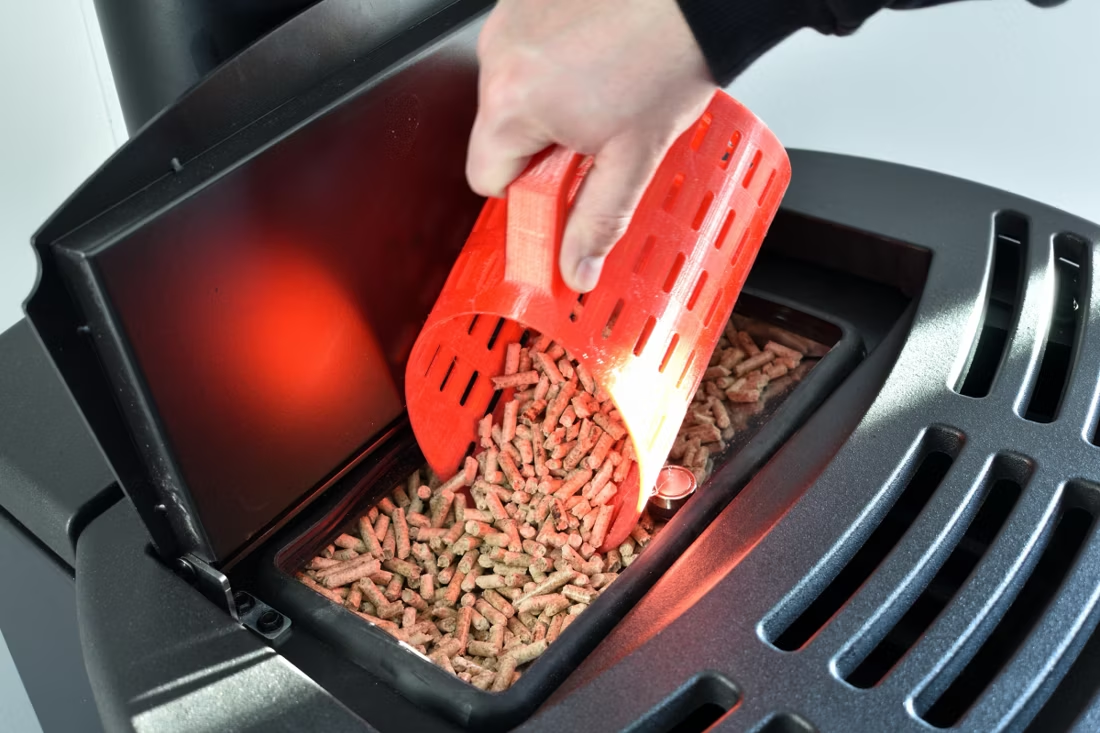
A pellet stove or insert gives Martin County homeowners the radiant, real-fire look without the daily wood handling—load a hopper, set a thermostat, and let the auger do the rest. With no air quality restrictions or burn bans in the county, there's nothing stopping year-round use during the heating months. Fuel supply is regional rather than local—brands like Indeck Energy Services, Lignetics, and Somerset Pellet Fuel supply much of the pellet fuel that ends up at farm and hardware retailers across south-central Indiana. Because Martin County itself is thin on dedicated hearth showrooms, most installers cover the county from nearby towns like Bedford or Washington—which is exactly the kind of gap Find My Fireplace is built to close: matching you with a dealer who actually services this stretch of Indiana, rather than a big-box guess.
Three steps. No salesperson until you're ready.
Tell us about your project
Your zip code, your situation, and the fuel you're leaning toward—or let the answers point you to one.
See what's actually available
The brands dealers within 100 miles genuinely carry—real options, never a catalog mirage.
Get your dealer & Project Guide
A trusted local dealer, plus the free Project Guide & Parts List that names every component of the job.
Frequently Asked Questions
How much does a pellet stove installation cost in Martin County?
Installed cost depends mainly on hopper size, the venting path (most pellet units use a simple through-wall vent rather than a full masonry chimney), and whether a dedicated electrical circuit needs to be added for the auger and blower motors. Straightforward installs into a room with an existing outlet and a short vent run tend to land on the lower end of the typical pellet range; installs needing new wall penetration, a hearth pad, or electrical work run higher. Because Martin County has few installers based in-county, expect a modest travel charge folded into quotes from dealers coming from Loogootee, Bedford, or Washington—get a firm number after an in-home look rather than a phone estimate.
What size pellet stove do I need for my home?
Sizing comes down to square footage, insulation, and whether the stove is your primary or supplemental heat. Given Martin County's long, sustained winter heating season and winter lows that regularly dip into the low 20s, older farmhouses and drafty rural homes typically need to size up compared to a well-insulated newer build of the same footprint. Small hoppers work fine for a single room or a seasonal cabin near the Hoosier National Forest edge; medium units cover most main living areas; larger-hopper models with bigger burn pots are worth it if you want the stove to carry the load through an entire cold spell without daily refilling. A local dealer will size this properly during an in-home visit—it's the single biggest factor in whether the stove keeps up on the coldest nights.
Where can I find certified pellet stove installers near me?
Look for installers with NFI (National Fireplace Institute) certification, which covers pellet-specific training on hopper systems, auger feed rates, and combustion air requirements. Given Martin County's small population, most certified dealers are based in nearby towns—Bedford, Washington, or Vincennes—and travel into Loogootee, Shoals, and the surrounding townships for installs. Ask any installer whether they're factory-trained on the specific brand you're considering; pellet appliances have more moving parts than a wood stove, and warranty service is easier when the installer knows the unit.
What's the difference between a pellet stove and a pellet insert?
A pellet stove is a freestanding unit that sits on a hearth pad and vents through a wall or existing chimney—it can go almost anywhere with a nearby electrical outlet. A pellet insert is built to slide into an existing masonry fireplace opening, turning a drafty open hearth into a sealed, thermostat-controlled heat source while using the existing chimney cavity for venting. For Martin County's older farmhouses with existing wood fireplaces, an insert is often the cleaner upgrade since it hides the mechanics behind the existing fireplace face. Homes without an existing fireplace opening are generally better suited to a freestanding stove.
Do I need a permit to install a pellet stove in Martin County?
Most pellet stove and insert installations require a building permit, and because these units run on electricity, an electrical permit is sometimes needed too if a new circuit is added for the auger and blower. Check with Martin County's building department before work starts—most established local dealers handle this paperwork as part of the installation quote, so it's worth asking upfront whether permitting is included.
What's the best pellet stove for Martin County's climate?
With winter lows commonly in the low 20s and a heating season that stretches on for months, Martin County doesn't demand the extreme cold-climate hopper capacity you'd see further north, but a sustained multi-month heating season still rewards a stove with a larger hopper and a longer burn time between refills—useful on the farmhouses and rural properties scattered across the county where a daily drive to town isn't always convenient. Ask a local dealer to match hopper size and BTU output to your square footage and insulation level, and confirm which pellet brands they stock or can source regionally—availability from suppliers like Lignetics or Somerset Pellet Fuel can vary by season.
How often does a pellet stove need to be cleaned and serviced?
Pellet stoves need more frequent light maintenance than wood stoves but far less heavy chimney work. Plan on emptying the ash pan and wiping down the burn pot every few days during regular use, a deeper cleaning of the auger and heat exchanger tubes monthly, and one full professional service annually—typically before the heating season starts in the fall. Skipping the annual service is the most common cause of feed jams and igniter failures mid-winter, which is an inconvenient time to be without heat in a county where a service call may involve some drive time.
Where can I buy pellet fuel in Martin County?
Because Martin County is rural and thinly populated, pellet fuel is typically sourced regionally rather than from a dedicated local supplier—brands like Indeck Energy Services, Lignetics, and Somerset Pellet Fuel distribute through farm supply and hardware retailers across south-central Indiana. Buying by the ton ahead of the heating season (rather than by the bag as needed) is the more economical approach for anyone running a pellet stove as a primary or heavy supplemental heat source, and it avoids the risk of local stock running low during a cold stretch.
Pellet stove vs. wood stove—which is right for my Martin County home?
Wood stoves burn the oak, hickory, maple, and beech that are abundant across Martin County's forests, work without electricity, and are the traditional choice for rural homes that value backup heat during power outages. Pellet stoves trade that off-grid resilience for convenience—no splitting or stacking, more even heat output, and less ash—but the auger and blower need electricity to run, so a pellet stove goes cold in an outage unless it's paired with a battery backup. For homes near town with reliable power and a preference for low-maintenance heat, pellet is often the better fit. For homes further out in the county where outages run longer, many households keep a wood option as backup even if pellet is the daily driver.
Why is my open fireplace making my house colder?
Open fireplaces suck—literally. As the fire burns, it consumes air your furnace already paid to heat and pulls it out through the chimney, so the house is actually colder after the fire goes out than before you lit it. An insert fixes this: it seals the chimney, puts fixed glass across the front, and turns that hole in your house into a real heat source.
What's the difference between an insert and a zero-clearance fireplace?
An insert is a fireplace that slides into a pre-existing wood-burning fireplace—if you don't have one, there's nothing to insert it into. A zero-clearance fireplace is built into a framed wall, which makes it the answer for remodels and new construction. Simple test: existing masonry fireplace means insert; blank or framed wall means zero-clearance.
Can a fireplace actually lower my heating bill?
Yes—by creating a comfort zone. A furnace heats every square foot of the house just to warm the one room you're in; a gas fireplace on low burns roughly a sixth of the gas a typical furnace does. Set the furnace around 55–60 degrees as a baseline, then heat the rooms your family actually uses. Families who heat this way commonly save $20–$60 a month.
What is an in-home preview and do I need one?
It's a visit where a hearth professional measures your space, confirms the model you picked actually works in your home, and walks the specs—framing, gas line, venting, finish work—before anything is ordered. Some details you just can't know until you see the house. Never make a down payment without one; it's the single most-skipped step that burns buyers.
Pellet Brands Stocked Around Martin County
Manufacturers will point you to the nearest stocking dealer.
Find your pellet stove in Martin County.
Tell us a bit about your home and we'll match you with a local dealer who covers Martin County, plus a free Project Guide & Parts List—the exact parts, including the vent kit, for your pellet project.
Find Your Fireplace →