
Steady, automated heat for Marshall County's six-month heating season.
From Plymouth to Bremen, Culver, and Bourbon, pellet stoves deliver thermostat-controlled hardwood heat without the splitting, stacking, and hauling. Find the right unit and connect with a trusted local dealer.
Every Project Starts From One of These Five Situations
Hopper-fed convenience for a hardwood county.
Marshall County sits on the flat glacial till plains of north-central Indiana, ringed by oak, hickory, maple, and beech woodlots and centered on Lake Maxinkuckee near Culver. Winters here run long, with average lows near 17°F—a heating load in the same range as Madison, WI, though without the extreme cold snaps of the upper Midwest. That's enough sustained cold for six months of regular indoor heating, and pellet stoves have become a popular way to meet it without the daily labor of cordwood.
Marshall County has a strong wood-heating tradition, including among the Amish and Mennonite farming families in the county's eastern townships who split and burn their own oak and hickory. Pellet stoves appeal to a different segment of that same instinct: homeowners who want the radiant, dry heat of a hardwood-fired appliance but with a hopper that feeds itself and a thermostat that holds the temperature overnight. Regional pellet brands including Indeck Energy Services, Lignetics, and Somerset Pellet Fuel supply the Midwest market from hardwood-heavy mill operations, which generally means steadier local availability than pellets shipped in from farther afield.
Three steps. No salesperson until you're ready.
Tell us about your project
Your zip code, your situation, and the fuel you're leaning toward—or let the answers point you to one.
See what's actually available
The brands dealers within 100 miles genuinely carry—real options, never a catalog mirage.
Get your dealer & Project Guide
A trusted local dealer, plus the free Project Guide & Parts List that names every component of the job.
Frequently Asked Questions
How much does a pellet stove installation cost in Marshall County?
A typical pellet stove installation runs roughly $3,000 to $6,500, depending on the unit, whether it vents through an existing chimney or requires new wall venting, and whether a hearth pad upgrade is needed for code clearance. Pellet inserts installed into an existing masonry fireplace tend to land on the lower end since the chimney chase is already in place. New freestanding installations in a home without an existing hearth—common in some of Marshall County's newer rural construction—run higher once wall penetration and venting materials are factored in. A local dealer will give you a firm number after seeing your space.
What size pellet stove do I need for my home?
Sizing depends on square footage, ceiling height, insulation, and whether the stove is your primary heat or a supplement to a furnace. As a rough guide for Marshall County's older farmhouses and newer subdivision homes alike: small units (up to roughly 1,000 sq ft) suit a single room or finished basement, medium units (1,000–1,800 sq ft) cover most main living areas, and larger units can carry a well-insulated whole home through the coldest stretch of a typical long, six-month winter. Homes with drafty older construction—not uncommon in the county's farmhouses—often need to size up from the manufacturer's stated square footage. A local dealer will size the unit based on an in-home look at your layout.
Where can I find certified pellet stove installers near me?
Look for installers with NFI (National Fireplace Institute) certification, which covers proper hopper placement, venting, and clearance requirements specific to pellet appliances. Trusted local dealers serving Plymouth, Bremen, and Culver typically handle both the sale and the installation as a package, which keeps warranty coverage and code compliance under one roof. Because pellet stoves vent through smaller-diameter pipe than wood stoves and rely on an electric blower, proper venting slope and termination matter for both draft and safety—this is not a project for a general handyman.
What's the difference between a pellet stove and a pellet insert?
A pellet stove is a freestanding appliance that sits on a hearth pad and vents through a wall or existing chimney chase—it can go almost anywhere in the house with the right clearances. A pellet insert is built to slide into an existing masonry fireplace opening, turning an old open hearth into a sealed, hopper-fed heat source using the existing chimney as the vent path. For Marshall County homes with an older wood-burning fireplace that's rarely used, an insert is often the simpler upgrade. Homes without an existing fireplace opening are usually better suited to a freestanding stove.
Do I need a permit to install a pellet stove in Marshall County?
Most pellet stove installations require a building permit through the local building department—Plymouth, Bremen, and Culver each have their own permitting process, while unincorporated areas go through the Marshall County Building Department. The stove itself should carry an EPA certification label, and your installer will typically pull the permit and schedule any required inspection as part of the job. Because there are no air quality non-attainment concerns in Marshall County, there are no curtailment-period burning restrictions to work around, unlike some western counties.
What's the best pellet stove for Marshall County's climate?
For a heating season with lows regularly in the teens, look at mid-to-large hopper-capacity units from established pellet manufacturers such as Harman, Enviro, or Lopi, which hold enough fuel to run overnight without a refill. A larger hopper matters more here than in milder climates—a 40- to 60-pound hopper can carry many units through a full overnight burn at Marshall County's typical winter temperatures. If the stove is meant to supplement a furnace rather than replace it, a smaller, less expensive unit is usually adequate. A local dealer can match hopper size and BTU output to your specific home.
How much maintenance does a pellet stove need?
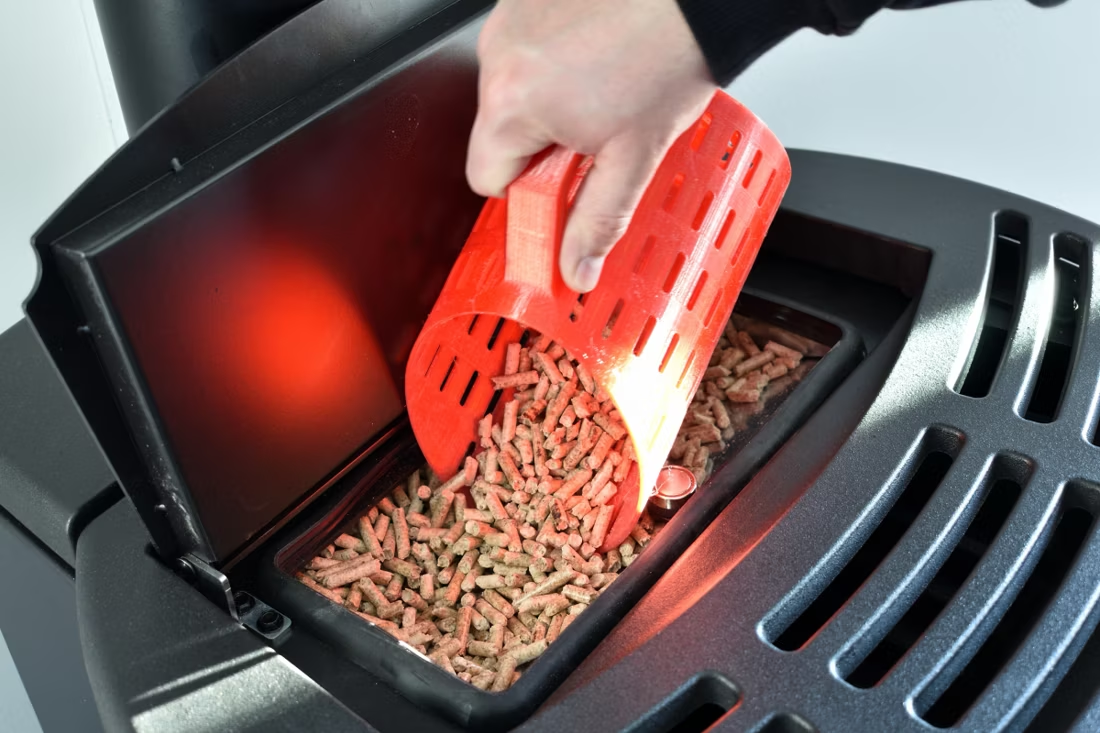
Pellet stoves need more frequent light maintenance than wood stoves but less heavy cleaning overall. Plan on emptying the ash pan every few days to weekly depending on use, wiping the glass as needed, and vacuuming the burn pot and heat exchanger tubes every one to two weeks during heavy winter use. A full professional cleaning and inspection—including the venting and exhaust blower—is recommended once a year, typically before the heating season starts in early fall. Skipping the annual service is the most common cause of the auger jams and ignition problems that pellet stove owners run into mid-winter.
Where can I buy pellets in Marshall County, and what do they cost?
Pellets are generally available through local hearth dealers, farm supply stores, and hardware retailers in Plymouth, Bremen, and Culver, often stocked heavier in fall as heating season approaches. Regional brands including Indeck Energy Services, Lignetics, and Somerset Pellet Fuel are common in the Midwest supply chain, with hardwood pellets typically running in the $240 to $300 per ton range depending on brand and time of purchase. Buying a full winter's supply—usually three to five tons for a primary-heat home—early in the fall generally avoids the price bumps and stock shortages that can hit in January during a hard cold spell.
Pellet stove vs. wood stove—which is right for my home?
Wood stoves burn free or low-cost cordwood—oak, hickory, maple, and beech are all common locally—and keep working during a power outage, which matters for rural Marshall County homes on longer utility restoration timelines after an ice storm. Pellet stoves are easier to run day to day: load the hopper, set the thermostat, and let the auger and blower do the rest, with less ash and a cleaner burn. The tradeoff is that pellet stoves need electricity to operate the auger and combustion blower, so they go dark in an outage unless paired with a battery backup or small generator. For a home with a reliable furnace as backup, pellet is often the easier daily-use choice; for a home that wants heat with the power off, wood remains the more resilient option.
How often does a pellet stove need cleaning?
A clean pellet stove is a happy pellet stove. Plan on cleaning the burn pot about once a week when you're burning regularly—ash and clinkers gum up the air holes just like a pellet barbecue. Most pellet stove problems trace back to skipped cleaning that nobody explained up front. Some designs make it easy with a trapdoor burn pot: pull a lever and the gunk drops into the ash pan.
Why is a fireplace insert so efficient?
An insert does two things: it seals the chimney completely, so you stop losing air you already paid to heat, and it radiates warmth into the room through the firebox and glass. Most add a heat-exchange fan that pulls cool room air underneath, wraps it around the hot firebox, and pushes it back out warm. Your home is more efficient before you've even lit the first fire.
How much should I budget for a fireplace?
For an average home—covering the fireplace, the vent pipe, and basic installation—a budget between $3,900 and $5,500 gives you a lot of options across wood, gas, and pellet. By the time you add finish work, gas line, and electrical, the average complete installation lands between $5,000 and $12,000 all-in. In a remodel or new build, a good rule is to put about 2.5% of the total project cost toward the fireplace.
Does a fireplace add value to my home?
On average, a fireplace adds back to the home about the same amount you spent installing it. Add the monthly savings from heating the rooms you actually use instead of the whole house—often hundreds of dollars a year—and the value case is strong before you even count what a fire does for how your family uses the room.
Stove and Fireplace Dealers in Marshall County
Pellet Brands Stocked Around Marshall County
Manufacturers will point you to the nearest stocking dealer.
Find your pellet stove in Marshall County.
Tell us about your home and heating goals, and we'll match you with a trusted local dealer and put together a free Project Guide & Parts List—the exact parts, including the vent kit, for your pellet project in Marshall County.
Find Your Fireplace →