
Steady pellet heat for Lawrence County's Limestone Country.
From Bedford's quarry neighborhoods to the farmland around Mitchell and Oolitic, pellet stoves deliver thermostat-easy heat through Lawrence County's roughly 5,300 heating degree days—without a woodpile to split or stack. Find the right unit and get matched with a local dealer.
Every Project Starts From One of These Five Situations
Clean-burning heat without the wood pile.
Lawrence County sits in the karst limestone belt of south-central Indiana—home to the Bedford and Oolitic quarries that once supplied stone for the Empire State Building, and bordered by Hoosier National Forest to the south. Zone 4A winters here run cold but not extreme: average lows near 20°F, occasional single-digit nights, and roughly 5,300 heating degree days per year—well short of what a place like Madison, WI or Duluth, MN sees, but enough that a lot of county homes want a dependable secondary heat source for January and February.
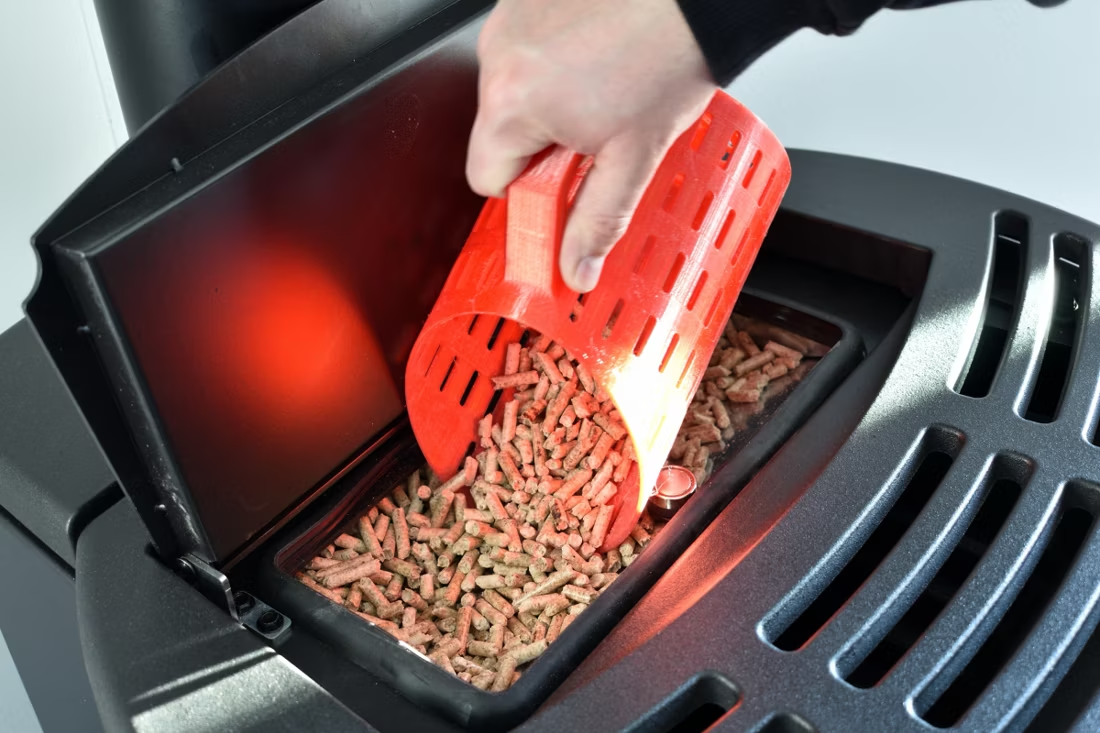
That's where pellet stoves fit. The region's hardwood forests—oak, hickory, maple, beech—feed into pellet supply chains from producers like Lignetics and Somerset Pellet Fuel, both regionally distributed brands you'll find at hearth shops and farm supply stores around Bedford and Mitchell. Lawrence County has no nonattainment designation and no winter burn-curtailment periods, so a pellet stove here runs on your schedule, not an air-quality advisory. For rural households and retirees who want real heat output without processing cordwood, a pellet stove with a hopper and auto-feed auger is often the easiest appliance to own and operate day to day.
Three steps. No salesperson until you're ready.
Tell us about your project
Your zip code, your situation, and the fuel you're leaning toward—or let the answers point you to one.
See what's actually available
The brands dealers within 100 miles genuinely carry—real options, never a catalog mirage.
Get your dealer & Project Guide
A trusted local dealer, plus the free Project Guide & Parts List that names every component of the job.
Frequently Asked Questions
How much does a pellet stove installation cost in Lawrence County?
Most pellet stove installations in Lawrence County run in the $3,500 to $6,500 range, depending on whether it's a freestanding stove venting through an exterior wall or an insert set into an existing masonry fireplace using the chimney as a chase. Freestanding units with a simple wall-through vent kit tend to land on the lower end; inserts requiring a liner and surround kit run higher. Electrical work is minimal—pellet stoves need a standard outlet for the auger and blower—but your installer should confirm hearth pad clearances and venting termination distances as part of the quote.
What size pellet stove do I need for my home?
For Zone 4A homes in Lawrence County, a stove rated for 40,000–50,000 BTU typically handles 1,500 to 2,200 square feet of reasonably insulated living space as a primary or near-primary heat source. Older farmhouses around Mitchell or Springville with less insulation may need to size up or plan on the stove supplementing a furnace rather than replacing it. Hopper capacity matters too—a 40-pound hopper gets you through roughly 24 hours on a moderate setting, which is worth factoring in if you're not home to reload during the day.
Where can I find certified pellet stove installers near me?
Look for installers with NFI (National Fireplace Institute) pellet-specific certification, which covers venting, clearance, and electrical requirements specific to pellet appliances. Hearth dealers serving the Bedford and Mitchell area typically handle both the sale and the install, which keeps warranty coverage straightforward. Because pellet stoves need a dedicated vent kit rather than a full masonry chimney, a qualified hearth installer—not a general handyman—should size and run that ductwork correctly the first time.
What's the difference between a pellet stove and a pellet insert?
A pellet stove is a freestanding appliance that sits on a hearth pad and vents through an exterior wall with a small-diameter vent kit—it can go almost anywhere in a room with an outside wall nearby. A pellet insert slides into an existing masonry fireplace opening and uses a liner run up the existing chimney, which is the more common choice for older Lawrence County homes with a fireplace already in place. If you don't have an existing fireplace, a freestanding stove is usually the simpler and less expensive install.
Do I need a permit to install a pellet stove in Lawrence County?
Yes—a building permit is generally required for a new pellet stove or insert installation, covering the appliance clearances and the vent-kit penetration through the wall or chimney. Your local dealer or installer typically pulls this permit as part of the job, so it's not something you need to manage yourself. Because Lawrence County has no nonattainment designation, there are no seasonal burn restrictions or curtailment periods to worry about once the stove is installed—you can run it as often as you like.
What's the best pellet stove for Lawrence County's climate?
For a climate with occasional single-digit nights but a moderate overall heating season, mid-size pellet stoves with a variable-speed auger and thermostatic control tend to work well—they can throttle down on milder days and ramp up during a cold snap without constant manual adjustment. Look for models with at least a 40-pound hopper if you want to avoid daily reloading. Local dealers carrying regionally available fuel from Lignetics or Somerset Pellet Fuel can also advise on which stove models burn cleanest with the pellet stock actually sold nearby.
How much maintenance does a pellet stove need?
Pellet stoves need more frequent light maintenance than wood stoves but far less heavy cleaning. Plan on emptying the ash pan every few days during regular use, wiping the glass weekly, and vacuuming the burn pot and heat exchanger tubes every few weeks depending on pellet quality. An annual professional inspection—checking the auger motor, exhaust blower, and vent kit for blockages—is recommended before each heating season, similar to how a furnace gets serviced ahead of winter.
Where can I buy pellet fuel in Lawrence County?
Hardwood pellets from producers like Lignetics and Somerset Pellet Fuel are distributed through farm supply stores and hearth dealers in the Bedford and Mitchell area, typically sold by the 40-pound bag or by the ton on pallet. Indeck Energy Services also supplies bulk pellet fuel regionally. Given southern Indiana's abundant oak, hickory, maple, and beech supply, hardwood pellet stock is generally easy to source locally rather than shipped in from out of region—worth asking your dealer which brand burns cleanest in the specific stove you buy.
Pellet stove vs. wood stove—which is right for my Lawrence County home?
Wood stoves burn cordwood cut from local oak, hickory, or maple, work without electricity, and give the classic look and smell of a real fire—a real advantage during winter power outages, which do happen in the county's more rural stretches. Pellet stoves are far easier to operate day to day (load the hopper, set the thermostat), burn cleaner with almost no creosote buildup, and produce more consistent heat—but they require electricity to run the auger and blower, so they go dark in an outage unless paired with a battery backup. For in-town homes in Bedford or Mitchell with reliable power, pellet is often the more convenient daily-use choice. For rural properties where storm-related outages are a real concern, a wood stove or a pellet stove with battery backup makes more sense.
Why is a fireplace insert so efficient?
An insert does two things: it seals the chimney completely, so you stop losing air you already paid to heat, and it radiates warmth into the room through the firebox and glass. Most add a heat-exchange fan that pulls cool room air underneath, wraps it around the hot firebox, and pushes it back out warm. Your home is more efficient before you've even lit the first fire.
Why is my open fireplace making my house colder?
Open fireplaces suck—literally. As the fire burns, it consumes air your furnace already paid to heat and pulls it out through the chimney, so the house is actually colder after the fire goes out than before you lit it. An insert fixes this: it seals the chimney, puts fixed glass across the front, and turns that hole in your house into a real heat source.
How much should I budget for a fireplace?
For an average home—covering the fireplace, the vent pipe, and basic installation—a budget between $3,900 and $5,500 gives you a lot of options across wood, gas, and pellet. By the time you add finish work, gas line, and electrical, the average complete installation lands between $5,000 and $12,000 all-in. In a remodel or new build, a good rule is to put about 2.5% of the total project cost toward the fireplace.
Can I install a fireplace myself?
If you're putting a fire in your house on purpose, it's best to work with an expert. Unless you're genuinely experienced in framing, gas line, vent pipe, and the national code on clearances to combustibles, have a professional do it—and ideally the same company that sells you the fireplace, so warranty, service, and liability all live under one roof.
Pellet Brands Stocked Around Lawrence County
Manufacturers will point you to the nearest stocking dealer.
Find your pellet stove in Lawrence County.
Tell us about your home and we'll put together a free Project Guide & Parts List—the right pellet stove or insert for your space, the vent kit and parts needed, and a match with a trusted local Lawrence County dealer who can install it.
Find Your Fireplace →