
Find the right pellet stove for your Howard County home.
Consistent, low-maintenance heat for Kokomo, Greentown, Russiaville, and the rest of Howard County—matched with a trusted local dealer who can size, permit, and install it correctly.
Every Project Starts From One of These Five Situations
Set it, forget it—heat that keeps up with a 6,060 HDD winter.
Howard County sits in climate zone 5A with roughly 6,060 heating degree days a year and average winter lows around 17°F—a heating season that runs long, if not brutally cold, similar to what homeowners deal with in Madison, WI or Fargo, ND during shoulder-season stretches. That's enough sustained cold that a lot of Kokomo-area homeowners want a stove that runs itself through a January cold snap without babysitting a firebox or restocking cordwood every few hours.
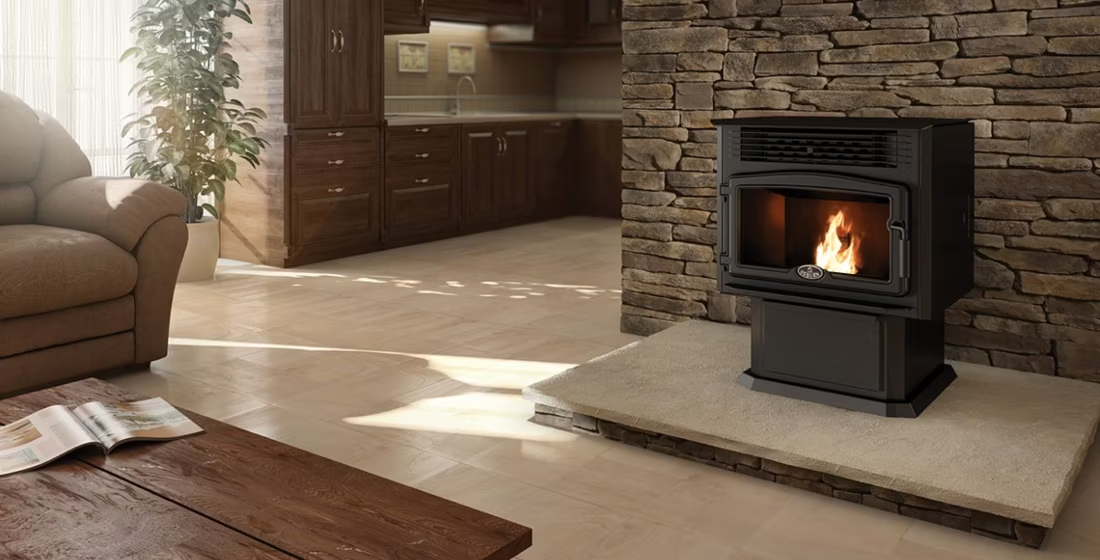
A pellet stove answers that directly: load the hopper, set the thermostat, and it maintains steady output for a day or more depending on the model and hopper size. Howard County doesn't have any air quality non-attainment concerns, so pellet appliances install without the curtailment restrictions you'd see in some western counties—and pellets are readily available regionally through suppliers like Indeck Energy Services, Lignetics, and Somerset Pellet Fuel. For homes near Kokomo, Greentown, or out in the farmland stretches of the county, that combination of steady heat and simple logistics is a big part of the appeal.
Three steps. No salesperson until you're ready.
Tell us about your project
Your zip code, your situation, and the fuel you're leaning toward—or let the answers point you to one.
See what's actually available
The brands dealers within 100 miles genuinely carry—real options, never a catalog mirage.
Get your dealer & Project Guide
A trusted local dealer, plus the free Project Guide & Parts List that names every component of the job.
Frequently Asked Questions
How much does a pellet stove installation cost in Howard County?
A typical pellet stove or insert installation in Howard County runs in the neighborhood of $4,500 to $7,500, depending on the unit, whether it's a freestanding stove or an insert going into an existing fireplace, and whether venting needs to be run through a wall or an existing chimney. Inserts into an existing masonry fireplace tend to land on the lower end since the chimney cavity is already there. New construction or homes without an existing fireplace opening run higher once wall penetration and venting materials are factored in. A local dealer will give you a firm number after seeing your home.
What size pellet stove do I need for my Howard County home?
Sizing depends on square footage, insulation quality, and whether the stove is your primary heat source or supplemental. As a rough guide for Howard County's 5A climate: smaller units (up to 1,000 sq ft) suit a single room, den, or a smaller Kokomo bungalow; mid-size units (1,000–2,000 sq ft) cover most main living areas in a typical ranch or two-story home; larger units (2,000+ sq ft) can handle a well-insulated whole house through the coldest stretches of a 6,060-HDD winter. Older farmhouses out toward Greentown or Russiaville with less insulation often need to size up a step from what square footage alone would suggest. A local dealer can size this properly with an in-home visit—it's the single biggest factor in whether you're happy with the stove come February.
Where can I buy pellets in Howard County?
Pellets are widely available through regional suppliers serving the Kokomo area, including brands like Indeck Energy Services, Lignetics, and Somerset Pellet Fuel, typically sold by the ton or by the 40-pound bag through hardware stores, farm supply retailers, and hearth dealers. Pricing fluctuates with wood pellet demand nationally, so it's worth asking your local dealer which brands they stock and whether they offer season-ahead pricing—buying a ton or more before the heating season starts is common practice for homeowners running a pellet stove as a primary heat source.
What's the difference between a pellet stove and a pellet insert?
A pellet stove is a freestanding unit that sits on a hearth pad and vents through a wall or existing chimney—it can go almost anywhere in a room with the right clearances. A pellet insert is built to slide into an existing masonry fireplace opening, turning a drafty old wood fireplace into a sealed, efficient heat source. For Howard County homes with an existing fireplace—common in older Kokomo neighborhoods—an insert is often the simpler and more cost-effective route since it reuses the chimney cavity. Homes without an existing fireplace, or new construction, usually go with a freestanding stove instead.
Do I need a permit to install a pellet stove in Howard County?
Most pellet stove and insert installations require a building permit through the applicable local jurisdiction—the City of Kokomo building department for in-city installs, or Howard County for unincorporated areas and smaller communities like Greentown and Russiaville. Most local hearth dealers handle the permit filing and inspection scheduling as part of the installation, so you generally don't have to navigate it yourself. Since Howard County has no air quality non-attainment designation, there are no burn curtailment periods to worry about once the unit is installed and inspected.
How often does a pellet stove need to be cleaned and serviced?
Pellet stoves need more frequent attention than gas units but less than wood stoves: expect to empty the ash pan every few days to weekly depending on use, clean the burn pot every week or two during heavy winter use, and have a full professional cleaning and inspection once a year—typically before the heating season starts in fall. The auger, exhaust fan, and hopper mechanisms are the parts most likely to need servicing over time. Local hearth dealers who sell pellet units in the Kokomo area typically offer this annual service, and it's worth budgeting for since it keeps warranty coverage intact.
Will my pellet stove work if the power goes out?
No—this is the one real tradeoff of pellet heat. Pellet stoves rely on an auger motor to feed fuel and a blower fan to distribute heat and exhaust combustion air, both of which require electricity. If Howard County loses power during a winter storm, a pellet stove will shut down. Some homeowners address this with a small battery backup or generator sized to run the stove's electrical components, which is worth discussing with your dealer if outage resilience matters for your household. Homeowners who want guaranteed heat during outages sometimes pair a pellet stove for daily convenience with a wood stove or fireplace as backup.
What size hopper do I need, and how often will I need to refill it?
Hopper sizes on residential pellet stoves generally range from 40 to 130 pounds. On a cold Howard County night with lows around 17°F, a mid-size hopper running on a moderate setting typically needs a refill every 24 to 48 hours; larger hoppers can stretch to 2-3 days on lower settings or in milder weather. If you're planning to run the stove as a primary heat source through the full winter, ask your local dealer about larger-hopper models—the difference between refilling daily and every other day adds up over a long heating season.
Pellet vs. wood—which is right for my Howard County home?
Wood stoves burn cordwood—plenty of oak, hickory, maple, and beech available locally—offer the most authentic fire experience, and keep working during a power outage since they need no electricity. Pellet stoves are more convenient day-to-day: load the hopper, set the thermostat, and walk away, with less ash and no need to split or stack cordwood. For Howard County homeowners who want steady, low-maintenance heat through a long 6,060-HDD winter and don't mind the electrical dependency, pellet is often the easier fit. For those who want a heat source that keeps running no matter what the grid does, wood is the more resilient choice. A local dealer can walk through both options against your specific home and habits.
Why is my open fireplace making my house colder?
Open fireplaces suck—literally. As the fire burns, it consumes air your furnace already paid to heat and pulls it out through the chimney, so the house is actually colder after the fire goes out than before you lit it. An insert fixes this: it seals the chimney, puts fixed glass across the front, and turns that hole in your house into a real heat source.
What's the difference between an insert and a zero-clearance fireplace?
An insert is a fireplace that slides into a pre-existing wood-burning fireplace—if you don't have one, there's nothing to insert it into. A zero-clearance fireplace is built into a framed wall, which makes it the answer for remodels and new construction. Simple test: existing masonry fireplace means insert; blank or framed wall means zero-clearance.
Can a fireplace actually lower my heating bill?
Yes—by creating a comfort zone. A furnace heats every square foot of the house just to warm the one room you're in; a gas fireplace on low burns roughly a sixth of the gas a typical furnace does. Set the furnace around 55–60 degrees as a baseline, then heat the rooms your family actually uses. Families who heat this way commonly save $20–$60 a month.
Can I install a fireplace myself?
If you're putting a fire in your house on purpose, it's best to work with an expert. Unless you're genuinely experienced in framing, gas line, vent pipe, and the national code on clearances to combustibles, have a professional do it—and ideally the same company that sells you the fireplace, so warranty, service, and liability all live under one roof.
Pellet Brands Stocked Around Howard County
Manufacturers will point you to the nearest stocking dealer.
Get your Howard County pellet stove Project Guide & Parts List.
Tell us about your home and heating goals, and we'll match you with a trusted local Howard County dealer plus a free Project Guide & Parts List—the exact stove, vent kit, and installation plan for your space.
Find Your Fireplace →