
Clean, consistent heat for a small Bartholomew County town.
With a long, steady heating season and winter lows averaging 22°F, Hope homeowners want heat that runs steady through a long Indiana winter without daily fire-tending. I'll match you with a trusted local dealer who knows the venting, the hopper sizing, and what's actually available here.
Every Project Starts From One of These Five Situations
Efficient, thermostat-like heat without the woodpile.
Hope is a small farm town of under 2,000 people tucked into rural Bartholomew County northeast of Columbus, Indiana. It sits in climate zone 5A at a modest 736 feet of elevation, with winter lows averaging 22°F and a long, solid Midwest heating season stretching from fall well into spring—nowhere near what Fargo or Bismarck deal with, but still substantial. That said, it's cold enough for long enough that a lot of local households, especially those on older farmhouses with plenty of square footage to condition, want a heat source that can run for hours unattended and hold a steady temperature without someone reloading logs every few hours.
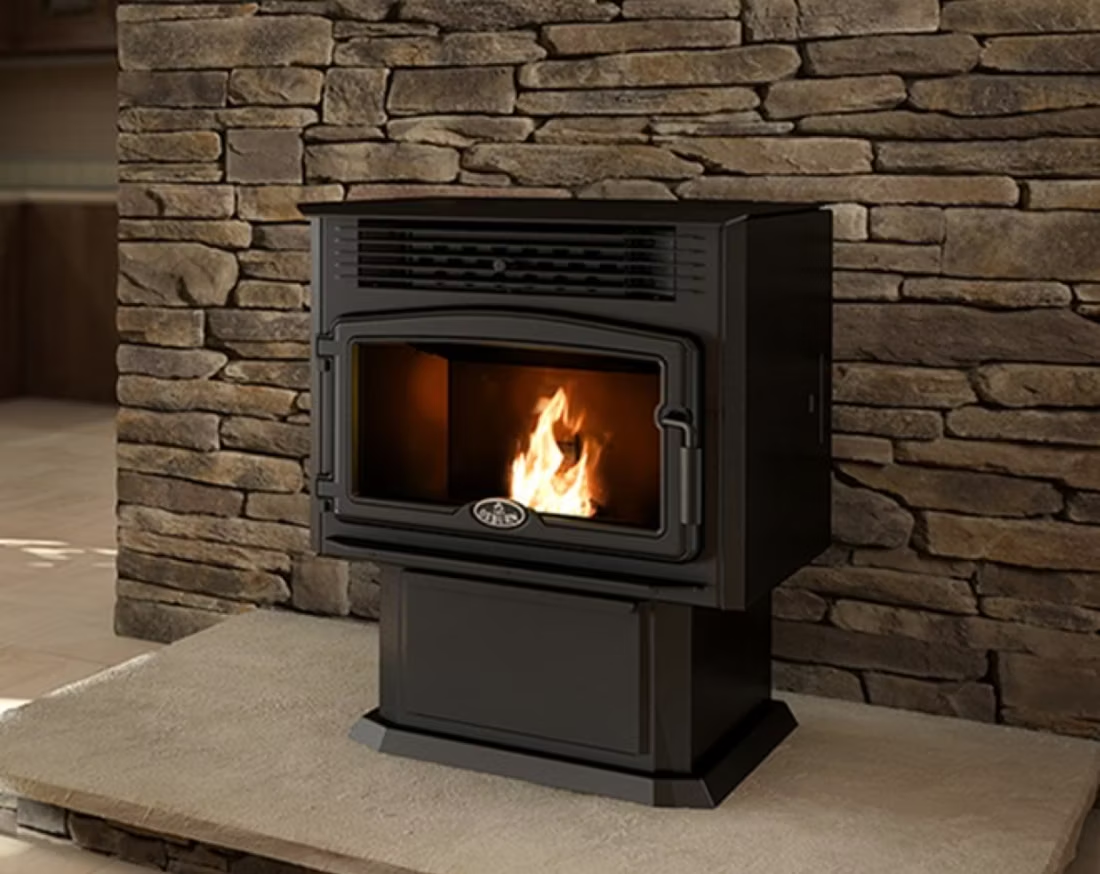
Pellet stoves fit that need well, and Hope has no air quality non-attainment issues or winter burn restrictions to work around, so there's no curtailment schedule to plan a pellet appliance's use around the way there is in some western towns. Regional pellet supply runs through brands like Indeck Energy Services, Lignetics, and Somerset Pellet Fuel, which is worth knowing in a town this size where you're not driving past three big-box stores stocking pallets of fuel—planning ahead on your ton order matters. One tradeoff to plan for: pellet stoves need electricity to run the auger and blower, and rural Bartholomew County homes served by Bartholomew County REMC can see longer outage restoration times than in-town Duke Energy Indiana customers, so a battery backup or small generator is worth discussing with your installer.
Three steps. No salesperson until you're ready.
Tell us about your project
Your zip code, your situation, and the fuel you're leaning toward—or let the answers point you to one.
See what's actually available
The brands dealers within 100 miles genuinely carry—real options, never a catalog mirage.
Get your dealer & Project Guide
A trusted local dealer, plus the free Project Guide & Parts List that names every component of the job.
Frequently Asked Questions
How much does a pellet stove installation cost in Hope?
Most pellet stove installations run $3,000 to $6,000, with the spread coming down to venting complexity and hopper size. A pellet insert going into an existing masonry fireplace with a straightforward through-wall vent kit lands toward the lower end. A freestanding stove in a room without an existing chimney, needing new wall penetration and a larger hopper for extended unattended burns, runs closer to the top of that range. A local dealer will confirm the number after seeing your hearth setup and where you want the vent to exit the house.
What size pellet stove do I need for a Hope-area home?
With winter lows averaging 22°F and Bartholomew County's long, steady heating season, most main living areas here do fine with a stove in the 40,000 to 60,000 BTU range, which typically covers 1,500 to 2,000 square feet depending on insulation. Older farmhouses common around Hope, with higher ceilings and less insulation than newer builds, often want the larger end of that range or a second zone-heating unit if the stove is meant to carry more than a single open living space.
Where do I buy pellets near Hope?
Regional supply comes through brands like Indeck Energy Services, Lignetics, and Somerset Pellet Fuel, typically stocked at farm and ag supply stores and hearth dealers in the Columbus, Indiana area rather than at a big-box store in Hope itself. Because this is a small town without dense retail, it's worth buying a season's supply—usually 2 to 3 tons for an average home—in the fall before demand picks up, rather than counting on picking up a bag or two mid-winter.
Will my pellet stove still work during a power outage?
Not without a backup power source. Pellet stoves rely on an electric auger to feed fuel and a blower to circulate heat, so a power outage stops the stove even with a full hopper. This matters more for homes served by Bartholomew County REMC, where rural outage restoration after an ice storm or high wind event can take longer than for customers on Duke Energy Indiana's more urban lines around Columbus. A lot of local pellet stove owners pair the unit with a small battery backup or portable generator specifically for this reason.
Do I need a permit to install a pellet stove in Hope?
Most likely yes—check with the Bartholomew County building and zoning office before installation, since a new solid-fuel appliance typically requires a permit and inspection even when it's a straightforward insert. Manufacturer clearance requirements for wall penetrations and hearth pads also need to be met regardless of permit status. A local hearth dealer who regularly installs in Bartholomew County will usually handle this paperwork as part of the job rather than leaving you to sort it out.
Pellet stove vs. wood stove—which makes more sense in Hope?
Hope sits in good hardwood country—oak, hickory, maple, and beech are all common on the farmland and woodlots around town—so wood is genuinely cheap and available if you have access to a source or the equipment to process it yourself. Pellet stoves trade that low fuel cost for convenience: no splitting, no stacking, longer unattended burn times, and a cleaner, more consistent heat output. Since Hope has no air quality restrictions either way, the choice mostly comes down to whether you want the lower ongoing cost of wood or the lower daily effort of pellets—plenty of local households run one as primary heat and keep the other as backup.
How much maintenance does a pellet stove need?
Plan on emptying the ash pan every few days during regular use and giving the burn pot and glass a quick cleaning weekly, since pellet stoves produce far less ash than wood but still need it managed. A full annual service—cleaning the auger, exhaust vent, and blower, and checking the gaskets—is worth scheduling in late summer before the heating season starts, similar to servicing a furnace before a long Indiana winter. Skipping this is the most common reason pellet stoves lose efficiency or jam mid-season.
How should I store pellets at a Hope-area property?
Pellets need to stay bone dry—even minor moisture exposure causes them to swell and crumble, ruining a bag. Store them off the ground on pallets in a garage, barn, or dry outbuilding rather than directly on a concrete floor, which is a common option for the outbuildings and pole barns typical of properties around Hope's farmland. Buying your season's supply—usually 2 to 3 tons for an average home given how long and steady the local heating season runs—in one delivery and storing it properly avoids mid-winter scrambling for a scarce local supply.
Can a pellet stove be my primary heat source in Hope, or just supplemental?
Plenty of Hope-area homes run a pellet stove as primary heat for a main living space, especially in older farmhouse layouts where a central woodstove or insert can carry most of the square footage. Given the area's long, steady heating season and 22°F average winter lows, sizing correctly matters—an undersized unit forces constant high-output cycling and burns through pellets fast, while a correctly sized stove can run at a lower, steadier output and stretch a ton of pellets much further across the season. Most homeowners here still keep a backup source, whether that's central propane, electric baseboard, or a wood stove, especially given the outage considerations for rural REMC service.
How often does a pellet stove need cleaning?
A clean pellet stove is a happy pellet stove. Plan on cleaning the burn pot about once a week when you're burning regularly—ash and clinkers gum up the air holes just like a pellet barbecue. Most pellet stove problems trace back to skipped cleaning that nobody explained up front. Some designs make it easy with a trapdoor burn pot: pull a lever and the gunk drops into the ash pan.
What does it take to replace an existing fireplace?
Fireplaces are like icebergs—bigger behind the wall than in front of it. Replacement means removing the surrounding tile or stone (the finish material laps onto the fireplace face), pulling the old unit, setting the new one in the same enclosure, and re-finishing the wall. A hearth professional can determine what's behind your wall without demolition during an in-home preview.
Can a fireplace actually lower my heating bill?
Yes—by creating a comfort zone. A furnace heats every square foot of the house just to warm the one room you're in; a gas fireplace on low burns roughly a sixth of the gas a typical furnace does. Set the furnace around 55–60 degrees as a baseline, then heat the rooms your family actually uses. Families who heat this way commonly save $20–$60 a month.
Can I install a fireplace myself?
If you're putting a fire in your house on purpose, it's best to work with an expert. Unless you're genuinely experienced in framing, gas line, vent pipe, and the national code on clearances to combustibles, have a professional do it—and ideally the same company that sells you the fireplace, so warranty, service, and liability all live under one roof.
Nearby Dealers
Hearth shops serving Hope and the surrounding area. Every listing shows whether it is a WhyFire partner, a dealer we have verified as authorized for the brands we recommend, or a local business carrying hearth products. No manufacturer pays for placement. How we verify dealers →
Hall Heating
Pellet Brands Stocked Around Hope
Manufacturers will point you to the nearest stocking dealer.
Get your free Project Guide & Parts List for a pellet stove in Hope.
Tell me about your home and heating setup, and I'll match you with a trusted local dealer and send a free Project Guide & Parts List with the right hopper size, vent kit, and parts for a Bartholomew County winter.
Find Your Fireplace →