
Add Warmth to Your Highland Home—No Chimney Required.
Plug-in and hardwired electric fireplaces for Highland's ranch homes, basements, and condos along US-41—no venting, no gas line, and a trusted local dealer to size it right.
Every Project Starts From One of These Five Situations
The Easiest Way to Add Real Warmth to a Room.
Highland sits in Lake County's 'Region,' minutes from the Illinois border, at 616 feet elevation with winters that average a 15°F low and rack up roughly 6,350 heating degree days a year. That's a real Midwest cold—furnaces run hard from November into March—though nowhere near the extremes of Fargo, ND or International Falls, MN. In that middle-cold climate, electric fireplaces have become a standard fixture in Highland homes: finished basements, condo and townhome units, and additions where running a gas line or masonry chimney isn't practical or allowed.
Northern Indiana Public Service Co. (NIPSCO) supplies both electric and gas service in Highland, with a residential electric rate around $0.1909 per kWh. That matters for sizing: a standard 1,500-watt fireplace heater costs roughly $0.29 an hour to run, which makes electric a smart zone-heating choice for one room rather than a whole-home heat source. Because there's no venting, no gas line, and often no permit required for a plug-in unit, electric is also the fastest fuel to install in Highland—many units go from delivery to lit the same afternoon.
Three steps. No salesperson until you're ready.
Tell us about your project
Your zip code, your situation, and the fuel you're leaning toward—or let the answers point you to one.
See what's actually available
The brands dealers within 100 miles genuinely carry—real options, never a catalog mirage.
Get your dealer & Project Guide
A trusted local dealer, plus the free Project Guide & Parts List that names every component of the job.
Frequently Asked Questions
How much does it cost to install an electric fireplace in Highland?
A plug-in electric insert, mantel, or media-console fireplace typically runs $500 to $2,000 installed in Highland, since no gas line, venting, or masonry work is involved—most of that cost is the unit itself plus mounting. A built-in wall unit that needs a dedicated 20-amp circuit run by a licensed electrician usually lands between $1,500 and $3,500, depending on how far the electrician has to run wire from your panel. Older Highland homes with original 1950s and 1960s electrical panels sometimes need a panel upgrade first, which adds to the cost.
Do I need a permit to install an electric fireplace in Highland?
Most plug-in electric fireplaces don't require a permit—they simply plug into an existing 120-volt outlet like any other appliance. If you're installing a hardwired built-in unit or having an electrician add a new dedicated circuit, that work requires an electrical permit through the Town of Highland Building Department and should be pulled by your licensed electrician as part of the job, not skipped to save time.
How much does it cost to run an electric fireplace in Highland?
At NIPSCO's residential rate of about $0.1909 per kWh, a standard 1,500-watt electric fireplace costs roughly $0.29 an hour to run on the heater setting, or about $2.30 for a typical eight-hour evening. Running it on flame-only mode with the heater off costs a fraction of that. Compared to running a furnace to heat the whole house, using an electric fireplace to zone-heat one occupied room—a den, a finished basement, a home office—is usually the cheaper option on nights when you don't need the whole house at 70 degrees.
Is an electric fireplace enough heat for a Highland winter?
Not as a whole-home heat source—with winter lows averaging 15°F and about 6,350 heating degree days a year, Highland homes need a working furnace or boiler as primary heat. A 1,500-watt electric fireplace is built for zone heating: it can comfortably take the chill off a single room of 300–400 square feet, which makes it a good fit for a finished basement, an added sunroom, or a bedroom where you want extra warmth without running central heat harder than necessary.
Electric fireplace vs. gas fireplace—which is right for my Highland home?
NIPSCO supplies both natural gas and electricity in Highland, so both fuels are genuinely available here. A gas fireplace needs a vented flue or direct-vent kit and a gas line, which adds installation complexity and cost, but it puts out more consistent heat and can serve as real supplemental heat during a furnace outage. Electric skips the venting and gas line entirely, installs faster, and costs less up front—the tradeoff is that it's ambiance-plus-zone-heat rather than a backup heat source. For condos, rentals, and finished basements without existing gas or flue access, electric is usually the practical choice.
What type of electric fireplace works best in a Highland home?
Most Highland homes are ranch or split-level construction without an existing fireplace opening, so wall-mount units and mantel or media-console fireplaces are the most common installs—they need only an outlet and a stud location. Homes with an existing wood-burning masonry fireplace can use an electric insert that slides into the firebox, retiring the chimney without losing the look. For basement remodels, a built-in wall unit framed into a stud wall gives the cleanest, most fireplace-like result.
Can I install an electric fireplace in a condo or rental in Highland?
Yes—this is one of the most common reasons homeowners in Highland choose electric. Because there's no venting, chimney, or gas line involved, electric fireplaces work in condos and townhomes along US-41 and in rental properties where a landlord or HOA won't allow a wood-burning or gas appliance. A plug-in unit can even move with you if you relocate.
Are electric fireplaces safe for kids and pets?
Electric fireplaces have no open flame, no carbon monoxide, and no combustible byproducts, and many models keep the glass front cool to the touch even while running—a real advantage over wood or gas units in households with young kids or pets. The main safety consideration is electrical: a permanent installation should run on its own dedicated circuit rather than sharing an outlet with other space heaters, especially in older Highland homes where original panels weren't built for modern electric loads.
Why isn't wood or pellet heat common in Highland?
Highland is a fully built-out residential town in Lake County with no nearby national forest or public-land cutting permits, and most neighborhoods don't have the lot size or ordinance allowance for active wood burning. A handful of older Highland homes with existing masonry fireplaces still burn oak, hickory, maple, or beech occasionally for ambiance, but it's not a mainstream heating strategy here the way it is in more rural parts of Indiana. Electric fills that gap well—it delivers the fireplace look and zone warmth without the wood supply, chimney maintenance, or ordinance questions.
Can I put a TV above my fireplace?
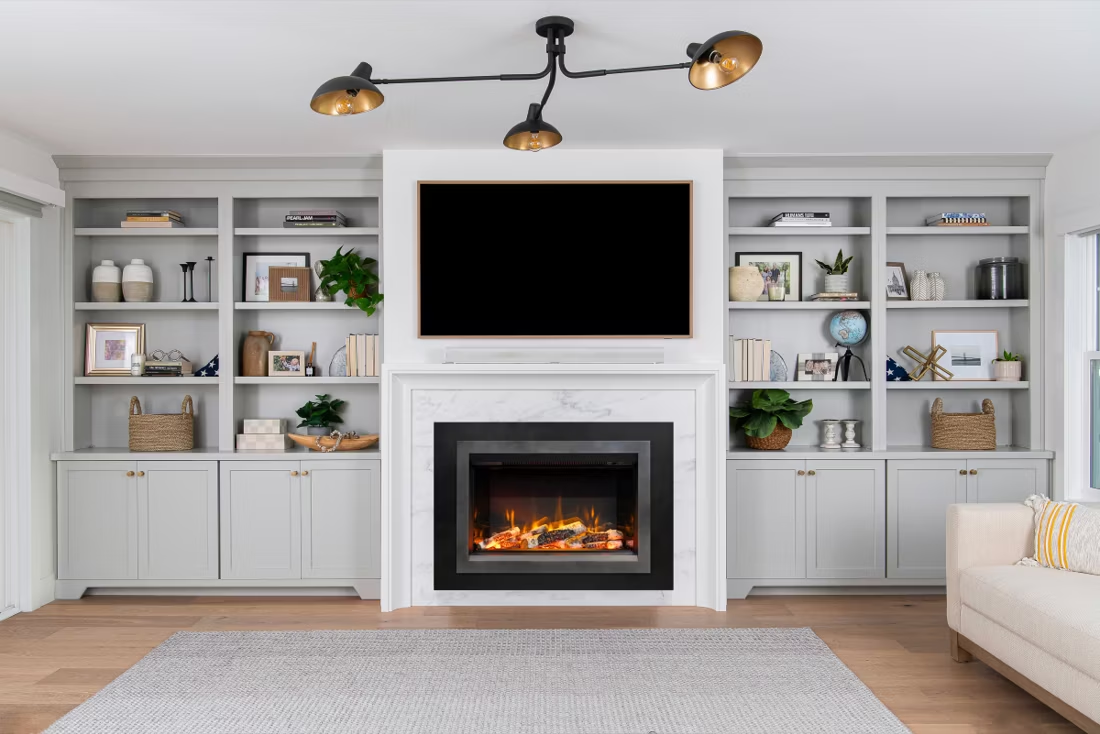
Yes—with an asterisk. Fireplaces are hot and TVs don't like heat. Either put a mantel between them to deflect rising warmth, or choose a fireplace with heat-management technology that creates a cool zone on the wall above—the wall stays around 125 degrees, barely warm, while the room still gets full heat. If you like clean lines and don't want a mantel, heat management is the answer.
Does an electric fireplace need a vent or chimney?
No—that's its superpower. An electric fireplace needs a wall and an outlet, period. No vent pipe, no gas line, no clearances to design around, which is why it works in bedrooms, offices, apartments, and walls where venting a gas or wood unit would be impractical or impossible. Installation is typically the simplest and least expensive of any fireplace type.
Can a fireplace actually lower my heating bill?
Yes—by creating a comfort zone. A furnace heats every square foot of the house just to warm the one room you're in; a gas fireplace on low burns roughly a sixth of the gas a typical furnace does. Set the furnace around 55–60 degrees as a baseline, then heat the rooms your family actually uses. Families who heat this way commonly save $20–$60 a month.
Does a fireplace add value to my home?
On average, a fireplace adds back to the home about the same amount you spent installing it. Add the monthly savings from heating the rooms you actually use instead of the whole house—often hundreds of dollars a year—and the value case is strong before you even count what a fire does for how your family uses the room.
Nearby Dealers
Hearth shops serving Highland and the surrounding area.
Electric Service in Highland
An electric fireplace's heater draws about 1,500 watts—pennies per hour at local rates.
Northern Indiana Pub Serv Co
Find your electric fireplace in Highland.
Tell us about your space and we'll match you with a trusted local Highland-area dealer and send a free Project Guide & Parts List—the right unit, mounting or insert kit, and electrical requirements for your home.
Find Your Fireplace →