
Warm Up Hendricks County Without the Wood Pile.
No chimney, no gas line, no permit hassle—just plug in or wire in a dedicated circuit. From new-build subdivisions in Avon and Plainfield to older farmhouses near Danville, find the right electric fireplace and connect with a trusted local dealer.
Every Project Starts From One of These Five Situations
Convenient heat for a fast-growing county.
Hendricks County has more than doubled in population over the last few decades as Indianapolis has pushed west into Avon, Brownsburg, and Plainfield, with Danville anchoring the county seat and smaller communities like Pittsboro, Clayton, and Coatesville filling in the gaps. Winters here sit in Climate Zone 5A—average lows around 19°F and a winter heating load a step milder than Upper Midwest cold like Madison, Wisconsin, but still cold enough that a furnace runs hard from November through March. Much of the county's newer housing stock—townhomes, ranch subdivisions, finished basements added after the original build—was never designed around a masonry chimney or a gas line, which is exactly the gap electric fireplaces fill.
Hendricks Power Cooperative serves much of the county outside the incorporated towns, and reliable rural electric service makes plug-in or hardwired electric units a practical option for zone heating in a room addition, a finished basement, or a primary bedroom that runs cold on the far end of the ductwork. There's no chimney to sweep, no gas line to run, and no emissions to worry about—not that Hendricks County has any regional air quality restrictions to begin with, but it does mean an electric unit works in condos and townhomes where venting a solid-fuel or gas appliance simply isn't an option. The tradeoff is honest: electric fireplaces supplement a furnace, they don't replace one, and they go dark in a power outage just like everything else on the circuit.
Three steps. No salesperson until you're ready.
Tell us about your project
Your zip code, your situation, and the fuel you're leaning toward—or let the answers point you to one.
See what's actually available
The brands dealers within 100 miles genuinely carry—real options, never a catalog mirage.
Get your dealer & Project Guide
A trusted local dealer, plus the free Project Guide & Parts List that names every component of the job.
Frequently Asked Questions
How much does an electric fireplace installation cost in Hendricks County?
A plug-in electric insert or freestanding unit that uses an existing outlet typically runs $150 to $600 for the unit itself, with no installation labor required beyond placement. A built-in electric fireplace or wall-mount unit that needs a dedicated 20-amp circuit run by a licensed electrician usually lands between $800 and $2,500 installed, depending on how far the circuit has to run and whether drywall or framing work is involved. Larger linear electric fireplaces built into new construction in Avon or Brownsburg—where the unit is framed into a wall during a remodel—can reach $3,000 to $5,000 once finish carpentry and surround materials are included. A local dealer can give you a firm number after seeing the space and your electrical panel.
Will an electric fireplace actually heat a room, or is it just for looks?
Most electric fireplaces put out somewhere between 4,600 and 9,000 BTU, enough to noticeably warm a single room in the 300 to 500 square foot range—a bonus room, a finished basement, a primary bedroom that the furnace doesn't reach well. It won't replace central heat for a whole Hendricks County house through a 19°F January night; it's a zone heater, not a furnace. Homeowners here typically use one to take the edge off a specific space rather than to carry the full heating load, which keeps the furnace from cycling as hard in that one room.
Do I need a permit to install an electric fireplace in Hendricks County?
A plug-in unit that uses an existing standard outlet doesn't require a permit. If your installer needs to run a new dedicated circuit—common for larger built-in units—that electrical work typically requires a permit through the Hendricks County Building & Planning Department for unincorporated areas, or through the building department in Avon, Brownsburg, or Plainfield if you're inside town limits. Most licensed electricians pull that permit as part of the job, so it's rarely something you handle yourself.
What's the difference between an electric insert, a built-in, and a wall-mount unit?
An electric insert is sized to slide into an existing masonry fireplace opening, which is useful for older Hendricks County homes near Danville or North Salem that already have a firebox but want to stop dealing with wood or an unused gas line. A built-in unit is framed into a wall during new construction or a remodel—common in newer Avon and Plainfield developments—and creates a flush, custom look. A wall-mount unit hangs directly on the wall like a large flat-panel television and needs the least construction work, making it the fastest option for a finished basement or a bonus room over an existing outlet or a newly added circuit.
Will my electric fireplace still work during a power outage?
No—and this is worth being direct about. An electric fireplace draws power just like any other appliance in the house, so if Hendricks Power Cooperative or your municipal utility loses service, the unit goes dark along with your lights and furnace blower. If backup heat during outages is a priority for your household, a wood stove or an insert that doesn't rely on electronic ignition is the better fit for that specific need. Electric fireplaces are best understood as a convenient, low-maintenance heat source for normal daily use, not an emergency backup.
Electric vs. gas vs. wood—which is right for my Hendricks County home?
Wood remains a strong option in the county's older, more rural properties, where oak, hickory, maple, and beech are all common locally sourced species and a real fire matters to the homeowner—plus it keeps working when the power doesn't. Gas offers instant, higher-output heat and a realistic flame with far less maintenance than wood, and works well in homes already served by natural gas or propane. Electric is the simplest and cheapest to install, produces zero emissions and no ash, and is often the only realistic option in a condo, a rented townhome, or a room where running a chimney or gas line isn't feasible—but it costs more to run per BTU than gas and won't function without power. Many Hendricks County homeowners choose based on the specific room: electric in a finished basement or bedroom, gas or wood in the main living space.
Are electric fireplaces safe for kids and pets?
Yes, generally more so than gas or wood alternatives. Most electric fireplaces use a cool-touch glass front or a glass-free heating element design, so there's no risk of a hot surface burn the way there is with a wood stove's cast iron or a gas unit's glass panel. There's no open flame, no combustion byproducts, and no ash or embers to manage—a meaningful consideration for the many young families in Hendricks County's newer subdivisions. That said, the heating element itself does get warm, so units still carry a clearance recommendation from curtains and furniture, which your dealer will walk through at installation.
How much does it cost to run an electric fireplace day to day?
A typical electric fireplace running on its highest heat setting draws around 1,500 watts, or 1.5 kWh per hour. At residential electric rates through Hendricks Power Cooperative or a municipal utility, that generally works out to somewhere around 15 to 25 cents an hour of heat, depending on your specific rate plan. Most owners don't run the heater constantly—they use the flame-only mode for ambiance (which draws only a few watts) and switch on the heater for a few hours at a time, which keeps monthly operating costs modest compared to running a whole-house furnace.
Electric vs. pellet stove—which makes more sense for my home?
Pellet stoves burn compressed wood pellets—regionally available from suppliers like Indeck Energy Services, Lignetics, and Somerset Pellet Fuel—and can put out significantly more heat than an electric unit, making them a reasonable option for a primary or supplemental heat source in a drafty older Hendricks County farmhouse. But they require pellet storage, periodic hopper loading, ash removal, and still need electricity to run the auger and blower, so they don't function during outages either. Electric fireplaces skip the fuel handling entirely—no bags to store, no ash to empty—at the cost of lower total heat output. For a finished basement or a supplemental room, electric is usually simpler; for a homeowner who wants to meaningfully offset furnace use in a larger space, a pellet stove often makes more sense.
Can I put a TV above my fireplace?
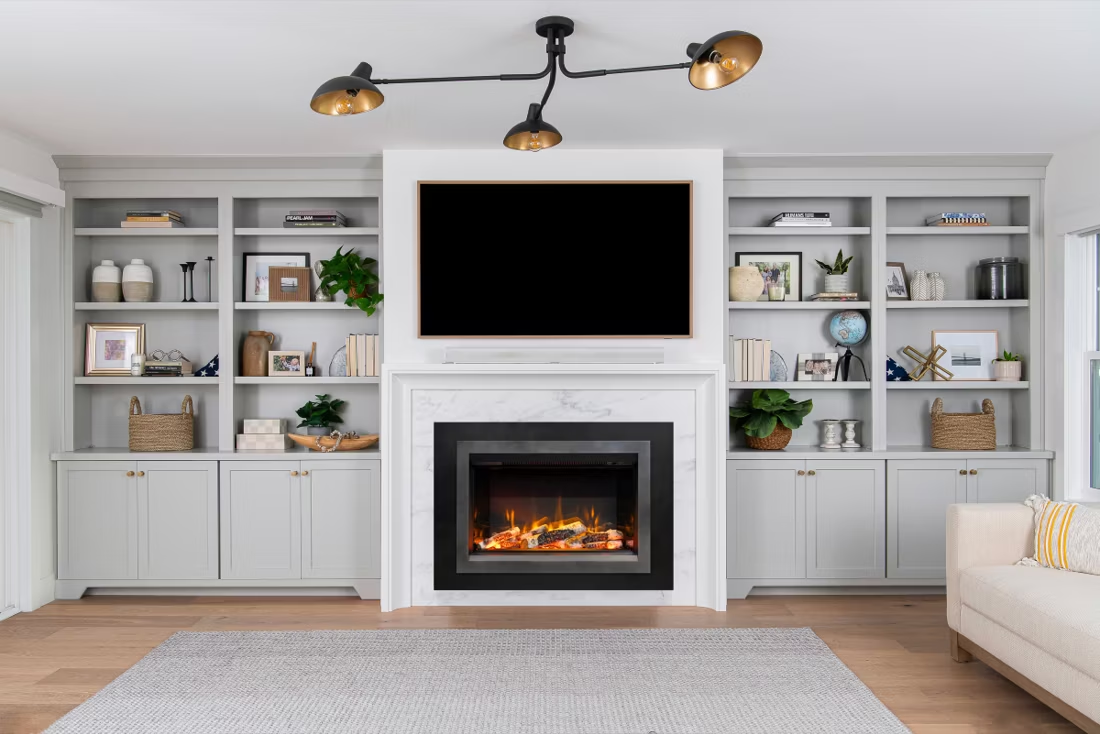
Yes—with an asterisk. Fireplaces are hot and TVs don't like heat. Either put a mantel between them to deflect rising warmth, or choose a fireplace with heat-management technology that creates a cool zone on the wall above—the wall stays around 125 degrees, barely warm, while the room still gets full heat. If you like clean lines and don't want a mantel, heat management is the answer.
Does an electric fireplace need a vent or chimney?
No—that's its superpower. An electric fireplace needs a wall and an outlet, period. No vent pipe, no gas line, no clearances to design around, which is why it works in bedrooms, offices, apartments, and walls where venting a gas or wood unit would be impractical or impossible. Installation is typically the simplest and least expensive of any fireplace type.
Can I install a fireplace myself?
If you're putting a fire in your house on purpose, it's best to work with an expert. Unless you're genuinely experienced in framing, gas line, vent pipe, and the national code on clearances to combustibles, have a professional do it—and ideally the same company that sells you the fireplace, so warranty, service, and liability all live under one roof.
Does a fireplace add value to my home?
On average, a fireplace adds back to the home about the same amount you spent installing it. Add the monthly savings from heating the rooms you actually use instead of the whole house—often hundreds of dollars a year—and the value case is strong before you even count what a fire does for how your family uses the room.
Stove and Fireplace Dealers in Hendricks County
Listings include WhyFire partner dealers, dealers we have verified as authorized for the brands we recommend, and established local businesses that carry hearth products. Every listing shows which one it is. The ones marked Preferred run on WhyFire's software, so they can show you real pricing and book your appointment right here. No manufacturer pays for placement. How we verify dealers →
Mowery Inc.
The Cinder Box
Pate's Pool Service & Supply
Pool City
Kindled Timber
Newco Dealers Wholesale
RT's Fireplace Shop
Edwards Royal Comfort Heating & Air
Get matched with an electric fireplace dealer in Hendricks County, Indiana.
Tell us about your room, your electrical setup, and your budget, and we'll match you with a trusted local dealer plus a free Project Guide & Parts List—the exact unit, mounting, and wiring details for your Hendricks County home.
Find Your Fireplace →