
Zone heat and ambiance without a chimney in Brownsburg.
With a solid full winter heating season and winter lows averaging 21°F, Brownsburg homes need real heat from the furnace—but an electric fireplace adds instant warmth and glow to one room with no venting, no gas line, and no chimney to maintain. I'll match you with a trusted local dealer.
Every Project Starts From One of These Five Situations
The easiest upgrade for a fast-growing suburb.
Brownsburg sits at 881 feet in climate zone 5A, with an average winter low of 21°F and a solid full winter heating season—solidly cold-winter territory, though nowhere near the extremes of a Fargo ND or International Falls MN. This is furnace weather: cold enough for a real heating season, mild enough that most homes lean on a gas or heat-pump furnace as primary heat and want something simpler for supplemental warmth in a specific room.
That's where electric fireplaces fit. Brownsburg's population has grown fast, and a lot of that growth is new-construction subdivisions around zip codes 46112 and 46234 where builders favor open great rooms, finished basements, and townhome layouts—all good candidates for a plug-in or built-in electric unit with zero venting requirements. Power comes from either Duke Energy Indiana or Hendricks County Rural E.M.C. depending on your address, at roughly 12.75 or 13.84 cents per kWh respectively, and that rate difference is worth knowing before you size a larger insert. Wood-burning options are essentially absent from Brownsburg's newer housing stock, and pellet stoves see little demand here too, so for homeowners who want fireplace ambiance without a chimney, cutting permits, or fuel storage, electric is the practical local default.
Three steps. No salesperson until you're ready.
Tell us about your project
Your zip code, your situation, and the fuel you're leaning toward—or let the answers point you to one.
See what's actually available
The brands dealers within 100 miles genuinely carry—real options, never a catalog mirage.
Get your dealer & Project Guide
A trusted local dealer, plus the free Project Guide & Parts List that names every component of the job.
Frequently Asked Questions
How much does it cost to install an electric fireplace in Brownsburg?
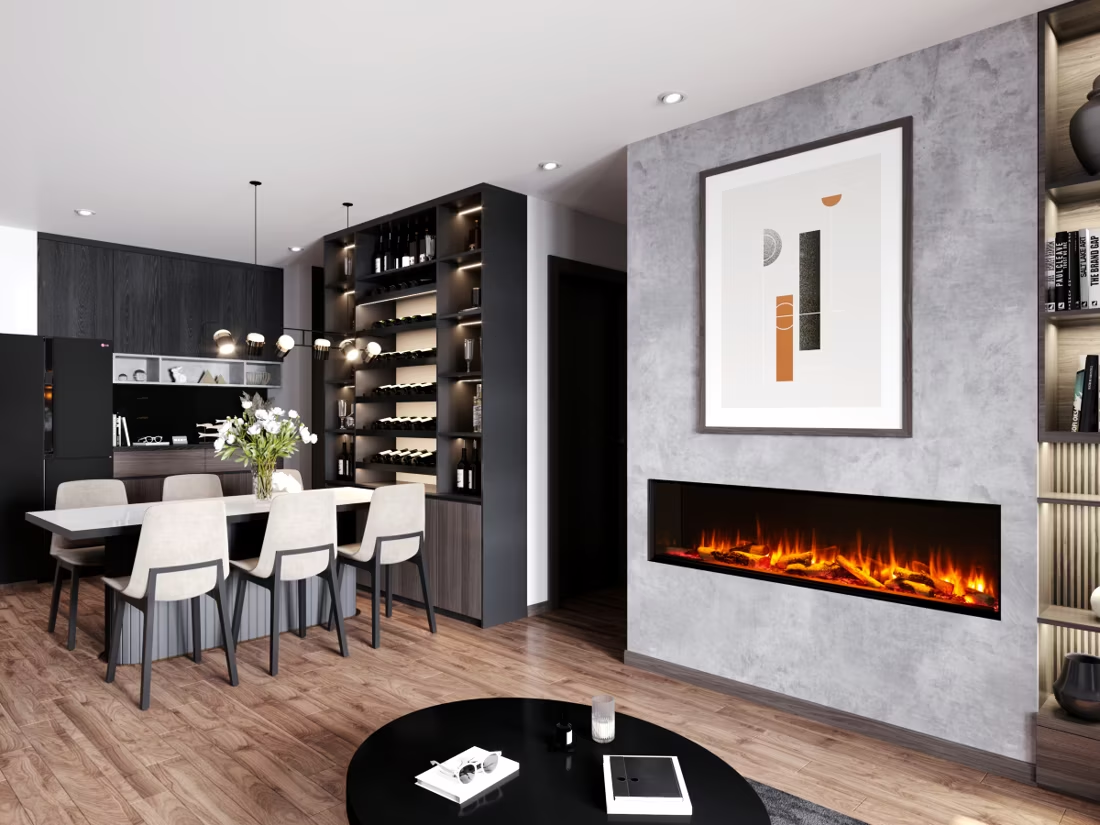
It depends heavily on the type. A freestanding plug-in unit runs $150 to $600 with no installation cost beyond an existing outlet—popular for a quick basement or bedroom upgrade. A recessed, wall-mounted linear fireplace, the style showing up in a lot of Brownsburg's newer great-room floor plans, typically runs $1,500 to $3,500 installed once you factor in framing, a finished surround, and sometimes a dedicated 20-amp circuit. A local electrician or hearth dealer can tell you quickly which category your project falls into once they see the wall and your electrical panel.
Will an electric fireplace actually lower my winter heating bill?
Only if you use it the way it's designed to be used—as zone heat in the room you're actually sitting in, not as a whole-home replacement. With Brownsburg's solid full winter heating season and lows around 21°F, running a small electric insert in a living room while you turn down the thermostat elsewhere can trim your furnace's runtime. But run the math against your actual utility: at Duke Energy Indiana's 12.75 cents per kWh a 1,500-watt heater costs less per hour to run than at Hendricks County REMC's 13.84 cents, and either way, running one continuously as primary heat will cost more than a well-tuned gas furnace.
Do I need a permit for an electric fireplace in Brownsburg?
A small plug-in unit needs no permit at all—it's no different than plugging in a space heater. A built-in or recessed electric fireplace that requires a new dedicated circuit does need an electrical permit, pulled through the Town of Brownsburg or Hendricks County depending on your address, and the work should be done by a licensed electrician. Either way, there's no venting, gas line, or chimney inspection to coordinate, which is one of the real advantages over a gas or wood project here.
What size electric fireplace do I need for my Brownsburg home?
Most electric inserts put out around 4,000-5,000 BTU (roughly 1,500 watts), which noticeably warms 400 to 600 square feet but isn't meant to heat a whole house through a 21°F night. For the open great rooms common in newer Brownsburg subdivisions, a 50-inch or larger linear unit with dual heat settings covers the space well; for a bedroom, home office, or finished basement rec room, a 30- to 36-inch unit is usually plenty.
Electric vs. gas—which fits my Brownsburg home better?
Most homes in Brownsburg already run a gas furnace for primary heat, and a gas fireplace can double as real backup heat during a winter power outage since it doesn't rely on the grid. An electric fireplace, by contrast, goes dark the moment the power drops, but it wins on simplicity—no gas line, no venting, no annual combustion inspection—which makes it the easier retrofit for a finished basement, condo, or townhome. A lot of Brownsburg households end up choosing electric specifically for ambiance and supplemental warmth in a den or bedroom while leaving primary heat to the furnace.
Which utility serves my address, Duke Energy Indiana or Hendricks County REMC?
Both utilities serve Brownsburg, and coverage generally splits by how urban or rural the address is—in-town properties, particularly around zip 46112, more often fall under Duke Energy Indiana, while some outlying and annexed areas closer to 46234 are served by Hendricks County Rural E.M.C., the local electric cooperative. Check a recent bill or the utility's service-territory map to confirm, since the roughly 1-cent-per-kWh difference (12.75 versus 13.84 cents) matters if you're sizing a larger electric fireplace for daily use.
How much maintenance does an electric fireplace need?
Very little, which is part of the appeal in a town like Brownsburg where wood-burning options are essentially off the table anyway. There's no chimney to sweep and no annual combustion safety inspection like a gas fireplace needs. Basic upkeep is dusting the heater vents periodically and, after several years of regular use, occasionally replacing an LED light strip or the internal blower fan—jobs most homeowners handle themselves or a local dealer handles in one quick visit.
What styles of electric fireplace are popular in Brownsburg?
In the newer subdivisions driving Brownsburg's growth, recessed linear wall-mount units are the most requested style for open great rooms. In older homes near downtown Brownsburg that have an existing masonry firebox they no longer want to maintain, an electric insert that slides into that opening is a common no-mess retrofit. And freestanding electric stoves show up often in finished basements and rec rooms, where homeowners want a defined heat zone without any venting work.
Are there rebates or efficiency incentives for electric fireplace upgrades in Brownsburg?
Both Duke Energy Indiana and Hendricks County REMC run seasonal energy-efficiency programs, but they're generally aimed at insulation, smart thermostats, and heat pumps rather than supplemental electric fireplaces specifically—worth a quick check on each utility's current program list before you buy, since offerings shift year to year. Because wood and pellet fuel relevance are both minimal in Brownsburg's newer housing stock, there isn't a local wood-stove-style tax credit angle here the way there might be in a more rural, wood-burning part of Indiana.
Can I put a TV above my fireplace?
Yes—with an asterisk. Fireplaces are hot and TVs don't like heat. Either put a mantel between them to deflect rising warmth, or choose a fireplace with heat-management technology that creates a cool zone on the wall above—the wall stays around 125 degrees, barely warm, while the room still gets full heat. If you like clean lines and don't want a mantel, heat management is the answer.
Does an electric fireplace need a vent or chimney?
No—that's its superpower. An electric fireplace needs a wall and an outlet, period. No vent pipe, no gas line, no clearances to design around, which is why it works in bedrooms, offices, apartments, and walls where venting a gas or wood unit would be impractical or impossible. Installation is typically the simplest and least expensive of any fireplace type.
Can a fireplace actually lower my heating bill?
Yes—by creating a comfort zone. A furnace heats every square foot of the house just to warm the one room you're in; a gas fireplace on low burns roughly a sixth of the gas a typical furnace does. Set the furnace around 55–60 degrees as a baseline, then heat the rooms your family actually uses. Families who heat this way commonly save $20–$60 a month.
Does a fireplace add value to my home?
On average, a fireplace adds back to the home about the same amount you spent installing it. Add the monthly savings from heating the rooms you actually use instead of the whole house—often hundreds of dollars a year—and the value case is strong before you even count what a fire does for how your family uses the room.
Nearby Dealers
Hearth shops serving Brownsburg and the surrounding area. Every listing shows whether it is a WhyFire partner, a dealer we have verified as authorized for the brands we recommend, or a local business carrying hearth products. No manufacturer pays for placement. How we verify dealers →
Mowery Inc.
The Cinder Box
Pate's Pool Service & Supply
Newco Dealers Wholesale
Pool City
Kindled Timber
Electric Service in Brownsburg
An electric fireplace's heater draws about 1,500 watts—pennies per hour at local rates.
Duke Energy Indiana, LLC
Hendricks County Rural E M C
Get your free Project Guide & Parts List for an electric fireplace in Brownsburg.
Tell me about your home, your room, and whether you're on Duke Energy Indiana or Hendricks County REMC, and I'll match you with a trusted local dealer and send a free Project Guide & Parts List sized to your space, no chimney or gas line required.
Find Your Fireplace →