
Pellet Heat Isn't the Norm in Greenwood—But It Still Has a Place.
Most Greenwood homes run on natural gas or electric heat already. For the households where a pellet stove genuinely makes sense, we'll connect you with a local dealer who can tell you the truth about it.
Every Project Starts From One of These Five Situations
A natural-gas suburb where pellet stoves are the exception, not the rule.
Greenwood is a fast-growing Indianapolis suburb of roughly 63,000 people in Johnson County, and most of its subdivisions were built in the last few decades with natural gas furnaces as the default heat source. Winters here are moderate by Midwest standards—with an average winter low near 19°F and a heating season notably shorter and less demanding than what you'd see in Madison, WI or Minneapolis, MN. That combination—dense gas infrastructure plus a climate that doesn't demand a dedicated biomass heating system—is exactly why pellet stoves haven't caught on the way they have in more rural or forested parts of the Midwest.
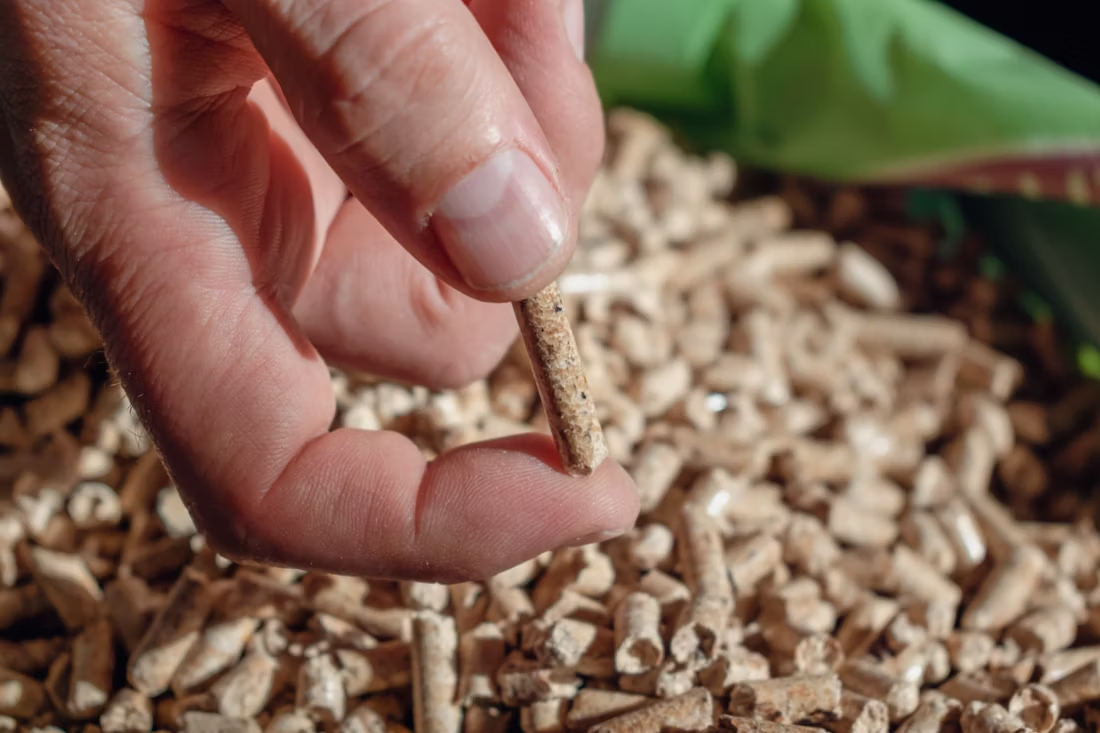
That doesn't mean pellet heat is off the table. Some Johnson County homeowners on acreage outside the city core, or those finishing a basement, sunroom, or detached shop, still want the radiant, low-maintenance heat a pellet stove offers without the chimney and cutting-permit hassle of true wood burning. Regional suppliers like Indeck Energy Services, Lignetics, and Somerset Pellet Fuel serve this part of Indiana, so bagged pellets are findable—they're just not stocked on every corner the way propane or firewood might be in a more rural county.
Three steps. No salesperson until you're ready.
Tell us about your project
Your zip code, your situation, and the fuel you're leaning toward—or let the answers point you to one.
See what's actually available
The brands dealers within 100 miles genuinely carry—real options, never a catalog mirage.
Get your dealer & Project Guide
A trusted local dealer, plus the free Project Guide & Parts List that names every component of the job.
Frequently Asked Questions
Are pellet stoves actually common in Greenwood?
No—and we'd rather tell you that upfront than sell you a fantasy. Greenwood's housing stock is dominated by natural-gas-heated homes built during the city's growth boom from the 1990s onward, and Duke Energy Indiana's electric service plus reliable gas mains make pellet heat a solution to a problem most residents don't have. Pellet stoves in this area tend to show up in older farmhouses on the county's fringes, detached workshops, or homes adding supplemental heat to a finished basement—not as a primary system in a typical Greenwood subdivision.
How much does a pellet stove installation cost in Greenwood?
Because pellet stoves are a niche request here, pricing isn't as standardized as it is for gas inserts. Expect a range similar to national averages—roughly $3,500 to $7,000 installed, covering the stove, the vent kit (pellet stoves use smaller-diameter PL venting rather than a full masonry chimney), a hearth pad if needed, and the electrical hookup for the auger and blower. Because so few Greenwood dealers carry pellet units as a core product line, get a firm quote from whoever you're matched with rather than assuming a big-box estimate applies.
Where can I actually buy pellets in Greenwood?
You won't find pellet stoves on every hearth showroom floor in Johnson County the way you might in New England or the Pacific Northwest, but bagged fuel itself is easier to source than the appliance. Regional producers like Lignetics and Somerset Pellet Fuel supply the broader Indiana market, and farm-supply retailers common to this part of the state often stock bagged hardwood pellets seasonally. Expect to pay somewhere in the $220–$280 per ton range typical of the Midwest, and buy ahead of the first cold snap—turnover is slower here than in pellet-heavy regions, so shelves can run out mid-winter.
Will a pellet stove keep my house warm if the power goes out?
Not on its own. Pellet stoves rely on an electric auger to feed fuel and a blower to push heat into the room, so a power outage stops the stove along with everything else in the house. Duke Energy Indiana and Johnson County Rural E M C both serve this area, and outages here are typically short compared to storm-prone regions—but if backup heat during an outage is your actual goal, a wood stove or a battery/generator setup paired with the pellet stove is the more honest answer than the pellet stove alone.
Why do most Greenwood homeowners choose gas over pellet?
Convenience and infrastructure. A gas insert or fireplace ties into service that's almost certainly already run to the house, lights with a switch or remote, and needs no fuel storage, hopper loading, or ash removal. A pellet stove requires buying and storing bags of fuel, refilling a hopper every day or two during heavy use, and periodic ash cleanout—real trade-offs for a modest efficiency and ambiance gain. In a city built out on gas lines like Greenwood, that math tips toward gas for most primary heating decisions.
Do I need a permit to install a pellet stove in Greenwood?
Generally yes. New solid-fuel appliance installations, including pellet stoves, typically require a permit through the City of Greenwood's building and code enforcement office, or through Johnson County's building department if the property sits outside city limits. A licensed installer will usually pull this permit as part of the job and make sure the vent termination clearances meet code—worth confirming directly, since permitting isn't something local pellet installers handle as routinely here as they might for a gas conversion.
What size pellet stove do I actually need?
Given Greenwood's moderate winters—an average low near 19°F and a heating season noticeably lighter than in Fargo, ND or Bismarck, ND—most local pellet installs are sized for supplemental heat rather than whole-house duty. A small to mid-size unit (rated for 1,000–1,800 sq ft) is usually plenty for a finished basement, sunroom, or single large living area, since the home's existing gas furnace is still doing the primary heavy lifting. A local dealer can size this properly based on your room's insulation and layout.
Pellet vs. wood—does either make sense in Greenwood?
Both are genuinely uncommon here for similar reasons: Johnson County lots are largely suburban, there's no meaningful public-land cutting-permit culture nearby the way there is in forested parts of the Midwest, and gas infrastructure already covers most heating needs. Between the two, pellet stoves are the easier fit for a Greenwood property—no chimney, no seasoned oak or hickory to source and stack, and a cleaner burn—even though the region's hardwoods (oak, hickory, maple, beech) are exactly the species pellets are often milled from elsewhere in the Midwest. If you're choosing between them purely for supplemental heat in an existing home, pellet is the lower-hassle option.
Is a pellet stove a good fit for my specific Greenwood home?
It depends heavily on the property—which is exactly why we don't try to talk everyone into one. A pellet stove tends to make sense for acreage homes outside the city core, detached garages or shops without gas service, or finished basements where running new ductwork isn't practical. It tends not to make sense for a standard subdivision home already on the gas grid. Rather than guess, tell us about your specific situation and we'll match you with a local dealer who'll give you a straight answer, plus a free Project Guide & Parts List if a pellet stove actually is the right call.
Why is my open fireplace making my house colder?
Open fireplaces suck—literally. As the fire burns, it consumes air your furnace already paid to heat and pulls it out through the chimney, so the house is actually colder after the fire goes out than before you lit it. An insert fixes this: it seals the chimney, puts fixed glass across the front, and turns that hole in your house into a real heat source.
What's the difference between an insert and a zero-clearance fireplace?
An insert is a fireplace that slides into a pre-existing wood-burning fireplace—if you don't have one, there's nothing to insert it into. A zero-clearance fireplace is built into a framed wall, which makes it the answer for remodels and new construction. Simple test: existing masonry fireplace means insert; blank or framed wall means zero-clearance.
Does a fireplace add value to my home?
On average, a fireplace adds back to the home about the same amount you spent installing it. Add the monthly savings from heating the rooms you actually use instead of the whole house—often hundreds of dollars a year—and the value case is strong before you even count what a fire does for how your family uses the room.
Can a fireplace actually lower my heating bill?
Yes—by creating a comfort zone. A furnace heats every square foot of the house just to warm the one room you're in; a gas fireplace on low burns roughly a sixth of the gas a typical furnace does. Set the furnace around 55–60 degrees as a baseline, then heat the rooms your family actually uses. Families who heat this way commonly save $20–$60 a month.
Nearby Dealers
Hearth shops serving Greenwood and the surrounding area.
Pellet Brands Stocked Around Greenwood
Manufacturers will point you to the nearest stocking dealer.
Find out if pellet heat actually makes sense for your Greenwood home.
Tell us about your home and we'll match you with a trusted local dealer who'll give you a straight answer—plus a free Project Guide & Parts List with the exact parts, vent kit, and recommended installer if a pellet stove is genuinely the right fit.
Find Your Fireplace →