
Find the right electric fireplace for your Grant County home.
No gas line, no chimney, no venting headaches—just plug-in warmth for Marion, Gas City, Fairmount, and every community in between. We match you with a local dealer who installs it right.
Every Project Starts From One of These Five Situations
Simple heat for a county that gets genuinely cold.
Grant County sits in climate zone 5A with a winter that runs long and cold, a winter comparable to Madison, WI in terms of sustained cold, with average lows around 18°F and stretches that dip well below that. That's enough cold to make supplemental heat worth having in bedrooms, sunrooms, finished basements, and additions that the furnace never quite keeps up with, whether you're in Marion, Gas City, Fairmount, Jonesboro, or Upland.
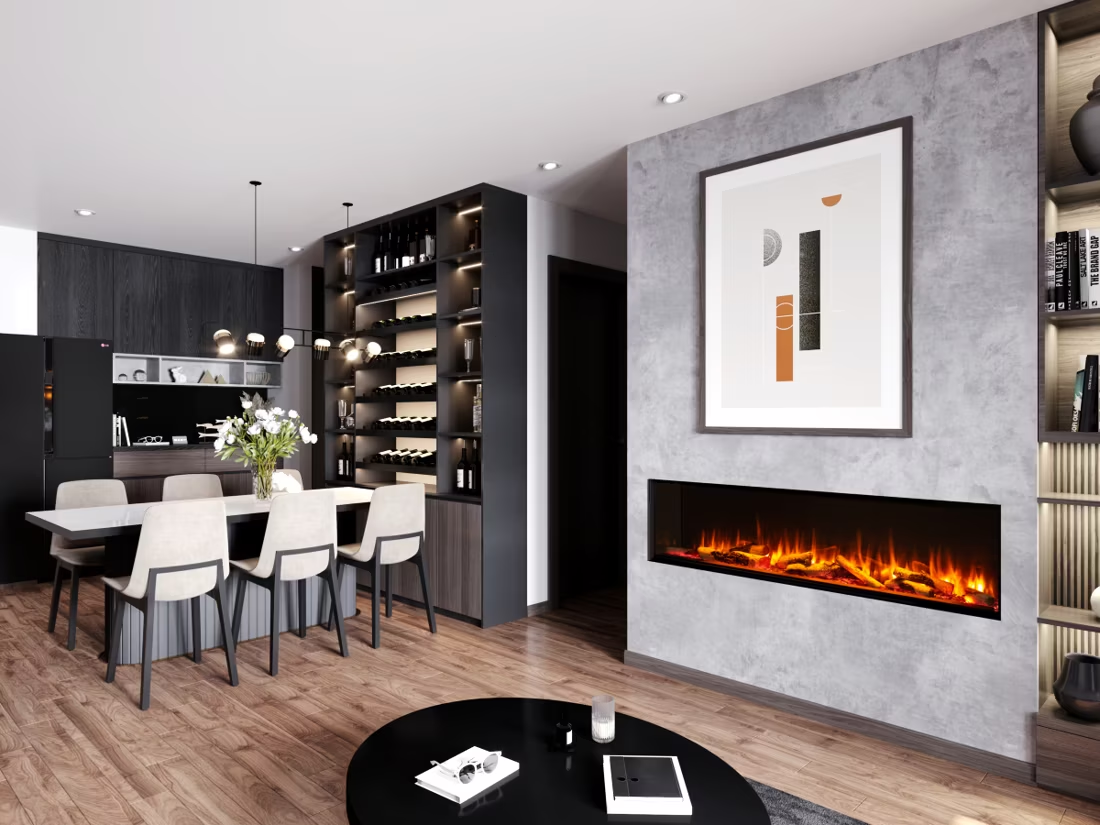
Electric fireplaces have become a practical fit here for a specific reason: they don't require the gas line work, venting, or annual chimney sweep that wood and gas units need. A homeowner in an older Marion neighborhood with plaster walls, or a newer build in Gas City without existing gas service, can add real supplemental heat and a finished look to a room in an afternoon rather than a multi-day remodel. It's not a replacement for a whole-home heating strategy in a county this cold, but as a zone-heat solution for specific rooms, it's hard to beat for the install simplicity.
Three steps. No salesperson until you're ready.
Tell us about your project
Your zip code, your situation, and the fuel you're leaning toward—or let the answers point you to one.
See what's actually available
The brands dealers within 100 miles genuinely carry—real options, never a catalog mirage.
Get your dealer & Project Guide
A trusted local dealer, plus the free Project Guide & Parts List that names every component of the job.
Frequently Asked Questions
How much does an electric fireplace installation cost in Grant County?
Most electric fireplace installations in Grant County run $400 to $1,200, which is dramatically less than wood or gas because there's no venting, no chimney work, and no gas line to run. A basic recessed or wall-mount unit with a straightforward electrical hookup sits at the lower end. Built-in units requiring a new dedicated circuit, custom framing, or a mantel surround push toward the higher end. Because there's no combustion involved, most local electricians and hearth dealers can complete the work in a single visit.
Do I need a permit to install an electric fireplace in Grant County?
In most cases, no—because electric fireplaces don't involve venting or gas lines, they typically fall outside the building permit requirements that apply to wood and gas installations. If your installation requires a new dedicated electrical circuit, an electrical permit may be needed depending on the scope of the wiring work, which a licensed electrician handles as part of the job. Built-in units that involve structural framing or a mantel surround in a Marion or Gas City home may also require a standard building permit—your local dealer can tell you whether your specific project needs one.
How much heat does an electric fireplace actually produce?
Most electric fireplaces produce around 4,600 to 5,000 BTUs, roughly equivalent to a space heater, and are designed to heat a single room rather than a whole house. In a Grant County winter with lows regularly near 18°F, that's enough to noticeably warm a bedroom, home office, or finished basement room, but it won't replace your furnace as primary heat. Think of it as zone heating—supplementing the room you're actually in and letting you turn the thermostat down elsewhere, rather than trying to carry the whole house through a cold snap.
Can an electric fireplace be a backup heat source during a power outage?
No—this is the one real limitation to plan around. Electric fireplaces require power to run the heater and, on most models, the flame effect too. If Grant County loses power during an ice storm or a bad winter system, an electric unit goes dark along with everything else on the circuit. Homeowners who want heat during outages typically pair an electric fireplace for everyday convenience with a wood stove or a battery-backed gas unit for true emergency backup. If outage-proof heat is the priority for your home, ask a local dealer about gas options alongside electric.
What's the difference between an electric insert, a wall-mount unit, and a built-in?
An electric insert is sized to slide into an existing masonry fireplace opening, instantly converting a cold, unused wood-burning fireplace into working supplemental heat—a common project in Marion's older housing stock. A wall-mount unit hangs on the wall like a flat-screen TV and needs only a nearby outlet or a simple electrical run. A built-in is framed into a wall or custom surround for a more finished, permanent look, similar to a gas fireplace installation but without the venting. For most Grant County homeowners with an existing fireplace opening, the insert is the simplest upgrade; for new construction or a room without a fireplace, wall-mount or built-in are the better fit.
Is an electric fireplace a good fit for Grant County's climate, or should I look at gas or wood instead?
Electric is a solid fit for supplemental, room-by-room heat in Grant County, but with a long, cold winter season and average lows around 18°F, it's rarely the right choice as a home's only heat source. Homeowners here tend to use electric units in specific rooms—a converted fireplace opening in Marion, a finished basement in Gas City, a sunroom addition in Fairmount—while relying on the furnace or a wood/gas unit for the coldest stretches. If you're trying to solve for a drafty older home or a room the furnace can't reach, electric is a fast, low-cost fix. If you're trying to solve for power-outage resilience or true primary heat, a local dealer can walk you through wood or gas alternatives.
Do electric fireplaces need any maintenance?
Very little compared to wood or gas. There's no chimney to sweep, no gas line to inspect, and no combustion byproducts to worry about. Periodic dusting of the heater vents and an occasional check that the fan and heating element are running cleanly is about all most units need. LED and flame-effect components can occasionally need bulb or component replacement after years of use, which most local dealers can handle as a quick service call rather than a full inspection like wood and gas installations require.
Can I install an electric fireplace myself, or do I need a professional?
Plug-in units that run off a standard outlet can often be installed by a homeowner—mounting a wall unit or sliding an insert into an existing opening isn't complicated. Where it's worth bringing in a licensed electrician is anything requiring a dedicated circuit, which is common for larger built-in units or when you're adding a fireplace to a room without existing capacity nearby. Grant County electricians and local hearth dealers both handle this work; going through a dealer has the advantage of matching the unit to your room size and electrical setup correctly the first time, rather than returning a unit that's underpowered or overloads a circuit.
Electric vs. gas—which is right for my Grant County home?
Gas delivers more heat output, works during power outages with the right ignition system, and functions well as a primary supplemental source through a genuinely cold Grant County winter. Electric costs far less to install, requires no gas line or venting, and can go virtually anywhere there's an outlet or simple circuit—a converted fireplace, a bedroom, a basement. For a room where you mainly want ambiance and modest, reliable warmth without construction, electric is usually the better fit. For a room you're counting on to carry real heat load through January, especially if outage resilience matters, gas is usually the stronger choice. A local dealer can walk through both options for your specific room.
Does an electric fireplace need a vent or chimney?
No—that's its superpower. An electric fireplace needs a wall and an outlet, period. No vent pipe, no gas line, no clearances to design around, which is why it works in bedrooms, offices, apartments, and walls where venting a gas or wood unit would be impractical or impossible. Installation is typically the simplest and least expensive of any fireplace type.
Do electric fireplaces actually produce heat?
Yes—most put out around 4,800–5,000 BTUs from a standard outlet, which comfortably warms a bedroom, office, or den as a comfort-zone heater. What they won't do is carry a whole house the way wood, gas, or pellet can. Think of electric as ambiance-first with honest supplemental heat: flames on with no heat in July, flames plus warmth in January.
Can I install a fireplace myself?
If you're putting a fire in your house on purpose, it's best to work with an expert. Unless you're genuinely experienced in framing, gas line, vent pipe, and the national code on clearances to combustibles, have a professional do it—and ideally the same company that sells you the fireplace, so warranty, service, and liability all live under one roof.
Can a fireplace actually lower my heating bill?
Yes—by creating a comfort zone. A furnace heats every square foot of the house just to warm the one room you're in; a gas fireplace on low burns roughly a sixth of the gas a typical furnace does. Set the furnace around 55–60 degrees as a baseline, then heat the rooms your family actually uses. Families who heat this way commonly save $20–$60 a month.
Find your electric fireplace in Grant County.
Tell us a bit about your home and we'll match you with a trusted local dealer and send over a free Project Guide & Parts List—the right unit, the electrical requirements, and what it'll take to get it installed.
Find Your Fireplace →