
Find your fireplace match in Grant County, Indiana.
Wood, gas, pellet, and electric fireplace resources for every town in Grant County—from Marion and Gas City to Fairmount and Upland. Get matched with a trusted local hearth retailer who knows what actually works in an east-central Indiana winter.
Every Project Starts From One of These Five Situations
Steady Midwest winters across Grant County, Indiana.
Grant County sits along the Mississinewa River in east-central Indiana, anchored by Marion—the county seat—with Gas City, Fairmount, Upland, and a scattering of smaller farm towns filling out the rest. Winters here are a straightforward 5A cold climate: average lows around 18°F, roughly 6,078 heating degree days a season, and a heating window that typically runs October through April. That's a notch milder than Madison, Wisconsin, but still cold enough that a heating system needs to actually perform, not just look good. The county's farmland woodlots are heavy with oak, hickory, maple, and beech—species that split clean and burn long, and that have kept wood stoves relevant on rural properties for generations.
Gas City, notably, takes its name from the natural gas boom that swept this part of Indiana in the 1880s and 90s—a reminder that gas heat has deep roots here, not just a modern retrofit trend. What you'll find on this hub: hearth retailers, service technicians, and fuel suppliers covering the whole county, plus a directory of every town—from Marion down to Fairmount and Swayzee. Pick your fuel below for local dealers, installation costs, and recommended units. Grant County doesn't carry the wildfire-smoke or inversion restrictions some Western counties deal with, so the fuel decision here comes down to your home, your budget, and how much labor you want to put into heating.
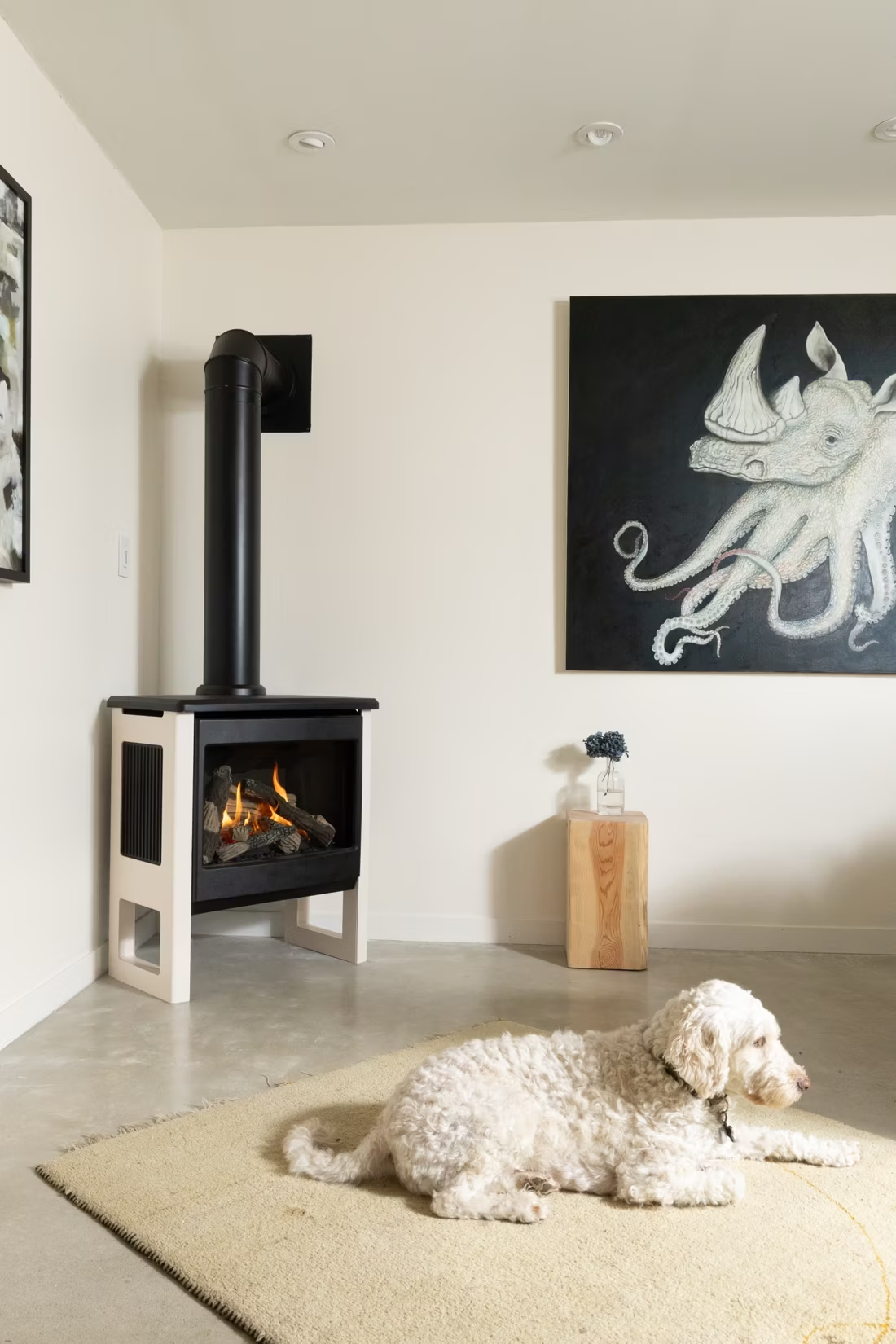
Four fuels. One honest answer for Grant County.
Three steps. No salesperson until you're ready.
Tell us about your project
Your zip code, your situation, and the fuel you're leaning toward—or let the answers point you to one.
See what's actually available
The brands dealers within 100 miles genuinely carry—real options, never a catalog mirage.
Get your dealer & Project Guide
A trusted local dealer, plus the free Project Guide & Parts List that names every component of the job.
Frequently Asked Questions
Which fuel works best in Grant County?
It depends on the house and how hands-on you want to be. Wood remains a strong option on rural Grant County properties—oak and hickory from local farm woodlots split clean and burn long, and a wood stove keeps working through a power outage, which matters on rural lines. Gas has deep local roots—Gas City is literally named for the natural gas boom that hit this stretch of Indiana in the 1880s—and today it's the low-maintenance choice for homes in Marion and Gas City with gas service already run. Pellet is the middle path: less labor than splitting wood, with regional supply from brands like Indeck Energy Services and Lignetics keeping fuel costs reasonable. Electric is best treated as supplemental heat—good for a bedroom or a finished basement, but not sized to carry a Grant County winter on its own. Most homes here end up pairing a primary fuel with electric backup in secondary rooms.
Do I need a permit to install a fireplace in Grant County?
Generally yes. New wood stoves, wood inserts, gas fireplaces, gas inserts, gas stoves, and pellet stoves typically require a building permit through Grant County's building department (or the applicable city office if you're inside Marion or Gas City limits). Wood-burning appliances need to meet current EPA 2020 NSPS emissions standards, and any gas hookup requires the connection work to be done by a licensed gas-fitter, usually pulled as a separate permit. Plug-in electric fireplaces don't typically need a permit, but built-in electric units that require new wiring or a dedicated circuit usually do. Most local hearth retailers handle the permit paperwork as part of the installation, so it's rarely something you have to manage yourself.
Are there air quality restrictions on wood burning in Grant County?
No—Grant County doesn't have the winter inversion or non-attainment issues that trigger burn advisories in some Western basins. There's no local ordinance restricting wood-burning days here. That said, an EPA-certified stove still burns cleaner and more efficiently than an old uncertified unit, which matters for your own indoor air quality and for being a good neighbor on a still winter night, even without a regulatory mandate behind it.
Can one local hearth retailer handle all four fuel types?
Many Grant County retailers carry at least three of the four fuel types, and some carry all four—wood, gas, pellet, and electric—which is worth asking about directly if you want to compare options side by side rather than visiting multiple showrooms. Smaller shops sometimes specialize, focusing heavily on wood and gas with a lighter pellet and electric selection. Fuel suppliers, like firewood and pellet distributors, are a separate category from hearth retailers who sell and install the appliances themselves—check the listing type before you call.
How does service work in the smaller towns around Grant County?
Most chimney sweeps and gas technicians are based in Marion or Gas City and travel out to Fairmount, Upland, Swayzee, Van Buren, and Sweetser as part of their regular routes. A small trip fee is common for the more outlying stops, but it's rarely prohibitive given the county's compact size. Booking annual service in late summer or early fall—before the heating season starts—is easier than trying to get a technician out during a January cold snap, especially in the smaller towns where a given tech may only pass through every week or two.
What's the typical cost range for fireplace installation across all fuel types in Grant County?
Costs vary by fuel and by how much of the existing chimney or venting can be reused. Wood stove or insert installation typically runs $4,000–$8,500, more for new construction requiring a full chimney build. Gas fireplace, insert, or stove installation runs roughly $4,000–$10,000 depending on whether a new gas line needs to be run. Pellet stove or insert installs generally fall between $4,000–$7,000. Electric fireplaces are the most affordable entry point—$200–$3,000 for the unit itself, plus $300–$1,000 in labor for anything beyond a simple plug-and-play placement. See the county + fuel pages above for cost detail tied to specific local retailers.
Can I install a fireplace myself?
If you're putting a fire in your house on purpose, it's best to work with an expert. Unless you're genuinely experienced in framing, gas line, vent pipe, and the national code on clearances to combustibles, have a professional do it—and ideally the same company that sells you the fireplace, so warranty, service, and liability all live under one roof.
What is an in-home preview and do I need one?
It's a visit where a hearth professional measures your space, confirms the model you picked actually works in your home, and walks the specs—framing, gas line, venting, finish work—before anything is ordered. Some details you just can't know until you see the house. Never make a down payment without one; it's the single most-skipped step that burns buyers.
What are the biggest mistakes people make buying a fireplace?
Five come up constantly: budgeting for the unit but not the full job (vent, gas line, electrical, finish work); drowning in options instead of starting from style and fuel; buying without an in-home preview; handing installation to a handyman instead of a pro; and giving up out of sheer indecision. Every one is avoidable with a clear plan—step one, step two, step three.
Can a fireplace actually lower my heating bill?
Yes—by creating a comfort zone. A furnace heats every square foot of the house just to warm the one room you're in; a gas fireplace on low burns roughly a sixth of the gas a typical furnace does. Set the furnace around 55–60 degrees as a baseline, then heat the rooms your family actually uses. Families who heat this way commonly save $20–$60 a month.
Stove and Fireplace Dealers in Grant County
Listings include WhyFire partner dealers, dealers we have verified as authorized for the brands we recommend, and established local businesses that carry hearth products. Every listing shows which one it is. The ones marked Preferred run on WhyFire's software, so they can show you real pricing and book your appointment right here. No manufacturer pays for placement. How we verify dealers →
Newco Dealers Wholesale
O'Malia's Living
Davis Cabinet & Design
Krisken's Pools And Spa's
Camflo Heating & Cooling
Jd Farm Supply
Pate's Pool Service & Supply
Brickworks Supply Center
The Cinder Box
Nob Sales Corporation
Home Lumber Of New Haven, Inc
Collier’s Fireplace Shop
Granite Ridge
Warsaw Masonry Supply
Chimney 1
Kindled Timber
Get matched with a Grant County dealer.
Tell us about your project and we'll match you with a trusted local hearth retailer and send you a free Project Guide & Parts List—the exact parts, vent kit included, and the dealer we recommend for your home in Grant County.
Find Your Fireplace →